A leather desk mat is one of those products that looks simple until you try to develop it properly. On paper, it is just a flat office accessory. In the real market, it carries much more weight. It protects the desk surface, defines the working area, improves comfort during long hours of typing and writing, and gives the office a cleaner, more premium look. For corporate offices, it also becomes part of the company image. A poor-quality desk mat may start curling at the edges, show glue marks, lose shape, or make the whole workstation look cheap. A well-made one can stay on the desk for years and quietly reinforce the brand every single day.
A leather desk mat for corporate offices is produced through material selection, pattern development, cutting, lamination, edge treatment, logo application, and quality inspection. Its final quality depends on the leather surface, backing structure, thickness balance, flatness, edge finish, and production consistency.
That is why serious customers do not only ask about price. They ask what leather is being used, whether the bottom slips, how the edges are finished, whether the size stays accurate in bulk production, whether the logo looks clean, and whether the product still looks good after six months of daily use. At SzoneierLeather, we have seen office gift projects fail because the mat looked good in the first sample but collapsed in mass production. We have also seen clients win repeat orders because the product arrived flat, clean, durable, and exactly on-brand. That gap is where production expertise matters most.
Leather Desk Mat Production
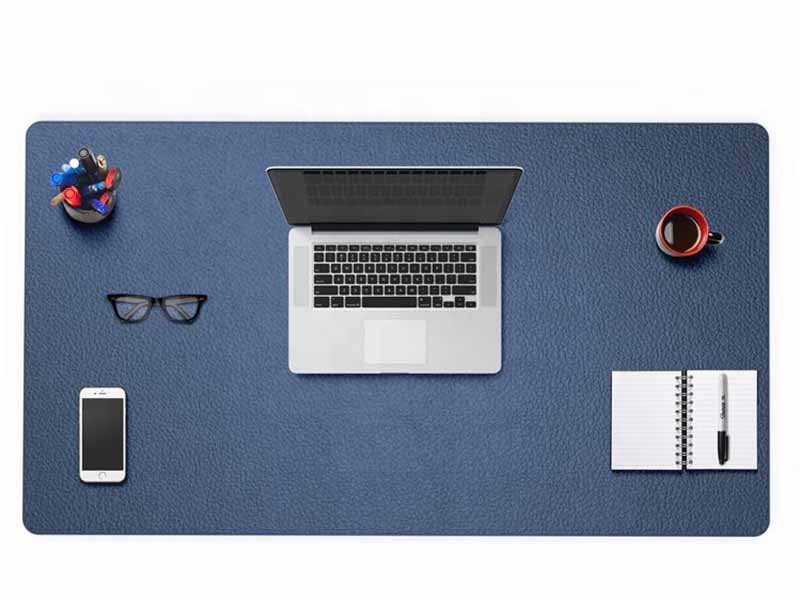
Leather desk mat production is the process of turning leather surface materials, backing materials, and finishing details into a flat, durable, office-ready product that protects desks and supports brand presentation. For corporate use, the key is not just appearance. The key is whether the mat stays flat, feels good in daily use, resists wear, and remains consistent across hundreds or thousands of units.
What Is a Leather Desk Mat
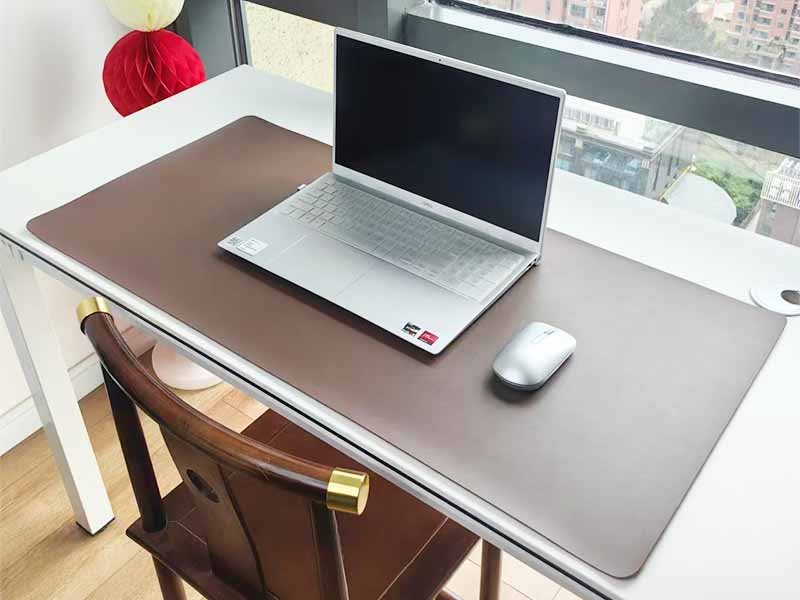
A leather desk mat is a large flat mat placed on top of a work desk to create a cleaner, softer, more organized working surface. In office use, it usually sits under a keyboard, mouse, laptop, notebook, or writing area. Compared with a small mouse pad, a desk mat covers a much larger space and changes the look and feel of the workstation immediately.
From a product structure point of view, a leather desk mat usually includes three main parts:
- a top surface layer for look, touch, and durability
- a middle support or bonding layer for body and stability
- a bottom layer for grip and desk protection
This is why a desk mat should not be treated as just a sheet of leather. Its performance depends on how these layers work together. A top layer may look premium, but if the bottom slides easily or the middle bonding is unstable, the product will disappoint users very quickly.
In corporate offices, leather desk mats are commonly used in the following areas:
- executive desks
- reception counters
- conference rooms
- shared office workstations
- manager offices
- branded employee welcome kits
- business gifts for partners and clients
The commercial value of a desk mat is also easy to understand. Unlike many low-retention office gifts, a desk mat stays visible every day. It is used for hours at a time. It sits directly under the user’s hands, laptop, phone, and documents. That gives it stronger practical value than many decorative office accessories.
The table below shows why the category continues to grow in office, gifting, and branded accessory programs.
| Product Type | Daily Visibility | Practical Use | Perceived Value | Branding Space |
|---|---|---|---|---|
| Pen | Medium | Medium | Low | Small |
| Mug | Medium | Medium | Medium | Medium |
| Notebook | Medium | High | Medium | Medium |
| Mouse Pad | High | High | Medium | Small |
| Leather Desk Mat | Very High | Very High | High | Large |
For customers developing corporate products, this matters. A desk mat combines visible branding, daily use, and premium positioning in one item. That is why it is often chosen for office upgrades, employee gifts, executive kits, and company-branded workplace projects.
Do Offices Need a Leather Desk Mat
Strictly speaking, an office can function without a leather desk mat. But once companies start paying attention to desk protection, employee experience, visual consistency, and workspace presentation, the desk mat becomes much more than an optional add-on.
A bare desk surface creates several problems over time:
- laptop feet and keyboards leave wear marks
- mouse movement causes friction and finish damage
- pens, paper clips, and office tools scratch the surface
- desk noise feels harder and less refined
- the workspace looks scattered instead of intentional
A leather desk mat solves several of these issues at once. It defines the work zone, protects the desktop, softens the user’s hand contact area, and makes the whole desk look more structured.
Here is a practical comparison from an office use perspective:
| Desk Condition | Without Desk Mat | With Leather Desk Mat |
|---|---|---|
| Surface wear after months of use | More visible | Greatly reduced |
| Typing and mouse sound | Harder, louder | Softer, quieter |
| Writing comfort | Basic | Improved |
| Workspace appearance | Fragmented | More unified |
| Cleaning experience | Direct desk cleaning only | Easier wipe-clean working zone |
For companies managing dozens or hundreds of desks, this has real value. Even if a desk mat costs more than a simple mouse pad, it can help reduce furniture wear and create a more professional office standard. In premium office environments, that difference is easy to see. A desk with a well-matched leather mat looks deliberate. A desk without one often looks unfinished, even when the furniture itself is expensive.
Another important point is employee perception. Office upgrades do not always need to be large or expensive. Small changes that improve the daily working environment can have a strong effect on how people feel about their space. A better desk setup can help a workstation feel more personal, more organized, and more comfortable. That matters in executive spaces, creative teams, sales departments, and client-facing meeting rooms alike.
At SzoneierLeather, many clients come with one of three goals:
- protect office furniture better
- upgrade office image without changing all desks
- create a branded desk setup across departments or locations
In all three cases, the desk mat becomes a simple but effective solution.
Why Is a Leather Desk Mat Used
A leather desk mat is used because it solves both functional and image-related problems at the same time. That combination is exactly what makes it attractive to companies, brands, distributors, and gift program buyers.
From the user side, the reasons are practical:
- it protects the desk finish from friction and scratches
- it creates a smoother and softer writing area
- it improves mouse tracking and keyboard placement
- it reduces direct contact with a cold or hard tabletop
- it helps keep the desk layout visually organized
From the company side, the reasons are broader:
- it improves workspace presentation
- it supports company branding
- it works well in executive gift programs
- it can be paired with other leather office accessories
- it gives a stronger premium impression than basic office items
This combination of function and visual value is why leather desk mats are often chosen instead of fabric mats or plastic desk pads. Plastic options may be cheaper, but they usually feel less premium and can age poorly. Fabric mats may feel soft, but they stain more easily and look less formal in executive office settings. Leather, especially when properly selected and finished, sits in a better position for corporate use because it balances appearance, durability, cleanability, and brand expression.
Below is a simple market-level comparison:
| Material | Office Appearance | Easy to Clean | Premium Feel | Long-Term Use |
|---|---|---|---|---|
| Plastic | Low to medium | High | Low | Medium |
| Fabric | Medium | Low | Low to medium | Medium |
| PU Leather | High | High | Medium to high | High |
| Genuine Leather | Very high | Medium to high | Very high | Very high |
A second reason companies choose leather desk mats is category expansion. Many customers do not stop at one desk mat. Once the material, color, and logo treatment are approved, they often expand into a full office accessory range, such as:
- leather mouse pads
- leather notebook covers
- leather document trays
- leather pen holders
- leather organizers
- leather conference folders
This is especially useful for private label clients and corporate office buyers who want a unified visual language across products.
At SzoneierLeather, we usually advise customers to define the desk mat not only as a single product, but as one part of a wider office collection. That approach makes development more strategic. It improves color consistency, packaging coordination, and brand presentation across the full set.
How Leather Desk Mat Improves Work
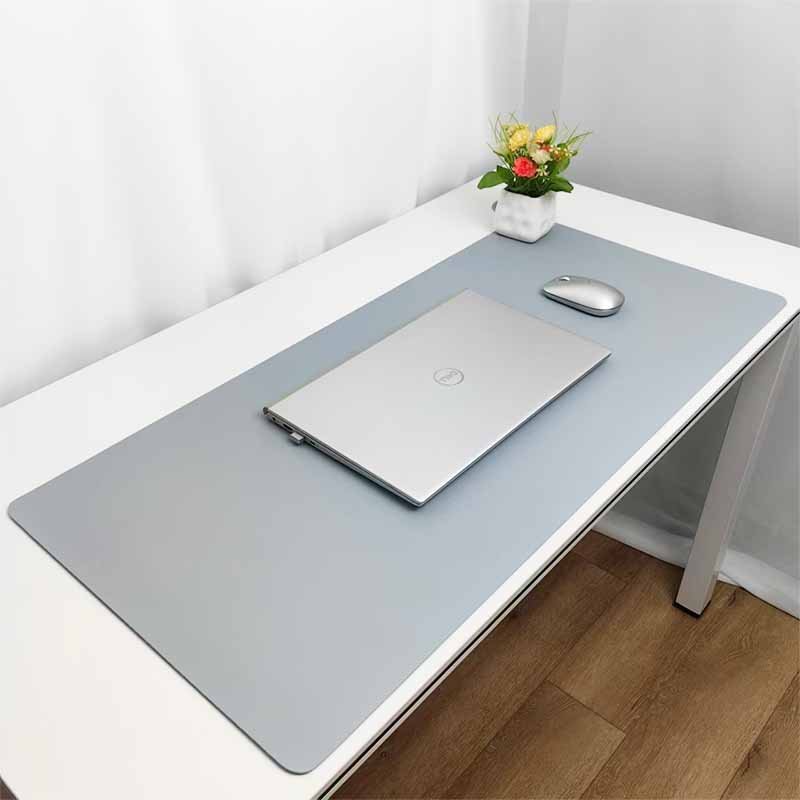
A leather desk mat improves work by making the desk surface more comfortable, more organized, and better protected. It creates a clear working zone for daily office tasks, reduces wear on furniture, softens the user’s hand contact area, and makes the workspace look more professional. For companies, it also helps standardize office presentation and strengthen brand consistency.
How Does Leather Desk Mat Protect Desks
Desk protection is usually the first reason companies consider a desk mat, and it is still one of the most important. Even in offices with good furniture, daily use creates slow but steady wear. Keyboards shift, laptops are opened and closed, mice move constantly, chargers drag across the surface, and sharp office tools leave small marks. None of these issues looks serious at the beginning, but over time the desk can lose its clean finish.
Common causes of desk damage include:
- friction from laptop bases
- mouse and keyboard movement
- pressure points from monitor stands or desk tools
- pen marks and accidental scratches
- liquid rings from cups and bottles
- contact wear from everyday cleaning
A leather desk mat acts as a buffer between the desk and these repeated points of contact. The larger the coverage area, the more effective the protection. That is why many corporate desk mats are much wider than regular pads. They are designed to sit under multiple work items at once.
Different product structures provide different levels of protection. A single thin layer may improve appearance, but it may not offer enough body for long-term use. A better-built desk mat usually performs more reliably because it combines surface material with stable backing and controlled thickness.
Below is a practical protection comparison:
| Desk Mat Construction | Surface Protection | Shape Stability | Office Suitability |
|---|---|---|---|
| Thin single-layer | Basic | Low | Budget use |
| Bonded double-layer | Good | Good | Standard office use |
| Structured premium build | Very good | Very good | Executive and gifting use |
For office procurement teams, the cost of replacing or refinishing damaged furniture is usually far higher than the cost of adding protective accessories early. This is especially true in meeting rooms, executive areas, and high-touch workspaces where presentation matters.
At SzoneierLeather, we often recommend matching desk mat thickness and backing type to the actual desk environment. For example, a smooth lacquered desk may need stronger anti-slip backing, while a high-end executive wood desk may need softer contact on both top and bottom surfaces. Small structural decisions like these can greatly improve long-term product value.
Does Leather Desk Mat Improve Comfort
Yes, and this point becomes more important the longer the desk mat is used. A workstation is not just a place to put a laptop. It is a physical touch surface used for hours every day. Hands rest on it. Wrists move across it. Documents are written on it. Phones, pens, notebooks, and keyboards are placed and moved on it repeatedly. A better working surface changes how the whole desk feels.
A leather desk mat improves comfort in several ways:
- it softens the writing area compared with a hard tabletop
- it provides smoother hand movement across the desk
- it creates a more stable base for keyboards and mice
- it reduces the harshness of direct contact with wood, metal, or laminate surfaces
- it adds visual order, which often makes the desk feel calmer and easier to use
Comfort is not always dramatic, but it is cumulative. In an office environment where employees use the same desk every day, small improvements are felt repeatedly. That is why this product performs well not only in executive gifting, but also in office setup projects.
The effect is especially clear in these work habits:
- frequent note-taking
- long keyboard use
- graphic tablet or mouse use
- multi-device desk setup
- customer-facing desk presentation
Here is a simple user-experience comparison:
| Work Surface | Writing Feel | Wrist Comfort | Visual Cleanliness |
|---|---|---|---|
| Bare desk | Hard | Basic | Medium |
| Fabric mat | Soft | Medium | Lower over time |
| Leather desk mat | Soft and stable | Good | High |
Another comfort factor is cleanability. Fabric office accessories can collect dust, absorb stains, and look aged quickly. Leather-style surfaces, especially PU or coated genuine leather, are much easier to wipe clean. In shared offices or high-turnover desks, that matters a lot. A cleaner surface is not just a maintenance benefit. It affects how people feel about the workspace.
For corporate customers, comfort should not be treated as a vague selling point. It should be understood as part of product retention. When users like how a product feels, they keep it on the desk. When they keep it visible and in use, the company gets far more value from the product.
Why Do Companies Use Leather Desk Mat
Companies choose leather desk mats because they solve several needs at once: office image, furniture protection, user comfort, and branding. That combination is difficult to find in lower-value office products. A leather desk mat is practical enough to be used every day, but premium enough to represent a company well.
In corporate procurement, common reasons for choosing desk mats include:
- upgrading office appearance without replacing furniture
- creating a more consistent look across desks
- improving meeting room and executive office presentation
- adding branded products to employee onboarding kits
- preparing premium gifts for clients or partners
- developing a custom office accessories line for resale or internal use
This broad use makes the desk mat commercially strong. It is not a novelty item. It has long service life, repeated daily exposure, and enough surface area for tasteful branding.
Logo treatment is one reason the category performs well. Unlike many small office tools, a desk mat allows several branding methods without looking forced. Common choices include:
- debossed logo
- embossed logo
- foil logo
- screen printed logo
- metal plate logo
- stitched label branding
The right method depends on the mat material, target customer level, and office image the client wants to create. In executive products, subtle branding usually works better. In promotional or event programs, more visible logo application may be preferred.
Companies also choose leather desk mats because they pair well with office culture and workspace trends. In recent years, many businesses have paid more attention to workspace design, employee experience, and premium desk accessories. A desk mat fits naturally into that shift. It is useful, professional, and easy to integrate into modern office setups.
For SzoneierLeather clients, one of the most common strategies is to start with one custom desk mat program, then expand based on feedback. Once the material, finish, and logo direction are approved, the same design language can be applied to more products and more departments. That makes the desk mat not just an accessory, but a strong entry point for a wider branded office collection.
What Materials Make Leather Desk Mat
The materials used in a leather desk mat directly determine how it feels, how long it lasts, how it performs in daily use, and how it represents a brand. For corporate office projects, material selection is not only about appearance. It is about balancing durability, cost, consistency, and long-term user experience.
A leather desk mat is usually made from a combination of surface material + backing material + bonding structure. Each layer has a clear function, and changing one layer will affect the final product performance.
What Leather Is Used in Leather Desk Mat
The top surface is the most visible and most frequently touched part of the desk mat. It defines the look, texture, and overall perception of quality.
The most common leather options are:
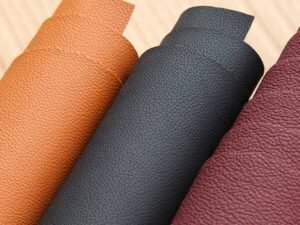
- PU leather (synthetic leather)
- genuine leather (split or top grain)
- full grain leather (premium category)
Each type has different characteristics and is used for different market levels.
| Leather Type | Cost Level | Durability | Appearance | Typical Use |
|---|---|---|---|---|
| PU Leather | Low to medium | Good | Consistent | Corporate bulk, promotional |
| Split Leather | Medium | Moderate | Natural look | Mid-range office use |
| Top Grain Leather | Medium to high | High | Refined texture | Executive products |
| Full Grain Leather | High | Very high | Premium natural | Luxury office and gifting |
PU leather is widely used because it offers:
- stable color consistency across batches
- lower cost for large-volume projects
- easier maintenance and cleaning
- flexibility for different textures and finishes
Genuine leather, especially top grain and full grain, is chosen when the client wants:
- natural leather feel
- higher perceived value
- long-term durability
- premium positioning
However, genuine leather also comes with more variation. Color, grain pattern, and texture can differ slightly from piece to piece. For large corporate orders, this needs to be controlled carefully during material selection.
At SzoneierLeather, material selection usually starts with one key question:
Is the project focused on cost efficiency, visual consistency, or premium positioning?
Which Backing Is Used in Leather Desk Mat
The bottom layer of a desk mat is just as important as the top. It affects grip, stability, and how the mat behaves during daily use.
Common backing materials include:
- microfiber backing
- felt backing
- cork backing
- rubber or anti-slip backing
Each has a different purpose.
| Backing Type | Grip Level | Feel | Application |
|---|---|---|---|
| Microfiber | Medium | Soft | Standard office mats |
| Felt | Medium | Warm texture | Lifestyle and design brands |
| Cork | Medium to high | Natural feel | Eco-focused products |
| Rubber | High | Strong grip | Heavy-use office desks |
Microfiber is one of the most common choices because it balances cost and performance. It provides a soft touch against the desk and prevents scratching.
Rubber backing is used when stronger anti-slip performance is required. This is especially useful for:
- glass desks
- smooth lacquered surfaces
- shared workstations
At SzoneierLeather, we often combine PU leather top + microfiber or rubber backing, depending on the client’s use scenario.
How Material Thickness Affects Quality
Thickness is a key factor that many customers underestimate at the beginning.
A desk mat that is too thin may:
- feel cheap
- curl at the edges
- move easily during use
A desk mat that is too thick may:
- feel bulky
- increase shipping cost
- lose flexibility
The goal is to find a balanced thickness that supports both structure and comfort.
Below is a practical guideline:
| Total Thickness | Product Level | User Experience |
|---|---|---|
| 1.2–1.5 mm | Entry level | Light, less stable |
| 1.5–2.0 mm | Standard | Balanced use |
| 2.0–2.5 mm | Premium | Stable, comfortable |
| 2.5 mm+ | High-end | Strong structure, heavy feel |
From production experience, 2.0–2.2 mm is often the best balance for corporate desk mats. It provides enough weight to stay flat while maintaining flexibility for packaging and transport.
How Material Choice Affects Price and Positioning
Material selection is one of the biggest cost drivers in desk mat production.
Here is a simplified cost comparison:
| Material Combination | Relative Cost | Market Position |
|---|---|---|
| PU + microfiber | Low | Promotional / bulk |
| PU + rubber | Medium | Retail / office |
| Split leather + microfiber | Medium | Mid-range |
| Top grain leather + microfiber | High | Executive |
| Full grain leather + premium backing | Very high | Luxury |
For corporate buyers, the right choice depends on:
- order quantity
- target budget
- usage scenario
- brand positioning
For example:
- large-scale employee kits often use PU leather for consistency
- executive gifts may use top grain leather for premium feel
- retail brands may choose PU with upgraded texture for cost-performance balance
At SzoneierLeather, we help clients adjust materials based on their target price range while maintaining acceptable quality standards. In many cases, small material changes can reduce cost without significantly affecting user experience.
How Leather Desk Mat Is Made
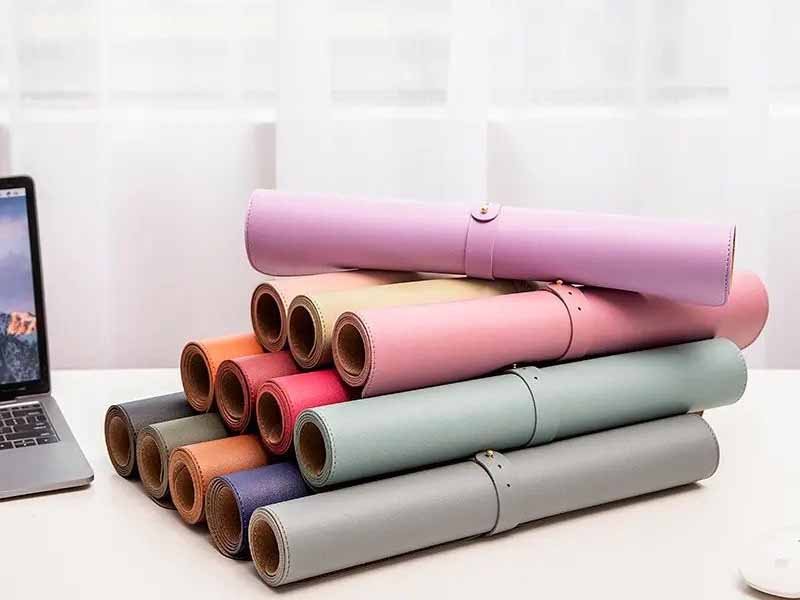
Leather desk mat production is not a single-step process. It involves multiple stages, each affecting the final quality. For corporate orders, consistency across large quantities is just as important as the quality of one sample.
A well-managed production process ensures that every unit:
- stays flat
- has clean edges
- keeps consistent color
- maintains accurate size
- meets branding requirements
How Do Factories Make Leather Desk Mat
The production process starts with material preparation and ends with final inspection and packaging.
A simplified workflow looks like this:
| Step | Process |
|---|---|
| 1 | Material selection and inspection |
| 2 | Cutting leather and backing |
| 3 | Surface treatment (if needed) |
| 4 | Bonding layers together |
| 5 | Edge finishing |
| 6 | Logo application |
| 7 | Cleaning and inspection |
| 8 | Packaging |
Each step must be controlled carefully to avoid defects in bulk production.
What Steps Are Critical in Production
Some production steps have a much greater impact on final quality than others.
1. Cutting accuracy
If cutting is not precise, the final product may have uneven edges or inconsistent size. For large orders, even small deviations become visible.
2. Bonding quality
The bonding between the top layer and backing must be strong and even. Poor bonding can lead to:
- bubbles
- separation
- uneven surface
3. Edge finishing
Edges are one of the most visible quality indicators. Common edge treatments include:
- folded edges
- painted edges
- stitched edges
Each method has different cost and durability characteristics.
| Edge Type | Appearance | Durability | Cost |
|---|---|---|---|
| Folded edge | Clean | High | Medium |
| Painted edge | Smooth | Medium | Low |
| Stitched edge | Detailed | High | High |
4. Surface finishing
The leather surface may go through additional processes such as:
- embossing texture
- color coating
- protective layer application
This affects both appearance and durability.
How Is Leather Desk Mat Quality Checked
Quality control is critical, especially for corporate orders where consistency matters.
Key inspection points include:
- size accuracy
- color consistency
- surface smoothness
- edge quality
- bonding strength
- logo clarity
Below is a basic inspection checklist:
| Inspection Item | Standard |
|---|---|
| Size tolerance | Within ±2 mm |
| Surface defects | No visible scratches or marks |
| Edge condition | Clean and even |
| Bonding | No separation |
| Logo | Clear and correctly positioned |
At SzoneierLeather, we implement multi-stage quality checks:
- raw material inspection
- in-line production checks
- final product inspection
This reduces the risk of defects reaching the customer.
How Production Affects Long-Term Use
Many product issues do not appear immediately. They show up after weeks or months of use.
Common long-term problems include:
- edge cracking
- surface peeling
- color fading
- shape deformation
These issues are usually linked to:
- low-quality materials
- weak bonding
- poor finishing processes
A well-produced desk mat should maintain:
- flat shape
- stable color
- smooth surface
- strong edges
for extended use.
From real client feedback, improving production quality can reduce return rates and complaints significantly. This is especially important for:
- e-commerce brands
- corporate gift programs
- large office procurement projects
At SzoneierLeather, many clients come to us after experiencing issues with previous suppliers. In most cases, the problem is not the product idea, but how it was produced. By improving material selection and production control, the same product concept can perform much better in the market.
How to Customize Leather Desk Mat
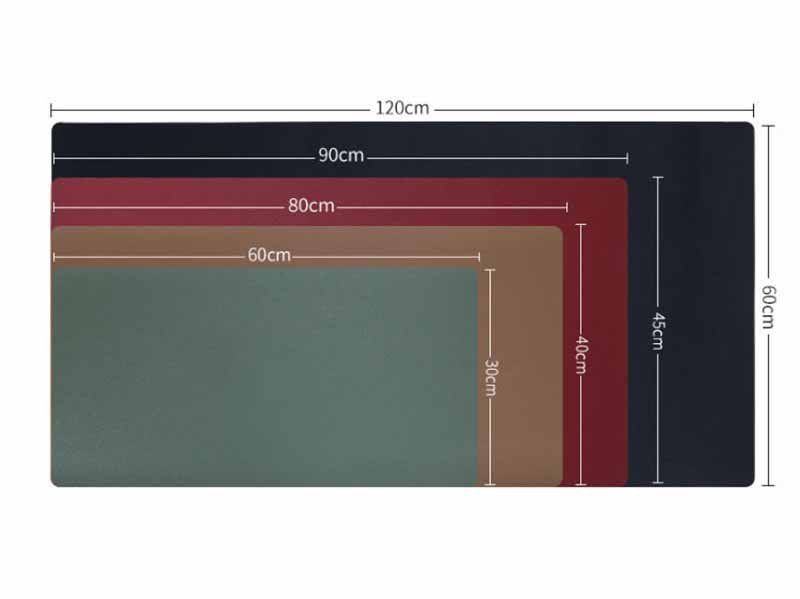
Customizing a leather desk mat is where a standard product turns into a branded asset. For corporate offices, customization is not only about adding a logo. It is about aligning the product with brand identity, usage scenarios, and long-term consistency across departments or locations.
A well-customized desk mat should feel like part of the company, not just an accessory placed on the desk.
How to Add Logo on Leather Desk Mat
Logo application is one of the most important decisions in customization. The method you choose will affect how the product looks, how long the branding lasts, and how it is perceived by users.
Common logo methods include:
- debossed logo (pressed into the leather)
- embossed logo (raised effect)
- foil stamping (gold, silver, or color foil)
- screen printing
- metal plate logo
- stitched label
Each method creates a different visual effect.
| Logo Method | Visual Style | Durability | Best Use |
|---|---|---|---|
| Debossed | Subtle, premium | Very high | Executive offices |
| Embossed | Textured, visible | High | Mid to high-end |
| Foil Stamping | Eye-catching | Medium | Corporate gifts |
| Screen Printing | Clear and bold | Medium | Promotional projects |
| Metal Plate | Strong branding | Very high | Premium positioning |
| Stitched Label | Casual branding | High | Lifestyle products |
For corporate offices, most clients prefer debossed or embossed logos because they look clean and professional without being too aggressive.
Another important factor is logo placement. Common positions include:
- bottom corner
- center edge
- side alignment
A well-positioned logo should be visible but not distracting during daily work.
At SzoneierLeather, we usually recommend testing logo size and placement during sampling. A logo that looks good on paper may appear too large or too small on the actual product.
Which Leather Desk Mat Styles Sell Well
Different markets and customer groups prefer different desk mat styles. Choosing the right style helps improve both usability and sales performance.
The most common styles include:
| Style | Features | Target Use |
|---|---|---|
| Standard rectangular | Simple, full coverage | Office desks |
| Extended desk mat | Covers keyboard + mouse area | Workstations |
| Double-sided desk mat | Two colors, reversible | Retail and gifting |
| Foldable desk mat | Easy storage | Travel and promotion |
| Desk mat with organizer | Includes pockets or slots | Business use |
| Hard-structure desk mat | Strong shape retention | Executive desks |
From market data and client feedback, extended desk mats and double-sided mats are among the most popular.
Extended mats provide:
- larger working area
- better visual organization
- higher perceived value
Double-sided mats offer:
- two color options in one product
- longer usage life
- more flexible design choices
For corporate projects, standard rectangular mats remain the most widely used because they are easy to standardize across offices.
What to Check Before Ordering Leather Desk Mat
Before placing a bulk order, there are several key points that customers should confirm. Skipping these steps often leads to quality issues or mismatched expectations.
Important checkpoints include:
1. Material confirmation
- Is the leather type clearly defined?
- Is the color approved with a physical sample?
2. Size and thickness
- Does the size fit the actual desk setup?
- Is the thickness suitable for daily use?
3. Logo details
- Is the logo file correct and clear?
- Is the logo method suitable for the material?
4. Edge finishing
- Which edge method is used?
- Does it match the target product level?
5. Packaging requirements
- Individual packaging or bulk packing?
- Any branding on packaging?
6. Sample approval
- Has a final sample been approved before production?
Here is a simplified pre-production checklist:
| Item | Status |
|---|---|
| Material sample approved | Yes / No |
| Color confirmed | Yes / No |
| Logo method approved | Yes / No |
| Size and thickness confirmed | Yes / No |
| Packaging confirmed | Yes / No |
| Final sample approved | Yes / No |
At SzoneierLeather, we guide clients through this process step by step to avoid errors. Clear communication at this stage can prevent delays and reduce risk in bulk production.
How Packaging Adds Value to Leather Desk Mat
Packaging is often underestimated, but it plays a big role in product presentation, especially for corporate gifting and retail.
Common packaging options include:
- poly bag (basic protection)
- paper box
- rigid gift box
- custom printed packaging
For corporate clients, packaging can be used to:
- reinforce brand identity
- improve unboxing experience
- increase perceived value
Here is a comparison:
| Packaging Type | Cost | Presentation Level | Use Case |
|---|---|---|---|
| Poly bag | Low | Basic | Bulk orders |
| Paper box | Medium | Clean | Office use |
| Gift box | High | Premium | Corporate gifts |
| Custom packaging | Medium to high | Branded | Retail |
A well-designed package can turn a simple desk mat into a complete product experience. Many SzoneierLeather clients combine custom logo + branded packaging to create a stronger impression.
Start Your Leather Desk Mat Project with SzoneierLeather
If you are planning to develop leather desk mats for corporate offices, retail, or promotional use, the most important step is working with a manufacturer that understands both product quality and customization requirements.
We work with:
- corporate brands
- office procurement teams
- promotional companies
- e-commerce sellers
- private label clients
Whether you need a simple desk mat or a complete office accessory collection, we can help you develop products that are:
- consistent in quality
- aligned with your brand
- practical for daily use
- competitive in your market
Contact SzoneierLeather today to get a customized leather desk mat solution tailored to your business needs.