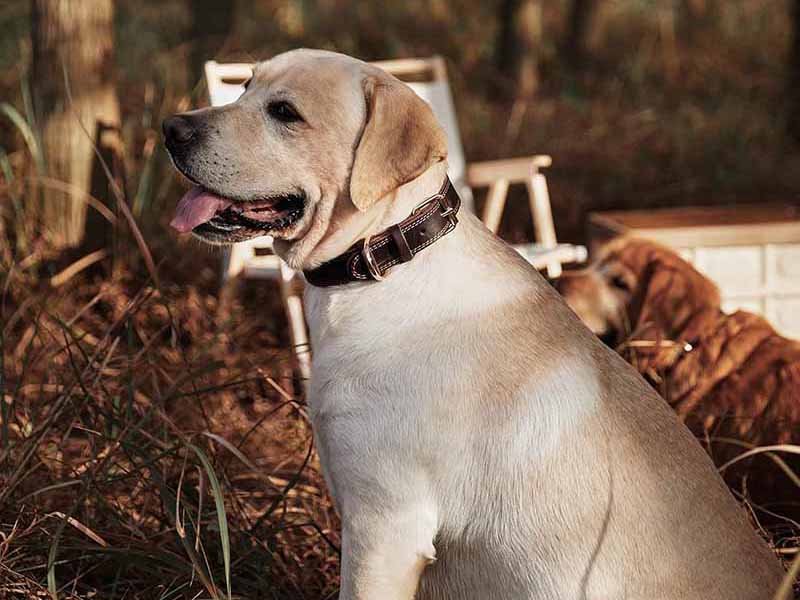
A leather dog collar made for outdoor use cannot be treated like a fashion-only accessory. It has to survive real use: dogs pulling hard on trails, collars getting wet in rain or near lakes, long hours under sunlight, repeated rubbing against fur and skin, and daily exposure to dust, mud, and sweat. This is exactly where many ordinary collars fail. They may look premium at first, but after a short period of outdoor use, the leather may dry out, the holes may stretch, the edges may crack, the hardware may corrode, and the collar may lose both its appearance and its safety value.
The real difference in leather dog collar manufacturing for outdoor use is that the product must be built around performance first, then appearance. That means stronger leather selection, better tanning control, correct thickness, cleaner edge treatment, more reliable stitching, stronger hardware, and practical structural design. A collar for outdoor use should not only look solid in product photos; it should still perform after months of walking, hiking, training, and daily wear.
A well-made outdoor leather dog collar is manufactured with thicker and stronger leather, reinforced stress points, rust-resistant hardware, and protective finishing that helps the product handle moisture, sunlight, friction, and pulling force. The goal is to keep the collar safe, comfortable, and stable in real outdoor conditions, while also giving the customer a product that lasts longer and feels worth the price.
For brands and wholesale customers, this is not a small detail. When the collar performs well, customers notice. They leave better reviews, reorder more easily, and trust the brand more deeply. When the collar fails, even one weak buckle or one cracked edge can damage the entire product line’s reputation. That is why professional factories like SzoneierLeather, with strong raw material sourcing, product development, sampling, manufacturing, packaging, and quality control capabilities, approach outdoor leather dog collar production as a technical product category rather than a simple leather item. And once you look closely at the materials, construction methods, and testing points, the difference becomes very clear.
What Is an Outdoor Leather Dog Collar?
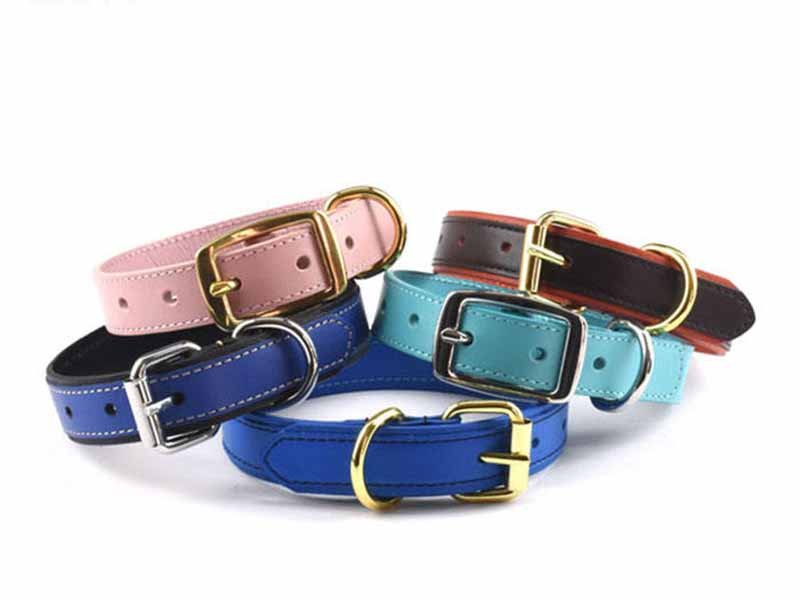
An outdoor leather dog collar is a collar designed for active, repeated, real-life use in changing environments. It needs to balance strength, comfort, weather resistance, and long-term structural stability. Compared with decorative leather collars, outdoor versions are built with more demanding material and production standards because they must continue performing under tension, moisture, abrasion, and exposure to sun and dirt.
What is a leather dog collar for outdoor use?
A leather dog collar for outdoor use is a functional pet product built for dogs that spend time walking, hiking, training, traveling, camping, or simply moving through everyday outdoor environments. Its purpose is not only to hold an ID tag or create a premium look. Its real purpose is to maintain control, comfort, and safety while facing repeated wear.
From a product development perspective, this means the collar must be designed around how the dog actually moves and how the owner actually uses it. A collar that works indoors or for occasional wear may not be suitable outdoors. Once a dog begins pulling during training, running through wet grass, or wearing the collar for long hours in heat and sun, weak points start to appear very quickly.
Outdoor collars usually require more attention in the following areas:
- Leather fiber strength
- Tear resistance around holes
- Tensile strength around buckle and D-ring areas
- Sweat and moisture handling
- Edge durability
- Neck comfort during long wear
- Corrosion resistance of metal parts
For many customers, the biggest mistake is assuming all leather dog collars serve the same purpose. In reality, there is a large difference between a gift-style leather collar and an outdoor-ready leather collar. The first may be made for visual appeal. The second has to be built like equipment.
This difference also affects manufacturing cost, material grade, and production control. A serious outdoor collar needs more than attractive leather. It needs the right structure, the right finish, and the right assembly method. That is why experienced factories such as SzoneierLeather focus on both material performance and construction details when developing custom leather pet products for brands and wholesalers.
What conditions must a leather dog collar handle?
Outdoor use creates much more stress than many product pages admit. The collar may only look like a small leather accessory, but in daily life it is under constant pressure. To manufacture a reliable product, the factory needs to understand exactly what the collar must endure.
The most common outdoor conditions include:
- Moisture: rain, splashes, puddles, wet grass, humidity, dog sweat
- Sunlight: UV exposure that can fade color and dry the leather surface
- Abrasion: friction from movement, sand, rocks, branches, or repeated rubbing against fur
- Pulling force: sudden tension when the dog jumps, turns, or resists the leash
- Temperature change: hot daytime weather and cooler evenings can affect leather flexibility
- Dirt and oils: natural body oils, dust, and outdoor debris can affect both appearance and finish
These are not rare conditions. They are normal conditions. That is why an outdoor collar cannot rely on appearance alone.
The table below shows what customers often expect versus what the product must actually handle in production:
| Use Situation | What the Customer Sees | What the Product Must Really Handle |
|---|---|---|
| Daily walks | A clean, premium collar | Repeated bending, sweat, leash tension |
| Hiking | Stylish outdoor gear | Mud, rocks, water, strong pulling |
| Training | Control and comfort | Frequent force at buckle and D-ring |
| Weekend travel | Durable pet accessory | Humidity, sunlight, long wear hours |
| Long-term use | Good value for money | Shape retention, edge stability, hardware durability |
This is why product testing and structural design matter. If the factory ignores real use conditions, the collar may still look good in bulk packaging but perform poorly after only a few weeks in the market.
For customers sourcing from China, this point matters a lot. Low-cost collars may save money at the start, but complaints about cracking, rust, peeling edges, or stretched holes can quickly erase that cost advantage. A more professional manufacturing approach reduces return rates, improves customer trust, and supports stronger repeat sales.
What makes a leather dog collar durable?
Durability comes from a combination of material quality, engineering logic, and factory execution. It is not enough to say a collar uses “real leather.” That phrase tells the customer very little. What really matters is what grade of leather is used, how thick it is, how it is finished, how the stress points are built, and how carefully the final assembly is checked.
A durable outdoor leather dog collar usually depends on these factors:
- Leather grade: full-grain and strong top-grain leathers generally perform better than lower-grade split materials
- Leather thickness: enough body to resist stretching and tearing, but not so much that the collar becomes stiff and uncomfortable
- Edge finishing: smooth, sealed edges help reduce cracking, fraying, and water intrusion
- Hole reinforcement: clean punching and correct spacing reduce tearing around adjustment holes
- Stitching quality: even stitching with suitable thread improves structural stability
- Hardware quality: stainless steel, brass, or quality-plated hardware helps resist rust and breakage
- Assembly accuracy: poor alignment at buckle and D-ring areas often leads to early failure
The table below gives a practical view of how different construction choices affect durability:
| Production Element | Lower-Quality Result | Better Manufacturing Result |
|---|---|---|
| Leather selection | Surface looks good, fibers weak | Dense fibers, better strength and lifespan |
| Thickness control | Too thin or inconsistent | Balanced strength and flexibility |
| Edge treatment | Rough, cracking edges | Smooth sealed edges, better wear resistance |
| Hardware choice | Rust, plating loss, weak welds | Corrosion resistance and stronger load performance |
| Stitching control | Loose thread, uneven seams | Stable structure and cleaner finish |
| Stress-point build | Holes stretch, hardware loosens | Better pull resistance and safer use |
In real production, durability is rarely about one dramatic feature. It is usually about many small decisions done correctly. A collar becomes reliable because the factory respects those details at every stage. This is where SzoneierLeather brings real value: strong raw material supply, product development capability, sampling experience, manufacturing control, and final quality inspection under one system. For customers developing an outdoor leather dog collar line, that integrated capability is a major advantage.
Which Leather Dog Collar Materials Work Best?
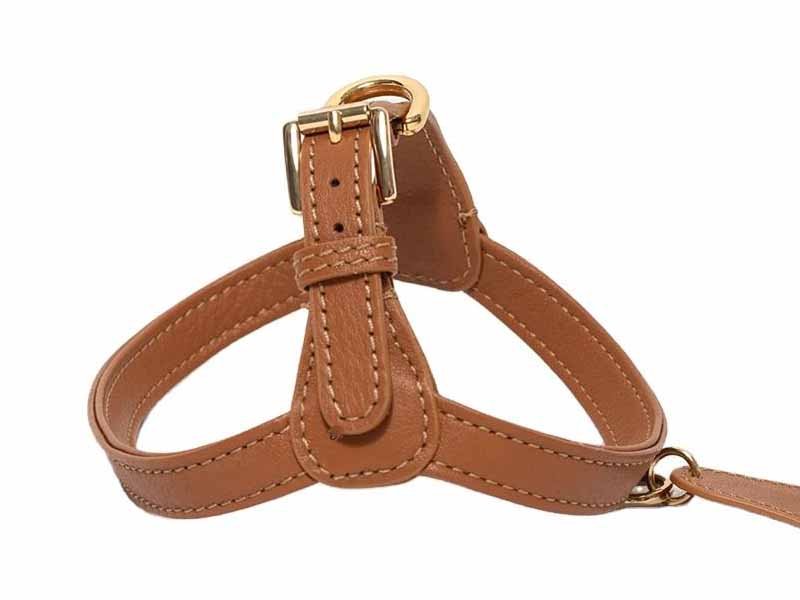
The best materials for an outdoor leather dog collar are those that offer a strong balance of tensile strength, flexibility, surface stability, comfort, and resistance to real outdoor wear. In most cases, full-grain leather and strong top-grain leather perform better than lower-grade materials. The right choice depends on the target price, dog size, expected use, and how much water, friction, and tension the collar will face.
Which leather dog collar type is strongest?
When customers ask which leather is strongest, the most practical answer is usually full-grain leather. It keeps the outermost layer of the hide, where the fibers are densest and strongest. Because that natural grain remains intact, the leather has better resistance to tearing, stretching, and long-term wear.
For outdoor dog collars, this matters because the product is constantly under tension. The buckle area, adjustment holes, and D-ring attachment all depend on the leather’s internal fiber strength. A surface that looks smooth in a catalog may still fail if the fiber structure underneath is weak.
Here is a practical comparison:
| Leather Type | Fiber Strength | Surface Durability | Outdoor Suitability | Price Level |
|---|---|---|---|---|
| Full-grain leather | Very high | Very high | Excellent | High |
| Top-grain leather | High | High | Very good | Medium to high |
| Split leather | Medium to low | Lower | Limited | Low |
| Bonded leather | Low | Low | Poor | Very low |
Full-grain leather is especially suitable for:
- Premium outdoor dog collars
- Heavy-duty collars for medium and large dogs
- Products sold at higher retail prices
- Brands that want long-term performance and stronger reputation
Top-grain leather can also be a good option when the customer wants a cleaner, more uniform look and slightly more flexibility in finishing. It may not have the same raw strength character as full-grain, but in controlled manufacturing it can still perform very well.
Lower-grade leather options may reduce cost, but customers should look carefully at the trade-off. Lower material cost often leads to lower product life, more complaints, and weaker perceived value in the market. For outdoor use, material quality should not be the first place to cut cost.
Which leather dog collar thickness is ideal?
Thickness is one of the most important details in leather dog collar manufacturing, but it should not be treated as “the thicker, the better.” The ideal thickness depends on dog size, collar width, leather type, intended use, and customer comfort expectations.
In practical development, outdoor collars often follow ranges like these:
| Dog Size | Common Collar Width | Common Leather Thickness | Suggested Use |
|---|---|---|---|
| Small dogs | 1.0–1.5 cm | 2.5–3.0 mm | Daily walks, light outdoor use |
| Medium dogs | 1.5–2.5 cm | 3.0–4.0 mm | General outdoor use, training |
| Large dogs | 2.5–4.0 cm | 4.0–5.0 mm | Strong pull, hiking, heavy-duty use |
These are useful guidelines, but good factories do not rely on thickness alone. They also look at:
- Leather density
- Softness after tanning
- Fold behavior
- Neck comfort
- Edge bulk after finishing
- Load performance at holes and buckle area
For example, a 4.0 mm leather strap made from low-density material may perform worse than a 3.5 mm strap made from stronger, denser leather. Likewise, a collar that is too thick may feel stiff, reduce comfort, and create a bulky look that customers do not like.
This is why sampling is important. Before bulk production, experienced manufacturers usually test different thickness combinations based on the target market. A premium fashion-outdoor collar may need a cleaner, smoother hand feel. A training collar may need more body and reinforcement. A large-dog collar may require both thickness and a wider strap to distribute force more safely around the neck.
For custom projects, SzoneierLeather can help customers evaluate thickness not only from a design point of view, but also from a durability, comfort, and production feasibility point of view. That makes the final product much more commercially stable.
Which leather dog collar finish resists water?
Leather is naturally porous, which means it does not love water by default. For outdoor use, the finish becomes extremely important. A good finish cannot make leather behave like plastic, but it can significantly improve water resistance, reduce surface damage, and help the collar stay flexible for longer.
The most common outdoor-oriented finish options include:
- Oil treatment
- Wax treatment
- Protective top coating
- Combination finish with conditioning and sealing
Each option has its own advantages and trade-offs.
| Finish Method | Water Resistance | Surface Feel | Appearance | Suitable For |
|---|---|---|---|---|
| Oil-treated | Good | Soft, rich | Natural | Premium casual outdoor collars |
| Wax-finished | Very good | Firmer | Vintage or rugged | Hiking and heavy-use styles |
| Top-coated finish | Good to very good | Smooth | Cleaner, more uniform | Commercial retail collections |
| Multi-layer finish | Very good | Balanced | Controlled premium look | Performance-focused products |
Customers should also understand an important point: more water resistance is not always better if it sacrifices too much natural feel. Some heavily sealed finishes improve water protection but reduce the leather’s breathable, premium character. The best result usually comes from balance.
A strong outdoor leather dog collar finish should help with:
- Light rain and splashes
- Slower moisture absorption
- Reduced surface staining
- Better flexibility after repeated wear
- Less risk of early cracking
For many customers, the smartest development route is to match the finish to the market position. If the collar is designed for premium boutique retail, a natural oil or wax finish may create a richer, more authentic leather character. If the collar is designed for broad commercial distribution, a cleaner and more controlled top-coated finish may provide better consistency across production.
This is where a factory with strong material development capability becomes valuable. SzoneierLeather does not only manufacture finished collars. It also works from the raw material side, helping customers evaluate the leather, surface finish, and performance match before moving into bulk production. That improves both product quality and development efficiency.
Which hardware materials match leather dog collar durability?
Many customers focus heavily on leather and forget that hardware failure can destroy the entire product. A strong leather strap with weak hardware is still a weak collar. For outdoor use, the buckle, D-ring, rivets, snaps, and adjustment parts must all be selected with performance in mind.
The most common hardware material options include:
| Hardware Material | Corrosion Resistance | Strength | Appearance | Cost Level |
|---|---|---|---|---|
| Stainless steel | Excellent | High | Clean, technical | High |
| Solid brass | Very good | High | Warm, premium | Medium to high |
| Zinc alloy with plating | Moderate | Medium | Flexible styling | Medium |
| Low-grade alloy | Low | Low to medium | Acceptable at first | Low |
For outdoor collars, stainless steel and solid brass are usually safer long-term choices, especially for products expected to face moisture and repeated pulling.
Customers should pay close attention to:
- Weld quality on D-rings
- Buckle pin stability
- Surface finish consistency
- Plating adhesion
- Rivet firmness
- Matching hardware size to strap width and dog size
For example, a large-dog collar may need a much stronger D-ring thickness than a small-dog fashion collar. Using the same hardware logic across all sizes can create serious performance risks.
In custom development, hardware should be tested together with the leather strap, not separately. The entire product must function as one unit. That integrated thinking is essential for a real outdoor product line.
How Is a Leather Dog Collar Made?
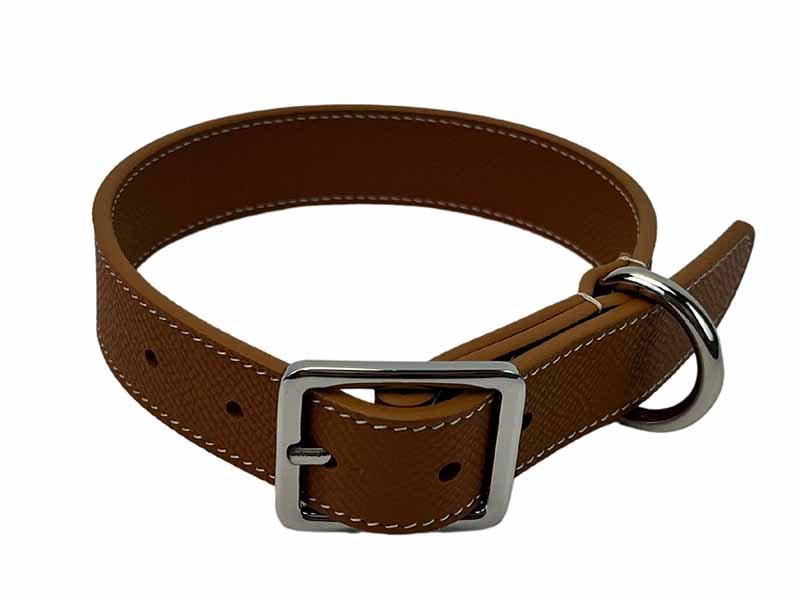
A leather dog collar for outdoor use is made through a controlled process that combines material preparation, precision cutting, reinforced construction, hardware installation, and multiple quality checks. Each step directly affects the collar’s strength, comfort, and long-term performance. A well-managed production process ensures the product remains consistent across bulk orders and performs reliably in real outdoor conditions.
How is leather dog collar leather prepared?
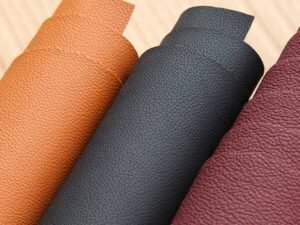
The process begins with raw leather selection and preparation. This stage determines up to 60–70% of the final product performance. If the leather quality is not correct at the beginning, no later process can fully fix it.
The preparation stage includes:
- Raw hide selection: choosing hides with fewer scars, balanced thickness, and strong fiber density
- Tanning process: vegetable tanning or chrome tanning depending on product positioning
- Moisture control: stabilizing the leather to prevent shrinkage or deformation
- Surface finishing: oiling, waxing, or coating based on outdoor performance needs
- Splitting and thickness control: ensuring consistent thickness across the strap
Key technical focus points during preparation:
| Process Step | Risk if Poorly Controlled | Correct Approach |
|---|---|---|
| Hide selection | Weak spots, uneven strength | Use high-density, clean hides |
| Tanning | Leather too stiff or too soft | Balance flexibility and strength |
| Moisture control | Warping or cracking later | Stabilize before cutting |
| Thickness splitting | Inconsistent feel and strength | Precision thickness control |
For outdoor collars, leather is often treated with oils or waxes to improve flexibility and resistance to moisture. This step must be controlled carefully. Too much oil can weaken structure; too little can make the leather dry and prone to cracking.
Factories like SzoneierLeather typically test multiple leather batches before confirming production materials, especially for custom orders where performance expectations are higher.
How is a leather dog collar cut and stitched?
Once the leather is prepared, the next step is cutting and shaping the collar strap. This stage directly affects product consistency and appearance.
There are two main cutting methods:
- Manual cutting: flexible, suitable for small batch or custom shapes
- Die cutting (mold cutting): high consistency, better for bulk production
After cutting, the edges are processed. This includes:
- Edge trimming
- Edge sanding
- Edge painting or burnishing
- Edge sealing
Edge finishing is critical for outdoor collars. Poor edge work often leads to cracking, peeling, or water penetration.
Next comes stitching and structural reinforcement. Not all collars require stitching, but for outdoor use, stitching significantly improves durability.
Common stitching methods:
| Stitch Type | Strength Level | Application |
|---|---|---|
| Single stitching | Medium | Light-use collars |
| Double stitching | High | Outdoor collars |
| Saddle stitching | Very high | Premium handmade collars |
Reinforcement techniques may include:
- Stitching + rivet combination
- Folded leather construction
- Extra leather layers at stress points
The most important areas to reinforce are:
- Buckle attachment area
- D-ring area
- First and last adjustment holes
These points receive the highest pulling force during use. A failure here often leads to product returns or safety issues.
How is leather dog collar hardware added?
Hardware installation is where the collar becomes a functional product. Even if the leather is strong, poor hardware installation can quickly lead to failure.
The main hardware components include:
- Buckle
- D-ring (for leash attachment)
- Rivets or screws
- Decorative accessories (optional)
Installation steps:
- Hole punching for buckle and rivets
- Positioning of hardware
- Riveting or screwing
- Alignment check
- Strength testing
Key technical concerns:
| Component | Common Problem | Better Solution |
|---|---|---|
| Buckle | Pin bending or loosening | Use thicker, tested metal |
| D-ring | Weld breakage | Use seamless welded rings |
| Rivets | Loosening over time | Use high-pressure setting |
| Screws | Falling off | Add thread-locking treatment |
For outdoor collars, hardware must be matched to the dog size and collar width. A mismatch between leather strength and hardware strength is a common mistake in low-cost production.
For example:
- A 5 mm thick leather strap with a weak zinc alloy D-ring will fail under strong pulling
- A wide collar with a small buckle creates uneven stress distribution
Professional manufacturers like SzoneierLeather test hardware together with the full collar assembly, not just as individual components.
How are leather dog collars tested before shipment?
Testing is one of the most overlooked but most important steps. A collar that looks perfect can still fail under real use if it is not properly tested.
Common testing methods include:
- Tensile strength testing (pull force test)
- Flex testing (repeated bending simulation)
- Moisture exposure testing
- Hardware corrosion testing
- Visual inspection and finishing check
Here is a simplified testing reference:
| Test Type | Purpose | Expected Result |
|---|---|---|
| Pull test | Check breaking strength | No tearing or hardware failure |
| Flex test | Check long-term use | No cracking or deformation |
| Water exposure | Check moisture resistance | Minimal absorption, no damage |
| Corrosion test | Check hardware durability | No rust or coating damage |
| Visual inspection | Check finishing quality | Clean, consistent appearance |
For outdoor leather dog collars, pull strength is especially important. A medium to large dog can easily generate force above 50–100 kg during sudden movement. The collar must be able to handle this without failure.
Factories with strong quality control systems, such as SzoneierLeather, typically perform multiple inspection stages:
- Raw material inspection
- In-line production inspection
- Final product inspection before packaging
This multi-stage control helps reduce defect rates and ensures consistency across bulk orders.
What Features Improve a Leather Dog Collar?
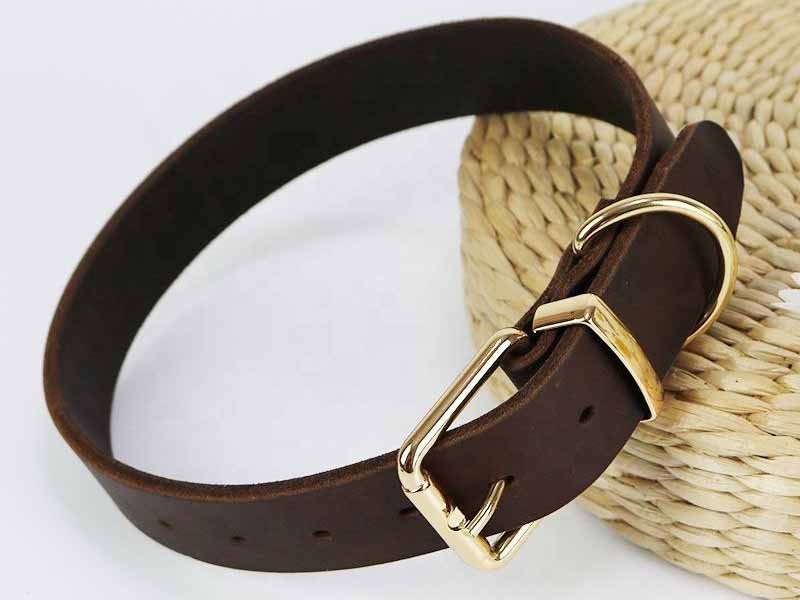
A high-quality outdoor leather dog collar is not only about material and production. It also depends on design features that improve performance, safety, and user experience. These features directly influence customer satisfaction, product lifespan, and brand reputation.
What makes a leather dog collar waterproof?
Leather is not naturally waterproof, but its resistance to water can be significantly improved through treatment and design.
Key waterproofing approaches include:
- Oil infusion into leather fibers
- Wax-based surface protection
- Protective coating layers
- Sealed edges to prevent water entry
The goal is not to make leather behave like plastic, but to:
- Slow down water absorption
- Maintain flexibility after exposure
- Reduce surface damage
Performance comparison:
| Treatment Type | Water Resistance | Flexibility | Natural Feel |
|---|---|---|---|
| Untreated leather | Low | Medium | Natural |
| Oil-treated leather | Medium | High | Very natural |
| Wax-treated leather | High | Medium | Slightly firm |
| Coated leather | High | Medium to low | Less natural |
For outdoor collars, oil + wax combination is often the most balanced solution. It provides enough protection while maintaining a premium leather feel.
What makes a leather dog collar stronger?
Strength comes from both material and structure. Even strong leather can fail if the design does not distribute force correctly.
Important strength features include:
- Double-layer leather construction
- Reinforced stitching
- Riveted stress points
- Wider strap design for large dogs
Force distribution is critical. A narrow collar concentrates pressure, while a wider collar spreads it more evenly across the dog’s neck.
Example:
| Collar Width | Force Distribution | Suitable For |
|---|---|---|
| Narrow (1–1.5 cm) | High pressure | Small dogs |
| Medium (2–3 cm) | Balanced | Medium dogs |
| Wide (3–5 cm) | Lower pressure | Large dogs |
Another important factor is hole design. Poorly spaced or weak holes can tear easily. Reinforced hole punching improves durability significantly.
What makes a leather dog collar comfortable?
Comfort is often underestimated, but it directly affects whether the customer continues using the product.
Key comfort features include:
- Smooth edge finishing
- Soft inner lining (optional)
- Flexible leather structure
- Proper thickness balance
- Rounded edges to reduce friction
Comfort vs durability balance:
| Feature | Too Soft Result | Balanced Result | Too Hard Result |
|---|---|---|---|
| Leather softness | Weak structure | Comfortable & strong | Uncomfortable |
| Thickness | Too thin, weak | Durable & flexible | Too stiff |
| Edge finish | Rough irritation | Smooth wear | Hard edges |
For premium outdoor collars, some brands add:
- Padded lining (neoprene or soft leather)
- Ergonomic shaping
- Adjustable fit design
A comfortable collar increases usage time and reduces complaints, especially for dogs that wear collars all day.
What design details improve safety and usability?
Beyond strength and comfort, small design details can greatly improve real-world usability.
Important features include:
- Quick-adjust holes for better fit
- Secure buckle design to prevent slipping
- Strong D-ring placement for leash stability
- Reflective elements for night visibility
- Engraved nameplates or ID holders
These features help the product perform better in real situations:
- Easier for owners to adjust
- Safer during walks and training
- More visible in low-light conditions
From a commercial perspective, these features also increase product value and differentiation. Customers are more likely to choose a collar that offers both durability and practical convenience.
Factories like SzoneierLeather often support custom design development, allowing brands to combine performance features with their own branding style, packaging, and positioning strategy.
How to Choose a Leather Dog Collar Manufacturer?
Choosing the right leather dog collar manufacturer directly affects product quality, delivery reliability, brand reputation, and long-term business growth. For outdoor leather dog collars, the requirements are even higher because the product must perform under real conditions, not just look good in photos. A professional manufacturer should offer strong material control, stable production capability, flexible customization, and consistent quality across orders.
How to evaluate leather dog collar quality?
Evaluating quality should go beyond visual inspection. Many collars look similar at first glance, but differences become clear after testing and real use. A structured evaluation approach helps buyers avoid common sourcing mistakes.
Key evaluation points include:
- Leather performance
- Is the leather dense and strong or soft and loose?
- Does it show natural grain or artificial surface coating?
- Does it crack after bending?
- Edge finishing quality
- Are edges smooth and sealed?
- Is there peeling after light scratching?
- Stitching consistency
- Are stitches evenly spaced?
- Is the thread tight and durable?
- Hardware reliability
- Does the buckle feel solid?
- Is the D-ring welded securely?
- Is there any early sign of rust or coating damage?
- Structural strength
- Does the collar hold shape under tension?
- Are stress points reinforced properly?
A simple but effective evaluation method is to request samples and perform basic testing:
| Test Method | What to Check | Good Result |
|---|---|---|
| Hand bending | Flexibility and surface behavior | No cracking or stiffness |
| Pull test | Strength at buckle and holes | No tearing or deformation |
| Water drop test | Surface absorption | Slow absorption, no staining |
| Scratch test | Surface durability | Minimal marks |
Buyers who skip these checks often face problems later, such as returns, negative reviews, or inconsistent product batches.
A reliable manufacturer like SzoneierLeather usually supports sample development and testing before bulk production, allowing customers to confirm product performance early.
How to customize a leather dog collar?
Customization is one of the most important reasons brands work with a professional factory. A good manufacturer should not only produce standard designs but also support product development based on brand positioning and market needs.
Common customization options include:
1. Material customization
- Full-grain, top-grain, or special leather types
- Thickness adjustment based on dog size
- Different finishes (oil, wax, coated)
2. Size and structure customization
- Collar width and length
- Strap layering or reinforcement
- Padding or lining options
3. Hardware customization
- Material (stainless steel, brass, alloy)
- Shape and size of buckle and D-ring
- Custom colors or plating
4. Branding customization
- Debossed or embossed logos
- Metal logo plates
- Laser engraving
- Printed logos
5. Packaging customization
- Individual packaging (box, bag, sleeve)
- Brand labels and tags
- Instruction cards
Here is a structured overview:
| Custom Area | Options | Impact on Product |
|---|---|---|
| Leather | Type, thickness, finish | Performance & appearance |
| Structure | Width, layering, padding | Comfort & strength |
| Hardware | Material, size, finish | Durability & style |
| Branding | Logo methods | Brand recognition |
| Packaging | Boxes, tags, inserts | Customer experience |
For B2B customers, customization is not just about appearance. It directly affects pricing, positioning, and competitiveness in the market.
SzoneierLeather supports full customization from raw material development to final packaging, helping clients build complete product lines rather than single items.
How to control cost without lowering quality?
One of the biggest challenges for buyers is balancing cost and quality. Lower price is attractive, but cutting cost in the wrong areas can damage the product and brand reputation.
Instead of simply choosing the cheapest supplier, experienced buyers focus on cost efficiency, not just price.
Smart cost control strategies include:
- Optimizing material selection Use top-grain instead of full-grain when appropriate
- Adjusting thickness carefully Avoid unnecessary over-thickness that increases cost
- Standardizing hardware Use common sizes and finishes to reduce sourcing cost
- Improving production efficiency Larger order quantities often reduce unit cost
- Simplifying packaging when possible Focus on function instead of over-designed packaging
Cost vs quality comparison:
| Approach | Short-Term Cost | Long-Term Result |
|---|---|---|
| Lowest price supplier | Low | High risk of complaints |
| Balanced material + design | Medium | Stable sales & fewer returns |
| Premium material only | High | Higher positioning, higher price |
For outdoor leather dog collars, cutting cost in these areas is risky:
- Leather quality
- Hardware strength
- Stitching reinforcement
These are core performance factors. Reducing cost here often leads to product failure.
A factory like SzoneierLeather helps customers find the right balance by offering multiple material and construction options based on target price and market positioning.
How does SzoneierLeather make leather dog collars better?
SzoneierLeather brings a complete manufacturing system that supports both product performance and business growth. With over 18 years of experience in leather product development and production, the company focuses on delivering stable, customizable, and scalable solutions for global clients.
Key advantages include:
1. Strong raw material supply chain
- Direct access to high-quality leather sources
- Ability to control leather quality from the beginning
- Flexible material options for different markets
2. Integrated product development
- In-house design and sampling team
- Fast sample turnaround
- Ability to refine products based on testing feedback
3. Stable manufacturing capability
- Experienced production teams
- Consistent quality across bulk orders
- Ability to handle both small MOQ and large-scale production
4. Full customization support
- Material, size, hardware, logo, and packaging customization
- Support for private label and OEM/ODM projects
5. Multi-stage quality control
- Raw material inspection
- In-line production checks
- Final inspection before shipment
6. Efficient communication and service
- Clear project follow-up
- Fast response time
- Understanding of international market standards
Here is a summary:
| Capability | SzoneierLeather Advantage |
|---|---|
| Material control | Strong sourcing and selection |
| Product development | Fast sampling and design support |
| Manufacturing | Stable, scalable production |
| Customization | Full OEM/ODM capability |
| Quality control | Multi-stage inspection system |
| Service | Professional and responsive |
For buyers, this means fewer risks, better product consistency, and smoother long-term cooperation.
Start Your Custom Leather Dog Collar Project with SzoneierLeather
If you are developing or expanding a leather dog collar product line for outdoor use, choosing the right manufacturing partner is one of the most important decisions you will make. A reliable factory does more than produce goods—it helps you build a product that performs well, represents your brand, and wins repeat customers.
Whether you are launching a new pet product line or upgrading your current collection, working with a professional manufacturer can significantly improve your results in the market.
You can start by:
- Sending your design or idea
- Requesting material recommendations
- Asking for samples
- Discussing target price and quantity
The next step is simple—reach out to SzoneierLeather and begin building a leather dog collar that is truly made for outdoor performance, not just appearance.