
Custom Leather Journal Manufacturer in China
A well-made leather journal is more than just a notebook. It combines material durability, thoughtful design, and precise craftsmanship. For brands, corporate gift suppliers, publishers, and stationery companies, the quality of the leather journal directly reflects the value of their brand.
Szoneier Leather is a Shenzhen-based leather goods manufacturer specializing in the development and production of leather accessories and custom leather products. With 18+ years of manufacturing experience, our team supports global clients in creating custom leather journals with reliable quality and stable production capacity.
- 18+ years leather goods manufacturing experience
- Low MOQ starting from 20 pcs • Fast sampling 5–7 days
- Production lead time 25–30 days
- Support custom leather and synthetic leather materials
- Global logistics available (Express / Air / Sea)
About Szoneier Leather
An Experienced Leather Goods Manufacturer in Shenzhen
Szoneier Leather is a leather goods manufacturing company based in Shenzhen, Guangdong, China. The company focuses on the development and production of leather accessories and custom leather products for global brands, retailers, and businesses.
Over the past 18+ years, Szoneier has built a stable manufacturing network that integrates product design, sampling, production, and quality control. Our team works with clients from many different industries to develop leather goods that combine reliable craftsmanship with scalable manufacturing.
Today, Szoneier Leather supports customers from North America, Europe, Australia, and Asia, producing a wide range of leather products including journals, bags, accessories, and other custom leather items.
Our Manufacturing Structure
Szoneier operates with a collaborative manufacturing system located within the Guangdong manufacturing region, one of the most established production areas for leather goods and accessories.
Our production capabilities include:
- product design and development team
- sample workshop and pattern room
- leather cutting and stitching production lines
- quality inspection department
- packaging coordination with partner factories
Because Shenzhen is located close to many material suppliers, Szoneier can efficiently coordinate the supply chain for leather products.
Our partner factories provide materials such as:
- genuine leather
- PU leather
- microfiber leather
- polyester fabrics
- nylon fabrics
- canvas
- neoprene materials
- PVC / TPU / EVA materials
This integrated supply network allows us to manufacture not only leather journals but also many other leather accessories and textile-based products.
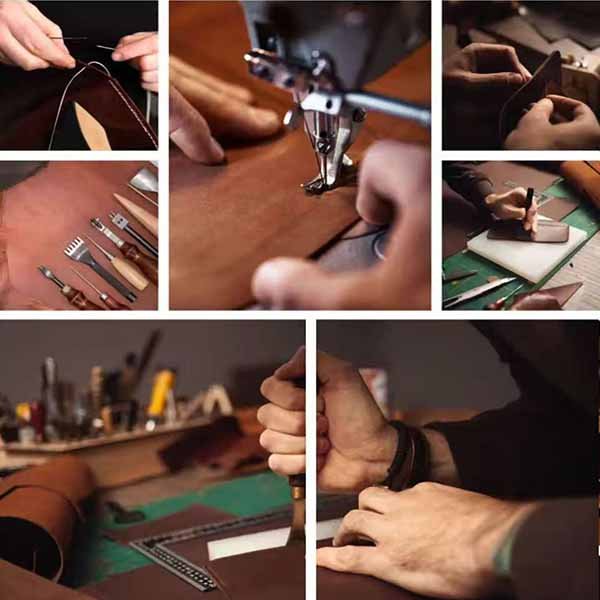
Product Development Experience
Szoneier has spent many years working with international clients developing customized leather products. Many projects begin with only a basic concept, and our product team helps turn those ideas into manufacturable designs.
Our development support includes:
- material selection
- structural design
- logo placement evaluation
- sample development
- packaging coordination
Most leather product samples can be developed within 5–7 days, allowing clients to evaluate the design before starting mass production.
Because we manage our own sampling workshop, the development process is usually faster and easier to adjust when changes are required.
Production Capacity and Order Flexibility
One of the advantages of working with Szoneier Leather is the ability to support different order scales.
We regularly work with:
- new brands launching their first products
- established stationery brands expanding product lines
- corporate gift companies producing event merchandise
- e-commerce businesses developing private label products
Our production system allows us to accept orders starting from 20 pieces, which is helpful for small product launches and product testing.
For larger projects, production capacity can scale to thousands of units per order while maintaining consistent quality standards.
Typical production lead time is 25–30 days after sample approval.
Quality Control System
Quality consistency is essential for leather products. At Szoneier, every order follows a structured quality control process.
Inspection stages include:
- raw material inspection
- in-process production checks
- final product inspection before packaging
Leather thickness, stitching consistency, and logo placement are all checked carefully before shipment.
For many projects we perform 100% inspection before products are packed and shipped, helping ensure the goods delivered to clients match the approved sample.
Communication and Project Support
Szoneier places strong emphasis on clear communication with clients throughout the production process.
Our sales and development teams communicate with clients through:
- video calls
- voice calls
All communication is handled in fluent English, which helps reduce misunderstandings during product development and production.
Clients can also request video factory tours or visit our workshop in Shenzhen to see the manufacturing process.
Global Logistics and Payment Options
Szoneier Leather supports multiple logistics methods depending on project size and delivery schedule.
Available shipping options include:
- international express courier
- air freight
- sea freight
Clients can choose trade terms such as:
- EXW
- FOB
- DAP
- DDP
Payment methods supported include:
- PayPal
- credit card
- bank transfer (T/T)
- Alibaba Trade Assurance
- Alipay
- Western Union
This flexibility allows clients from different regions to choose the payment and logistics solutions that best suit their business operations.
Long-Term Manufacturing Partnerships
Many clients who begin with small development projects later continue working with Szoneier as their product lines grow.
Because our company combines product development capability, flexible production capacity, and stable supply chain resources, we are able to support long-term partnerships with brands that require reliable manufacturing.
Whether the project involves launching a new leather journal product or expanding an existing stationery line, the Szoneier team works closely with clients to ensure the final products meet both quality expectations and market requirements.
Industries and Clients We Serve
Global Clients Who Source Leather Journals from Szoneier
Leather journals are widely used across many industries. Over the past 18+ years, Szoneier Leather has worked with a variety of international clients developing custom leather stationery and accessories.
Our flexible production capacity allows us to support both small creative brands and larger commercial projects.
Stationery and Notebook Brands
Many stationery brands develop leather journals as part of their product lines.
These products are commonly sold through:
- bookstore chains
- stationery retailers
- lifestyle shops
- online marketplaces
Leather journals are often positioned as premium writing tools that complement paper notebooks.
Corporate Gift Companies
Corporate gifting is another large market for leather journals. Companies often customize journals with their logo and use them for:
- conference gifts
- company anniversary gifts
- client appreciation gifts
- executive gifts
These projects usually involve custom logo branding and gift box packaging.
E-Commerce Brands
Many online brands selling through platforms such as Amazon, Shopify, and independent websites develop leather journals as lifestyle products.
These brands often focus on:
- minimalist design
- refillable journal systems
- travel notebooks
Small order quantities and flexible customization make it easier for new brands to launch products.
Travel and Outdoor Brands
Travel brands sometimes include leather journals as part of travel kits or lifestyle accessories.
Travel journals are commonly designed with features such as:
- strap closures
- refillable inserts
- card pockets
These features make them practical for travelers who want to record experiences during trips.
Educational and Creative Markets
Leather journals are also used by:
- artists
- writers
- designers
- students
Sketch journals with thicker paper are particularly popular among creative users.
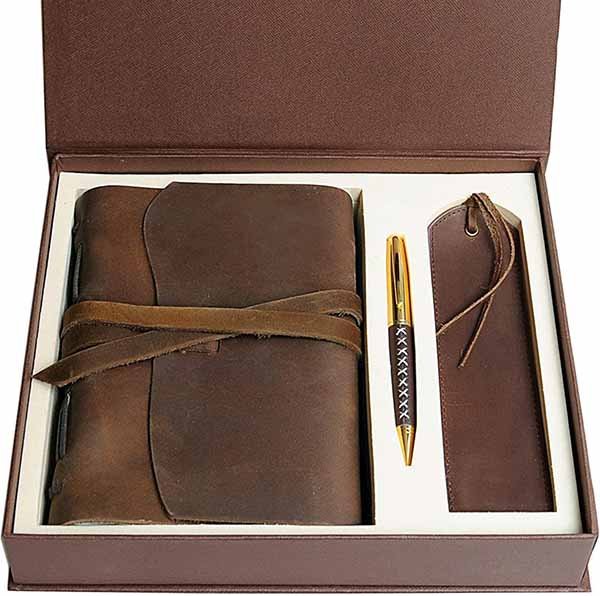
Different industries require different materials, structures, and branding approaches.
Our team helps you define the right leather journal solution based on your target market, price level, and sales channel.
Types of Leather Journals We Manufacture
Custom Leather Journal Styles Developed by Szoneier
Leather journals are widely used across many industries including stationery brands, lifestyle retailers, travel brands, corporate gift companies, and e-commerce businesses.
Different markets require different journal styles, structures, and materials. Szoneier Leather has produced a wide range of leather journals with varying cover constructions, closure systems, and internal notebook formats.
Below are some of the most common leather journal styles we manufacture.
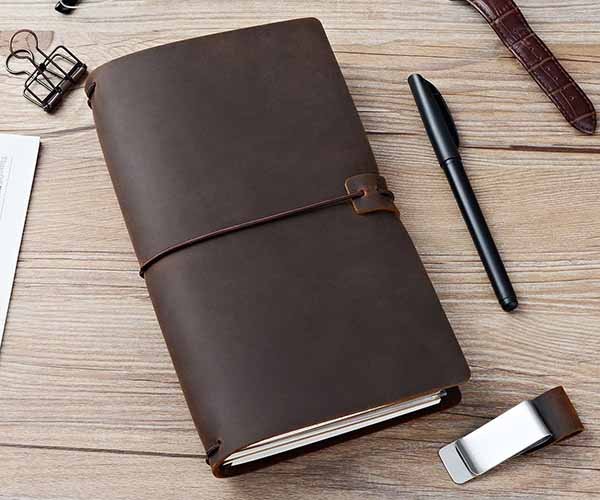
Refillable Leather Journals
Refillable leather journals are one of the most popular designs in the stationery market. Instead of replacing the entire notebook, users can simply replace the internal paper insert while keeping the leather cover.
Typical features include:
- elastic insert system
- leather sleeve notebook holder
- ring binder system
- replaceable A5 or A6 notebook inserts
Refillable journals are commonly used by:
- travel brands
- productivity notebook brands
- lifestyle stationery companies
At Szoneier, refillable journals are often produced in A5 size, which accounts for nearly 60% of refillable journal projects we manufacture.
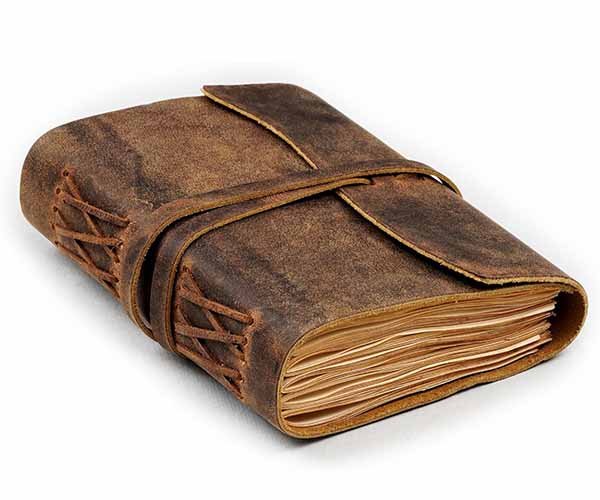
Vintage Leather Journals
Vintage-style journals are designed with a rustic or distressed appearance. These products often use materials such as crazy horse leather or vegetable tanned leather, which develop a unique patina over time.
Typical design elements include:
- distressed leather texture
- wrap strap closure
- antique metal lock
- hand-style stitching appearance
These journals are commonly sold through:
- gift shops
- bookstores
- artisan markets
- online lifestyle stores
Vintage journals often use leather thickness between 1.6–2.2 mm, which provides a more rugged appearance and longer durability.
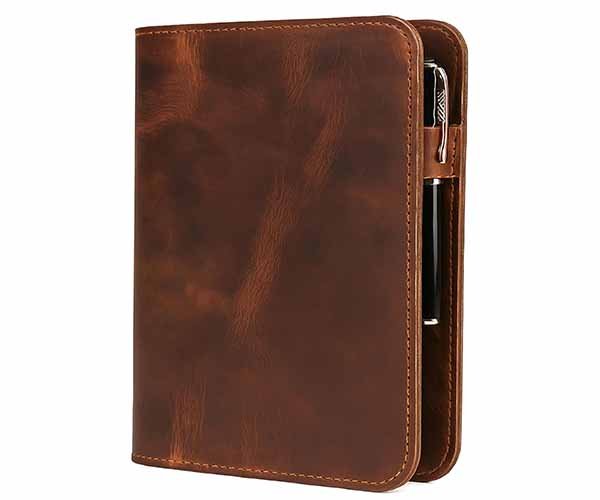
Executive Leather Planners
Executive leather planners are designed for professional office use and corporate gifting. These journals often feature a more structured design with clean lines and refined branding.
Common features include:
- structured hardcover leather cover
- debossed or foil stamped logo
- pen holder loop
- card pockets
- ribbon bookmark
Corporate planners are frequently ordered by companies for:
- conferences
- leadership events
- corporate gifts
Many executive journals are produced with PU leather covers because the material allows stable color matching and consistent logo stamping.
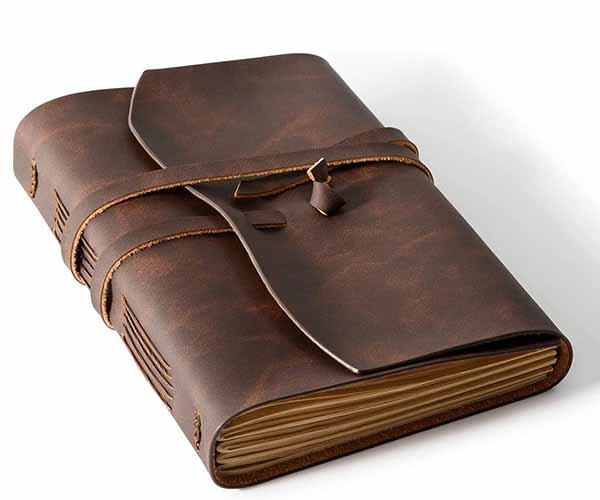
Travel Leather Journals
Travel journals are designed for people who want to document experiences during trips. These journals often combine writing space with small storage features.
Typical features include:
- strap or elastic closure
- refillable notebook inserts
- card pockets for tickets or receipts
- passport pocket
Travel journals are especially popular among brands that sell:
- travel accessories
- adventure gear
- lifestyle products
The leather cover thickness is usually 1.2–1.6 mm, balancing flexibility with durability.
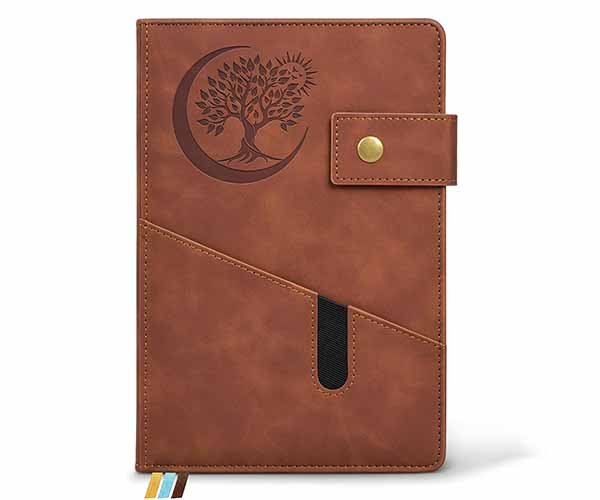
Leather Sketch Journals
Sketch journals are designed for artists and designers who require thicker paper and flat-opening notebook structures.
Common characteristics include:
- larger notebook sizes (B5 or A4)
- thick interior paper (120–160 gsm)
- flexible leather covers
- lay-flat binding systems
Sketch journals are often used by:
- art supply brands
- design schools
- creative professionals
These journals usually require wider spine structures to accommodate thicker paper.
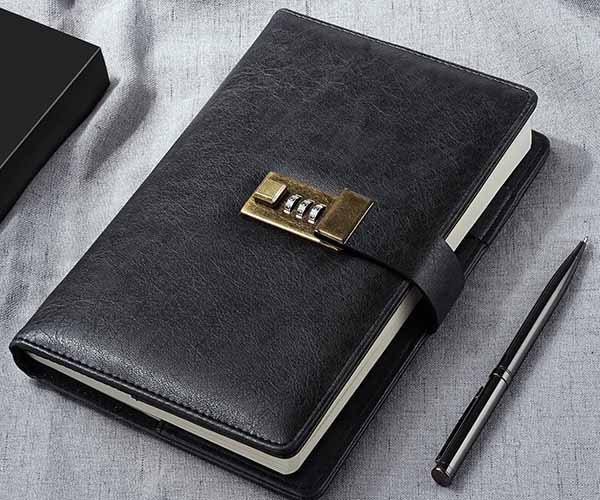
Leather Diary with Lock
Lockable leather diaries are often positioned as personal writing journals or gift items. These products are especially popular in the gift market.
Typical features include:
- antique metal lock closure
- vintage leather cover
- handmade style stitching
- decorative metal corners
Hardware components such as locks and corner protectors are sourced from stable suppliers in Guangdong to ensure consistent plating quality and durability.
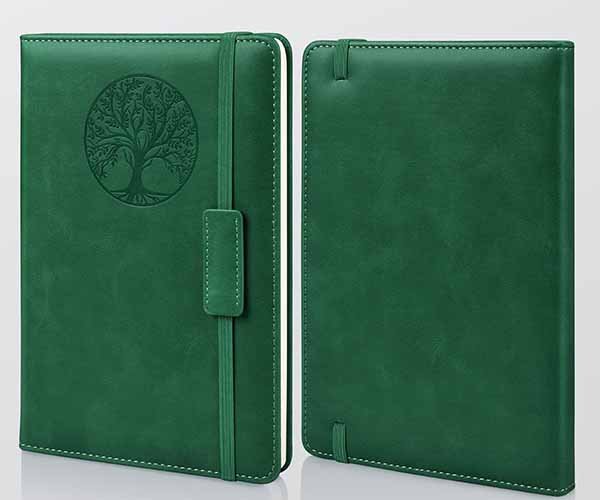
Elastic Closure Leather Journals
Elastic band journals use a stretch band to secure the notebook when closed. This design is simple, reliable, and widely used across the stationery market.
Advantages include:
- lightweight construction
- easy opening and closing
- modern minimalist appearance
Elastic closure journals are commonly used by brands selling through:
- bookstore chains
- office supply stores
- online retail platforms
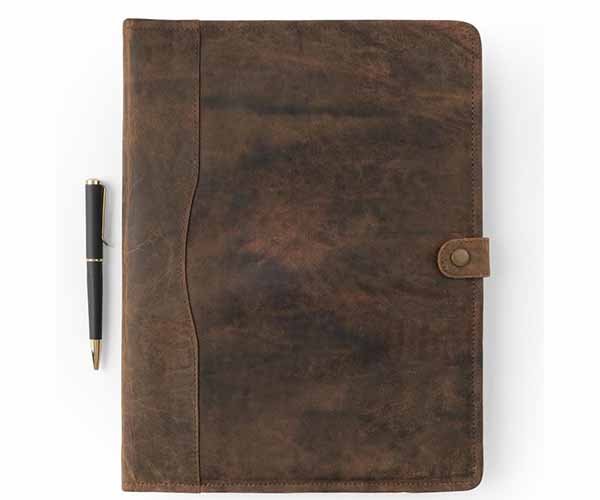
Leather Portfolio Journals
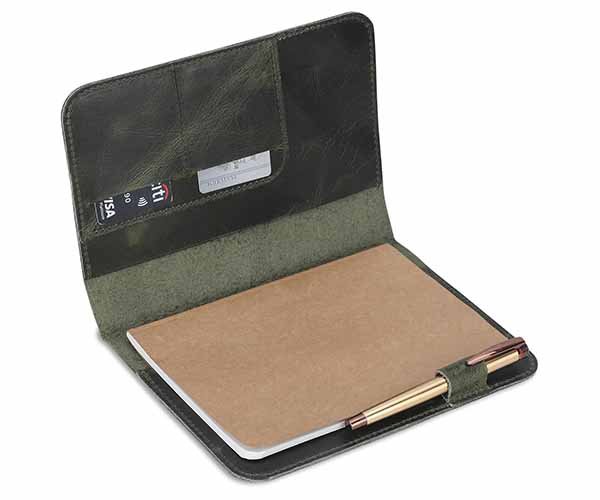
Portfolio journals combine a notebook with document storage. These products are often used by professionals who need to carry notes and documents together.
Common features include:
- document pockets
- business card slots
- pen holders
- removable notebook inserts
Portfolio journals are widely used in business environments and conference settings.
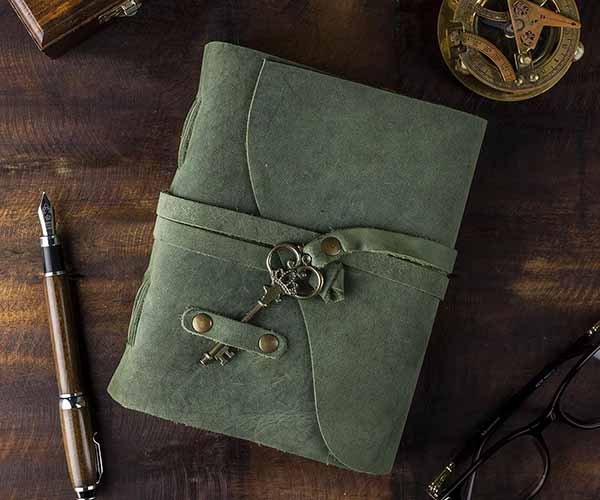
Handmade Style Leather Journals
Some brands prefer a handmade aesthetic even when products are produced in small-scale factory environments.
These journals may include design features such as:
- visible saddle-style stitching
- burnished leather edges
- thicker leather materials
- wrap strap closures
Although the journals are manufactured using professional equipment, the design creates a handcrafted visual identity.
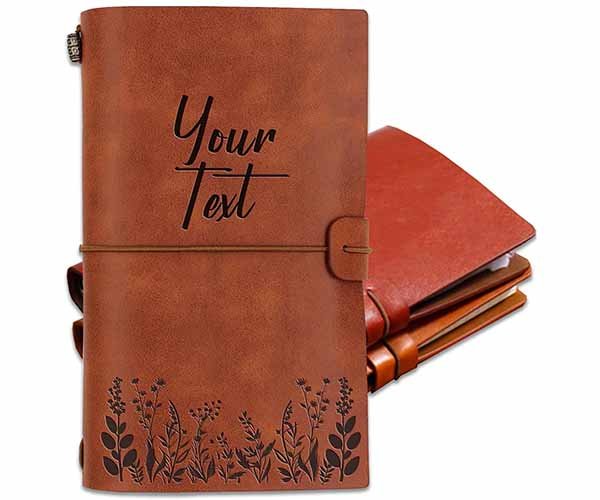
Custom Leather Journal Designs
In addition to standard styles, Szoneier frequently develops fully customized leather journals based on client requirements.
Customization options include:
- unique cover shapes
- custom interior layouts
- special hardware components
- combination materials such as leather + canvas
| Journal Type | Description | Common Usage |
|---|---|---|
| Refillable Leather Journal | Leather cover with replaceable notebook inserts | Travel brands, productivity planners |
| Vintage Leather Journal | Distressed leather surface with rustic style | Lifestyle brands |
| Executive Leather Planner | Structured leather notebook designed for office professionals | Corporate gifts |
| Travel Leather Journal | Compact journal for travel writing | Travel brands |
| Sketch Leather Notebook | Thick pages suitable for drawing and sketching | Artists |
| Leather Diary with Lock | Classic diary with antique lock closure | Gift market |
| Elastic Strap Journal | Leather cover secured with elastic band | Minimalist brands |
| Ring Binder Leather Journal | Binder style with removable pages | Productivity systems |
| Leather Portfolio Notebook | Notebook integrated with document pockets | Business use |
| Handmade Leather Journal | Hand stitched journals with artisan look | Premium niche markets |
Szoneier has experience producing leather journals in different sizes, paper formats, and closure styles, which allows clients to develop products that match their target market positioning.
Typical Market Applications
Leather journals are commonly sold through:
- bookstore chains
- stationery retailers
- gift shops
- e-commerce platforms
- corporate promotional campaigns
- conference merchandise
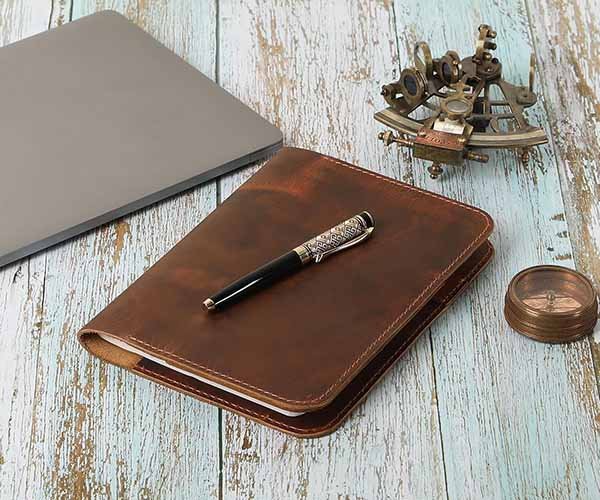
From refillable systems to vintage covers and executive planners, we help you define structure, materials, and functional details for real production.
Leather Journal Structure & Product Details
The durability and usability of a leather journal depend on several structural elements. At Szoneier, our product development team evaluates each component carefully to ensure long-term performance.
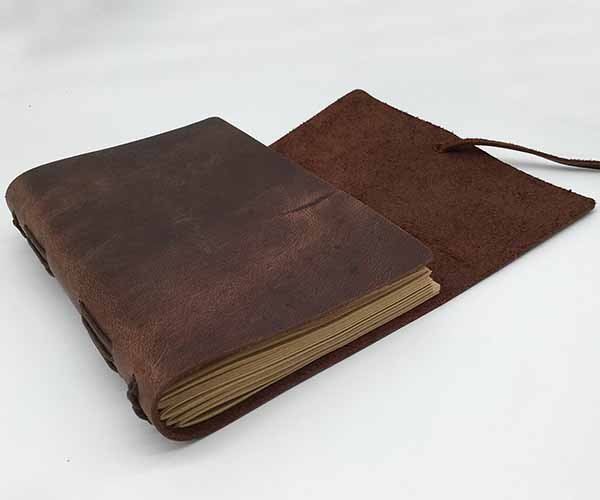
Leather Cover Structure
Leather journals can be designed with different cover constructions depending on the desired appearance and price level.
| Cover Type | Characteristics |
|---|---|
| Full Leather Wrap | Entire notebook wrapped in leather |
| Leather Sleeve Cover | Leather cover holds removable notebook |
| Leather + Board Reinforcement | Structured hardcover journal |
| Soft Leather Cover | Flexible minimalist journal |
Structured journals typically include an internal cardboard reinforcement layer to maintain shape and prevent bending.
Binding Systems
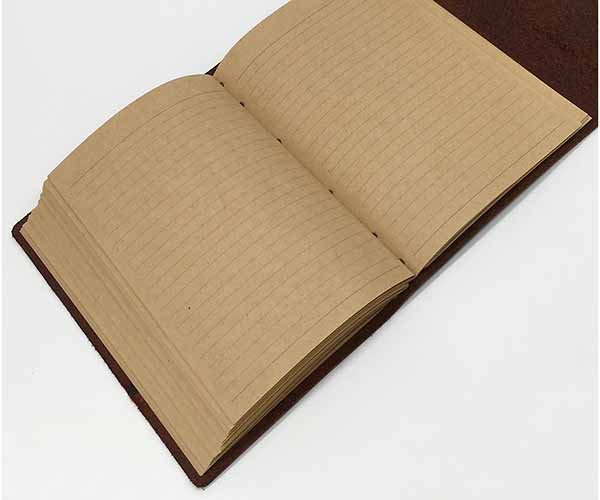
The binding method determines the durability of the journal and how easily pages can be replaced.
| Binding Type | Durability | Usage |
|---|---|---|
| Smyth Sewn Binding | Very durable | Premium journals |
| Perfect Binding | Standard durability | Retail notebooks |
| Ring Binder | Replaceable pages | Planner systems |
| Elastic Insert Binding | Modular inserts | Travel journals |
For premium leather journals, Smyth sewn binding is often preferred because it allows the notebook to open flat while maintaining strong page durability.
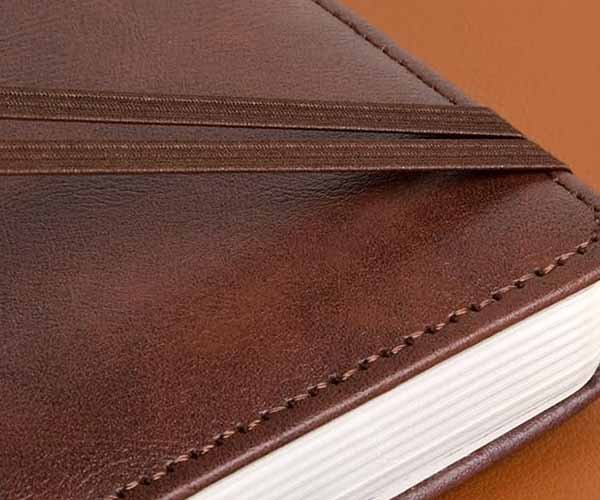
Closure Systems
Leather journals may include several closure styles depending on product design.
Common closure options include:
- elastic band closure
- leather strap wrap
- magnetic snap
- antique metal lock
- button strap
Each closure type provides a different aesthetic and functional experience.
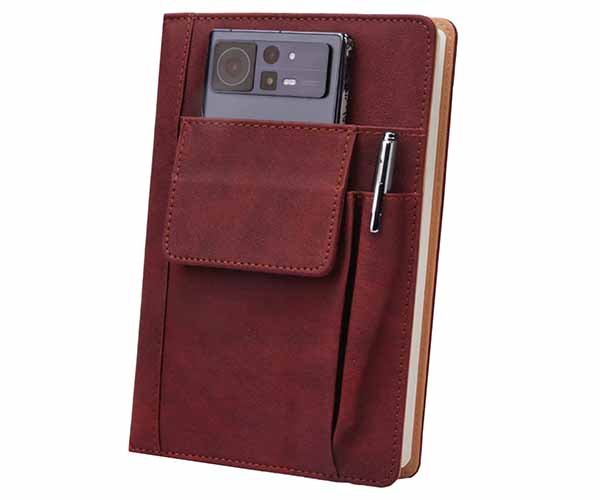
Interior Features
Many leather journals also include functional interior components.
Examples include:
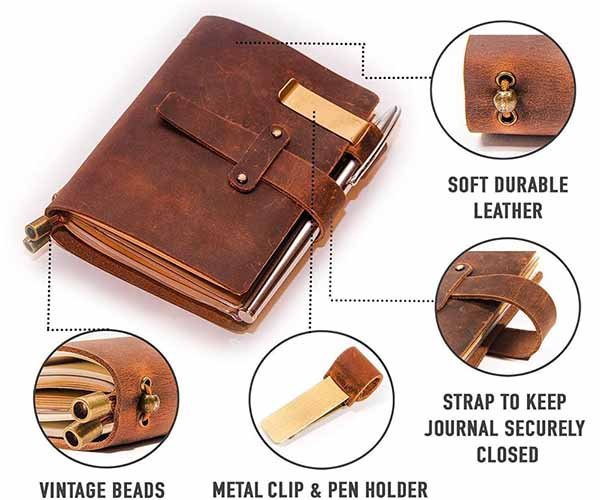
- pen holders
- card pockets
- document sleeves
- zipper compartments
- bookmark ribbons
These features increase the journal’s usability for business professionals, travelers, and writers.
Leather Materials Used for Leather Journals
Professional Leather Material Selection for Custom Journals
The quality of a leather journal begins with the material. Leather determines the appearance, durability, texture, and overall positioning of the final product.
Szoneier leather supply network includes both genuine leather tanneries and synthetic leather manufacturers, we can support projects ranging from affordable promotional notebooks to premium handcrafted leather journals.
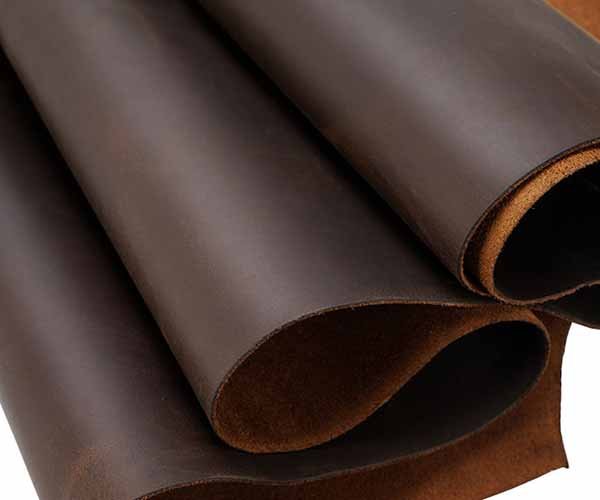
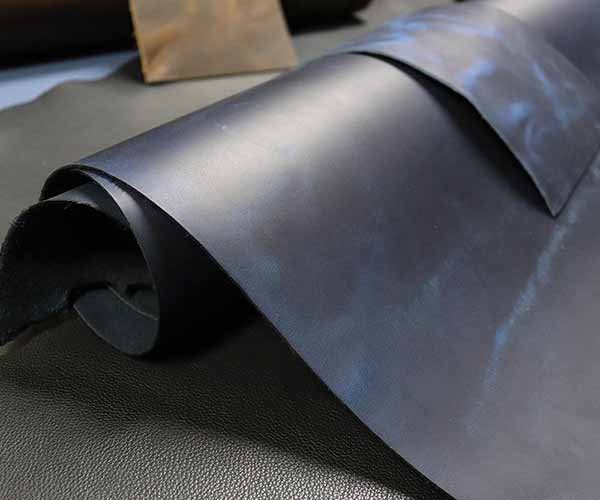
Full Grain Leather
Full grain leather is the highest quality leather available for leather journals. It retains the natural surface of the hide and provides excellent durability.
Characteristics
- natural leather grain texture
- strong fiber structure
- high durability
- develops patina over time
Typical Specifications
| Parameter | Range |
|---|---|
| Thickness | 1.4–2.0 mm |
| Surface | natural grain |
| Durability | very high |
Full grain leather journals are often used for luxury stationery products and heritage-style notebooks. These journals can last for many years with proper care.
Because full grain leather is more expensive, it is commonly used for limited edition journals or premium brand collections.
Top Grain Leather
Top grain leather is one of the most commonly used genuine leather materials in leather journal production.
The surface is lightly sanded and finished to create a smooth and uniform appearance.
Characteristics
- refined surface texture
- stable color consistency
- good durability
- easier logo embossing
Typical Specifications
| Parameter | Range |
|---|---|
| Thickness | 1.2–1.8 mm |
| Surface | smooth finish |
| Durability | high |
Top grain leather journals are commonly used by corporate gift brands and premium stationery companies because the material supports clean logo stamping and professional appearance.
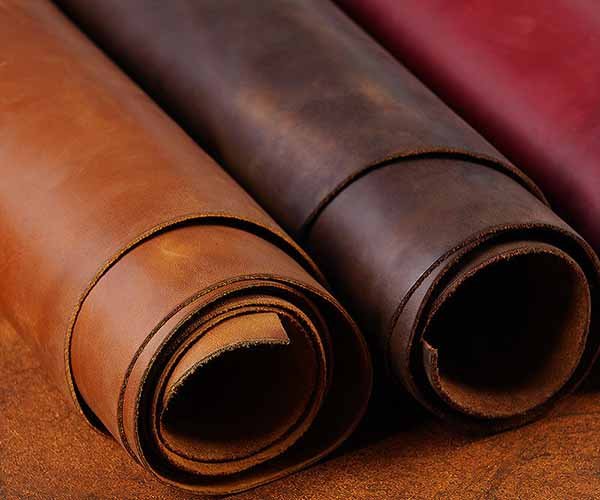
Crazy Horse Leather
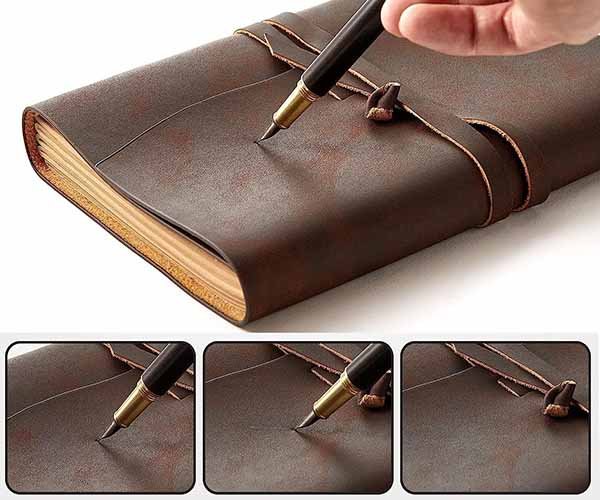
Crazy horse leather is widely used for vintage-style leather journals. The surface is treated with special wax that creates a distressed look when the leather is bent or scratched.
Characteristics
- vintage distressed appearance
- strong leather fibers
- unique patina development
- soft but durable surface
Typical Specifications
| Parameter | Range |
|---|---|
| Thickness | 1.4–2.2 mm |
| Surface | waxed distressed |
| Durability | very high |
Crazy horse leather is commonly used for travel journals, adventure notebooks, and rustic-style writing journals.
This leather type is popular among brands that want a handcrafted aesthetic.
Vegetable Tanned Leather
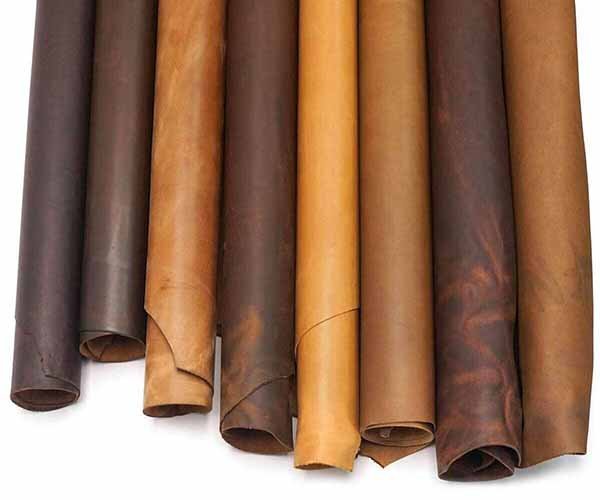
Vegetable tanned leather is produced using natural tannins derived from plants such as tree bark. This traditional tanning method creates a leather that gradually develops a deep patina.
Characteristics
- natural tanning process
- eco-friendly production
- rich aging patina
- firm leather structure
Typical Specifications
| Parameter | Range |
|---|---|
| Thickness | 1.6–2.2 mm |
| Surface | natural matte finish |
| Durability | very high |
Vegetable tanned leather journals are commonly used by artisan stationery brands and premium leather goods brands.
Because this leather ages beautifully, many customers prefer it for personal diaries and heirloom journals.
PU Leather (Synthetic Leather)
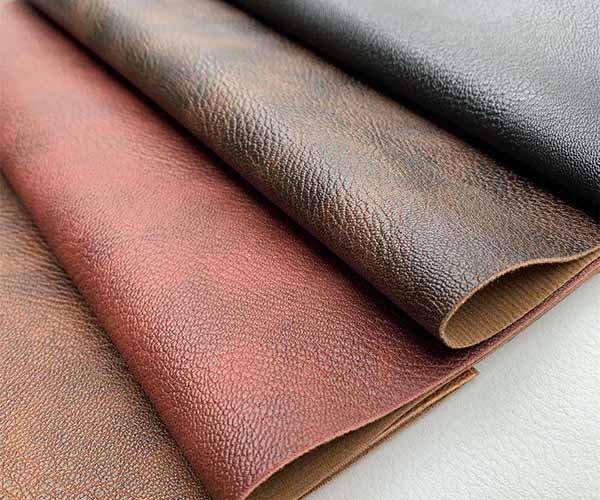
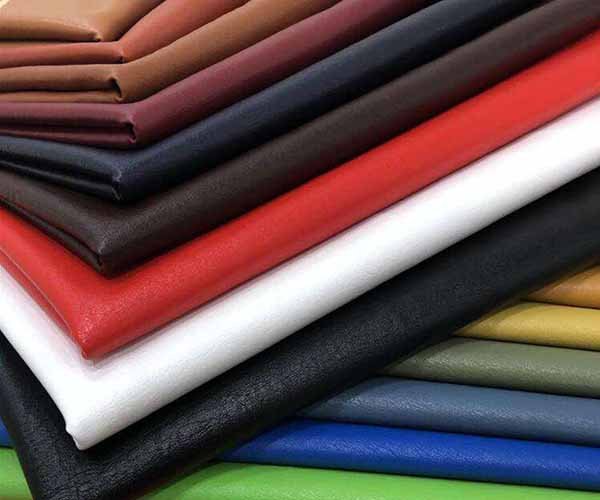
PU leather is one of the most widely used materials for leather journals in the global stationery market. It provides a leather-like appearance while maintaining lower production costs.
At Szoneier, PU leather is commonly used for corporate gift journals and large retail orders.
Characteristics
- uniform surface
- consistent color production
- cost efficient
- suitable for logo stamping
Typical Specifications
| Parameter | Range |
|---|---|
| Thickness | 0.8–1.4 mm |
| Surface | smooth or textured |
| Durability | medium |
PU leather journals are widely used in conference gifts, promotional notebooks, and office stationery products.
Because PU leather is easier to control during manufacturing, it is often selected for large production volumes.
Microfiber Leather
Microfiber leather is a high-performance synthetic leather made from ultra-fine fibers. It offers strong durability while maintaining a leather-like appearance.
Characteristics
- high abrasion resistance
- consistent texture
- lightweight structure
- vegan material option
Typical Specifications
| Parameter | Range |
|---|---|
| Thickness | 0.9–1.4 mm |
| Surface | smooth matte finish |
| Durability | high |
Microfiber leather is commonly used by brands that focus on vegan products or environmentally conscious materials.
Leather Thickness Engineering
Leather thickness has a significant impact on the final structure of the journal.
If the leather is too thin, the cover may lose its shape. If it is too thick, the journal may become difficult to open comfortably.
Based on Szoneier’s production experience, the following thickness ranges are commonly used.
| Journal Structure | Recommended Leather Thickness |
|---|---|
| Soft leather cover | 1.0–1.3 mm |
| Flexible travel journal | 1.2–1.6 mm |
| Structured hardcover journal | 1.4–1.8 mm |
| Vintage handmade journal | 1.6–2.2 mm |
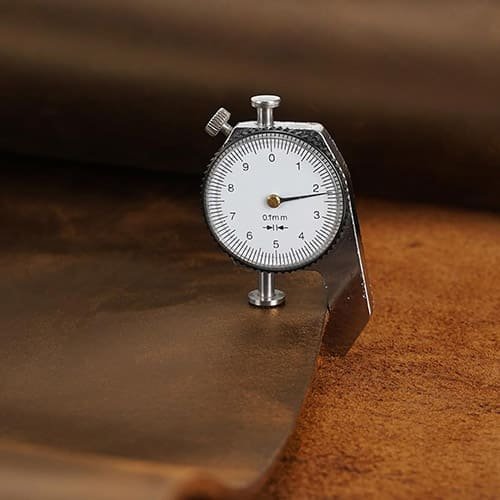
During production, our technicians measure leather thickness using digital gauges, maintaining tolerance within approximately ±0.1 mm.
This helps ensure consistent product quality across large production runs.
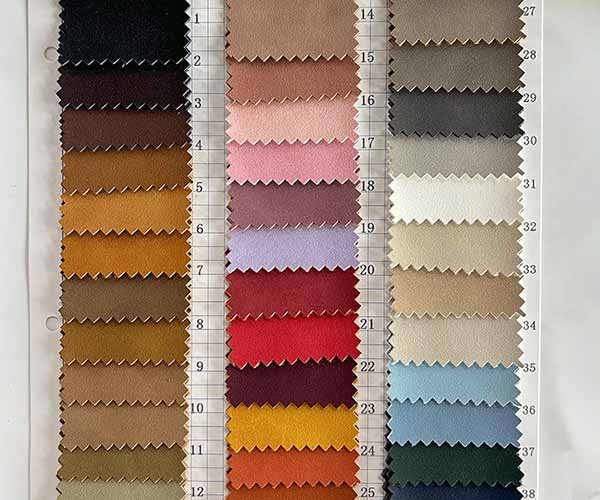
Leather Color and Surface Options
Leather journals can be produced in a wide range of colors and surface textures.
Common leather colors include:
- black
- dark brown
- vintage brown
- tan
- burgundy
- navy blue
- forest green
For custom projects, Szoneier can coordinate Pantone color matching with partner leather suppliers.
Surface finishes can also vary depending on the product style.
| Surface Finish | Appearance |
|---|---|
| Smooth leather | modern style |
| Pebbled leather | textured look |
| Vintage waxed leather | rustic style |
| Matte leather | minimalist design |
Leather Journal Craftsmanship Details
Precision Craftsmanship in Leather Journal Manufacturing
A leather journal may appear simple, but its quality is determined by several small details in the manufacturing process. Poor craftsmanship often leads to problems such as uneven edges, weak stitching, or distorted covers.
At Szoneier Leather, journals are produced through a structured manufacturing process involving pattern cutting, edge treatment, stitching, and final assembly. Each stage is carefully controlled to ensure consistent quality.
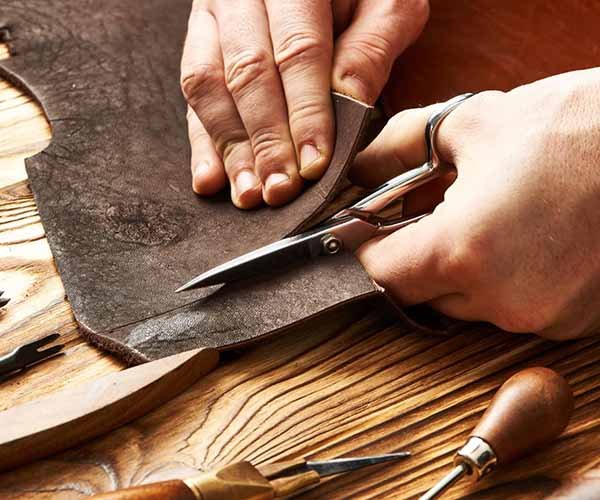
Leather Cutting
The first step is cutting leather panels based on the product pattern.
Our workshop uses:
- steel cutting dies
- hydraulic cutting machines
- manual inspection
This ensures each panel is cut with accurate dimensions and minimal material waste.
Typical tolerance during cutting is controlled within ±1 mm, which is important for maintaining consistent journal assembly.
Edge Treatment
Leather edges require finishing to prevent fraying and to improve the appearance of the product.
Common edge treatments include:
- edge painting
- edge burnishing
- folded edge construction
| Edge Finish | Appearance | Usage |
|---|---|---|
| Painted Edge | Smooth and modern | PU leather journals |
| Burnished Edge | Natural leather look | Vintage journals |
| Folded Edge | Reinforced edge | Premium notebooks |
Edge painting typically requires 2–3 coating layers, with drying time between each layer to achieve a smooth finish.
Stitching Quality
Stitching holds the journal cover together and contributes significantly to durability.
| Stitch Type | Characteristics |
|---|---|
| Machine Stitch | Efficient for mass production |
| Saddle Stitch | Traditional handcrafted look |
| Reinforced Stitch | Extra strength at stress points |
The thread used in leather journals is usually waxed polyester thread, which provides strong tensile strength and resistance to wear.
Typical stitch density used in journals is 3–4 stitches per centimeter, which balances durability and appearance.
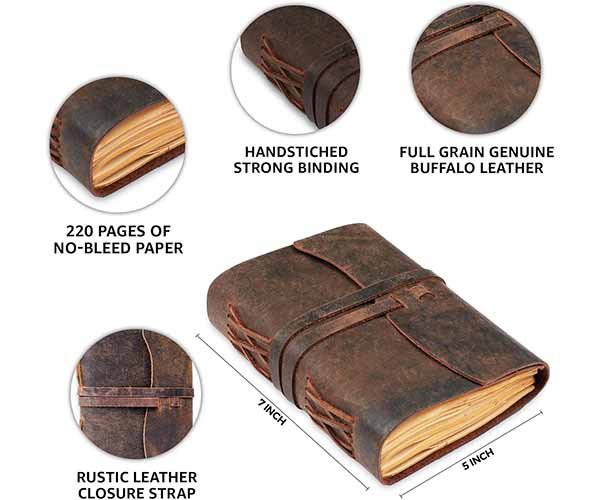
Corner Finishing
Corners are vulnerable areas that often show wear first.
Szoneier applies rounded corner finishing to reduce edge damage during daily use. This process improves both aesthetics and product lifespan.
Spine Reinforcement
For hardcover journals, the spine is reinforced with an internal support layer to prevent deformation when the journal is repeatedly opened.
Hardware & Accessories for Leather Journals
Functional Components That Improve Journal Usability
Many leather journals include additional accessories that improve practicality and enhance the overall design. These components may appear small, but they significantly influence how the product is used.
At Szoneier, we work with stable hardware suppliers in Guangdong to source accessories with consistent plating quality and durability.
Common Journal Accessories
| Accessory | Function |
|---|---|
| Elastic closure band | Keeps journal securely closed |
| Pen holder loop | Holds writing pen |
| Bookmark ribbon | Marks pages |
| Card pocket | Stores business cards |
| Document sleeve | Holds loose papers |
| Zipper pocket | Stores small items |
These accessories are especially common in business journals and travel notebooks, where functionality is important.
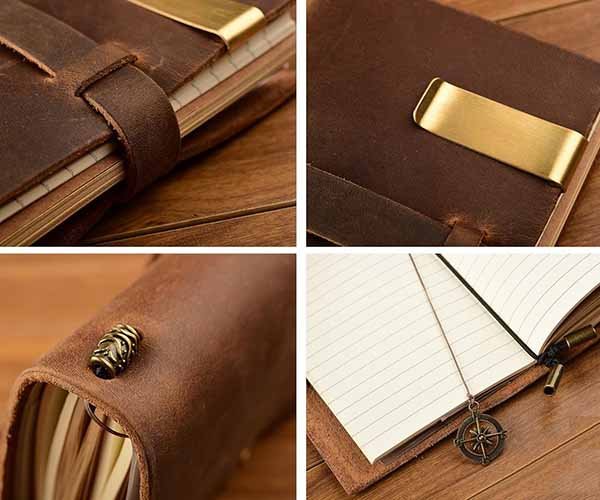
Metal Hardware Options
Some leather journals include decorative or functional metal hardware.
Common hardware components include:
- antique diary locks
- snap buttons
- corner protectors
- binder rings
Hardware Finishes
| Finish | Appearance |
|---|---|
| Antique brass | Vintage look |
| Nickel | Clean modern finish |
| Gunmetal | Premium dark tone |
| Gold | Luxury style |
Hardware plating thickness typically ranges from 0.03–0.05 mm, which helps improve wear resistance.
Elastic and Strap Closures
Closure systems are often used to keep journals secure.
Common closure styles include:
- elastic band closure
- wrap-around leather strap
- magnetic snap closure
- metal clasp lock
The elastic band closure is widely used because it combines simplicity with durability.
Interior Organization Options
Leather journals can be designed with additional internal storage features such as:
- passport pocket
- card slots
- notebook sleeves
- refillable inserts
These features allow journals to function not only as notebooks but also as portable organizers for travel and work.
Small details like closures, pockets, and hardware can significantly impact usability, cost, and product positioning.
We help you select the right combination based on your target market, pricing strategy, and real usage scenarios.
Leather Journal Design & Product Development
How Szoneier Develops Custom Leather Journals with Clients
Developing a leather journal usually begins with an idea rather than a finished product design. Many brands approach Szoneier with sketches, reference photos, or simply a concept of how they want the journal to look and function.
Our product development team works closely with clients to transform these ideas into manufacturable products. The team includes product engineers, pattern technicians, and sampling specialists who evaluate the design from both aesthetic and manufacturing perspectives.
Over the past 18+ years, Szoneier has helped develop leather accessories for brands selling through retail stores, e-commerce platforms, and corporate gift channels.
Step 1
Initial Concept Discussion
Clients typically provide:
- reference images
- logo files
- desired size
- preferred materials
- estimated order quantity
Our product engineers review these details and suggest improvements if necessary. For example, certain stitching structures or leather thicknesses may be recommended to improve durability.
Step 2
Material & Structure Planning
Once the concept is clear, we determine:
- leather type
- cover structure
- closure system
- interior layout
- logo placement
At this stage we also calculate the approximate production cost based on material consumption and labor requirements.
Step 3
Technical Pattern Development
The next step is pattern development. Our pattern technicians create cutting patterns that determine:
- leather panel dimensions
- spine width
- seam allowances
- accessory positioning
Accurate patterns are essential because even small errors can affect the alignment of the final journal.
Step 4
Prototype Sampling
The sample development process includes:
- leather cutting
- stitching assembly
- logo mold testing
- accessory installation
- edge finishing
Most leather journal samples can be completed within 5–7 days, depending on complexity.
Step 5
Sample Evaluation
After the prototype is finished, clients review the sample and may request adjustments such as:
- logo size changes
- color adjustments
- closure modifications
- interior pocket changes
Once the sample is approved, the product moves into mass production planning.
Leather Journal Quality Control
Quality Inspection System at Szoneier Leather
Quality control is one of the most important factors in leather goods manufacturing. Even small inconsistencies in leather thickness or stitching can affect the final product.
At Szoneier, all leather journals undergo multiple inspection stages before shipment to ensure every order meets agreed specifications.
Raw Material Inspection
Before production begins, all materials are inspected.
The inspection includes:
- leather thickness measurement
- color consistency check
- surface defect inspection
- accessory plating quality check
Leather thickness is measured using digital gauges to ensure it matches the required specification, typically within ±0.1 mm tolerance.
In-Process Production Inspection
During production, quality supervisors monitor several aspects of the manufacturing process.
| Inspection Area | Control Method |
|---|---|
| Cutting accuracy | pattern comparison |
| Stitching quality | stitch density inspection |
| Edge finishing | visual inspection |
| Hardware installation | pull strength testing |
Stitch density is typically maintained at 3–4 stitches per centimeter, which provides both durability and clean visual appearance.
Final Product Inspection
Before shipment, finished products are inspected individually.
The final inspection includes checking:
- logo placement accuracy
- stitching consistency
- leather surface quality
- accessory installation
- packaging integrity
For many projects, Szoneier performs 100% product inspection before packing.
Packaging Inspection
Packaging is also checked to ensure products are protected during transport.
Typical packaging includes:
- protective poly bag
- tissue wrapping
- custom gift box
- carton packaging
Quality Assurance Commitment
Every shipment is inspected to ensure the products delivered match the approved production sample.
This approach helps prevent common issues such as:
- logo misalignment
- loose stitching
- leather surface damage
- incorrect accessories
From raw material inspection to final product checks, we ensure every detail meets your specifications.
Our team helps you reduce production risks and maintain stable quality across bulk orders.
Custom Leather Journal Manufacturing Process
From Concept to Finished Leather Journal
Producing a leather journal involves multiple manufacturing stages. Each stage contributes to the final quality and durability of the product.
At Szoneier Leather, the production process follows a structured workflow that ensures efficient communication and stable product quality.
Step 1
Project Confirmation
The process begins when the client confirms key product specifications such as:
- journal size
- leather material
- logo method
- accessory details
- order quantity
At this stage we prepare a formal quotation based on material cost and labor requirements.
Step 2
Sample Order
After the quotation is accepted, a sample order is created.
Clients pay a sample development fee, and the factory begins prototype production.
Sample lead time for leather journals is usually 5–7 days.
Step 3
Sample Approval
The finished sample is sent to the client for evaluation. Adjustments can be made before bulk production begins.
This stage ensures the final product meets the expected design and quality standards.
Step 4
Bulk Production Preparation
Once the sample is approved, we prepare for mass production.
Preparation includes:
- ordering leather materials
- preparing cutting molds
- confirming accessories
- scheduling production lines
Step 5
Leather Cutting
Leather sheets are cut using hydraulic cutting machines and steel dies. This ensures consistent panel dimensions.
Step 6
Stitching and Assembly
Cut leather panels move to the sewing workshop where:
- covers are stitched
- pockets are installed
- accessories are attached
This stage requires experienced technicians because leather stitching must remain straight and evenly spaced.
Step 7
Edge Finishing and Cleaning
Edges are finished through:
- edge painting
- burnishing
- polishing
The product is then cleaned and prepared for inspection.
Step 8
Quality Inspection
Quality inspectors verify:
- stitching quality
- logo accuracy
- accessory installation
- overall appearance
Step 9
Packaging
Approved products are packed using protective materials to prevent scratches or deformation during shipping.
Step 10
Shipment
Finished products are shipped according to the client’s chosen logistics method.
Available shipping options include:
- express delivery
- air freight
- sea freight
Clients may choose trade terms such as EXW, FOB, DAP, or DDP.
Packaging Solutions for Leather Journals
Retail-Ready Packaging Options for Leather Journals
Packaging plays an important role in the final presentation of leather journals. For many brands, packaging is not only used for product protection but also for retail display, brand storytelling, and gift presentation.
At Szoneier Leather, we provide multiple packaging solutions that match different product positioning, from simple protective packaging for bulk shipments to premium gift packaging used by retail brands.
Our packaging suppliers are located in Guangdong and specialize in stationery and leather goods packaging, allowing us to coordinate packaging production together with journal manufacturing.
Common Packaging Types
| Packaging Type | Characteristics | Typical Use |
|---|---|---|
| Poly Bag | Simple protective packaging | Bulk shipments |
| Kraft Paper Box | Eco-friendly packaging | Retail journals |
| Rigid Gift Box | Thick cardboard box | Premium journals |
| Magnetic Gift Box | Luxury presentation | Corporate gifts |
| Cotton Dust Bag | Soft protective packaging | High-end journals |
For many leather journal projects, brands prefer rigid gift boxes because they provide strong protection during transportation while also improving retail presentation.
Custom Packaging Branding
Packaging can be customized with the same branding elements used on the journal itself.
Common packaging branding methods include:
- foil stamping on boxes
- printed logos
- embossed packaging logos
- custom printed tissue paper
- branded stickers
These elements help create a consistent brand identity across the product and its packaging.
Packaging Dimensions and Protection
Journal packaging is designed based on the product size to ensure proper protection during transportation.
Typical packaging specifications for an A5 leather journal:
| Parameter | Typical Range |
|---|---|
| Box Length | 230–240 mm |
| Box Width | 170–180 mm |
| Box Height | 25–40 mm |
Inside the box, protective materials such as tissue paper, foam inserts, or cardboard holders may be used to prevent movement.
Carton Packaging for Shipping
After individual packaging, products are packed into export cartons for international shipping.
Typical carton specifications:
| Parameter | Range |
|---|---|
| Carton Capacity | 30–60 journals |
| Carton Weight | 12–18 kg |
| Carton Material | 5-layer corrugated carton |
Cartons are designed to balance transport safety and shipping efficiency.
Customer Case Studies
Real Leather Journal Projects Developed by Szoneier Leather
Over the past 18+ years, Szoneier Leather has worked with clients from different industries including stationery brands, corporate gift companies, e-commerce brands, and travel accessory companies.
Many leather journal projects start with only a basic idea or reference image. Our product development team helps clients refine the design, select suitable materials, and prepare production samples before mass manufacturing.
Refillable Leather Travel Journal for a U.S. Lifestyle Brand
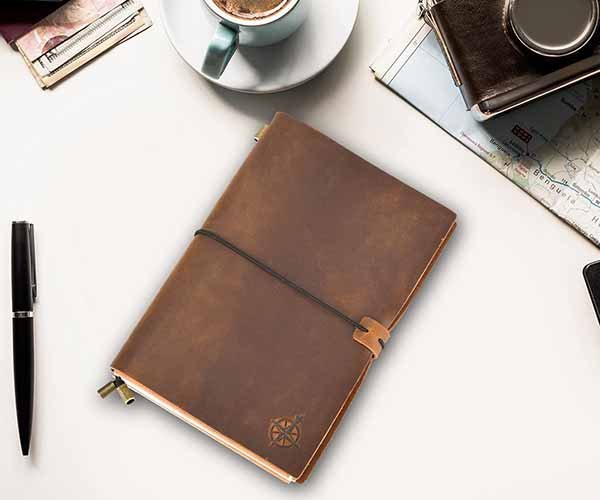
A lifestyle brand based in California contacted Szoneier to develop a refillable leather travel journal that could be sold through their online store and selected retail partners.
The brand wanted a notebook that combined a vintage leather appearance with a flexible refill system so users could replace notebook inserts while keeping the leather cover.
At the beginning of the project, the client only provided a few reference images and general size requirements. Our development team helped refine the structure and suggested using crazy horse leather because it would provide the rustic appearance the brand wanted.
The final design included the following features:
- A5 size leather cover
- crazy horse leather with vintage finish
- elastic insert system for replaceable notebooks
- wrap leather strap closure
- debossed logo on the front cover
The leather thickness used for the cover was approximately 1.6 mm, which provided a balance between durability and flexibility.
The first prototype was completed within 6 days. After minor adjustments to the strap length and logo size, the client approved the sample and placed an initial production order of 500 units.
The journals were packaged in custom kraft gift boxes with the brand’s logo printed on the packaging.
After the product launch, the client returned several months later to place a repeat order of 2,000 journals, as the product had become one of their best-selling accessories.
Corporate Gift Leather Journals for a European Conference Event
A corporate gift supplier based in Germany contacted Szoneier to produce custom leather journals for an international leadership conference.
The journals were intended to be distributed as executive gifts for conference participants, so the client required a product with a clean professional appearance and consistent branding.
Because the order quantity was relatively large and the delivery deadline was strict, our team recommended using high-quality PU leather. This material allowed stable color matching with the client’s brand color and ensured efficient production.
The final journal design included:
- A5 structured leather notebook
- black PU leather cover
- gold foil stamped logo on the front
- ribbon bookmark
- elastic pen holder
- interior pocket for documents
The journals were packaged in rigid magnetic gift boxes with gold foil branding to match the journal logo.
Production quantity for this project was 3,500 units, and the order was completed within 28 days including final inspection and export packaging.
The client later reported that the journals were very well received by conference participants and asked Szoneier to produce additional leather notebooks for future events.
Premium Handmade Style Leather Journals for an Online Stationery Brand
A small stationery brand selling through Shopify approached Szoneier to create a premium handmade-style leather journal designed for writers and artists.
The brand wanted a product that looked handcrafted but could still be produced in consistent quality for online retail sales.
After reviewing several design references, the Szoneier product development team proposed a journal using vegetable tanned leather combined with visible stitching details to create the handcrafted aesthetic.
The final journal included:
- B5 size leather cover
- vegetable tanned leather (1.8 mm thickness)
- wrap leather strap closure
- hand-style saddle stitching appearance
- thick sketch paper suitable for drawing
The product was positioned as a premium creative journal and targeted customers interested in writing, sketching, and journaling.
The first sample was completed in 7 days, and after approval the client placed an initial order of 300 journals.
Because the brand was selling through an online store, the journals were packaged in cotton dust bags and kraft paper boxes to create a more natural presentation.
Within the first six months of launch, the brand reordered the product twice, increasing the production quantity to 1,200 units.
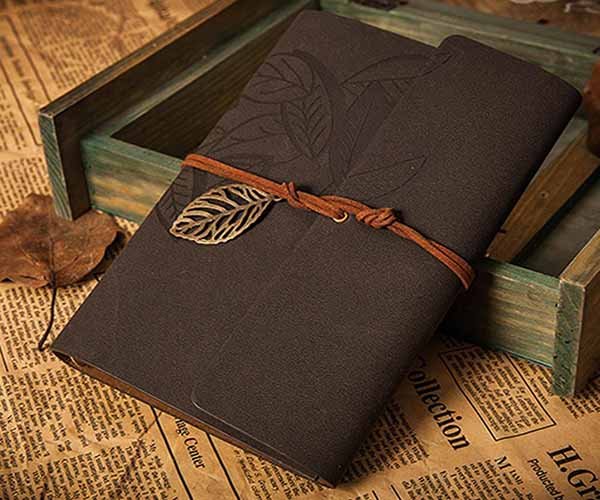
Make A Sample First
If you have your own tech packs, logo design artwork, or just an idea,please provide details about your project requirements, including preferred fabric, color, and customization options,we’re excited to assist you in bringing your leather goods designs to life through our sample production process.
Frequently Asked Questions About Leather Journal Manufacturing
What is the minimum order quantity for custom leather journals?
The minimum order quantity for leather journals at Szoneier Leather starts from 20 pieces. This relatively low MOQ allows many small brands, independent designers, and companies launching new stationery products to test the market before committing to larger production quantities.
Many clients initially start with small pilot orders to evaluate product quality and market response. Once the design is validated and sales begin to grow, production quantities are often increased to several hundred or several thousand units. Because Szoneier works with a flexible production structure in Shenzhen and nearby manufacturing areas in Guangdong, we are able to support both small custom projects and larger production runs.
How long does it take to develop a sample leather journal?
Sample development time for most leather journals is typically 5–7 days after the design details are confirmed. During this stage our workshop prepares the leather materials, cutting patterns, and logo molds required for the sample.
For projects that involve custom hardware components, special molds, or complex structures, sample development may take 7–15 days. This usually happens when journals include unique metal locks, custom rings, or specially designed accessories.
Before producing the sample, the Szoneier product team carefully reviews the design and confirms details such as leather type, journal size, logo placement, and closure style. This preparation helps ensure the sample accurately reflects the final production version.
What is the typical production lead time for leather journals?
After the sample is approved, the standard production time for leather journals at Szoneier Leather is usually 25–30 days depending on the order quantity and complexity of the design.
Production begins with material preparation and cutting, followed by stitching and assembly. Once the journals are assembled, the products go through finishing processes such as edge painting, surface cleaning, and accessory inspection.
Because our factory cooperates closely with leather suppliers and hardware manufacturers located within the Guangdong manufacturing region, material procurement can usually be arranged quickly. This helps maintain stable production schedules even when working with customized materials.
What types of leather can be used for custom journals?
Szoneier Leather supports a wide range of materials depending on the desired product positioning. These include genuine leather options such as full grain leather, top grain leather, crazy horse leather, and vegetable tanned leather, as well as synthetic materials like PU leather and microfiber leather.
Many brands choose PU leather when producing corporate gift journals or large retail orders because it provides consistent color and stable logo stamping results. Premium stationery brands often prefer genuine leather options such as crazy horse leather or vegetable tanned leather because these materials develop a natural patina over time.
Our product development team usually recommends materials based on the project’s retail price target, durability expectations, and branding requirements.
Can you help develop a completely new leather journal design?
Yes. One of the key strengths of Szoneier Leather is our product development capability. Clients often approach us with reference images or basic concepts rather than fully detailed product specifications.
Our design and engineering team works with clients to develop the product structure, select suitable materials, and determine the most efficient manufacturing approach. This process includes pattern development, material testing, logo placement evaluation, and sample production.
Because our team has worked on leather accessories and stationery products for many years, we are able to suggest design improvements that help improve both durability and production efficiency.
What logo branding methods are available for leather journals?
Several logo branding methods can be applied depending on the leather material and design style. The most common method for leather journals is debossing, where a heated metal mold presses the logo into the leather surface to create a permanent impression.
Other options include embossing, foil stamping with metallic finishes, screen printing for colored logos, laser engraving for synthetic leather, and custom metal logo plates attached to the journal cover.
During the development process, Szoneier reviews the logo artwork and recommends the method that will produce the best visual result on the selected leather material.
Do you provide packaging together with leather journals?
Yes. Szoneier Leather can coordinate custom packaging production together with journal manufacturing. Many clients prefer to receive journals with retail-ready packaging so the products can be sold directly after arrival.
Packaging options include kraft paper boxes, rigid gift boxes, magnetic closure boxes, and cotton dust bags. For corporate gift projects, custom gift boxes with foil stamped logos are often used to create a more premium presentation.
Our packaging partners are also located in Guangdong, which makes it easier to coordinate packaging production with the journal manufacturing schedule.
What shipping methods are available for international orders?
Szoneier Leather supports several shipping options depending on the client’s location, order size, and delivery schedule. Small orders or samples are usually shipped through express courier services such as DHL or FedEx.
Medium-sized shipments are often sent by air freight, while large production orders may be transported by sea freight to reduce shipping costs.
Clients can also choose trade terms such as EXW, FOB, DAP, or DDP depending on their preferred logistics arrangement.
Can overseas clients visit your factory?
Yes. Clients are welcome to visit the Szoneier Leather workshop located in Shenzhen, Guangdong. Many international clients choose to visit during product development or before placing larger production orders.
For clients who cannot travel to China, our team can also arrange video factory tours and live production updates so clients can see the manufacturing process and production environment.
How do you ensure the quality of leather journals before shipment?
Quality control is a critical part of the manufacturing process at Szoneier. Each order goes through several inspection stages including raw material inspection, in-process production inspection, and final product inspection.
Leather thickness, stitching quality, logo placement, and accessory installation are all checked before packaging. For many projects we perform 100% inspection before shipment to ensure the final products match the approved sample.
This systematic quality control process helps ensure that the journals delivered to clients meet both functional and visual expectations.
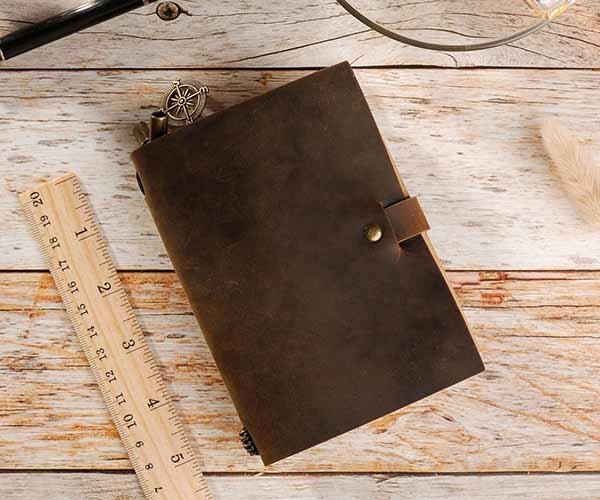
Start Your Leather Journal Project
Work with an Experienced Leather Journal Manufacturer
If you are planning to develop custom leather journals for your brand, Szoneier Leather can support your project from concept to production.
With 18+ years of leather goods manufacturing experience, our team has helped many international clients develop reliable leather accessories and stationery products.
Our advantages include:
- low minimum order quantity starting from 20 pieces
- fast sampling within 5–7 days
- stable production lead time of 25–30 days
- flexible customization options
- multiple global shipping solutions
Whether you are launching a new stationery brand or expanding your existing product line, our team can help bring your leather journal project to life.
- (+86) 13823134897
- info@szoneierleather.com
Exclusive Offer for You
As a first-time buyer, you’ll receive a Free bags Color Card to help you select the right material and shade. Once confirmed, we’ll also provide a Free Sample made by our factory—no extra cost.
For our regular partners, we send New Color Charts multiple times a year—completely free—to support your latest collections.