
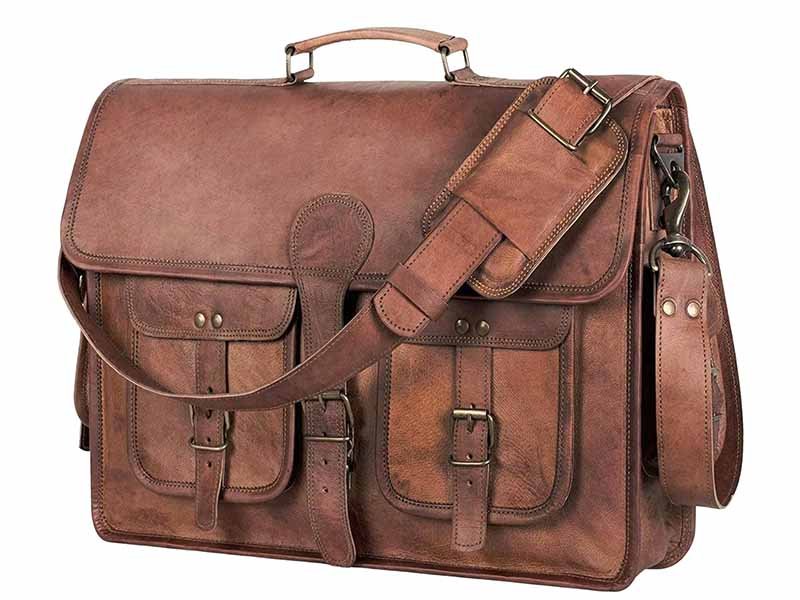
A leather messenger bag is one of those products that can look premium in a product photo and still disappoint badly in real life. That gap usually starts with leather selection. Many brands focus first on silhouette, hardware color, logo placement, and lining. Those details matter, but the leather still decides most of the product’s real personality: whether the bag feels stiff or soft, whether it scratches beautifully or looks worn too fast, whether it keeps shape under daily load, and whether customers feel they bought something worth carrying for years. In messenger bag manufacturing, leather is not just a surface material. It is the structure, the aging story, the hand feel, the stress tolerance, and often the reason a customer comes back for a second order.
The best leather types for messenger bag manufacturing are usually full grain leather for premium durability and natural aging, top grain leather for a cleaner surface and easier production control, and selected genuine or corrected leathers for cost-sensitive projects. Suede and nubuck can also work when the design goal is texture and fashion appeal rather than maximum durability. The right leather depends on target price, product positioning, structure, and daily-use expectations.
A lot of brands learn this only after launch. On the table, two messenger bags can look equally attractive. Six months later, one develops a rich patina and a stronger customer reputation, while the other starts showing loose grain, surface cracking, edge wear, or shape collapse. That is why experienced factories do not treat leather choice as a decoration step. They treat it as the first real product-engineering decision. And once you see how different leather types behave under weight, friction, moisture, and daily commuting, it becomes much easier to understand why the best messenger bags are built from the inside out.
What Leather Is Used in Messenger Bag Manufacturing?
Messenger bag manufacturing commonly uses full grain leather, top grain leather, genuine or corrected leather, suede, and nubuck. The best option depends on how the bag is meant to look, feel, age, and perform under daily use. Full grain and top grain are the most widely preferred for better leather bags because they offer stronger durability and more stable long-term value.
What leather is used in messenger bags?
In real factory production, messenger bags are rarely built around one simple idea of “good leather.” Different leather grades solve different product goals, and each one comes with trade-offs in cost, processing difficulty, appearance consistency, and long-term wear.
The most common leather choices are:
| Leather Type | Hide Layer / Surface | Main Strength | Main Limitation | Best Fit |
|---|---|---|---|---|
| Full grain leather | Top layer with natural grain intact | Strongest aging and durability | Higher cost, more natural variation | Premium commuter and heritage bags |
| Top grain leather | Top layer, lightly sanded/buffed | Cleaner look, easier to standardize | Less natural grain character than full grain | Mainstream quality messenger bags |
| Genuine / corrected leather | Lower layers or heavily finished surfaces | Lower cost, uniform appearance | Lower durability than higher grades | Entry-price leather bags |
| Nubuck | Top-grain leather with buffed surface | Soft premium hand feel, refined texture | Needs more care than smooth leather | Fashion and lifestyle messenger bags |
| Suede | Split side with nap finish | Soft casual look | Lower water resistance and easier soiling | Fashion-led, lighter-duty use |
Full-grain leather is widely regarded as the highest grade because it keeps the natural grain and strongest fiber structure of the hide, while top-grain leather is still high quality but is sanded or buffed for a more uniform appearance and easier production. Genuine leather is real leather, but the term itself does not guarantee high quality and often refers to lower or more processed layers. Nubuck comes from top-grain leather and is more resilient than suede, while suede is usually made from split leather and is softer but less practical for rough daily use.
For messenger bags, daily use matters a lot. These bags are often worn crossbody, rubbed against jackets, set on floors, loaded with laptops or documents, and opened and closed repeatedly. That means the leather has to handle bending stress, edge wear, panel shaping, and strap pressure. A leather that looks attractive in a swatch book may not behave well once it becomes a full-size bag with weight and movement.
This is where SzoneierLeather’s material-development background becomes valuable. Instead of choosing leather only by appearance, the factory can help clients compare real-use performance: structure, thickness stability, scratch visibility, aging character, and how each leather works with the target price level.
How is leather chosen for messenger bag manufacturing?
Good leather selection starts with the product goal, not with the leather name. Many clients begin by saying they want “full grain” because it sounds premium, but the better first question is: what kind of messenger bag are you building, and what does the end customer expect from it?
A practical decision process usually looks like this:
| Decision Point | What It Changes |
|---|---|
| Target retail price | Determines how much leather cost the product can absorb |
| Bag structure | Affects thickness, temper, and reinforcement needs |
| Daily-use load | Influences fiber strength and shape retention requirements |
| Visual direction | Helps decide between natural grain, smooth finish, or textured surface |
| Market segment | Premium, mid-range, or entry-level product logic |
| Order size | Affects sourcing flexibility and consistency requirements |
Here is how leather choice often aligns with market positioning:
| Product Positioning | Leather Direction | Why It Works |
|---|---|---|
| Premium office / heritage bag | Full grain leather | Best natural character and aging |
| Mid-high retail messenger bag | Top grain leather | Strong balance of appearance, cost, and production stability |
| Entry-level leather line | Genuine / corrected leather | Lower material cost and more uniform look |
| Fashion-led soft messenger bag | Nubuck or suede accents | Adds texture and visual softness |
Leather thickness also needs to match the product. Recent leather-thickness guides place everyday bags around roughly 1.2–1.8 mm and more structured bags around roughly 1.6–2.0 mm, while some bag-oriented guides extend practical bag leather into the 1.6–2.8 mm range depending on structure and reinforcement. In other words, messenger bags do not use one universal thickness. Soft-body bags, flap bags, laptop styles, and boxier crossbody messenger bags all behave differently.
That is why experienced factories do not separate leather choice from construction planning. A softer top-grain leather might work beautifully for a relaxed messenger silhouette but may need reinforcement behind the flap or base panel. A thicker full-grain leather may create a stronger premium feel but could increase weight or reduce flexibility if used everywhere. Smart development is about balance, not labels.
Are all leather messenger bags the same?
Not even close. The words “leather messenger bag” tell you very little by themselves. Two bags can use real leather, similar dimensions, and even similar hardware, yet perform very differently after six months of use.
The biggest differences usually come from these factors:
- leather grade and hide selection
- leather thickness and firmness
- finishing method and surface coating
- panel reinforcement and lining support
- stitching density and edge finishing
- hardware strength and strap construction
A useful comparison looks like this:
| Factor | Lower-End Leather Messenger Bag | Better Leather Messenger Bag |
|---|---|---|
| Leather source | Split / corrected or low-grade mixed hides | Better-selected full grain or top grain |
| Surface behavior | Uniform at first, may wear flat or crack earlier | More natural variation, better aging character |
| Structure | Can feel floppy or collapse under load | Better body and shape support |
| Strap durability | More risk of stretch or edge failure | Better reinforcement and long-term carry comfort |
| Price logic | Lower opening cost | Better long-term value |
Full-grain leather is more expensive and more difficult to work with, but it is prized for durability and natural character. Top-grain leather remains popular in quality bags because it gives a more even surface and is easier to craft consistently. Genuine leather sits lower in the quality hierarchy and is often used where price pressure is stronger.
This matters commercially because customers do not only judge a messenger bag on day one. They judge it after commuting, travel, desk use, and exposure to weather. If the corners soften too quickly, the flap loses shape, the surface creases badly, or the strap edges fail, the product’s “leather value” drops fast in the customer’s mind. That is why material choice and bag engineering have to be treated as one decision.
Which Leather Types Are Best for Messenger Bag Manufacturing?
For most serious messenger bag projects, full grain leather is best when durability, aging, and premium positioning matter most; top grain leather is often best for balanced commercial production; genuine or corrected leather is mainly used when price pressure is strong; and suede or nubuck are better for style-driven collections that accept more maintenance. The best leather is not the most expensive one. It is the one that fits the product’s use, structure, and market.
Is full grain leather best for messenger bags?
For many premium messenger bag projects, yes. Full-grain leather is generally considered the highest-quality leather because it keeps the outermost grain intact, preserving the strongest fiber structure and natural character of the hide. That combination makes it especially attractive for products where longevity and patina matter.
Why brands choose full grain leather:
- stronger long-term durability
- richer aging and patina development
- more authentic grain character
- better premium storytelling for the product page and brand
From a factory angle, full grain also changes how the bag is perceived in hand. It often feels denser, more honest, and more substantial. That matters a lot in messenger bags, which are often sold as work bags, commuter bags, or long-use lifestyle pieces.
But full grain is not automatically the best answer for every project. It costs more, natural grain variation is higher, and production selection standards need to be tighter. That means higher raw material cost, more hide grading, and sometimes lower usable yield from each hide. Brands that choose full grain should do it because the customer and product positioning can justify it.
A simple commercial view:
| Full Grain Strength | Why It Matters in Messenger Bags |
|---|---|
| Strong fiber structure | Better for long daily use |
| Natural surface | Makes each bag feel more individual |
| Better aging | Supports repeat business and stronger product reputation |
| Higher cost | Requires the right market and retail pricing |
SzoneierLeather usually recommends full grain for brands building premium collections, heritage-style business bags, or long-use leather ranges where the bag itself is expected to improve with age.
Is top grain leather good for messenger bags?
Very much so. In fact, top grain is often the most practical choice for commercial messenger bag manufacturing because it offers a strong balance between quality, appearance consistency, and production efficiency. Top grain leather comes from the top part of the hide, but the uppermost surface is sanded or buffed, which makes it more uniform and easier to craft.
That brings several real manufacturing advantages:
- more even surface appearance across bulk orders
- easier color consistency for dyed collections
- simpler pattern matching for cleaner production
- lower cost than full grain while still staying in a quality tier
For messenger bags, top grain is especially useful when the design calls for:
- cleaner, more refined modern styling
- smoother flap panels
- predictable production across larger quantities
- strong but not overly rugged product character
A comparison helps:
| Feature | Full Grain | Top Grain |
|---|---|---|
| Natural character | Higher | Medium |
| Surface uniformity | Lower | Higher |
| Ease of production | More demanding | Easier |
| Cost | Higher | Medium to high |
| Best fit | Premium heritage bags | Mainstream quality bags |
Top grain is often the smartest answer for brands that want a polished leather messenger bag with stable large-order quality. It may not produce the same deep aging story as strong full grain, but it can still deliver very good durability and a more controlled finish.
Is genuine leather used in messenger bags?
Yes, very often. But it should be used with clear expectations. “Genuine leather” means the product is made from real leather, yet the term does not automatically indicate a high-grade material. In many cases it refers to lower layers of the hide or heavily corrected leather that has a more processed surface and lower durability than full grain or top grain.
This does not mean genuine leather has no place in messenger bag manufacturing. It can still work for:
- entry-price leather collections
- price-sensitive wholesale projects
- fashion styles with lower long-term wear expectations
- collections where appearance matters more than deep aging performance
The main issue is positioning. Problems happen when a brand uses genuine leather but markets it as if it will behave like high-end full grain over many years. That mismatch creates disappointment.
A realistic view:
| Genuine Leather Advantage | Genuine Leather Limitation |
|---|---|
| Lower cost | Lower strength and wear life |
| More uniform look | Less character as it ages |
| Easier price targeting | Harder to support premium product claims |
For SzoneierLeather, this category is most useful when the client is building a commercial line that needs real leather at a controlled cost. The key is honest material planning, not overpromising.
Are suede leather messenger bags practical?
They can be, but only in the right context. Suede and nubuck both offer softer texture and a more fashion-led hand feel, but they are not equally practical for all messenger bag use. Nubuck is made from top-grain leather and is generally stronger than suede, while suede comes from the split side and is softer and more porous. Neither is naturally waterproof, and both require more care than smooth finished leather.
For messenger bags, this means:
- nubuck can work well for premium casual collections
- suede works better for lighter-duty fashion styles
- both are less ideal for rough daily commuting in wet conditions unless protected carefully
A practical comparison:
| Material | Texture | Strength | Water Practicality | Best Use |
|---|---|---|---|---|
| Nubuck | Fine velvety surface | Better | Moderate with care | Premium casual messenger bags |
| Suede | Softer fuzzy nap | Lower | Lower | Fashion-led bags, lighter use |
Clients often like suede or nubuck because they feel luxurious immediately. That first-touch effect is real and valuable. But for messenger bags that will be carried to work, placed on floors, used in travel, and exposed to weather, smooth full grain or top grain often performs better. SzoneierLeather usually treats suede and nubuck as style decisions that need honest use-case matching, not universal upgrades.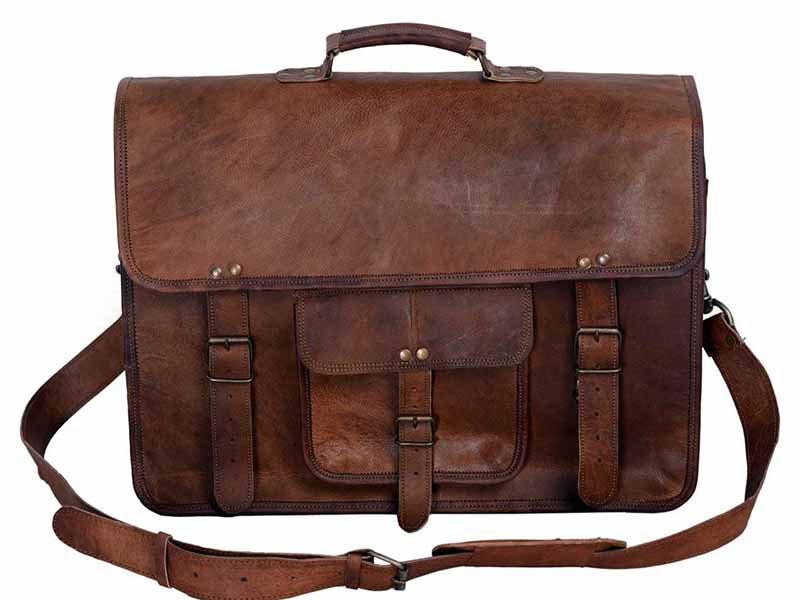
How Does Leather Affect Messenger Bags?
Leather affects almost every aspect of a messenger bag, including durability, structure, weight, appearance, aging, and price. The same design can perform very differently depending on the leather used. Choosing the right leather ensures the bag holds shape, resists wear, ages well, and matches the target market.
How does leather affect messenger bag durability?
Durability is the first real test of a messenger bag, especially for daily use. Messenger bags are not occasional-use products. They carry laptops, documents, chargers, books, and personal items, often in the range of 3–8 kg.
Leather directly controls how well the bag handles:
- Repeated bending (flap opening and closing)
- Load pressure (bottom panel and straps)
- Surface abrasion (daily contact with clothing, desks, floors)
- Edge wear (corners and strap edges)
Here is a practical durability comparison:
| Leather Type | Fiber Strength | Wear Resistance | Expected Lifespan |
|---|---|---|---|
| Full grain | Very high | Very high | 5–10+ years |
| Top grain | High | High | 3–7 years |
| Genuine leather | Medium | Medium | 1–3 years |
| Suede | Lower | Lower | 1–3 years |
The key reason full grain performs better is its intact fiber structure. The top layer of the hide contains the densest fibers, which resist tearing and stretching.
However, durability is not only about leather type. It also depends on:
- Thickness (too thin → weak, too thick → stiff)
- Reinforcement (lining, base support)
- Stitching quality
For example, a 1.4 mm top grain leather bag with proper reinforcement can outperform a poorly constructed 1.8 mm bag.
At SzoneierLeather, durability testing often includes:
- Load simulation (5–10 kg stress)
- Strap tension testing
- Edge wear evaluation
This ensures the leather choice matches real use, not just visual expectations.
How does leather affect messenger bag appearance?
Appearance is where leather creates immediate value perception. Customers often decide within seconds whether a bag looks premium or not.
Leather affects:
- Surface texture (smooth vs natural grain)
- Color depth and consistency
- Shine level (matte vs glossy)
- Aging behavior
Here is a comparison:
| Leather Type | Visual Style | Aging Effect |
|---|---|---|
| Full grain | Natural, rich | Develops patina |
| Top grain | Clean, uniform | Slight aging |
| Genuine leather | Even surface | Limited character |
| Nubuck | Soft matte | Subtle change |
| Suede | Fuzzy texture | Wears quickly |
Full grain leather stands out because it develops a patina—a natural darkening and soft sheen over time. This is highly valued in premium products.
Top grain leather offers a more consistent look, which is easier for large-scale production.
From a commercial perspective:
- Premium brands → prefer natural variation and aging
- Retail brands → prefer consistency and clean finish
Another important factor is scratch visibility:
- Full grain → scratches can blend into patina
- Corrected leather → scratches may look more obvious
This directly affects customer satisfaction.
How does leather affect messenger bag cost?
Leather is usually the largest cost component in a messenger bag, often accounting for 40%–70% of total product cost.
Cost differences come from:
- Leather grade
- Hide selection quality
- Tanning process
- Yield efficiency
Here is a simplified cost comparison:
| Leather Type | Relative Cost | Production Impact |
|---|---|---|
| Full grain | High | Higher material cost, more selection needed |
| Top grain | Medium–High | Balanced cost and yield |
| Genuine leather | Medium | Lower cost, easier sourcing |
| Split leather | Low | Lowest cost, limited performance |
Another hidden factor is material utilization.
Full grain leather has more natural variation, which means:
- More material waste during cutting
- Higher rejection rate
- More careful pattern placement
This increases effective cost beyond the raw material price.
In contrast, corrected leather offers more uniformity, improving cutting efficiency.
From a business perspective:
- Full grain → higher upfront cost, higher perceived value
- Top grain → best balance for most brands
- Genuine leather → cost control but lower long-term value
SzoneierLeather helps clients optimize cost by:
- Matching leather grade to product positioning
- Improving cutting efficiency
- Suggesting hybrid constructions (e.g., full grain exterior + cost-controlled interior)
Which Leather Features Matter in Messenger Bag Manufacturing?
Beyond leather type, specific features such as thickness, finishing, and treatment determine how the leather performs in production and daily use. These technical details often have a greater impact than the leather category itself.
What leather thickness is best for messenger bags?
Leather thickness directly affects structure, weight, and durability.
For messenger bags, the common thickness range is:
| Bag Type | Thickness |
|---|---|
| Soft messenger bag | 1.2–1.4 mm |
| Standard messenger bag | 1.4–1.8 mm |
| Structured messenger bag | 1.8–2.2 mm |
Key considerations:
- Thinner leather → lighter, more flexible, less durable
- Thicker leather → stronger, more structured, heavier
However, thickness must match design.
Examples:
- A soft casual bag → better with 1.3–1.5 mm
- A structured work bag → better with 1.6–2.0 mm
Too thick can cause:
- Difficult sewing
- Reduced flexibility
- Higher weight
Too thin can cause:
- Shape collapse
- Reduced lifespan
This is why thickness is always selected together with reinforcement materials.
How does leather finishing affect messenger bags?
Leather finishing determines surface feel, appearance, and protection.
Common finishing types:
| Finish Type | Effect | Use Case |
|---|---|---|
| Aniline | Natural look | Premium bags |
| Semi-aniline | Balanced | High-end retail |
| Pigmented | Uniform color | Mass production |
| Waxed/oiled | Vintage look | Lifestyle bags |
Finishing affects:
- Scratch resistance
- Water resistance
- Color consistency
- Maintenance level
For example:
- Aniline → beautiful but less protected
- Pigmented → more durable but less natural
From a manufacturing perspective:
- Pigmented leather → easier to control in bulk
- Aniline leather → requires better hide selection
SzoneierLeather often recommends semi-aniline finishes for a balance between aesthetics and durability.
What leather treatment improves messenger bags?
Leather treatments improve performance in real use conditions.
Common treatments include:
- Water-resistant coating
- Anti-scratch finish
- Oil/wax treatment
- Anti-mold treatment
Here is a practical overview:
| Treatment | Benefit |
|---|---|
| Water-resistant | Protects from light rain |
| Anti-scratch | Reduces visible marks |
| Oil/wax | Improves aging and feel |
| Anti-mold | Prevents humidity damage |
For messenger bags used daily, especially in urban environments, water resistance is one of the most important upgrades.
However, treatments must be balanced:
- Too much coating → reduces natural feel
- Too little protection → reduces durability
The best solution depends on:
- Climate (humid vs dry markets)
- Usage (daily commute vs occasional use)
- Brand positioning
SzoneierLeather customizes treatments based on these factors, ensuring performance matches customer expectations.
How to Choose Leather for Messenger Bag Manufacturing?
Choosing the right leather for messenger bag manufacturing is a structured decision that balances product positioning, cost, durability, and user expectations. The best choice is not always the most expensive leather, but the one that fits the target market, design, and long-term use.
What to check when choosing leather for messenger bags?
Before selecting leather, it is important to evaluate both technical performance and commercial fit. Many product issues start from choosing leather based only on appearance.
Here are the key checkpoints used in real product development:
1. Leather Grade and Source
- Is it full grain, top grain, or corrected leather?
- Is the supplier consistent in hide quality?
2. Thickness and Structure
- Does the thickness match the bag design?
- Will it hold shape under load?
3. Surface Quality
- Are there visible scars or defects?
- Is the finish consistent across batches?
4. Flexibility and Feel
- Does the leather feel too stiff or too soft?
- Will it crease naturally or deform?
5. Durability Performance
- How does it perform under stress and bending?
- Is it suitable for daily use?
A practical evaluation table:
| Checkpoint | What to Look For | Risk if Ignored |
|---|---|---|
| Leather grade | Clear classification | Misleading quality level |
| Thickness | Matches design | Shape issues |
| Surface | Consistent finish | Poor appearance |
| Flexibility | Balanced feel | Comfort issues |
| Durability | Tested performance | Early failure |
From a factory perspective, these checks are done during sampling, not after production starts.
SzoneierLeather supports this process by providing material samples, performance feedback, and design recommendations before bulk production.
How to balance cost and quality in leather messenger bags?
Balancing cost and quality is one of the most important challenges in leather bag manufacturing.
A simple way to think about it:
- Higher leather grade → higher cost, higher perceived value
- Lower leather grade → lower cost, but potential quality risk
Here is a practical cost-performance comparison:
| Strategy | Leather Choice | Result |
|---|---|---|
| Premium positioning | Full grain leather | High cost, strong brand value |
| Balanced approach | Top grain leather | Good cost-performance |
| Budget control | Genuine leather | Lower cost, limited durability |
However, cost optimization does not always mean choosing cheaper leather.
Better strategies include:
1. Smart Material Combination
- Full grain exterior + lower-cost interior
2. Thickness Optimization
- Reduce unnecessary thickness to control weight and cost
3. Design Efficiency
- Minimize material waste through pattern optimization
4. Production Efficiency
- Use leather types with better yield rates
Example:
| Optimization Method | Cost Impact | Quality Impact |
|---|---|---|
| Material mix | -10% to -20% | Minimal |
| Pattern efficiency | -5% to -10% | None |
| Thickness adjustment | -5% | Balanced |
SzoneierLeather works closely with clients to apply these strategies, ensuring the final product meets both price targets and quality expectations.
Why choose an experienced leather manufacturer?
Leather messenger bag manufacturing is not just about cutting and stitching. It requires deep knowledge of materials, construction, and production control.
An experienced manufacturer provides:
1. Material Expertise
- Accurate leather selection
- Performance-based recommendations
2. Product Development Support
- Pattern design
- Structure optimization
3. Quality Consistency
- Stable production processes
- Low defect rates
4. Cost Control
- Efficient material usage
- Reduced waste
5. Customization Capability
- Private label (logo, packaging)
- OEM/ODM services
Comparison:
| Aspect | New Supplier | Experienced Manufacturer |
|---|---|---|
| Material selection | Basic | Professional |
| Development speed | Slow | Fast |
| Quality stability | Variable | Consistent |
| Problem solving | Limited | Strong |
SzoneierLeather, with over 18 years of experience, combines:
- Strong raw material supply chain
- In-house leather development
- Advanced manufacturing capability
- Full customization support
This allows brands to move from idea to finished product with fewer risks and better results.
Final Thoughts: Build Your Leather Messenger Bags with SzoneierLeather
A successful leather messenger bag is not defined by a single factor. It is the result of multiple decisions working together—leather type, thickness, finishing, structure, and production quality.
For brands, the goal is to create products that:
- Look premium
- Perform well in daily use
- Maintain value over time
- Build customer trust
Choosing the right leather is the foundation of that process.
Working with an experienced manufacturer ensures that every detail—from material selection to final production—is aligned with your product goals.
Whether you are developing a new messenger bag or improving an existing product, you can share your requirements:
- Leather type and finish
- Product design and size
- Target price
- Order quantity
- Delivery timeline
Contact SzoneierLeather today to start your custom messenger bag project and build products that stand out in quality and performance.