
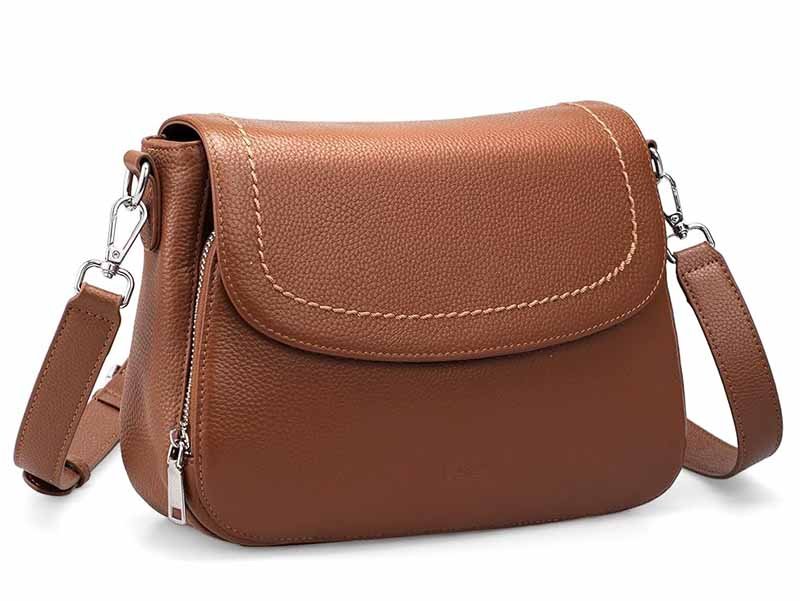
A lot of people think a high-end leather handbag is defined mainly by the leather itself. They look at whether it is full grain, top grain, smooth, embossed, soft, or glossy, and then assume that material alone decides whether the bag feels premium. In real product development, that is only part of the story. Two bags can use leather from the same tannery and still feel completely different in the customer’s hand. One stays upright, keeps its lines, carries weight evenly, and still looks refined after a year of use. The other starts to sag, lean, wrinkle at the corners, or lose its shape after a short period of daily wear. The difference usually comes from structure.
The key structural elements of high-end leather handbags include the outer leather shell, panel layout, gussets, base construction, lining system, reinforcement layers, handle attachment points, hardware support, and edge finishing. Together, these elements control shape, load balance, durability, and long-term appearance. A premium leather handbag is not simply made from expensive leather. It is built through a precise combination of materials and construction methods that keep the bag stable, elegant, and reliable over time.
This is exactly why many handbag projects go wrong even when the leather looks beautiful at first. A bag may photograph well in a studio, but real users notice problems fast. Maybe the opening collapses after a few weeks. Maybe the bottom sinks when a wallet, phone, and cosmetics are placed inside. Maybe the side panels start curving outward, making the whole bag look tired and uneven. One small structural mistake can quietly damage the entire product. And once that happens, the leather is no longer the hero. It becomes the surface layer covering a weak foundation. That is why understanding structure is one of the most important steps in developing a truly high-end leather handbag.
What Defines High-End Leather Handbags Structure?
High-end leather handbags structure is the full system that gives the bag its form, support, balance, and long-term stability. It is created through the way leather panels, reinforcement materials, lining, base support, and load-bearing details are built together. Good structure helps a bag hold its shape, carry weight properly, and continue looking refined after repeated daily use.
What is structure in high-end leather handbags
In high-end leather handbags, structure means much more than “does the bag stand up or not.” Structure is the engineered relationship between the outer shell, the hidden internal support, and the way each panel is connected. It determines how the bag behaves when it is empty, half full, or fully packed. It also affects how the handbag opens, closes, hangs from the shoulder, sits on a table, and ages over time.
A well-structured handbag usually performs in the following ways:
- it keeps a stable silhouette from different angles
- it does not collapse too easily when placed down
- it distributes the load without dragging certain panels downward
- it keeps the opening aligned so the bag still looks clean in use
- it resists corner distortion and base warping
In manufacturing terms, handbag structure is built through layers. The outer leather provides visual character and some surface strength, but it is rarely enough by itself. Most high-end handbags also rely on a support system inside the product. This may include bonded reinforcement materials, stiffeners, shaped interlinings, padded zones, base boards, and lining layers that work together to guide the bag’s behavior.
The reason this matters is simple: leather is a living material with natural flexibility. That is one of the reasons it feels premium. But flexibility without control creates problems. Soft leather without the right support may stretch. Heavy leather without the right panel engineering may become bulky. Smooth leather without the right backing may wrinkle in visible areas. So structure is what turns raw leather into a handbag that performs like a finished luxury product rather than just a folded leather container.
This is also why experienced factories start handbag development by asking how the bag should feel and behave, not just how it should look. A top-handle bag, a work tote, a shoulder bag, and a mini box bag all need very different structural planning. The right structure is never random. It is designed around function, size, leather temper, and brand positioning.
Why structure matters in high-end leather handbags
Structure matters because customers feel it immediately, even if they cannot explain it in technical terms. When someone picks up a well-made handbag, they notice the balance, the firmness of the body, the confidence of the silhouette, and the way the bag responds to movement. It feels intentional. It feels finished. That reaction is not caused by leather alone. It comes from the structural decisions hidden inside the product.
When structure is weak, the problems show up quickly:
- the top opening becomes uneven
- the bag leans to one side when placed down
- the corners crease too early
- the side walls start bowing outward
- the handles pull the upper body out of shape
- the bottom begins to sag under normal daily weight
These are not small cosmetic issues. They affect how customers judge product quality, how often they use the bag, and whether they trust the brand again.
The table below shows how structure affects product performance in a practical way:
| Structure Level | Common Physical Result | Visual Result After Use | Customer Reaction |
|---|---|---|---|
| Weak | Base sinks, body twists, opening deforms | Bag looks tired quickly | Disappointment, lower trust |
| Moderate | Holds shape at first, softens unevenly | Some visible fatigue after use | Acceptable but not memorable |
| Strong | Balanced load support, better shape retention | Cleaner appearance over time | Feels premium and reliable |
For brands, the financial effect is real. Poor structure increases sample revisions, complaint rates, and post-sale issues. Strong structure improves product confidence and makes it easier to justify a higher retail price. In premium leather goods, customers do not just pay for material. They pay for the feeling that the product was built properly.
This is why serious handbag development should never focus only on exterior styling. A handbag can have beautiful metal hardware, elegant edge paint, and fine leather grain, but if the structure underneath is wrong, the customer will eventually see the weakness. Structure is the part of the product that protects the rest of the design.
For SzoneierLeather, this is especially important because many brand clients and custom wholesale customers already understand leather basics. They are not only asking for a nice-looking bag. They want a product that feels professionally developed, carries well, ages well, and holds up in the real market. That requires structural discipline from the start.
How structure shapes high-end leather handbags
Structure shapes the identity of the handbag itself. It decides whether the product feels architectural, relaxed, technical, elegant, soft, or sharp. Before color, hardware finish, or logo treatment even enters the discussion, structure is already influencing what kind of product the customer believes they are seeing.
A rigid or sharply structured handbag usually communicates:
- formality
- higher polish
- stronger shape discipline
- clearer luxury positioning
A soft or semi-structured handbag may communicate:
- relaxed elegance
- comfort
- lighter styling
- easier daily carry
Neither approach is wrong. The problem begins when the structure does not match the design intention. For example, a formal work tote with insufficient reinforcement may look refined in the sample room but slump after being loaded with a tablet, notebook, bottle, and pouch. On the other hand, a soft shoulder bag built with too much stiffness may lose the fluid look that gives the design its appeal.
The table below shows how different structure strategies affect handbag behavior:
| Structure Style | Shape Behavior | Best Suited For | Risk If Done Poorly |
|---|---|---|---|
| Rigid | Holds shape strongly | Box bags, top-handle bags, formal totes | Can feel bulky or unnatural |
| Semi-structured | Balanced control and flexibility | Daily handbags, premium shoulder bags | May soften unevenly if under-supported |
| Soft | More relaxed body movement | Hobos, casual shoulder bags | Can collapse too much or wrinkle badly |
The real skill lies in controlling the transition between shape and movement. A premium handbag should not feel stiff for the sake of stiffness. It should feel supported where support is needed, and flexible where comfort and elegance matter more.
This is why panel design is so important. The way front panels, back panels, side gussets, and base sections interact will determine where the bag stands firm and where it naturally bends. Even small changes in panel height, corner radius, seam placement, or leather thickness can change the entire personality of the bag.
In high-end development, structure is therefore not only a technical issue. It is a design language. It tells the customer whether the product was carefully thought through or simply copied from a visual reference without understanding how the form should behave in daily life.
What makes structure premium in leather handbags
Premium structure is not about making the handbag harder, heavier, or more complicated. Premium structure means the bag performs in a controlled, refined way. It feels stable without being clumsy. It feels soft where it should feel soft, and supported where it must remain stable. This balance is what separates luxury-level development from average production.
A premium structure usually includes the following qualities:
- the bag keeps clean proportions from front, side, and top view
- the base stays level when the bag is set down
- the opening remains neat instead of collapsing inward
- the handles or straps do not distort the upper body
- the corners keep their intended shape instead of buckling early
- the bag carries daily essentials without losing its silhouette
The table below helps explain the difference between ordinary structure and premium structure:
| Factor | Ordinary Structure | Premium Structure |
|---|---|---|
| Shape retention | Acceptable at first, weakens faster | More stable over time |
| Weight handling | Uneven stress in loaded use | Better load distribution |
| Visual balance | Small distortions appear sooner | Cleaner lines maintained |
| User feel | Can feel empty or unstable | Feels confident and composed |
What often creates this premium result are the details customers do not see directly:
- the right reinforcement density behind the leather
- the correct base board thickness for the bag size
- consistent seam allowance control
- handle anchor design that spreads force properly
- lining materials chosen to support, not fight, the leather body
- edge finishing that protects rather than only decorates
This is where experienced factories create real value. SzoneierLeather has more than 18 years of experience in leather goods development and manufacturing, with capabilities covering raw material development, finished product development, product design, sampling, production, packaging design, and packaging quality control. That kind of supply chain depth matters because premium structure is never achieved by one step alone. It comes from how leather selection, support materials, pattern engineering, craftsmanship, and final inspection all work together.
For customers developing high-end leather handbags, this is the core point to remember: premium structure is not an invisible extra. It is one of the main reasons the product feels worth its price. Without it, even very good leather struggles to deliver a truly high-end result.
Which Parts Build High-End Leather Handbags Structure?
High-end leather handbags structure is built from multiple integrated parts, including the outer leather shell, internal lining, side gussets, base construction, and hidden reinforcement layers. Each component plays a specific role in shaping the bag, supporting weight, and maintaining long-term form. A premium handbag is not made from one material—it is assembled as a structured system.
Which outer shell forms high-end leather handbags
The outer shell is the most visible part of high-end leather handbags, but it also contributes directly to structure. The type of leather, its thickness, and its temper (softness vs firmness) all influence how the bag behaves in use.
Common leather types used for structured handbags:
- full grain leather (strongest, natural surface, long lifespan)
- top grain leather (refined surface, more uniform appearance)
- corrected leather (more processed, lower cost, less character)
- split leather with coating (used in cost-sensitive projects)
Leather thickness in handbag production usually ranges from:
| Leather Type | Thickness Range | Structural Impact |
|---|---|---|
| Soft nappa | 1.0–1.2 mm | Flexible, needs reinforcement |
| Standard cowhide | 1.2–1.6 mm | Balanced structure |
| Heavy cowhide | 1.6–2.0 mm | Strong, more rigid feel |
A common mistake in product development is assuming thicker leather automatically means better structure. In reality:
- too thin → bag collapses
- too thick → bag becomes bulky and hard to shape
The right choice depends on the design. For example:
- a structured tote may use 1.4–1.6 mm leather with reinforcement
- a soft shoulder bag may use 1.1–1.3 mm leather with minimal backing
Another key factor is leather temper. A firm leather may already provide some structure, while a soft leather requires more internal support. This is why experienced factories do not select leather in isolation—they match leather properties with the intended structure.
How lining supports high-end leather handbags
Lining is often underestimated, but it plays a critical role in structure and durability. It is not just an interior finish—it acts as a support layer that stabilizes the outer leather and improves usability.
Common lining materials include:
- polyester lining (cost-effective, stable)
- cotton lining (natural feel, breathable)
- microfiber lining (premium, suede-like touch)
- leather lining (used in luxury products)
Each option affects the bag differently:
| Lining Type | Strength | Feel | Use Case |
|---|---|---|---|
| Polyester | High stability | Smooth | Most commercial bags |
| Cotton | Medium | Soft, natural | Lifestyle handbags |
| Microfiber | High | Premium touch | Mid to high-end bags |
| Leather lining | Very high | Luxury feel | High-end handbags |
Beyond material, lining also supports:
- pocket structure (zip pockets, slip pockets)
- internal compartment shaping
- reinforcement bonding
- load distribution inside the bag
A weak lining can lead to:
- interior tearing
- pocket deformation
- reduced structural support
In high-end leather handbags, lining is often bonded or stitched in a way that works together with reinforcement layers, rather than acting as a loose inner layer.
Which gussets shape high-end leather handbags
Gussets are the side panels that connect the front and back of the handbag. They are one of the most important structural elements because they define the bag’s width, volume, and expansion behavior.
Types of gussets commonly used:
- straight gusset (clean, structured look)
- curved gusset (softer, more fluid shape)
- accordion gusset (expandable compartments)
- winged gusset (extended sides for extra space)
Gusset design affects:
- how wide the bag opens
- how much the bag expands
- how the bag holds shape when partially filled
Comparison:
| Gusset Type | Feature | Structural Effect |
|---|---|---|
| Straight | Fixed width | Strong shape control |
| Curved | Softer edges | More flexible appearance |
| Accordion | Expandable | Complex structure, more compartments |
| Winged | Extended sides | Increased capacity |
Poor gusset design often leads to:
- uneven expansion
- side panel collapse
- difficulty in opening/closing
In premium handbags, gussets are often reinforced internally to ensure they do not lose shape over time.
What base supports high-end leather handbags
The base (bottom structure) is one of the most critical load-bearing parts of a handbag. It supports all contents and determines whether the bag can stand upright.
Common base structures include:
- single leather layer (soft, flexible)
- double-layer leather (stronger, more stable)
- reinforced base with board (PE, fiberboard)
- molded base (EVA or structured insert)
Comparison:
| Base Type | Strength | Shape Retention | Use Case |
|---|---|---|---|
| Single layer | Low | Weak | Soft bags |
| Double layer | Medium | Moderate | Mid-range bags |
| Board reinforced | High | Strong | Structured handbags |
| Molded base | Very high | Excellent | Premium products |
Additional base features:
- metal feet (protect bottom from wear)
- padding layers (improve shape and feel)
A weak base leads to:
- sagging bottom
- uneven weight distribution
- faster wear on corners
In high-end handbags, base construction is carefully matched with bag size and expected load.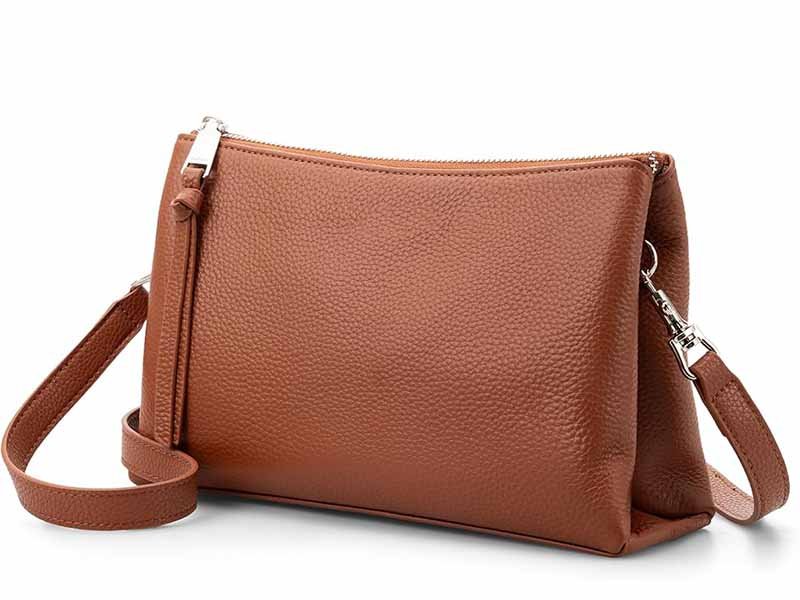
How Reinforcement Works in High-End Leather Handbags?
Reinforcement in high-end leather handbags is the hidden system that provides strength, shape control, and durability. It includes internal layers, stiffeners, base inserts, and structural bonding techniques. Without reinforcement, even premium leather cannot maintain form or support weight effectively.
How layers support high-end leather handbags
Reinforcement layers are placed between the outer leather and lining. These layers are responsible for controlling stiffness and maintaining shape.
Common reinforcement materials:
- non-woven fabric
- foam padding
- fiberboard inserts
- synthetic stiffeners
Layer combinations vary depending on design:
| Structure Level | Layer Setup |
|---|---|
| Soft bag | Leather + lining only |
| Semi-structured | Leather + light reinforcement + lining |
| Structured | Leather + stiffener + reinforcement + lining |
These layers affect:
- how the bag stands
- how it resists bending
- how it recovers after pressure
Too much reinforcement makes the bag rigid and uncomfortable. Too little leads to collapse.
Which materials reinforce leather handbags
Different reinforcement materials serve different purposes.
Common options:
- Non-woven backing → adds light support
- Foam (2–5 mm) → adds body and softness
- Fiberboard → strong structural support
- EVA sheets → durable and flexible reinforcement
Comparison:
| Material | Flexibility | Strength | Application |
|---|---|---|---|
| Non-woven | High | Low | Light structure |
| Foam | Medium | Medium | Shape + comfort |
| Fiberboard | Low | High | Base and panels |
| EVA | Medium | High | Premium structure |
Material selection depends on:
- bag size
- weight load
- desired stiffness
How bottom panels strengthen leather handbags
The bottom panel carries the highest stress. Reinforcing this area is essential for durability.
Common bottom construction:
- leather + fiberboard + lining
- leather + EVA + padding
- multi-layer composite structure
Typical bottom thickness:
| Bag Size | Recommended Thickness |
|---|---|
| Small bag | 2–3 mm |
| Medium bag | 3–5 mm |
| Large bag | 5–8 mm |
A strong bottom prevents:
- sagging
- deformation
- corner wear
How stiffness affects high-end leather handbags
Stiffness must be carefully controlled. It directly affects how the bag feels and performs.
Too soft:
- bag collapses
- poor shape retention
- less premium feel
Too stiff:
- uncomfortable to use
- unnatural movement
- risk of cracking over time
Ideal balance:
- firm enough to hold shape
- flexible enough for comfort
This balance is one of the hardest parts of handbag development and often requires multiple sample adjustments.
What Details Define High-End Leather Handbags Quality?
High-end leather handbags quality is defined by how well stitching, edge finishing, hardware integration, and closure systems are executed. These details determine durability, visual precision, and long-term performance. Even with premium leather and strong structure, poor craftsmanship in these areas can quickly reduce product value.
How stitching defines high-end leather handbags
Stitching is one of the clearest indicators of handbag quality because it directly affects both strength and appearance. In high-end leather handbags, stitching is not only functional—it is also part of the visual identity.
Key stitching factors include:
- stitch density (usually 6–10 stitches per inch for leather goods)
- thread type (polyester thread for durability, nylon for flexibility)
- stitch consistency (even spacing, straight alignment)
- reinforcement stitching at stress points
Common stitching types:
| Stitch Type | Function | Application |
|---|---|---|
| Single stitch | Basic seam | Interior panels |
| Double stitch | Extra strength | Outer panels |
| Saddle stitch | Handcrafted durability | Luxury handbags |
| Bartack stitch | Load reinforcement | Handle anchors |
Poor stitching often leads to:
- loose threads after short use
- seam opening under load
- uneven visual lines
High-end production focuses heavily on precision. Even a small deviation in stitch alignment can affect the overall perception of quality. For premium handbags, stitching must remain clean and stable even after repeated bending and weight stress.
How edge finishing improves leather handbags
Edge finishing plays both a protective and aesthetic role. It seals raw leather edges, prevents fraying, and gives the bag a refined look.
Common edge finishing methods:
- edge painting (most common in structured bags)
- folded edges (clean, durable finish)
- raw cut edges (used in some minimalist designs)
Comparison:
| Edge Type | Appearance | Durability | Use Case |
|---|---|---|---|
| Edge painting | Smooth, polished | Medium to high | Structured handbags |
| Folded edge | Clean, strong | High | Premium products |
| Raw edge | Natural look | Lower | Casual designs |
High-quality edge finishing requires:
- multiple paint layers (2–4 coats)
- sanding between layers
- consistent thickness and smoothness
Common issues in low-quality production:
- cracking edges after bending
- uneven paint thickness
- visible glue marks
In high-end handbags, edge finishing is often one of the most time-consuming processes because it directly affects both durability and visual refinement.
Which hardware supports leather handbags
Hardware is not just decorative—it is part of the structural system. It supports load-bearing areas and affects the overall durability of the bag.
Key hardware components include:
- D-rings and buckles
- zipper systems
- rivets and studs
- magnetic closures
- metal feet
Hardware materials:
| Material | Strength | Finish Quality | Use Case |
|---|---|---|---|
| Zinc alloy | Medium | Good | Most handbags |
| Brass | High | Premium | Luxury bags |
| Stainless steel | Very high | Industrial | Heavy-duty designs |
Important considerations:
- plating quality (anti-rust, anti-scratch)
- thickness of metal parts
- attachment method (riveted vs stitched)
Weak hardware can cause:
- strap detachment
- zipper failure
- surface scratches
High-end handbags often use thicker hardware with better plating to maintain appearance over time.
How closures affect high-end leather handbags
Closures affect both usability and structural stability. A well-designed closure system ensures the bag opens smoothly while maintaining its shape.
Common closure types:
- zipper closure (secure, widely used)
- magnetic snap (quick access)
- turn-lock (premium appearance)
- flap closure (classic style)
Comparison:
| Closure Type | Security | Convenience | Use Case |
|---|---|---|---|
| Zipper | High | Medium | Travel and daily bags |
| Magnetic | Medium | High | Casual handbags |
| Turn-lock | High | Medium | Luxury handbags |
| Flap | Medium | High | Fashion bags |
Poor closure design can lead to:
- misalignment of opening
- stress on surrounding leather
- difficulty in daily use
In premium handbags, closure systems are integrated into the structure so they support the overall shape rather than weaken it.
How to Judge High-End Leather Handbags Structure?
High-end leather handbags structure can be evaluated by checking shape retention, load distribution, stitching strength, and overall balance. A well-structured bag maintains its form, supports weight evenly, and shows minimal deformation after repeated use.
What shows strong high-end leather handbags
Strong structure can be identified through simple observation and handling.
Key signs include:
- the bag stands upright without collapsing
- panels remain straight and aligned
- the opening keeps its shape
- handles do not distort the upper body
- the base remains flat under load
Quick evaluation checklist:
| Check Point | Good Sign | Warning Sign |
|---|---|---|
| Shape | Holds form | Collapses easily |
| Base | Flat and stable | Sagging |
| Panels | Straight lines | Wrinkling |
| Handles | Firm attachment | Pulling or twisting |
Customers often notice these details immediately, even without technical knowledge.
How to test leather handbags durability
Durability testing can be done through simple real-world simulations.
Common tests:
- load test (fill bag with 5–10 kg and observe shape)
- handle pull test (apply repeated lifting force)
- zipper cycle test (open/close 50–100 times)
- base pressure test (place weight and check deformation)
These tests reveal:
- structural weaknesses
- stitching quality
- hardware reliability
Professional factories also perform internal testing to ensure consistency before shipment.
What defects weaken leather handbags
Structural defects often come from poor design or rushed production.
Common issues:
- insufficient reinforcement
- weak stitching at stress points
- low-quality lining
- uneven panel cutting
- improper edge finishing
Typical defect impact:
| Defect | Result |
|---|---|
| Weak reinforcement | Bag loses shape quickly |
| Poor stitching | Seams open |
| Low-quality lining | Interior tears |
| Bad cutting | Misaligned structure |
These problems usually appear after short-term use, affecting customer satisfaction.
How factories control leather handbags quality
Consistent quality requires a structured production system.
Key control steps:
- Material inspection
- leather thickness and consistency
- hardware quality
- lining strength
- In-line production checks
- stitching accuracy
- panel alignment
- reinforcement placement
- Final inspection
- appearance check
- functional testing
- packaging quality
Factories like SzoneierLeather integrate these processes to maintain stable quality across orders.
Work With SzoneierLeather to Build Your High-End Leather Handbags
At this point, one thing should be clear: high-end leather handbags are not defined by leather alone. Structure, reinforcement, craftsmanship, and quality control all work together to create a product that truly performs in the market.
SzoneierLeather brings over 18 years of experience in leather goods development and manufacturing, covering:
- raw material sourcing and development
- product design and engineering
- sample development and refinement
- full-scale production
- packaging design and quality control
We support brands and custom wholesale clients who already understand the importance of product quality and want a manufacturing partner that can match that level of expectation.
If you are planning to develop a high-end leather handbag, the right structure starts with the right factory.
Send us your design, reference sample, or idea today. SzoneierLeather will help you turn it into a well-structured, market-ready leather handbag that your customers can trust and use with confidence.