
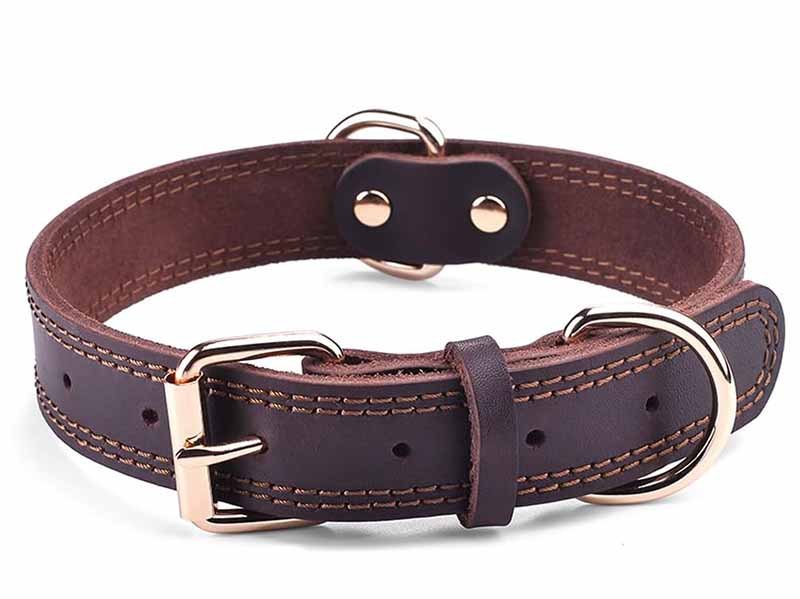
A leather dog collar may look simple, but one of its most important design decisions is easy to overlook: width. Many brands spend a lot of time choosing leather type, buckle finish, edge paint color, logo method, or packaging style. Those details matter, especially in premium pet products. But if the collar width is wrong, even a beautiful product can feel uncomfortable on the dog, look unbalanced on the neck, or fail to give the level of control the customer expected.
This is why width selection matters far beyond appearance. A narrow collar can feel light and elegant, but it may concentrate too much pressure on the neck of a strong dog. A wide collar can improve control and spread force more evenly, but it may feel bulky on a small breed or look oversized for a fashion-focused collection. For brands developing leather dog collars, width is where comfort, control, breed fit, visual style, and product positioning meet.
The right width for leather dog collars depends mainly on breed size, neck circumference, daily use, and pulling strength. Small breeds usually perform better with lighter widths such as 0.5 to 0.75 inch, while medium breeds often use 0.75 to 1 inch. Large or strong breeds generally need 1 to 1.5 inches or more so pressure is distributed better and the collar has enough structural strength for leash control.
Many product problems start when width is chosen by appearance alone. The collar may photograph well, but in real use the dog pulls, turns, runs, and wears it for hours. That is when width stops being a styling choice and becomes a product performance issue. If a collar is supposed to serve both the dog and the brand well, width has to be chosen with much more care than most people think.
What Is the Right Width for Leather Dog Collars?
The right width for leather dog collars is the width that provides enough surface area to distribute pressure comfortably around the dog’s neck while maintaining the structural strength needed to handle leash tension. In practice, collar width must be selected according to four real-world factors: dog size, neck circumference, pulling strength, and daily usage conditions. When the width is properly matched to these factors, the collar sits more securely on the neck, reduces pressure concentration, and maintains long-term durability without feeling bulky.
Many product problems appear when width is chosen only for appearance. A collar that looks elegant on a product page may feel uncomfortable during real walks if it is too narrow for the dog’s strength. On the other hand, collars that are unnecessarily wide can feel heavy or restrict neck movement for smaller breeds. For this reason, experienced manufacturers usually treat width as one of the first structural decisions during collar development.
In most leather dog collar product lines, widths fall into a predictable range. Each width corresponds to a certain level of structural strength and dog size category.
| Collar Width | Metric Size | Typical Dog Size | Typical Weight Range |
|---|---|---|---|
| 0.5 inch | 12–13 mm | toy breeds | 2–4 kg |
| 0.75 inch | 19 mm | small breeds | 4–10 kg |
| 1 inch | 25 mm | medium breeds | 10–25 kg |
| 1.25 inch | 32 mm | large breeds | 25–35 kg |
| 1.5 inch | 38 mm | strong large breeds | 35 kg+ |
This width structure is widely used across pet product brands because it aligns well with the physical differences between dog sizes.
What Does Width Mean for Leather Dog Collars?
Width refers to the distance between the two edges of the leather strap that wraps around the dog’s neck. Although this measurement seems simple, it influences several important aspects of collar performance.
First, width determines how much of the dog’s neck surface comes into contact with the collar. A wider collar spreads force over a larger area, while a narrow collar concentrates force in a smaller zone.
Second, width affects the type and size of hardware that can be used. Buckles, D-rings, and rivets must match the width of the strap to maintain structural balance.
Third, width influences how the collar visually fits the dog’s body. Narrow collars usually appear lighter and more minimal, while wider collars create a stronger, more substantial appearance.
Manufacturers therefore treat width as part of the collar’s structural design rather than a simple aesthetic choice.
Another practical detail is that width must also match leather thickness. When collars become wider, the leather usually becomes thicker to maintain stiffness and durability.
| Collar Width | Common Leather Thickness |
|---|---|
| 0.5 inch | 2.5–3 mm |
| 0.75 inch | 3–3.5 mm |
| 1 inch | 3.5–4 mm |
| 1.25 inch | 4–4.5 mm |
| 1.5 inch | 4–5 mm |
This combination ensures the collar keeps its shape and resists stretching over time.
Why Does Width Matter for Leather Dog Collars?
Width plays a direct role in how comfortable the collar feels and how effectively it controls the dog.
When a dog pulls on the leash, the collar transfers the pulling force into the neck area. If the collar is narrow, that force is concentrated on a small strip of contact area. If the collar is wider, the same force spreads across more surface area.
This difference becomes more noticeable when the dog is strong or energetic.
To understand this better, imagine a dog pulling with approximately 15 kilograms of force, which is common during sudden leash tension.
| Collar Width | Contact Area | Pressure Distribution |
|---|---|---|
| 0.5 inch | small | pressure concentrated |
| 1 inch | medium | balanced pressure |
| 1.5 inch | large | pressure spread widely |
Wider collars therefore reduce the sensation of pressure cutting into the neck. This is particularly beneficial for dogs with stronger neck muscles.
Another reason width matters is collar stability. Narrow collars can rotate around the neck more easily. When this happens, the buckle or D-ring may shift position during walks. Wider collars tend to stay more stable and aligned.
Customers often notice this difference when switching from a narrow collar to a wider one. The wider collar feels more secure and balanced during leash control.
How Does Width Affect Leather Dog Collars?
Width influences several structural and design characteristics of leather dog collars.
First, it affects durability. Wider straps contain more leather material, which improves resistance to stretching and tearing. This is important for dogs that frequently pull or run.
Second, width affects hardware strength. Larger collars require stronger buckles and thicker D-rings to handle increased force.
Third, width influences manufacturing cost. Wider collars require more leather per piece and often use heavier hardware components.
The relationship between width and structural durability can be seen below.
| Collar Width | Recommended Hardware | Strength Level |
|---|---|---|
| 0.5 inch | light buckle | light duty |
| 0.75 inch | medium buckle | moderate duty |
| 1 inch | solid buckle | strong |
| 1.25 inch | reinforced buckle | very strong |
| 1.5 inch | heavy-duty buckle | maximum strength |
Another factor influenced by width is product style. Many premium pet brands intentionally design wider collars for large dogs because they create a stronger visual presence. These collars often appear more substantial and durable, which aligns with the expectations of owners of large breeds.
For smaller dogs, the design goal is usually the opposite. Collars should appear lightweight, flexible, and proportional to the dog’s neck.
Because of these factors, width selection is usually determined early during product development. Manufacturers consider breed size, neck measurement, leather type, hardware strength, and product positioning before finalizing the collar width.
When width is selected carefully, the collar achieves a balanced combination of comfort, strength, and visual proportion, which ultimately improves both dog comfort and customer satisfaction.
Which Width Fits Different Leather Dog Collars?
The width of leather dog collars should match the physical structure and behavior of the dog wearing them. Breed size, neck circumference, muscle strength, and pulling tendency all influence how wide a collar should be. Selecting the correct width helps distribute pressure evenly across the neck, improves comfort during daily wear, and ensures the collar has enough structural strength to handle leash tension.
Which Width Fits Small Leather Dog Collars?
Small dog breeds require collars that are light, flexible, and proportionate to their neck size. Because small dogs usually weigh between 2 kg and 10 kg, their collars do not need the same structural strength as those designed for larger breeds.
For most small dogs, collars between 0.5 inch and 0.75 inch provide the best balance between comfort and durability.
If the collar is too wide, it can create several problems:
- restrict neck movement
- interfere with shoulder motion
- feel bulky relative to the dog’s body size
The table below shows commonly recommended widths for small breeds.
| Dog Breed | Average Weight | Recommended Collar Width |
|---|---|---|
| Chihuahua | 2–3 kg | 0.5 inch |
| Yorkshire Terrier | 2–4 kg | 0.5 inch |
| Pomeranian | 3–4 kg | 0.5–0.75 inch |
| Maltese | 3–4 kg | 0.5–0.75 inch |
| Miniature Dachshund | 4–5 kg | 0.75 inch |
For leather collar manufacturers, small collars also require careful material selection. Thin collars made from low-quality leather may stretch over time.
Most high-quality small dog collars use:
- 2.5–3 mm leather thickness
- lightweight buckles
- smaller D-rings
- smooth edge finishing
These details ensure the collar remains comfortable while maintaining long-term durability.
Another design factor is weight. A collar that weighs too much may feel uncomfortable for small dogs that wear it all day.
In many premium pet brands, small dog collars are intentionally designed to remain lightweight while still using strong leather.
Which Width Fits Medium Leather Dog Collars?
Medium-sized dogs represent the largest segment of the pet market. Breeds such as Beagles, Cocker Spaniels, and Border Collies often require collars that balance comfort, strength, and visual proportion.
Most medium dogs weigh between 10 kg and 25 kg, which means their collars must handle moderate pulling force during walks.
For these breeds, collars between 0.75 inch and 1 inch are generally the most practical option.
| Dog Breed | Average Weight | Recommended Collar Width |
|---|---|---|
| Beagle | 9–11 kg | 0.75–1 inch |
| Cocker Spaniel | 10–14 kg | 1 inch |
| French Bulldog | 10–13 kg | 1 inch |
| Border Collie | 14–20 kg | 1 inch |
| Shiba Inu | 8–10 kg | 0.75–1 inch |
The 1-inch collar width is widely used because it provides a good balance of strength and comfort. It is wide enough to distribute leash pressure but still flexible enough for daily wear.
From a product design perspective, medium-width collars allow manufacturers to use stronger hardware and thicker leather without making the collar feel bulky.
Typical construction for this category includes:
- 3–4 mm full-grain leather
- solid brass or stainless steel hardware
- double stitching or reinforced stitching
- burnished or edge-painted finishing
This combination gives the collar a solid feel while maintaining comfort for the dog.
For brands selling premium leather dog collars, the 1-inch width is often considered the most versatile size in the product line.
Which Width Fits Large Leather Dog Collars?
Large dog breeds generate significantly more pulling force during daily walks. Breeds such as German Shepherds, Labradors, and Rottweilers may weigh 30–50 kg or more, which means their collars must withstand greater mechanical stress.
For these dogs, collars between 1.25 inches and 1.5 inches are usually recommended.
Wider collars help distribute pressure more evenly and provide better control during leash handling.
| Dog Breed | Average Weight | Recommended Collar Width |
|---|---|---|
| Labrador Retriever | 25–36 kg | 1–1.25 inch |
| German Shepherd | 30–40 kg | 1.25 inch |
| Golden Retriever | 25–34 kg | 1–1.25 inch |
| Doberman | 30–40 kg | 1.25–1.5 inch |
| Rottweiler | 35–50 kg | 1.5 inch |
Large collars also require stronger construction to prevent stretching or deformation.
Manufacturers often increase both leather thickness and hardware size when producing collars for large breeds.
Typical construction specifications include:
| Collar Width | Leather Thickness | Hardware Size |
|---|---|---|
| 1 inch | 3.5–4 mm | medium |
| 1.25 inch | 4–4.5 mm | large |
| 1.5 inch | 4.5–5 mm | heavy-duty |
Another important reason for wider collars is control. When a strong dog pulls suddenly, a wider collar spreads the pressure across a larger neck area. This makes the leash feel more stable for the owner while reducing discomfort for the dog.
Many working-dog collars, including those used for training or outdoor activity, adopt wider constructions for this reason.
Leather Dog Collar Width Chart by Breed
For product designers and pet brands developing leather dog collars, the following width guide is commonly used during early product planning.
| Dog Size Category | Neck Circumference | Collar Width Range |
|---|---|---|
| Toy breeds | 18–25 cm | 0.5 inch |
| Small breeds | 22–30 cm | 0.5–0.75 inch |
| Medium breeds | 30–40 cm | 0.75–1 inch |
| Large breeds | 40–55 cm | 1–1.25 inch |
| Giant breeds | 50–70 cm | 1.25–1.5 inch |
These ranges provide a starting point, but the final width selection should also consider the collar’s purpose.
For example:
- fashion collars may prioritize lighter width
- training collars may require stronger width
- luxury collars may use wider straps for visual impact
This is why experienced manufacturers often develop several width options within the same collar collection.
By doing this, brands can offer a consistent design language across multiple dog sizes while still maintaining the correct structural proportions.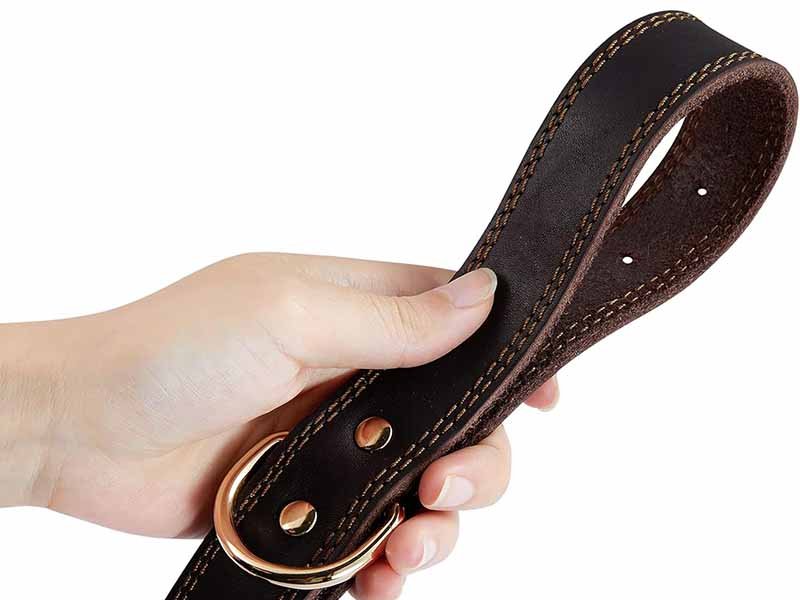
How Does Width Affect Leather Dog Collars Comfort?
The width of leather dog collars directly affects how pressure is distributed around a dog’s neck. When the collar is properly sized, it spreads tension evenly and reduces localized pressure. If the collar is too narrow, the pressure becomes concentrated in a small area. Over time this may cause discomfort, hair loss, or skin irritation, especially in dogs that pull strongly on the leash.
How Does Width Spread Pressure on Leather Dog Collars?
Pressure distribution is one of the most important reasons collar width matters.
When a dog pulls forward during a walk, the leash creates tension that travels through the D-ring and buckle into the collar strap. That force presses against the dog’s neck.
If the collar is narrow, the contact area is small. This increases pressure per square centimeter.
If the collar is wider, the same force is distributed across a larger area.
The relationship can be simplified like this:
| Collar Width | Neck Contact Area | Pressure Level |
|---|---|---|
| 0.5 inch | small | higher pressure |
| 1 inch | medium | balanced pressure |
| 1.5 inch | large | lower pressure |
This does not mean wide collars eliminate pressure entirely, but they significantly reduce concentrated stress on the neck.
This is particularly important for:
- strong pulling breeds
- active dogs
- dogs that wear collars all day
Many premium leather dog collars use wider straps not only for style but also to improve long-term comfort.
Why Do Wide Leather Dog Collars Improve Comfort?
Wide collars improve comfort because they stabilize the collar on the neck and reduce sharp pressure points.
Dogs naturally move their heads, shoulders, and neck muscles while walking. A collar that is too narrow can twist or shift easily. This movement creates uneven pressure.
A wider collar remains more stable during motion.
This stability helps in several ways:
- reduces collar twisting
- spreads tension evenly
- keeps hardware aligned on the neck
- minimizes rubbing on fur and skin
Another comfort factor is edge finishing. Wider collars allow manufacturers to round and finish the edges more smoothly.
Typical finishing methods include:
- burnished edges
- edge paint
- folded leather edges
- padded lining
These details reduce friction and make the collar feel softer against the dog’s neck.
For premium leather collars, manufacturers often combine wider straps with soft interior lining materials such as:
- nubuck leather
- suede lining
- padded leather backing
This creates a collar that feels strong but comfortable during long wear.
Do Narrow Leather Dog Collars Suit Small Dogs?
Narrow collars remain the best choice for small dogs because their necks are shorter and lighter.
A collar that is too wide can create several issues for small breeds:
- restrict neck flexibility
- add unnecessary weight
- interfere with shoulder movement
- look oversized on the dog
For toy and small breeds, collars between 0.5 inch and 0.75 inch provide a better balance of comfort and flexibility.
These collars are also easier to pair with smaller hardware.
Typical small-breed collar specifications include:
| Collar Width | Leather Thickness | Hardware Size |
|---|---|---|
| 0.5 inch | 2.5–3 mm | small buckle |
| 0.75 inch | 3–3.5 mm | small-medium buckle |
This construction ensures the collar remains lightweight while maintaining enough strength for everyday use.
How Does Width Affect Leather Dog Collars Strength?
Width also influences the structural strength of leather dog collars. A wider strap contains more material, which allows the collar to withstand higher tension without stretching or tearing.
How Does Width Improve Leather Dog Collars Strength?
When a dog pulls on the leash, the collar must handle both tensile force and bending stress.
A wider strap improves strength in several ways:
First, it increases the cross-section area of leather. More material means higher resistance to tearing.
Second, it allows larger hardware components to be used.
Third, it improves stitching stability by providing more space for stitch placement.
The relationship between width and structural strength is shown below.
| Collar Width | Recommended Leather Thickness | Strength Level |
|---|---|---|
| 0.5 inch | 2.5–3 mm | light duty |
| 0.75 inch | 3–3.5 mm | moderate |
| 1 inch | 3.5–4 mm | strong |
| 1.25 inch | 4–4.5 mm | very strong |
| 1.5 inch | 4–5 mm | heavy duty |
For strong breeds, collars below 1 inch may not provide enough structural stability.
This is why many working dog collars are designed with wider straps.
Which Width Works for Strong Leather Dog Collars?
Strong dog breeds require collars that can handle sudden pulling force.
Large breeds often generate significant tension during walking or training. If the collar width is insufficient, the leather may stretch or the hardware may deform.
Collars designed for strong dogs typically include:
- 1.25–1.5 inch width
- 4–5 mm full grain leather
- heavy-duty D-rings
- reinforced stitching
Examples of breeds that often use wider collars include:
| Dog Breed | Recommended Width |
|---|---|
| German Shepherd | 1.25 inch |
| Doberman | 1.25–1.5 inch |
| Rottweiler | 1.5 inch |
| Cane Corso | 1.5 inch |
These collars are built to handle higher pulling force while maintaining structural stability.
How Do Width and Leather Thickness Work Together?
Collar width and leather thickness must be balanced carefully.
A wide collar made from thin leather may still stretch or deform. Conversely, a narrow collar made from very thick leather may feel stiff and uncomfortable.
Manufacturers usually combine both factors to create a balanced structure.
Typical combinations include:
| Collar Width | Leather Thickness | Application |
|---|---|---|
| 0.5 inch | 2.5–3 mm | toy breeds |
| 0.75 inch | 3–3.5 mm | small breeds |
| 1 inch | 3.5–4 mm | medium breeds |
| 1.25 inch | 4–4.5 mm | large breeds |
| 1.5 inch | 4–5 mm | strong breeds |
This balance ensures the collar remains both strong and comfortable.
How Do Brands Choose Width for Leather Dog Collars?
When brands develop leather dog collars, width is rarely chosen randomly. It is usually determined through a combination of dog size data, neck measurements, product positioning, durability expectations, and manufacturing constraints. For companies producing collars at scale, width selection becomes a structured product decision rather than a design preference.
Most professional pet product brands start width selection by analyzing the target dog category their product is intended for. Dogs vary greatly in size and strength. A collar designed for a 3 kg toy breed cannot be built using the same proportions as one intended for a 40 kg working dog.
In product development, brands often build a collar collection around several standardized width ranges. This allows them to maintain a consistent visual design across multiple dog sizes while ensuring each collar performs properly for the intended breed.
| Dog Size Category | Typical Neck Range | Collar Width Range |
|---|---|---|
| Toy breeds | 18–25 cm | 0.5 inch |
| Small breeds | 22–30 cm | 0.5–0.75 inch |
| Medium breeds | 30–40 cm | 0.75–1 inch |
| Large breeds | 40–55 cm | 1–1.25 inch |
| Giant breeds | 50–70 cm | 1.25–1.5 inch |
These ranges help brands create a structured product lineup that fits most dog sizes without overcomplicating the manufacturing process.
How Do Breeds Affect Leather Dog Collars Width?
Different dog breeds have different neck shapes, muscle strength, and behavior patterns. These characteristics directly affect how wide a collar should be.
For example, small breeds such as Chihuahuas, Yorkshire Terriers, and Pomeranians have delicate neck structures. Narrow collars work best because they are lighter and less restrictive.
Medium breeds such as Beagles, Shiba Inus, and Cocker Spaniels require collars that balance comfort and control. A width of around 0.75–1 inch typically works well because it spreads pressure without adding unnecessary bulk.
Large breeds such as Labradors, German Shepherds, and Dobermans need wider collars to handle stronger pulling forces.
| Dog Breed | Average Weight | Common Collar Width |
|---|---|---|
| Chihuahua | 2–3 kg | 0.5 inch |
| Pomeranian | 3–4 kg | 0.5–0.75 inch |
| Beagle | 9–11 kg | 0.75–1 inch |
| Border Collie | 14–20 kg | 1 inch |
| Labrador Retriever | 25–36 kg | 1–1.25 inch |
| Rottweiler | 35–50 kg | 1.5 inch |
By matching collar width to breed size, brands can ensure that the collar remains comfortable while still providing adequate strength.
Another factor brands consider is neck fur thickness. Dogs with thick fur often benefit from slightly wider collars because the extra width helps stabilize the collar on top of the fur layer.
How Do Factories Test Leather Dog Collars Width?
Before finalizing collar specifications, experienced manufacturers usually test width in combination with leather thickness and hardware strength.
These tests simulate real conditions such as leash pulling, sudden tension, and repeated wear.
Common evaluation methods include:
| Test Type | Purpose |
|---|---|
| tensile strength test | measures how much pulling force the collar can handle |
| buckle load test | checks buckle and D-ring durability |
| stitching pull test | ensures seams do not tear |
| long-term flex test | evaluates leather fatigue after repeated bending |
For example, a 1-inch leather collar designed for medium breeds may be tested with a 20–30 kg pull force to ensure it can withstand sudden leash tension.
During testing, manufacturers observe whether:
- the leather stretches excessively
- the hardware bends
- the stitching begins to loosen
If the collar fails any of these checks, adjustments are made to the width, leather thickness, or hardware size.
This testing process helps brands avoid common product failures such as:
- D-ring deformation
- strap stretching
- buckle breakage
- stitching separation
By confirming structural performance before production, brands reduce the risk of returns and negative customer feedback.
How Do Brands Customize Leather Dog Collars Width?
Many brands prefer to offer multiple collar widths within the same design collection. This allows them to serve different dog sizes while maintaining a consistent visual identity.
A typical leather collar product line may include three to five width options.
| Product Size | Collar Width | Target Dogs |
|---|---|---|
| XS | 0.5 inch | toy breeds |
| S | 0.75 inch | small dogs |
| M | 1 inch | medium breeds |
| L | 1.25 inch | large breeds |
| XL | 1.5 inch | strong large dogs |
This structured sizing system simplifies product selection for customers and improves inventory management for brands.
Customization can also include adjustments to:
- leather thickness
- buckle size
- D-ring diameter
- stitching pattern
- lining material
For example, a luxury pet brand might choose 1.25-inch padded collars for large breeds to combine comfort with a premium appearance.
Another brand focusing on outdoor dog gear may prioritize thicker leather and stronger hardware for durability.
Factories like SzoneierLeather work closely with clients during this stage to determine the most appropriate width configuration for their target market. By combining breed data, product testing, and manufacturing experience, brands can develop leather dog collars that perform reliably while maintaining a consistent brand identity.
Develop Custom Leather Dog Collars with SzoneierLeather
Designing high-quality leather dog collars requires more than simply cutting leather straps and attaching hardware. Width selection must work together with leather thickness, hardware strength, stitching construction, and breed-specific ergonomics.
SzoneierLeather has more than 18 years of experience developing and manufacturing leather products, including leather bags, wallets, belts, straps, accessories, and premium pet products such as leather dog collars.
Our factory supports brands with a complete development system:
- leather material sourcing
- product structure design
- sample development
- hardware selection
- logo customization
- packaging design
- quality inspection
For leather dog collar projects, our team helps clients determine the most suitable specifications, including:
- collar width by breed
- leather thickness selection
- hardware durability
- structural reinforcement
This development process ensures the final product meets both comfort requirements for the dog and durability expectations from customers.
If you are planning to develop custom leather dog collars for your brand, SzoneierLeather can support your project from design to production.
Contact our team to discuss your ideas and start developing a leather dog collar collection tailored to your market.