If you’ve ever opened a sample box and thought, “This leather looks great… but will it survive real use?”—you’re already asking the right question. Split leather is where many product lines win or lose: used correctly, it’s a smart way to control cost and still deliver a solid feel; used incorrectly, it becomes the reason a bag peels at the handle, a strap cracks at the bend, or a wallet starts looking tired after a season.
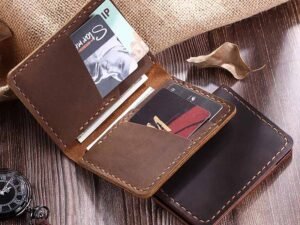
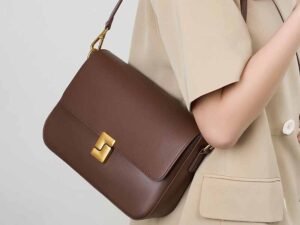
Split leather is acceptable when it’s placed in low-stress zones (linings, suede interiors, decorative panels, some box coverings) and when the thickness and finish match the job. It’s a poor choice for high-stress zones (handles, straps, corners, fold lines) because it comes from deeper hide layers with lower fiber density and can be more prone to tearing or finish failure if heavily coated.
At SzoneierLeather, we’ve spent 18+ years developing and producing leather bags, wallets, belts, straps, accessories, and leather boxes. Our clients—brands and professional wholesale programs—don’t just want “real leather.” They want leather that performs in the exact part of the product where it’s used. So let’s strip away the marketing and talk like product people.
Split Leather — What Is It Really?
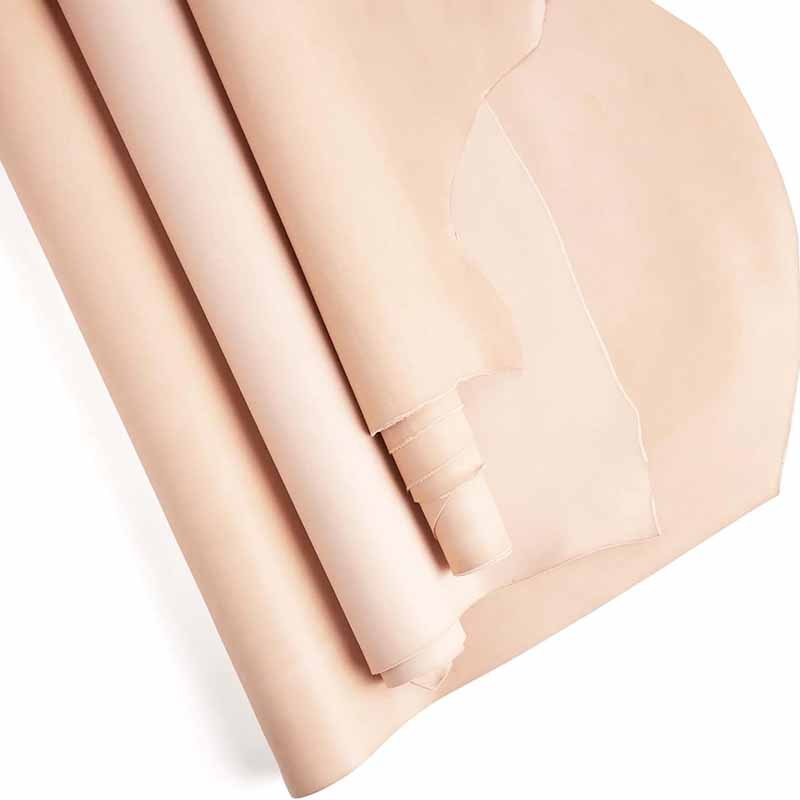
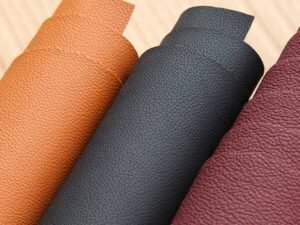
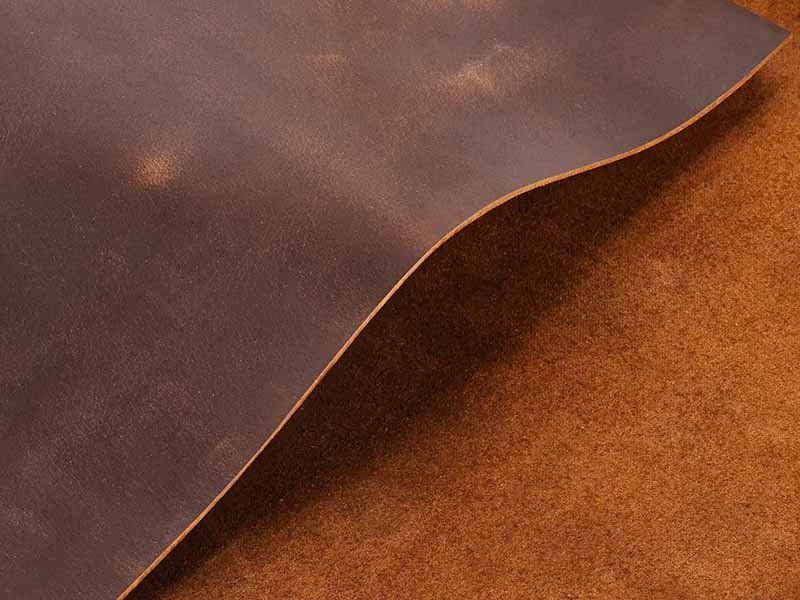
Split leather is the lower layer of a hide that remains after the grain layer is separated during the splitting process. It does not contain the original surface grain and has a looser fiber structure. It is real leather, but it generally offers lower tensile strength and flex durability than full grain or top grain leather.
To understand split leather properly, you need to understand how a hide is built and how it is processed.
How a Hide Is Structured Before Splitting
A cowhide is not uniform from top to bottom. It has layers with different fiber density and strength characteristics.
Before splitting, the hide thickness usually ranges between 4mm and 6mm, depending on breed and region.
The upper part of the hide (the grain layer) contains:
- Dense, tightly interwoven collagen fibers
- Strong horizontal fiber orientation
- Higher natural tensile strength
The lower portion (which becomes split leather) contains:
- Looser fiber bundles
- More vertical fiber structure
- Less compact density
When the hide is run through a splitting machine, it is horizontally divided into layers.
Here’s how it typically breaks down:
| Hide Layer | Description | Fiber Density | Strength Level |
|---|---|---|---|
| Full Grain | Top surface with natural grain | Highest | Strongest |
| Top Grain | Grain sanded or corrected | High | Strong |
| Split Leather (Upper Split) | Just below grain | Medium | Moderate |
| Split Leather (Lower Split) | Deeper layer | Lower | Weaker |
Not all split leather is the same. Upper splits are structurally stronger than deeper splits.
This distinction is rarely mentioned in retail marketing, but it is critical in manufacturing.
What Happens to Split Leather After Separation?
Once separated, split leather can be finished in several ways:
- Suede finish – natural fibrous surface exposed
- Pigmented finish – colored coating applied
- Embossed finish – artificial grain texture pressed into surface
- PU-coated finish – synthetic film layered on top
These finishing methods dramatically change how split leather looks and performs.
Performance impact by finish type:
| Finish Type | Visual Appearance | Flex Behavior | Risk Factor |
|---|---|---|---|
| Suede | Soft, matte | Flexible | Low structural risk |
| Light Pigment | Smooth | Moderate | Medium |
| Heavy PU Coating | Grain-like | Reduced flexibility | Higher crack/peel risk |
| Embossed Thick Film | Artificial grain | Less flexible | Surface failure risk |
When heavily coated, split leather can look almost identical to top grain leather at first glance. But structurally, the substrate beneath the coating remains less dense.
If the coating layer is too rigid and the product bends repeatedly (e.g., wallet spine), cracking may appear along fold lines.
What Does “Looser Fiber Structure” Actually Mean in Use?
Fiber density affects:
- Tear resistance
- Edge durability
- Stretch under load
- Long-term shape retention
In practical product terms:
| Product Area | What Fiber Density Affects |
|---|---|
| Bag handles | Pull strength |
| Shoulder straps | Stretch resistance |
| Wallet folds | Crack resistance |
| Belt holes | Tear resistance |
| Corners | Abrasion tolerance |
Because split leather has lower fiber compactness than grain leather, it is less suited for high-load or high-flex areas unless thickness and reinforcement compensate.
Thickness and Performance Relationship
Split leather thickness matters more than most buyers realize.
Here’s a simplified performance guide:
| Thickness | Use Suitability |
|---|---|
| 0.8–1.0 mm | Linings, interior panels |
| 1.2–1.4 mm | Decorative exterior panels |
| 1.6–1.8 mm | Structured applications with support |
| <1.0 mm + heavy coating | High risk in flex zones |
A 1.6mm upper split can perform reasonably well in moderate-stress areas.
A 1.0mm heavily coated lower split used in a strap is likely to fail prematurely.
At SzoneierLeather, we always specify thickness in millimeters during sampling and confirm tolerance ranges (±0.1mm or ±0.2mm depending on spec).
Thickness consistency directly affects long-term durability.
Why Split Leather Exists in the First Place
Split leather is not a “waste material.” It exists because:
- Hides are thick and need splitting for different product categories.
- Not all applications require grain-layer strength.
- It allows more efficient use of each hide.
- It supports cost control in mid-range product lines.
When used intelligently, split leather is economically and structurally appropriate.
When used incorrectly in load-bearing areas, it becomes a liability.
Split Leather — How Strong Is It?
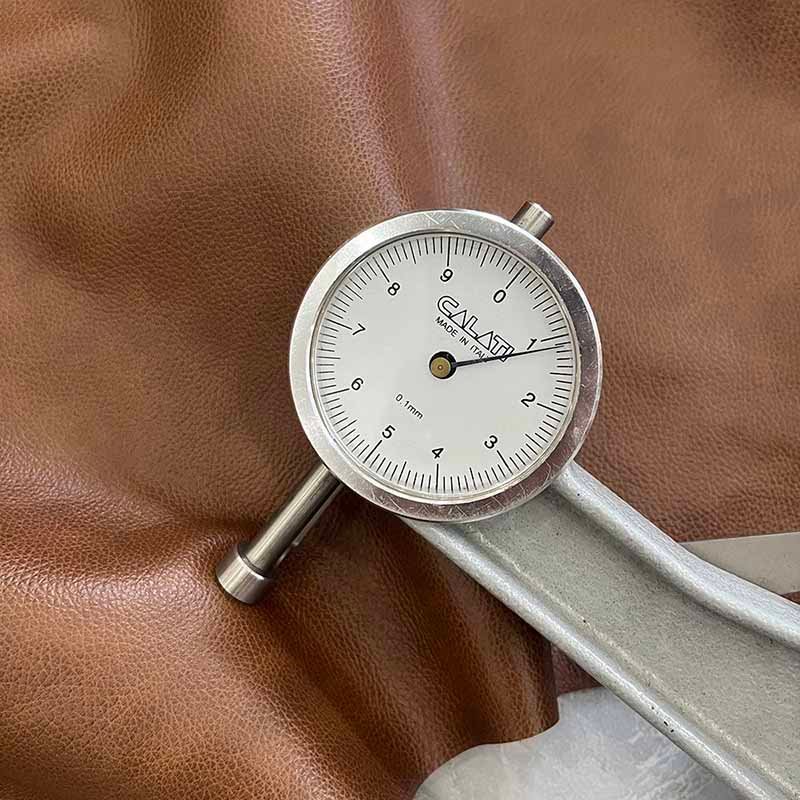
Split leather is structurally weaker than top grain or full grain leather because it comes from the lower layers of the hide, where fiber density is lower. Its tensile strength and tear resistance are generally reduced, especially in thin cuts or heavily coated versions. However, thickness, finish type, and structural placement can significantly improve its practical performance.
Strength is not only about “is it leather.” It is about fiber structure + thickness + usage zone.
Split Leather — Which Parts of the Hide Become Split Leather?
After tanning, hides are often 4–6 mm thick. They are split horizontally into layers. The uppermost layer (grain) contains tightly interwoven collagen fibers. Below it, the structure becomes looser and more vertical.
A simplified technical breakdown:
| Hide Section | Fiber Structure | Typical Strength Behavior |
|---|---|---|
| Grain Layer (Full / Top) | Dense, interlocked | High tensile & tear resistance |
| Upper Split | Moderately dense | Acceptable for light structure |
| Lower Split | Looser fibers | Lower tear resistance |
The deeper the split, the lower the structural cohesion.
This is why not all split leather performs the same. A 1.6mm upper split can outperform a thin 1.0mm lower split significantly.
When sourcing split leather for leather goods, thickness alone is not enough. You must confirm whether it is:
- Upper split (closer to grain)
- Middle split
- Lower split
At SzoneierLeather, we request layer origin details from tanneries before approving bulk production for structured goods.
Split Leather — How Does It Handle Stress and Wear?
Let’s separate stress into three categories:
- Tensile stress (pulling force)
- Flex stress (repeated bending)
- Abrasion stress (rubbing/friction)
Tensile Strength
Split leather generally has lower tensile strength than top grain because fiber bundles are less compact.
In bag handles or belt straps, tensile load can exceed:
- 20–40 kg force during regular use
- Higher in travel or work bags
A thin coated split leather strap may stretch or tear earlier than a top grain equivalent of similar thickness.
Flex Stress
Repeated bending exposes weakness in:
- Wallet spines
- Strap fold points
- Belt buckle areas
- Card slot edges
Coated split leather is more vulnerable here because the finish layer must flex together with the substrate.
Common failure modes:
| Area | What Happens |
|---|---|
| Wallet fold | Micro-cracks form |
| Strap fold | Surface finish separates |
| Corner seam | Delamination risk |
Abrasion Stress
Abrasion performance depends on finish type:
- Suede split → surface fibers can wear but age naturally
- Heavy PU-coated split → coating may scratch or peel
For leather boxes and structured decorative panels, abrasion stress is minimal, so split leather performs well.
For bag corners or strap ends, abrasion is constant — split leather is risky unless reinforced.
Split Leather — What Thickness Makes It More Durable?
Thickness dramatically affects performance.
Here is a practical reference table for leather goods:
| Product Type | Recommended Split Thickness | Risk Level |
|---|---|---|
| Wallet interior panels | 0.8–1.2 mm | Low |
| Suede lining | 0.8–1.4 mm | Low |
| Decorative outer panel | 1.2–1.6 mm | Moderate |
| Bag gusset (low stress) | 1.4–1.8 mm | Moderate |
| Handle / Strap | Not recommended | High |
| Belt strap | Not recommended | Very High |
Important principle:
If you increase split thickness, strength improves — but flexibility decreases and cost rises.
For example:
- 1.0mm split → flexible, but limited tear resistance
- 1.6mm split → stronger, but heavier and less supple
- 2.0mm split → rarely used for fine leather goods
In leather box production, thicker split (1.6–1.8mm) bonded to rigid board works well because structural stress is transferred to the internal board.
In soft leather bags, thickness alone cannot compensate for fiber density differences.
Real Failure Patterns We See in Production
From 18+ years of leather goods manufacturing, common split leather misuse leads to:
- Peeling on coated split straps Cause: repeated flex + thick surface coating.
- Tearing near hardware rivets Cause: load concentration in low fiber-density area.
- Edge fuzzing on corners Cause: abrasion + loose fiber structure.
- Cracking at fold points Cause: thin split + rigid finish system.
Most of these failures happen when split leather is placed in:
- High-bend zones
- High-load zones
- Edge stress zones
They rarely occur when used as:
- Interior suede
- Decorative surfaces
- Low-stress covering materials
Practical Stress-Zone Placement Guide
Use this simple classification when designing:
| Product Zone | Stress Level | Split Leather Recommended? |
|---|---|---|
| Bag exterior body panel (center) | Medium | Yes (if thick enough) |
| Bag bottom panel | High abrasion | No |
| Shoulder strap | High tensile | No |
| Interior pocket | Low | Yes |
| Wallet card slot interior | Low | Yes |
| Wallet spine | High flex | No |
| Leather box covering | Low | Yes |
The correct question is not “Is split leather good?”
It is “Is split leather in a low-stress or high-stress zone?”
Split Leather — When Is It Acceptable in Leather Goods?
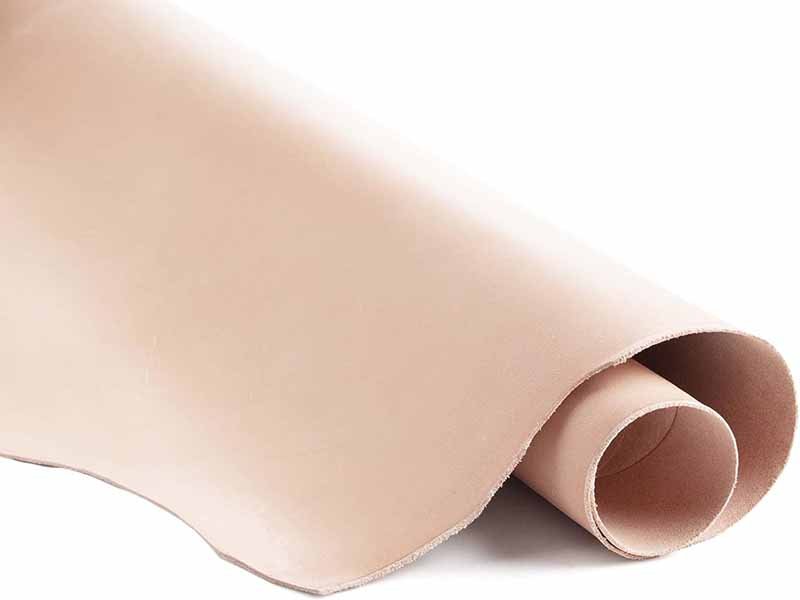
Split leather is acceptable when used in low-stress areas, structural-support environments, or products where bending and load tension are minimal. It performs well as suede lining, interior panels, leather box coverings, decorative elements, and selected mid-range bag components. It becomes a cost-efficient solution when placement aligns with its structural limits.
The key is placement, not prejudice.
Split Leather — Which Product Areas Can Use It Safely?
Not all parts of a leather product experience the same stress. In many leather goods, only 20–40% of the surface area actually carries structural load.
Split leather performs reliably in:
- Interior lining panels
- Suede compartments
- Decorative flaps
- Low-flex gussets
- Structured box coverings
- Reinforced panels backed by board
Here is a practical placement guide:
| Product Component | Stress Level | Split Leather Suitability |
|---|---|---|
| Bag body (flat exterior) | Medium | Yes (if ≥1.4mm) |
| Bag gusset (low tension) | Medium | Yes |
| Interior lining | Low | Yes |
| Wallet card slots | Low | Yes |
| Leather box exterior wrap | Low | Yes |
| Reinforced panel (bonded to board) | Low–Medium | Yes |
In leather boxes, for example, the rigid board carries structural load. The leather is decorative. Split leather works well here when properly bonded.
In mid-range handbags, split leather can be used on body panels if:
- It is not load-bearing
- It is not a corner stress zone
- It is ≥1.4mm thickness
- The finish system is flexible
This reduces material cost while maintaining appearance.
Split Leather — What Product Categories Fit It Best?
Split leather is strategically useful in:
- Suede bags and accessories Because suede is split leather with a nap finish.
- Leather boxes and rigid cases Where structure is supported by board or frame.
- Wallet interiors Where stress is limited.
- Decorative panels on mid-tier products Especially where bending is minimal.
- Brand-controlled cost collections Where price sensitivity matters but visual appeal is required.
Split leather is often appropriate in:
- Private label mid-range programs
- Corporate gifting leather goods
- Promotional leather accessories
- Structured leather packaging
However, product positioning matters.
If your brand claims “heritage craftsmanship” or “lifetime durability,” split leather on visible hero surfaces may conflict with brand narrative.
Material choice must align with brand promise.
Split Leather — How Do Coatings Improve or Reduce Performance?
Coatings can enhance appearance but also introduce risk.
Common split leather finishes:
- Pigmented PU coating
- Embossed grain coating
- Polyurethane topcoat
- Nubuck finish
- Waxed split
Performance impact:
| Finish Type | Appearance | Flex Risk | Peeling Risk |
|---|---|---|---|
| Suede (natural split) | Soft / matte | Low | None |
| Light pigmented | Smooth | Moderate | Low–Moderate |
| Heavy embossed coating | Grain-like | High | Higher |
| Thick PU film | Glossy | High | High if flexed |
When heavily coated to imitate top grain, split leather relies on finish adhesion. In high-flex areas, the finish may crack before the substrate fails.
At SzoneierLeather, we conduct:
- Bend testing (500+ cycles)
- Edge flex test
- Adhesion inspection
- Scratch resistance evaluation
before approving coated split leather for visible surfaces.
Coatings improve look. They do not change fiber density.
Split Leather — When Should You Avoid It?
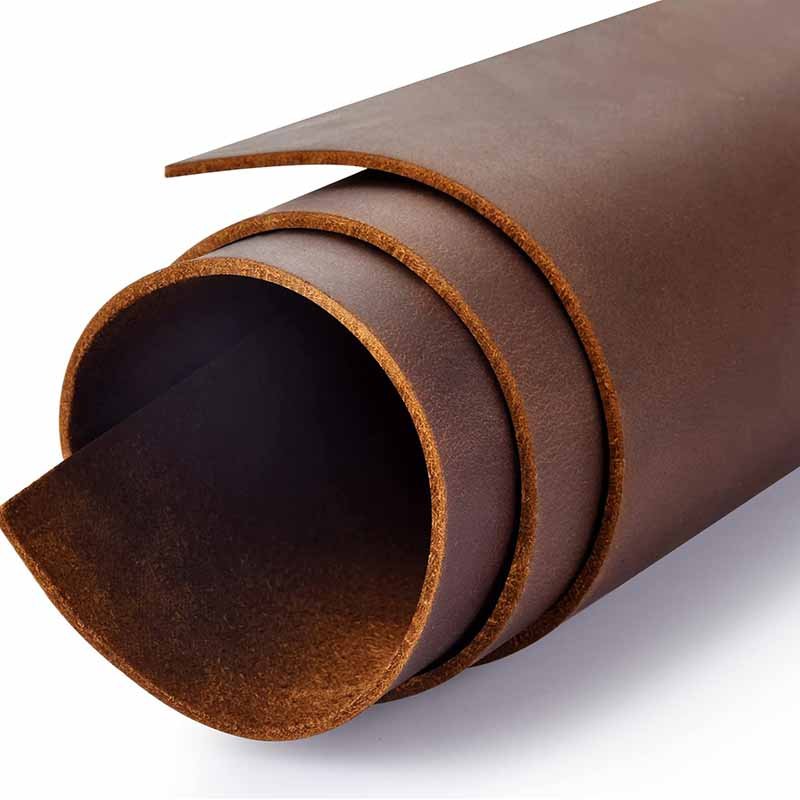
Split leather should be avoided in high-stress zones such as handles, shoulder straps, belt straps, corner reinforcements, fold-heavy areas, and load-bearing anchor points. These areas require dense fiber structure for tensile strength and flex durability. Using split leather here increases the risk of tearing, cracking, or finish failure over time.
Split Leather — Which High-Stress Zones Should Avoid It?
High-stress zones include:
- Bag handles
- Shoulder strap attachments
- Strap adjustment holes
- Wallet fold spines
- Belt body sections
- Corner base reinforcements
- Hardware rivet areas
Stress mapping example:
| Zone | Stress Type | Risk with Split Leather |
|---|---|---|
| Strap near buckle | Repeated flex + tension | High crack risk |
| Handle anchor | Pull force | Tear risk |
| Bag bottom corner | Abrasion | Fiber thinning |
| Belt holes | Concentrated tension | Stretch / tear |
In these zones, top grain or full grain leather is structurally safer.
Cost savings from split leather in these areas are usually offset by:
- Returns
- Warranty claims
- Brand damage
- Product reviews
Split Leather — Why Do Luxury Brands Limit Its Use?
Luxury brands prioritize:
- Fiber integrity
- Aging behavior
- Long-term structure
- Surface authenticity
Full grain leather develops patina and improves over time. Split leather does not age in the same way.
Luxury customers often examine:
- Edge finishing
- Flex durability
- Corner wear
- Strap strength
Coated split leather can look similar to top grain at first glance, but over time:
- Surface micro-cracking may appear
- Edges may loosen
- Surface finish may dull unevenly
This is why luxury programs typically reserve split leather for:
- Interior suede
- Hidden panels
- Decorative inserts
Material selection communicates brand positioning.
Split Leather — What Are the Common Failure Risks?
The most common issues seen in production misuse:
- Peeling at bend points
- Cracking along fold lines
- Tearing near hardware
- Edge fiber separation
- Coating delamination
These risks increase when:
- Thickness <1.2mm
- Heavy PU coating is applied
- Used in load-bearing zones
- Hardware is directly riveted without reinforcement
Failure rarely occurs in low-stress applications.
The mistake is misplacement, not the material itself.
Split Leather — How Do You Identify Quality?
Quality split leather can be identified by checking thickness consistency, fiber compactness at the edge, flexibility under bending, finish adhesion strength, and even dye penetration. Professional inspection includes edge viewing, bend testing, scratch resistance evaluation, and coating adhesion checks before bulk approval.
Split Leather — What Does Quality Look Like?
Visual indicators:
- Uniform thickness
- Even fiber density
- Clean cut edges
- No excessive fluffing
- Flexible coating without cracking
Edge check:
When you examine the cross-section:
- Fibers should look moderately tight
- No loose sponge-like texture
- Consistent color penetration
Split Leather — How Do You Test Before Production?
Recommended factory checks:
- 90° bend test (repeat 100–300 cycles)
- Scratch resistance check
- Edge abrasion test
- Pull strength test at 20–30kg
- Coating adhesion tape test
If coating peels during bend testing, it should not be used in flex zones.
Split Leather — What Should You Ask Your Leather Factory?
Before approving split leather:
- What layer is it (upper split or lower split)?
- What thickness range (mm)?
- What finish system is applied?
- Where will it be used in the product?
- Has bend testing been performed?
- What stress zone mapping was done?
At SzoneierLeather, we provide:
- Raw material traceability
- Thickness control
- Structural zone mapping
- Prototype stress simulation
- In-house QC before shipment
Because leather selection is a technical decision, not a marketing label.
Work With SzoneierLeather for Professional Leather Development
SzoneierLeather is a professional leather goods R&D and manufacturing factory with over 18 years .
We control:
- Raw material sourcing
- Leather development
- Product design
- Sampling
- Manufacturing
- Packaging and QC
We help brands decide:
- When split leather is appropriate
- When top grain is required
- How to balance cost and durability
- How to map stress zones correctly
- How to avoid post-sale failure risks
If you are developing a leather goods line and want professional material guidance before sampling, contact SzoneierLeather.
We support:
- Custom OEM / ODM development
- Brand clients
- Professional wholesale programs
- Low MOQ development
- High-end production standards
Choosing split leather is not about cutting cost.
It is about placing the right material in the right structural position.
Let’s develop your next leather product line with the correct material engineering from the beginning.