
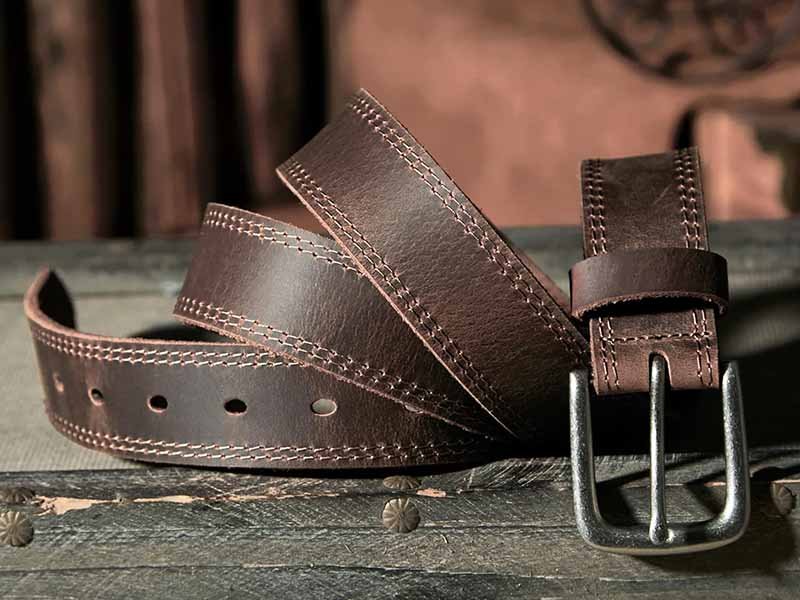
When it comes to leather belts, the buckle is more than just a functional accessory – it plays a key role in style, comfort, and how well the belt holds up over time. Many shoppers are unaware of the impact that the buckle type can have on the overall belt experience. While the classic pin buckle has been the go-to choice for centuries, automatic and slide buckles are growing in popularity, thanks to their convenience and versatility.
This article explores the three main types of buckles used in leather belts: Pin Buckle, Automatic Buckle, and Slide Buckle. We’ll break down how each type works, their key benefits, and which one might be best suited for different needs and preferences. Whether you’re looking for a classic look, modern functionality, or the ultimate in comfort, understanding the differences between these buckles can help you make an informed choice for your leather belt.
What Are the Main Types of Belt Buckles?
When customers ask about leather belts, they are often really asking about how the belt will feel, last, and behave in daily use. The buckle plays a decisive role in all three. From a manufacturing and user-experience perspective, leather belt buckles fall into three core categories: pin buckles, automatic (ratchet) buckles, and slide buckles. Each type works differently, ages differently, and fits different usage habits.
Understanding these differences helps brands avoid common problems such as poor comfort, premature wear, or high return rates.
What Is a Pin Buckle and Why Is It Still Widely Used?
A pin buckle is the most traditional and widely accepted buckle type for leather belts. It consists of a metal frame and a prong (pin) that goes through pre-punched holes in the leather strap.
From a customer’s point of view, pin buckles offer predictability. Users know exactly how tight the belt will feel, and the buckle stays firmly in place throughout the day. This is one of the reasons pin buckles are still dominant in formal belts, business wear, and premium classic styles.
From a production standpoint, pin buckles are also very stable. They work well with thicker leather and tolerate long-term stress without mechanical failure.
Typical characteristics of pin buckle belts:
| Aspect | Practical Reality |
|---|---|
| Adjustment method | Fixed by holes (usually 5–7 holes) |
| Ideal leather thickness | 3.5–4.5 mm |
| Daily comfort | Stable, slightly less flexible |
| Failure mode | Gradual (hole stretch, pin wear) |
| Customer acceptance | Very high, global |
Customers who value longevity, tradition, and a clean look usually prefer pin buckles, especially for belts worn with suits or dress shoes.
What Is an Automatic Buckle and How Does It Work in Real Use?
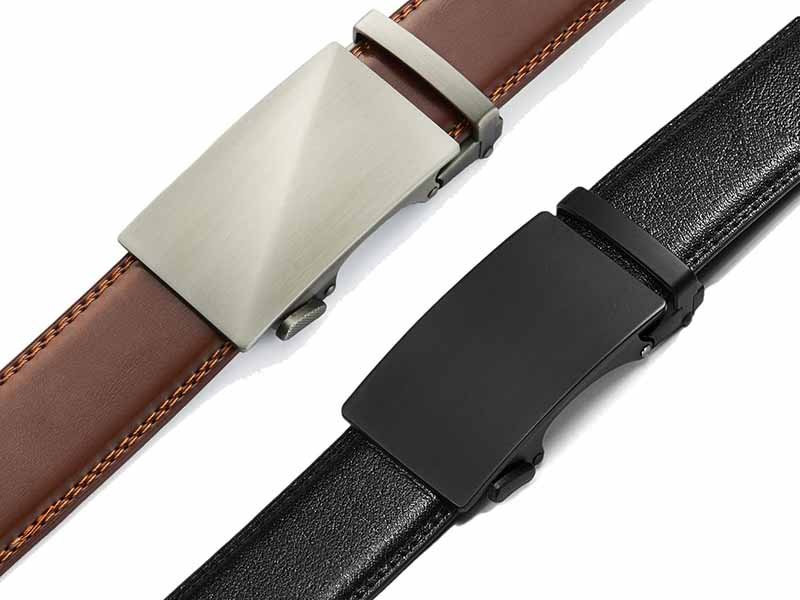
An automatic buckle (also called a ratchet buckle) uses an internal locking system instead of holes. The back of the leather strap has fine teeth, and the buckle locks onto these teeth as the belt is pulled through.
For customers, the biggest advantage is micro-adjustment. Instead of tightening or loosening by one hole at a time (often 20–25 mm per hole), automatic buckles adjust in small steps of 3–5 mm. This creates noticeably better comfort, especially when sitting, eating, or moving throughout the day.
However, automatic buckles introduce mechanical complexity, which means quality differences matter a lot.
Key customer-relevant facts about automatic buckles:
| Aspect | Practical Reality |
|---|---|
| Adjustment precision | Very high |
| Ideal leather thickness | 3.2–4.0 mm |
| Comfort during long wear | Excellent |
| Noise & feel | Depends on mechanism quality |
| Failure risk | Sudden if mechanism is poor |
Automatic buckles are popular among office workers, frequent travelers, and online shoppers, but they must be well-made. A smooth, silent mechanism builds trust; a slipping or noisy one quickly damages brand perception.
What Is a Slide Buckle and When Does It Make Sense?
A slide buckle holds the leather strap through friction rather than pins or teeth. The belt slides through the buckle and locks when tension is applied.
From the user’s perspective, slide buckles offer continuous adjustment with no fixed steps. This makes them comfortable and flexible, especially for casual wear. They are often chosen for minimalist or relaxed designs rather than formal belts.
However, slide buckles are highly dependent on leather surface quality. If the leather is too smooth, the belt may slip. If it is too soft, the belt can deform over time.
Real-world considerations for slide buckles:
| Aspect | Practical Reality |
|---|---|
| Adjustment range | Unlimited |
| Ideal leather thickness | 2.8–3.8 mm |
| Leather surface requirement | Medium friction |
| Best use cases | Casual, fashion, lifestyle belts |
| Long-term stability | Medium, leather-dependent |
Slide buckles work best when the leather and buckle are designed together, not when a generic buckle is added to an existing belt design.
How Do These Buckle Types Compare at a Glance?
Below is a practical comparison focused on customer experience, not theory:
| Feature | Pin Buckle | Automatic Buckle | Slide Buckle |
|---|---|---|---|
| Ease of use | Simple | Very easy | Very easy |
| Adjustment precision | Low | Very high | Unlimited |
| Formal appearance | Excellent | Good | Limited |
| Comfort flexibility | Medium | High | High |
| Mechanical complexity | Low | High | Low |
| Long-term predictability | Very high | Medium | Medium |
Which Buckle Type Is Best for Leather Belts?
There is no single buckle type that is “best” for all leather belts. The right choice depends on how the belt will be worn, who will wear it, and what the customer expects after months or years of use. From a manufacturing and sales perspective, the best-performing belts are those where buckle type, leather structure, and usage scenario are aligned.
Below, we break this down in a way that reflects real customer behavior — not theory.
Which Is Better for Everyday Wear?
For everyday wear, comfort consistency and reliability matter more than appearance alone. Customers usually wear daily belts for 8–12 hours, which exposes weaknesses quickly.
Real-world performance comparison for daily use:
| Buckle Type | Everyday Comfort | Adjustment Flexibility | User Complaints |
|---|---|---|---|
| Pin buckle | Medium | Low | “Too tight or too loose” |
| Automatic buckle | High | Very high | Noise / mechanism quality |
| Slide buckle | High | Unlimited | Slipping with smooth leather |
What customers actually experience:
- Pin buckles feel stable but lack fine adjustment. Many users tolerate slight discomfort because they trust the structure.
- Automatic buckles offer the best balance for daily wear, especially for office workers who sit and stand frequently.
- Slide buckles are comfortable but rely heavily on leather friction; if leather choice is wrong, daily wear becomes frustrating.
Best everyday choice:
For most modern daily-use belts, automatic buckles perform best, provided the mechanism is well made.
Which Is Best for Formal vs Casual Styles?
Style expectations strongly influence buckle choice. Customers subconsciously associate certain buckles with formality, even if they don’t articulate it.
Formal wear expectations:
- Clean silhouette
- Predictable structure
- Traditional appearance
Casual wear expectations:
- Comfort
- Flexibility
- Ease of use
| Style Category | Best Buckle Type | Why |
|---|---|---|
| Formal suits | Pin buckle | Classic look, visual balance |
| Business casual | Pin or automatic | Structure + comfort |
| Casual jeans | Automatic or slide | Easy adjustment |
| Travel & lifestyle | Automatic | Comfort over long hours |
Using an automatic buckle on a formal dress belt often feels “off” to traditional customers, even if the leather quality is high. Likewise, a pin buckle on a travel belt often feels outdated or uncomfortable.
Which Buckle Type Works Best with Different Leather Types?
Buckle choice cannot be separated from leather thickness and firmness. Many belt failures come from ignoring this relationship.
| Buckle Type | Ideal Leather Thickness | Leather Firmness |
|---|---|---|
| Pin buckle | 3.5–4.5 mm | Medium to firm |
| Automatic buckle | 3.2–4.0 mm | Medium |
| Slide buckle | 2.8–3.8 mm | Medium, with surface grip |
Key factory-side observations:
- Thick, stiff leather works best with pin buckles
- Medium-firm leather pairs well with automatic buckles
- Soft or overly smooth leather performs poorly with slide buckles
Choosing the wrong combination leads to early wear, deformation, or customer dissatisfaction — even if each component is good on its own.
Which Buckle Type Lasts the Longest Over Time?
Longevity is not just about material strength — it’s about how failure happens.
| Buckle Type | Typical Lifespan | Failure Pattern |
|---|---|---|
| Pin buckle | 5–10 years | Slow, visible wear |
| Automatic buckle | 3–6 years | Sudden mechanism failure |
| Slide buckle | 3–5 years | Gradual slipping |
Customers who value predictable aging prefer pin buckles. Customers who value comfort now accept the shorter but more convenient life of automatic buckles.
Which Buckle Type Is Best for Online Sales and Custom Orders?
Online sales introduce one major issue: sizing errors.
Automatic buckles reduce sizing problems significantly because:
- Belts can be cut to length
- No hole alignment is required
- Adjustment is forgiving
| Sales Channel | Best Buckle Choice |
|---|---|
| Physical retail | Pin buckle |
| Online direct-to-consumer | Automatic buckle |
| Custom corporate orders | Pin or automatic |
| Promotional belts | Slide buckle |
For brands selling internationally or offering customization, automatic buckles lower return rates and simplify inventory management.
How Do Different Buckles Affect Belt Performance?
In real life, belt performance is judged long after purchase — when the belt has been worn hundreds of times, adjusted repeatedly, and exposed to body movement, temperature changes, and daily stress. At that stage, the buckle often matters more than the leather itself.
Different buckle types distribute force differently, wear differently, and fail differently. Understanding these differences helps brands avoid quality complaints and helps customers choose belts that match their habits.
How Durable Are Pin Buckles?
Pin buckles are mechanically simple, and that simplicity is their biggest advantage.
There are only three stress points:
- The buckle frame
- The pin
- The leather hole
Because there are no hidden moving parts, wear is slow, visible, and predictable.
Measured durability characteristics (based on long-term use):
| Factor | Pin Buckle Reality |
|---|---|
| Typical lifespan | 5–10 years |
| Stress concentration | Leather holes |
| Buckle metal fatigue | Very low |
| Sudden failure risk | Almost none |
What customers experience over time:
- Holes gradually stretch, not tear
- The belt still holds even with wear
- Fit does not change unexpectedly during the day
Pin buckles perform best with thicker leather, because the leather itself supports the pin and resists deformation.
Limitations customers notice:
- Adjustment steps are large (20–25 mm per hole)
- “One-hole-too-tight or one-hole-too-loose” feeling
- Less forgiving after meals or long sitting
From a performance standpoint, pin buckles are ideal when stability and lifespan matter more than fine comfort control.
How Reliable Are Automatic Buckles?
Automatic buckles change belt performance by introducing precision adjustment, but they also introduce mechanical dependency.
Instead of load being held by leather holes, force is carried by:
- Ratchet teeth
- A spring-loaded locking pawl
- Internal metal or alloy components
Real-world reliability depends on cycle endurance, not appearance.
| Test Parameter | Good Quality Automatic Buckle |
|---|---|
| Lock/unlock cycles | 2,000–5,000 |
| Spring tension loss | Minimal |
| Slippage under load | None |
| Noise after aging | Low |
What customers experience when quality is good:
- Belt stays exactly where it’s set
- Micro-adjustment prevents pressure points
- Comfort remains consistent throughout the day
What customers experience when quality is poor:
- Belt loosens while walking or sitting
- Clicking becomes rough or loud
- Sudden loss of holding strength
Key difference from pin buckles:
Automatic buckles usually fail suddenly, not gradually. One day the belt works, the next day it doesn’t hold.
Performance-wise, automatic buckles excel in:
- Office and desk work
- Long driving or flights
- Daily wear where comfort changes matter
But they require strict quality control to perform reliably.
How Easy Is It to Adjust Slide Buckles?
Slide buckles offer the highest freedom of adjustment, but that freedom comes from friction, not locking.
Instead of teeth or pins, performance depends on:
- Leather surface grip
- Strap thickness consistency
- Buckle pressure geometry
Adjustment behavior under real conditions:
| Usage Condition | Performance Result |
|---|---|
| Light daily movement | Stable |
| Frequent bending | Slight loosening |
| Heavy load (tools, items) | Risk of slip |
| Smooth leather surface | Reduced holding |
What customers appreciate:
- No fixed adjustment points
- Easy tightening and loosening
- Comfortable feel without sharp pressure
What customers complain about:
- Gradual loosening during active movement
- Inconsistent hold if leather softens over time
- Less confidence compared to locked systems
Slide buckles perform best when:
- Leather has controlled surface friction
- Belt is used casually
- Weight load is light
They are not ideal for long-term load-bearing or formal belts, where structure and predictability matter.
Overall Performance Impact Comparison
| Performance Factor | Pin Buckle | Automatic Buckle | Slide Buckle |
|---|---|---|---|
| Long-term stability | Very high | Medium | Medium |
| Comfort adaptability | Low | High | Very high |
| Wear predictability | Excellent | Medium | Medium |
| Sudden failure risk | Very low | Medium | Low |
| Leather dependency | Medium | High | Very high |
Do Buckle Types Influence Belt Manufacturing Costs?
Yes — buckle choice has a direct and measurable impact on belt manufacturing costs. The buckle affects not only hardware price, but also leather preparation, labor time, quality control, tooling, and after-sales risk. Many cost overruns in belt production come from underestimating how much the buckle choice changes the entire production process.
Do Automatic Buckles Cost More?
In almost all cases, automatic buckles cost more than pin or slide buckles, both in unit price and in hidden production costs.
From a hardware perspective, automatic buckles contain:
- Multiple internal components (ratchet teeth, springs, locking pawl)
- Tighter machining tolerances
- More finishing steps (polishing, plating, coating)
Typical hardware cost comparison :
| Buckle Type | Hardware Cost Index* |
|---|---|
| Pin buckle | 1.0 |
| Slide buckle | 1.1–1.3 |
| Automatic buckle | 1.6–2.5 |
- Index based on comparable material and finish level.
Beyond the buckle itself, automatic buckles also increase costs in other areas:
- Leather strap preparation (ratchet teeth cutting)
- More skilled labor during assembly
- Higher QC time to test locking performance
However, many brands accept this higher cost because:
- Automatic buckles reduce size-related returns
- They support higher retail pricing
- Customers perceive higher comfort value
In short, automatic buckles are more expensive — but often strategically justified.
Do Pin and Slide Buckles Require Different Production Skills?
Yes. While both pin and slide buckles are mechanically simpler than automatic buckles, they demand different production attention points, which affects labor cost and defect rates.
Pin Buckle Production Requirements
Pin buckles require:
- Accurate hole punching
- Precise hole spacing alignment
- Reinforcement around hole areas
- Careful pin-to-leather fit testing
Labor impact:
- Hole punching adds 1–2 extra steps
- Reinforcement stitching or backing may be needed
- Scrap risk if holes are misaligned
Pin buckles are forgiving in hardware, but less forgiving in leather preparation.
Slide Buckle Production Requirements
Slide buckles eliminate holes, but they shift cost pressure elsewhere.
Slide buckle belts require:
- Very consistent strap thickness
- Controlled leather surface friction
- Precise edge finishing to prevent slippage
Labor impact:
- More leather selection and grading time
- Additional surface testing
- Higher rejection rate if leather is too smooth or uneven
Cost reality:
Slide buckles are cheap as hardware, but expensive if leather quality is inconsistent.
How Do Buckle Types Affect Labor Time and Assembly Cost?
Assembly time varies significantly by buckle type.
| Buckle Type | Assembly Time Impact |
|---|---|
| Pin buckle | Medium |
| Slide buckle | Low–medium |
| Automatic buckle | High |
Automatic buckles require:
- Cutting strap to exact length
- Aligning ratchet teeth
- Installing buckle head precisely
- Functional testing for every piece
This increases labor cost per unit, especially for small or customized orders.
Pin buckles require less testing but more manual leather handling.
How Do Buckle Choices Affect Quality Control Costs?
Quality control is where buckle cost differences become most visible.
| Buckle Type | QC Focus | QC Time |
|---|---|---|
| Pin buckle | Hole alignment, pin strength | Low |
| Slide buckle | Slippage testing | Medium |
| Automatic buckle | Lock strength, cycle testing | High |
Automatic buckles often require:
- Load testing
- Repeated lock/unlock cycles
- Noise and smoothness checks
Skipping these steps saves money short-term but causes long-term brand damage.
How Do Buckle Types Influence After-Sales Costs?
After-sales cost is often overlooked during product planning.
| Buckle Type | After-Sales Risk |
|---|---|
| Pin buckle | Very low |
| Slide buckle | Medium |
| Automatic buckle | Medium–high |
Pin buckle issues usually appear gradually and are often accepted as normal wear.
Automatic buckle failures tend to be:
- Sudden
- Clearly mechanical
- More likely to trigger returns or complaints
Brands using automatic buckles should plan:
- Spare buckle availability
- Clear warranty policies
- Higher QC upfront to reduce claims
What Is the True Cost Picture for Brands and Buyers?
When all factors are considered, buckle cost is not just hardware price.
| Cost Factor | Pin Buckle | Automatic Buckle | Slide Buckle |
|---|---|---|---|
| Hardware | Low | High | Low |
| Labor | Medium | High | Low–medium |
| QC | Low | High | Medium |
| Leather waste risk | Medium | Low | High |
| After-sales risk | Low | Medium | Medium |
Are There Trends in Buckle Preferences for Leather Belts?
Yes. Buckle preferences are changing, but they are not being “replaced” in a simple way. Instead, different buckle types are becoming dominant in different use scenarios, price ranges, and customer groups. Understanding these trends helps brands and wholesalers choose the right buckle strategy for their product lines.
Are Pin Buckles Still Popular in the Leather Belt Market?
Pin buckles are still the most widely accepted and trusted buckle type globally, especially for classic leather belts. In many markets, consumers associate pin buckles with authentic leather craftsmanship, durability, and long-term reliability.
From a production and sales perspective, pin buckles remain dominant in:
- Formal men’s belts
- Business leather accessories
- Traditional European and US dress styles
- Mid-range to premium leather belts
One key reason pin buckles remain popular is consumer familiarity. Most buyers already know how pin buckles work, how they feel, and how they age over time. There is very little learning curve, which reduces return rates for brands and retailers.
Another important factor is repairability. If a pin buckle bends or wears out, it can usually be replaced without discarding the entire belt. This matters to customers who value longevity and sustainability.
Market insight (based on factory order data):
| Belt Category | Pin Buckle Usage |
|---|---|
| Formal leather belts | 80–90% |
| Business casual belts | 60–70% |
| Luxury heritage brands | 85%+ |
| Gift belts (classic style) | 75% |
Despite newer designs entering the market, pin buckles are not declining — they are stabilizing as a long-term standard.
Are Automatic Buckles Becoming More Popular?
Yes, automatic buckles are clearly growing, especially in urban, office, and e-commerce-driven markets. Their popularity is driven less by tradition and more by comfort and convenience.
Automatic buckles appeal strongly to customers who:
- Sit for long periods (office work, driving, flights)
- Experience waist size fluctuation during the day
- Prefer precise fit instead of fixed holes
- Like modern, clean aesthetics
One major reason automatic buckles sell well online is ease of sizing. Since the belt can be cut to length and adjusted without holes, sizing errors are reduced — a major advantage for online brands.
However, automatic buckles are not universally accepted. Some customers still perceive them as:
- More mechanical
- Less “traditional”
- Potentially less durable if poorly made
This means quality control is critical. A low-quality ratchet system can damage brand reputation quickly.
Typical use cases for automatic buckles:
| Application | Suitability |
|---|---|
| Office & business casual | Very high |
| Travel belts | High |
| Gift belts (modern style) | High |
| Heavy-duty work belts | Medium |
| Formal suit belts | Medium–low |
For brands, automatic buckles work best when positioned as comfort-focused, modern leather belts, not as replacements for classic dress belts.
Are Slide Buckles a Niche or a Growing Segment?
Slide buckles remain a niche product, but a stable one. They do not compete directly with pin or automatic buckles — instead, they serve specific functional and stylistic needs.
Slide buckles are commonly used in:
- Casual leather belts
- Minimalist fashion belts
- Youth and streetwear collections
- Lightweight or soft leather belts
Their biggest advantage is continuous adjustment. Unlike pin buckles (fixed holes) or automatic buckles (click steps), slide buckles allow truly free sizing. This makes them popular among customers who value comfort over structure.
However, slide buckles place higher demands on leather quality and surface finish. If the leather is too soft, the belt may slip. If it’s too stiff, adjustment becomes difficult.
Slide buckle suitability by leather type:
| Leather Type | Slide Buckle Performance |
|---|---|
| Full-grain stiff leather | Low |
| Top-grain semi-firm leather | Medium |
| Soft vegetable-tanned leather | High |
| Nubuck / suede | Medium |
| Split leather with backing | High |
Slide buckles work best when designed together with the leather, not added as an afterthought.
Ready to Develop Custom Leather Belts with the Right Buckle?
At SzoneierLeather, we don’t just assemble belts — we engineer leather belt systems.
With over 18 years of experience in leather sourcing, buckle selection, product design, sampling, and manufacturing, we help brands and wholesalers:
- Choose the right buckle for their market
- Match buckle mechanisms with leather structure
- Test durability before mass production
- Develop custom designs with low MOQ
- Ensure consistent quality from sample to shipment
If you’re planning to develop custom leather belts — whether classic pin buckle styles or modern automatic designs —
contact SzoneierLeather today to discuss your project, request samples, or receive a tailored quotation.