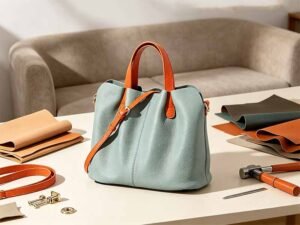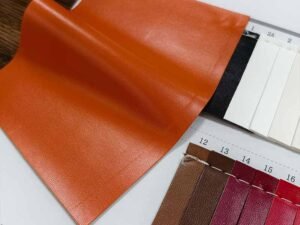
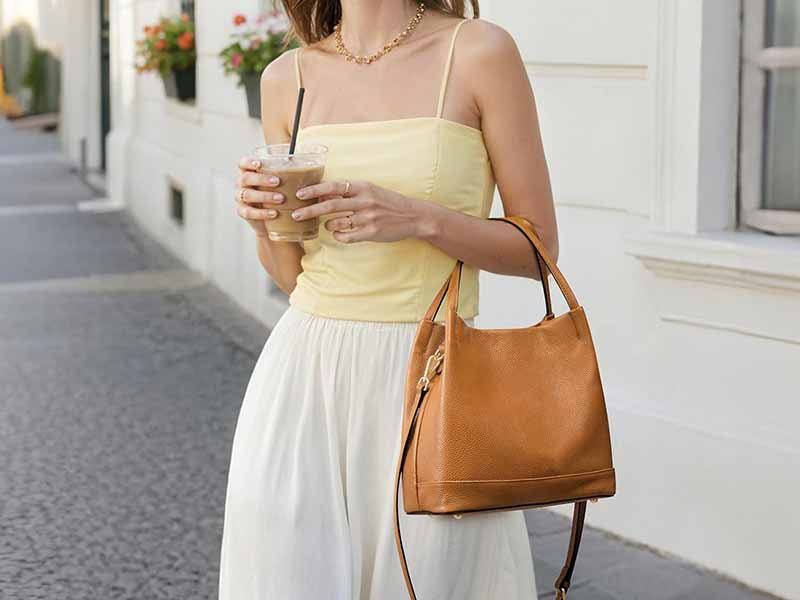
In handbag sales, “full grain” often gets treated like a magic word. Customers see it and assume the bag must be premium. But in real production, a handbag can be full grain and still disappoint—too many visible marks, uneven color panels, scratch sensitivity, or inconsistent batches that are hard to repeat at scale. On the other side, many top-performing everyday handbags are made from top grain because it offers a cleaner surface, more predictable color, and fewer customer complaints in high-touch areas like corners and handles.
Full grain leather keeps the hide’s original grain layer, offering strong fiber structure and natural aging, but it shows more natural marks and varies more between hides. Top grain leather is lightly refined and finished for smoother texture and better consistency. For handbags, full grain suits heritage and luxury styles, while top grain often fits structured designs and repeatable mass production better.
If your handbag line needs consistent color, clean panels, and predictable repeats, the “best” leather may not be the one with the loudest label—it’s the one that matches your design, price point, and how customers actually use the bag.
What Is Full Grain Leather?
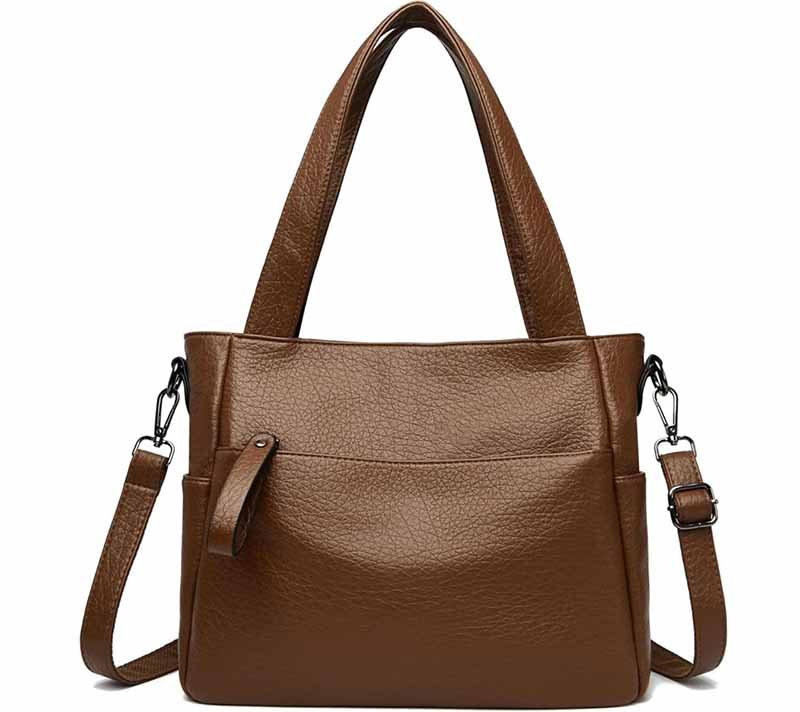
Full grain leather is the top layer of the hide with the natural grain surface left intact—no sanding or heavy correction. For handbags, it offers high fiber strength and rich character, but it also brings natural variation (marks, wrinkles, grain differences). It works best when your design and customer expectations accept authentic, non-uniform surfaces.
What does full grain mean?
“Full grain” means the outer grain surface is kept. That surface contains the hide’s densest fiber structure and natural pore pattern. In handbags, this usually translates to better tear resistance and a more authentic look, especially when the bag is meant to age with patina.
But full grain is not automatically uniform. On the same hide, you can have:
- tighter grain areas
- looser grain areas
- small scars or healed marks
- natural wrinkles around neck/shoulder zones
That variation can be a selling point in luxury storytelling—but a problem in retail if customers expect perfect smoothness.
Full grain handbag feel and behavior (practical):
- stronger structure at equal thickness
- more “alive” texture (not flat)
- natural marks are visible upfront
- scratches often blend later with use (patina), especially in darker colors
How is full grain leather made?
For handbag-grade full grain, the process is less about “fixing” and more about selecting and controlling.
A realistic production chain looks like this:
- Hide grading (not every hide qualifies as full grain for handbags)
- Tanning (chrome, veg, or combination)
- Dyeing (drum-dyed helps color depth)
- Finishing choice (aniline / semi-aniline / light protective coats)
- Panel cutting strategy (to keep the bag visually balanced)
The biggest cost driver is yield: full grain requires higher hide quality and usually generates more “reject areas” because you can’t sand defects away.
| Item | What changes with full grain | What it means for brands |
|---|---|---|
| Hide selection | fewer hides qualify | higher raw material cost |
| Cutting yield | more panels rejected | higher cost per bag |
| Color matching | more variation | more QC time |
| Surface marks | remain visible | requires brand education or design strategy |
Full grain isn’t expensive because it’s “fancy.” It’s expensive because it demands better hides and stricter planning.
Why do designers choose full grain for handbags?
Designers choose full grain when they want the bag to feel authentic, not perfect. Full grain fits products where the leather itself is the hero and the customer enjoys natural change over time.
Full grain works well for:
- heritage-inspired totes and satchels
- minimalist handbags with large leather panels
- luxury lines where “natural variation” is part of the story
- darker colors that age into patina more smoothly
But full grain can be a poor match for:
- very light colors (marks show strongly)
- high-gloss fashion looks (needs heavy finishing)
- highly structured bags needing identical panels
- clients requiring strict batch-to-batch repeatability
Where full grain performs best on a handbag (by zone):
| Bag Area | Full Grain Performance | Notes |
|---|---|---|
| Main panels | High | looks premium, ages well |
| Handles | Medium–high | depends on finish and sweat exposure |
| Corners | Medium | need reinforcement; abrasion is high |
| Bottom panel | Medium | scuff protection recommended |
Use full grain on large visible areas, but consider more protective finishing or reinforced construction on corners and bottoms, where abrasion is unavoidable.
| Feature | Full Grain for Handbags |
|---|---|
| Strength at equal thickness | High |
| Surface uniformity | Medium–low |
| Natural marks visibility | High |
| Aging style | Patina, character |
| Best for | luxury/heritage, darker tones |
| Risk points | color/panel variation, early scratch visibility |
What Is Top Grain Leather?
Top grain leather is created by shaving off the outermost layer of the hide, which removes the natural grain surface. This process results in a smoother, more uniform leather surface that’s easier to work with. The top layer is then sanded and finished, often with a protective coating to improve its appearance and wear resistance.
Unlike full grain, which retains its original texture and character, top grain leather is corrected to create a more consistent, uniform look. This makes top grain leather ideal for structured, polished designs, where a clean surface is necessary.
What does top grain mean?
Top grain leather refers to the second-highest quality layer of the hide after the full grain layer has been removed. The term “top grain” means the top part of the hide (beneath the grain) has been treated to remove imperfections. This leather is still high-quality, but it doesn’t retain the natural grain and texture of full grain leather. Instead, the leather is sanded and sometimes embossed to create a smoother, more predictable surface.
Key features of top grain leather:
- Refined surface: The rougher outer layer of the hide is removed, leading to a smoother, more uniform look.
- More affordable: Since the leather is processed and imperfections are removed, it’s usually more affordable than full grain.
- More flexible: The leather is softer and more flexible compared to full grain, making it easier to handle during production.
However, top grain does not develop the same rich patina over time as full grain does. Its appearance remains more stable but lacks the natural aging effect that leather enthusiasts often appreciate.
How is top grain leather processed?
The process of creating top grain leather involves the following steps:
- Hide selection: The best parts of the hide (those without visible flaws) are chosen for top grain production.
- Shaving: The outermost layer, which holds the most natural character, is shaved off to reveal a smooth surface beneath.
- Sanding and buffing: The top surface is sanded to remove any scars, blemishes, or imperfections.
- Dyeing and finishing: The leather is dyed and treated with a protective coating (such as polyurethane or acrylic) to give it a uniform color and additional protection against moisture, stains, and abrasions.
Top grain leather is then used in a wide range of products, including handbags, wallets, and other leather accessories, where a smooth, polished finish is desired.
Where is top grain leather commonly used?
Top grain leather is the preferred choice for many handbag designers and manufacturers because of its consistent texture, durability, and versatility. Here are some common uses:
- Luxury handbags: High-end fashion brands often use top grain leather for handbags, as it provides a clean, flawless finish that appeals to customers seeking modern sophistication.
- Everyday leather goods: Since it’s more affordable than full grain leather, top grain is often used for wallets, belts, and accessories that need to withstand daily wear and tear without the premium price.
- Fashion items: For handbags that need consistent color, smooth surfaces, and a high-quality feel, top grain leather provides the right balance of durability and aesthetics.
Top grain leather works particularly well when visual consistency is a priority, such as in mass-produced luxury handbags that require identical appearance across all units.
Which Is Better for Handbags?
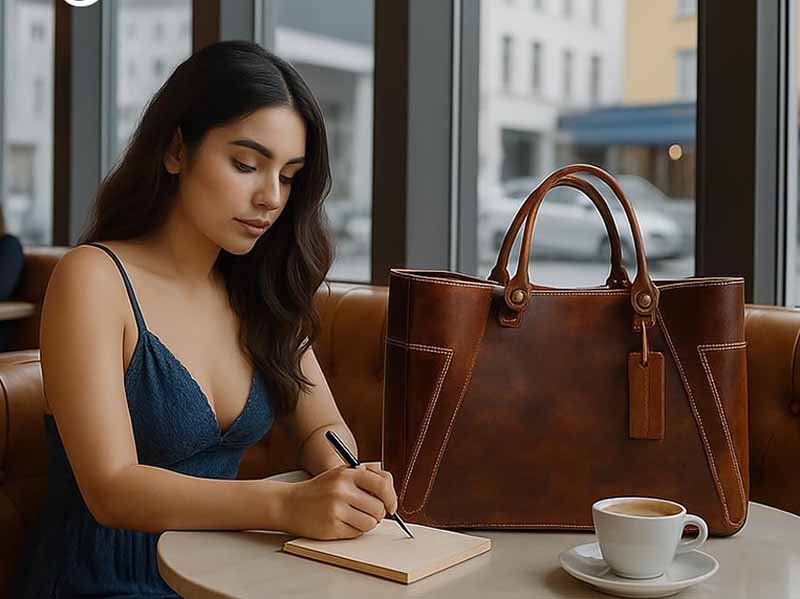
The choice between full grain and top grain leather depends on your specific product needs, customer preferences, and desired price point. Both types of leather have unique benefits, and understanding when each works best can significantly impact the overall quality of the handbag.
Let’s break down which leather is better for specific handbag requirements.
Which is more durable?
In terms of raw strength, full grain leather is stronger because it retains the natural grain structure of the hide, which contains the densest fibers. This makes it highly resistant to wear and tear, as well as tear resistance.
However, top grain leather is still durable enough for most handbag applications. Its durability is mainly determined by the thickness of the leather, the type of finish applied, and the wear it’s subjected to. While top grain may not have the same natural strength as full grain, it offers excellent resilience due to the refinishing process.
Durability comparison:
| Leather Type | Durability | Best For |
|---|---|---|
| Full Grain | High (long-term) | Luxury bags, outdoor gear, heavy-use |
| Top Grain | Medium–High | Everyday bags, fashion accessories |
For everyday handbags, top grain leather holds up well in daily use, while full grain leather is ideal for luxury products or bags that will be used frequently for many years.
Which has better surface texture?
When it comes to surface texture, top grain leather is typically the superior option because it is sanded and smoothed. This results in a clean, uniform appearance that is perfect for fashion-forward designs, where texture consistency is essential.
On the other hand, full grain leather retains its natural surface texture, which can include visible pores, wrinkles, and scars. These marks give it character, but they may not appeal to all customers, especially those who prefer a polished, refined look in their handbags.
Texture comparison:
| Leather Type | Surface Texture | Best For |
|---|---|---|
| Full Grain | Natural, varied | Heritage bags, luxury bags |
| Top Grain | Smooth, uniform | Fashion-forward, modern designs |
Top grain leather offers smoother finishes that are ideal for handbags that need to stay polished and consistent over time.
Which ages better over time?
When it comes to aging, full grain leather has the advantage. As it ages, it develops a natural patina that adds richness and character to the material. This process happens over years of use, as the leather reacts with sunlight, oils from the skin, and environmental elements.
In contrast, top grain leather doesn’t develop the same rich patina. It’s more likely to maintain a consistent look throughout its lifespan, with less visible change as it ages. While this can be an advantage for handbags that need a consistent appearance, some customers prefer the unique aging effect of full grain leather.
Aging comparison:
| Leather Type | Aging Behavior | Best For |
|---|---|---|
| Full Grain | Develops patina | Heritage, luxury bags |
| Top Grain | Stays consistent | Fashion, structured bags |
If you want a handbag that becomes more beautiful over time, full grain leather is your choice. For bags that need to maintain their original look, top grain works best.
How Do Full Grain and Top Grain Affect Price & Value?
Price is always a key factor for manufacturers, especially when deciding between full grain and top grain leather. While full grain leather is typically more expensive due to its high quality and natural, untreated surface, top grain leather offers a more affordable alternative while still maintaining a high standard of quality.
How does leather type influence handbag pricing?
Full grain leather is the premium option, and this is reflected in the price. It requires more careful hide selection, more precise cutting, and less processing, which all add to the final cost.
Top grain leather, on the other hand, is more affordable, since the top surface is shaved off and the leather is treated to remove imperfections. This makes it easier to produce in larger volumes.
Cost comparison:
| Leather Type | Material Cost | Production Cost | Retail Price Range |
|---|---|---|---|
| Full Grain | High | Higher | High |
| Top Grain | Medium | Lower | Medium–High |
For high-volume handbag brands, top grain leather provides a better balance of cost-effectiveness and quality without compromising on customer experience.
Are There Myths About Full Grain vs Top Grain Leather?
Many handbag buyers—and even some brands—approach leather selection with oversimplified assumptions. These myths often lead to misaligned products, unnecessary cost increases, or customer dissatisfaction. Understanding what isn’t true is just as important as knowing what is.
Is Full Grain Leather Always Superior?
No. Full grain leather is not automatically superior for every handbag.
While full grain offers strong fiber structure and natural aging, it also introduces:
- Visible grain variation
- Natural marks and scars
- Higher rejection rates during cutting
- Greater inconsistency between production batches
For handbags that require:
- Clean, symmetrical panels
- Identical appearance across SKUs
- Light colors or pastel tones
- High-volume repeat orders
full grain can actually increase risk, not quality.
Full grain works best when:
- The brand story values authenticity and variation
- Customers accept natural marks
- The design highlights leather character rather than hiding it
Are Top Grain Handbags Lower Quality?
This is one of the most damaging misconceptions in the handbag market.
Top grain leather is widely used by premium and luxury brands, especially for:
- Structured handbags
- Fashion-driven designs
- Products needing visual consistency
Top grain leather still comes from the upper hide layer and retains strong fiber structure. The difference is controlled refinement, not inferior material.
Where top grain often performs better than full grain:
- Scratch resistance in high-contact areas
- Uniform color across panels
- Predictable softness and drape
- Easier long-term maintenance for end users
Do Maintenance Needs Differ Between Full Grain and Top Grain?
Yes—and this matters more than many brands expect.
| Aspect | Full Grain | Top Grain |
|---|---|---|
| Initial scratch visibility | High | Low |
| Patina development | Strong | Minimal |
| Cleaning frequency | Moderate | Low |
| Conditioning need | Regular | Occasional |
| Customer learning curve | Higher | Lower |
Full grain leather rewards attentive care, but it also punishes neglect faster in the early stage. Top grain leather is generally more forgiving for customers who want a “low-effort” leather bag.
If your target customer is not a leather enthusiast, top grain often leads to fewer complaints and returns.
Which Leather Should You Choose for Custom Handbags?
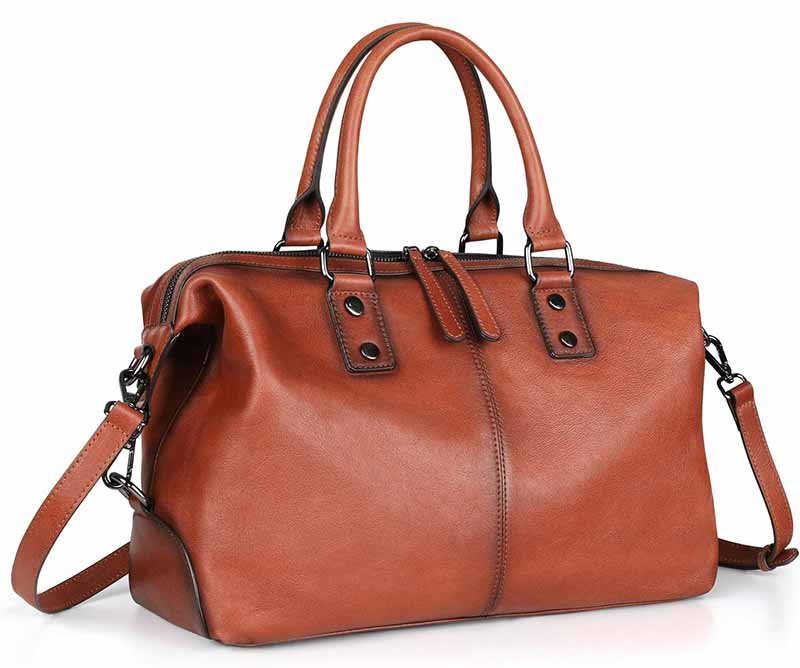
There is no single correct answer. The right leather choice depends on how the handbag will be used, who will use it, and how the brand positions the product.
Which Is Best for Everyday Handbags?
For daily-use handbags, performance matters more than philosophy.
Top grain leather is often the better choice because it offers:
- Better resistance to casual scratches
- More consistent feel across batches
- Easier care for non-expert users
- Stable structure for reinforced corners and edges
Everyday bags experience:
- Constant friction (clothing, desks, seats)
- Frequent handling
- Exposure to oils, cosmetics, moisture
In these conditions, top grain usually delivers longer visual satisfaction for most users.
Which Is Best for Luxury or Statement Designs?
Full grain leather excels when:
- The handbag is a statement piece
- Leather character is part of the visual appeal
- Aging is positioned as a feature, not a flaw
Luxury customers who choose full grain often expect:
- Visible texture differences
- Gradual patina development
- A bag that looks “lived-in” over time
These designs often succeed with:
- Darker colors
- Minimal hardware distraction
- Larger leather panels
Here, full grain enhances emotional value rather than just physical durability.
How to Choose for OEM / ODM Handbag Production?
From a factory and sourcing perspective, leather choice must also support repeatability and scalability.
| Production Requirement | Better Option |
|---|---|
| High volume repeat orders | Top Grain |
| Strict color consistency | Top Grain |
| Hand-cut artisanal runs | Full Grain |
| Light-color handbags | Top Grain |
| Heritage storytelling | Full Grain |
| Lower defect tolerance | Top Grain |
Experienced manufacturers often recommend different leathers within the same collection, depending on model and use case.
Conclusion: Full Grain vs Top Grain for Handbags
| Factor | Full Grain | Top Grain |
|---|---|---|
| Fiber strength | Very high | High |
| Surface consistency | Low–Medium | High |
| Scratch behavior | Visible early | Resistant |
| Aging | Patina | Stable |
| Customer learning curve | Higher | Lower |
| Production consistency | Lower | Higher |
| Best for | Luxury, heritage | Everyday, fashion |
The most successful handbag lines do not chase labels—they match material behavior to real user expectations.
Ready to Develop Custom Leather Handbags?
At SzoneierLeather, we don’t recommend leather based on buzzwords.
We recommend it based on:
- Handbag structure
- Target customer behavior
- Usage environment
- Price positioning
- Long-term production stability
With over 18 years of experience in leather sourcing, R&D, sampling, and handbag manufacturing, we help brands:
- Choose the right leather for each handbag model
- Balance durability, appearance, and cost
- Reduce defect rates and customer complaints
- Build consistent OEM / ODM production programs
If you are planning custom leather handbags, whether premium full grain or refined top grain,
contact SzoneierLeather to discuss materials, samples, and quotations.