
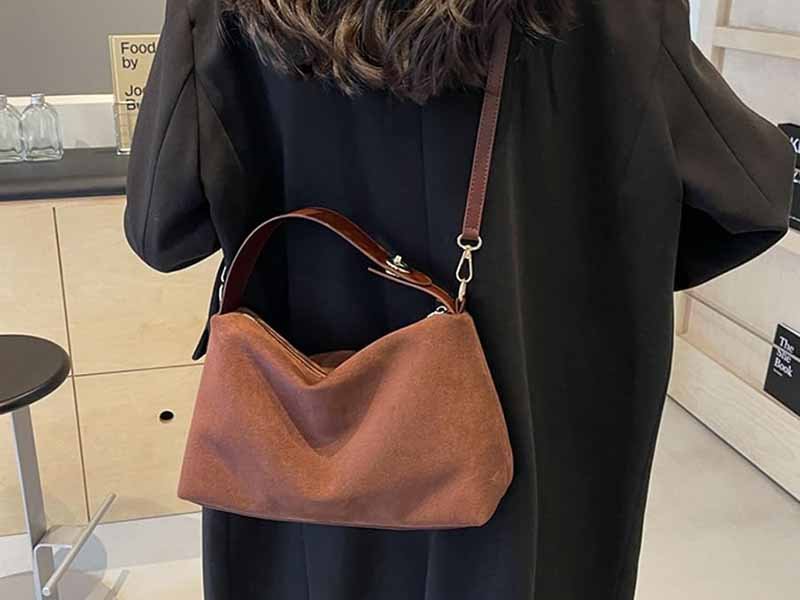
Suede and nubuck leather bags sell with one “silent promise”: the moment a customer touches that soft surface, they believe the bag is premium. But in real life, the same soft surface can create the fastest wave of complaints a brand can face—color transfer. It doesn’t take a manufacturing disaster to trigger it. Sometimes a customer wears a white shirt on a humid day, carries a dark suede shoulder bag for two weeks, and the dye slowly rubs onto the fabric. Or the interior lining picks up color along the zipper edge. The bag still looks “fine,” but the customer feels cheated, and returns follow.
Here’s the uncomfortable truth: samples rarely reveal the full risk. A suede prototype can look perfect under studio light and still fail in the field because color transfer is driven by friction cycles, humidity, body oils, and the way dyes are fixed inside open fibers.
Color transfer in suede and nubuck leather bags happens because dyes sit closer to the surface fibers and can move under rubbing, moisture, heat, and oils. Dark shades (black, navy, burgundy) and poorly fixed dyes increase the risk. Prevention requires controlled tanning and dye fixation, measurable rub fastness testing, surface treatments when appropriate, careful lining choices, and clear care guidance for customers.
If your brand wants suede or nubuck to be a “signature,” you don’t need luck—you need control. Let’s start with what these leathers really are and why they behave this way.
What are suede and nubuck leathers?
Suede and nubuck are leathers with a raised, velvety surface created by buffing. Suede is usually made from the split (inner) layer of the hide, while nubuck is made by lightly sanding the grain side of full-grain leather. Because their fibers are exposed, they absorb moisture and oils more easily and are more prone to color transfer than smooth leathers unless dyes and finishes are carefully controlled.
What is suede leather?
Suede is produced from the split layer of the hide (the inner part after the grain is removed). The surface is made of open fibers—soft, flexible, and easy to dye in rich colors. That open structure is exactly why suede can shed color under friction.
What brands should care about (practical points):
- Higher transfer risk in dark colors: black, navy, dark brown, burgundy.
- Friction zones are predictable: shoulder area, bag back panel, strap underside, piping edges.
- Return triggers are emotional: customers often return even if transfer is “minor.”
Production reality: if dye fixation is not strong enough, color can “dust” off the fiber tips under repeated rubbing. You won’t see that by touching a sample once or twice—you see it after hundreds of rub cycles.
What is nubuck leather?
Nubuck is made by lightly sanding the grain side of full-grain leather to create a fine velvet feel. It’s generally stronger than suede because the hide structure remains intact. But nubuck still has exposed micro-fibers on the surface, which can hold dye near the exterior.
Where nubuck surprises brands:
- Looks cleaner than suede, but can transfer similarly in dark shades.
- Moisture makes it worse: humidity, sweat, light rain, damp storage.
- Body oils change the surface: oils can darken areas and make transfer uneven.
Nubuck is often used for structured bags, premium backpacks, and “heritage” styles—exactly the products customers expect to be durable. That means the tolerance for color transfer complaints is even lower.
How do suede and nubuck differ from smooth leather?
Smooth leather keeps the grain surface intact (or coated), which acts like a protective layer. Suede and nubuck remove or disturb that protection, exposing fibers that can grab moisture, oils, and friction more easily.
| Key Factor | Smooth Leather | Suede | Nubuck |
|---|---|---|---|
| Surface | sealed/compact | open fibers | fine raised fibers |
| Moisture absorption | low–medium | high | medium–high |
| Dye location | deeper & locked | near fiber tips | near surface |
| Color transfer risk | lower | higher | medium–high |
| Customer care needed | low | high | medium–high |
What “color transfer” means in real customer scenarios
Brands often think color transfer is only “dye rubbing off on hands.” In reality, complaints usually come from:
- Clothing staining (white shirts, light jackets, light pants)
- Lining discoloration (light cotton or polyester lining turning grey/blue)
- Edge zone bleeding (around seams, piping, zipper tape, strap edges)
- Uneven dark patches (from sweat/body oils, making the bag look “dirty”)
To make the risk more concrete, here’s a realistic “risk map” by bag style:
| Bag Style | Contact With Clothing | Transfer Risk Level | Why |
|---|---|---|---|
| Shoulder bag | very high | high | repeated rubbing on fabric |
| Crossbody | very high | high | constant friction + sweat |
| Handheld / tote | medium | medium | less body contact |
| Backpack | high | medium–high | back panel friction |
| Small pouch | low | low–medium | limited contact |
Why many brands miss the risk during sampling
Most sample reviews focus on:
- color look under light
- softness and feel
- stitching and shape
But color transfer shows up under:
- repeat friction (hundreds of rubs)
- humidity cycles
- sweat/oil contact
- temperature + storage
That’s why a suede sample can pass visual checks and still fail in bulk-market reality.
Practical launch advice (brand-side):
- If you plan to sell dark suede/nubuck, treat rub fastness like a “must pass” requirement.
- Match materials (lining + thread + zipper tape) to reduce visible staining.
- Write realistic care guidance before launching, not after complaints begin.
Why does color transfer happen in suede and nubuck bags?
Color transfer happens in suede and nubuck bags because dyes sit close to exposed surface fibers and are not fully locked in place. Repeated friction, moisture, body oils, heat, and inadequate dye fixation allow pigment particles to migrate. Dark shades, poor rub fastness, and unsuitable linings or threads significantly increase the likelihood of visible staining during everyday use.
What causes dye movement in suede and nubuck?
At a material level, color transfer is not a single problem—it’s a combination of fiber structure and dye chemistry.
Key mechanisms:
- Exposed fibers: sanding creates loose fiber tips that release pigment under rubbing
- Incomplete fixation: dyes bond weakly if tanning and fixation steps are rushed
- Surface loading: excess dye remains near the surface to achieve deep color
- Capillary action: moisture pulls dye outward along fibers
In smooth leather, the grain layer acts as a barrier. In suede and nubuck, there is no such barrier—so process control replaces surface protection.
Which conditions increase color bleeding the most?
Color transfer rarely appears in controlled environments. It appears in real life.
| Condition | Impact on Transfer | Why it matters |
|---|---|---|
| Friction (rubbing) | Very high | Lifts pigment from fiber tips |
| Humidity / sweat | Very high | Mobilizes dye molecules |
| Body oils | High | Changes surface tension |
| Heat | Medium | Accelerates migration |
| Rain / damp storage | High | Uneven bleeding patterns |
Field insight: most complaints occur during summer months or in humid regions, even if the same bags perform acceptably in dry climates.
How friction creates visible transfer
Friction is cumulative. One rub does nothing; hundreds create a problem.
High-risk friction zones on bags:
- Back panel (against clothing)
- Strap underside
- Piping and folded seams
- Zipper tape edges
- Bottom corners
A shoulder bag worn daily can experience 5,000–10,000 friction cycles per month. If rub fastness is marginal, color transfer is not a possibility—it’s a certainty.
How moisture and sweat change the outcome
Sweat is not just water. It contains:
- salts
- fatty acids
- skin oils
These elements:
- weaken dye bonds
- darken fibers unevenly
- create “shadow stains” on suede and nubuck
That’s why transfer often appears patchy, not uniform. Customers often describe this as “the bag looks dirty,” even when the dye is the real cause.
Why dark colors fail more often
Dark colors require more pigment. More pigment near the surface equals higher risk.
| Color | Typical Risk Level |
|---|---|
| Black | Very high |
| Navy | High |
| Burgundy | High |
| Dark brown | Medium–high |
| Tan / beige | Low–medium |
| Light grey | Low |
Production trade-off: To achieve deep, rich color, some tanneries load extra dye. Without stronger fixation steps, that richness turns into transfer risk.
How finishing choices influence transfer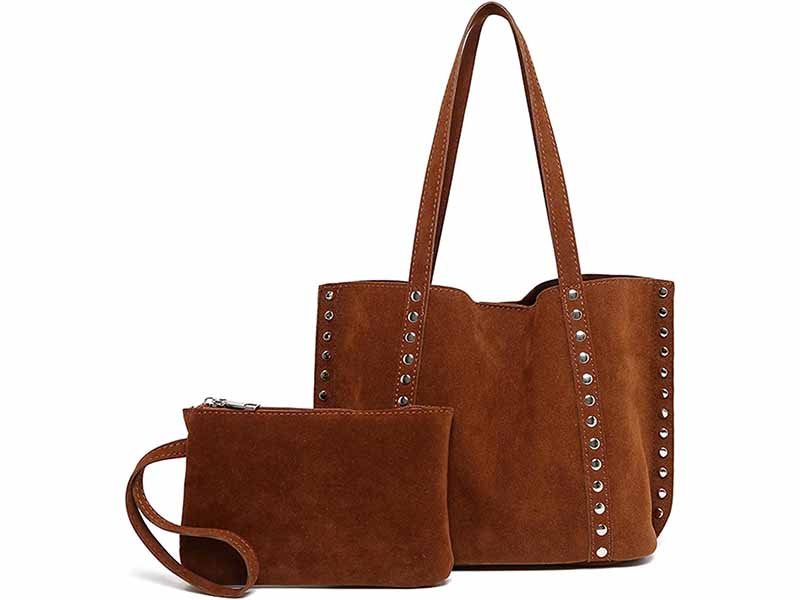
Not all suede and nubuck are finished the same way.
Finishing variables that matter:
- brushing intensity
- buffing depth
- post-dye washing
- surface spray treatments
| Finish Choice | Effect on Transfer |
|---|---|
| Heavy buffing | increases risk |
| Insufficient washing | increases risk |
| Light protective spray | reduces risk |
| Over-spraying | stiff feel, color shift |
A good factory balances feel vs stability, not one at the expense of the other.
The hidden role of linings, thread, and hardware
Many “color transfer” complaints are actually contrast problems.
Common examples:
- dark suede staining white cotton lining
- dye migrating into light stitching
- black nubuck rubbing onto zipper tape
| Component | Better Choice |
|---|---|
| Lining | mid-tone polyester twill |
| Thread | color-matched, darker than leather |
| Zipper tape | tone-on-tone, not white |
These choices don’t eliminate transfer—but they reduce visible damage, which matters to customers.
Why samples often pass but bulk fails
Samples are:
- handled lightly
- used briefly
- stored cleanly
Bulk products are:
- worn daily
- exposed to weather
- handled by different users
If a brand approves suede or nubuck based only on appearance, the test is incomplete. Performance must be measured, not assumed.
What brands should decide before production
Before confirming suede or nubuck for a bag line, brands should answer:
- Which body contact areas are unavoidable?
- Which colors are essential vs optional?
- What rub fastness level is acceptable?
- How will customers realistically use this bag?
When these answers are clear, factories can engineer solutions instead of reacting to complaints later.
How do manufacturers test and control color transfer?
Manufacturers control color transfer in suede and nubuck bags by measuring rub fastness, moisture resistance, and dye stability before mass production. Standardized friction tests, humidity exposure, and internal wear simulations reveal whether pigments migrate under real-use conditions. Only materials that meet defined performance thresholds should move into bulk production.
How color transfer is actually tested in factories
Testing is not about passing paperwork—it’s about predicting complaints.
Core tests used for suede and nubuck:
- Dry rubbing: simulates clothing friction
- Wet rubbing: simulates sweat and humidity
- Moisture exposure: checks dye movement under damp conditions
| Test Type | What it Reveals | Why brands care |
|---|---|---|
| Dry rub | pigment release | staining on clothing |
| Wet rub | dye mobility | summer-use complaints |
| Damp storage | uneven bleeding | returns after shipping |
A strong result doesn’t mean “no transfer.” It means controlled, minimal, predictable behavior.
Interpreting test results realistically
Many brands misunderstand test grades. A pass does not mean zero risk—it means acceptable risk.
| Rub Grade | Real-world meaning |
|---|---|
| 4–5 | very low complaint risk |
| 3–4 | acceptable for dark suede |
| 2–3 | high complaint risk |
| ≤2 | not suitable for bags |
Factory recommendation: For shoulder and crossbody bags in dark suede or nubuck, anything below grade 3.5 should be reconsidered or redesigned.
Why internal wear testing matters
Lab tests simulate motion—but real bags behave differently.
Factories often perform:
- Strap-on-fabric rubbing
- Back-panel abrasion tests
- Oil + friction combined testing
These internal checks expose issues that formal tests may miss, especially with:
- folded seams
- piping edges
- strap underside zones
How do you prevent color transfer in suede and nubuck bags?
Preventing color transfer requires a combination of controlled dye fixation, appropriate surface treatments, smart component matching, and realistic design decisions. No single coating can solve the problem alone. The most reliable results come from controlling leather chemistry, limiting high-risk colors in high-contact zones, and designing bags to reduce friction where possible.
Leather and dye choices that reduce risk
Prevention starts at the tannery level.
Lower-risk approaches:
- Deeper dye penetration with stronger fixation
- Extra post-dye washing
- Reduced surface dye loading
| Choice | Effect |
|---|---|
| Strong fixation | locks pigment |
| Extra washing | removes loose dye |
| Moderate color depth | lowers migration |
Brands pushing ultra-deep blacks or blues must accept higher risk or higher cost.
Surface treatments: what helps and what doesn’t
Light protective sprays can help—but only when used correctly.
| Treatment | Result |
|---|---|
| Light fluorocarbon spray | reduces moisture uptake |
| Heavy coating | stiff feel, uneven color |
| Silicone sprays | temporary benefit |
Surface treatment is supporting, not a cure. It works best when the leather itself is already stable.
Design decisions that lower complaints
Design can quietly reduce risk.
Effective strategies:
- Use darker linings with dark suede
- Avoid white stitching on dark nubuck
- Reinforce high-friction zones
- Reduce strap width friction surface
| Design Element | Risk Reduction |
|---|---|
| Tone-on-tone lining | high |
| Dark zipper tape | medium |
| Folded seams | medium |
These changes don’t alter the look—but they reduce visible damage.
What care guidance should brands give customers?
Clear care guidance reduces misuse and unrealistic expectations. Customers should understand that suede and nubuck are sensitive materials requiring dry use, limited friction against light fabrics, and regular brushing. Honest communication builds trust and reduces disputes, especially for dark-colored bags.
What customers should avoid
Brands should clearly communicate:
- avoid wearing with light clothing in humidity
- avoid rain exposure
- avoid placing on damp surfaces
- avoid aggressive cleaners
When guidance is missing, customers assume suede behaves like smooth leather—which leads to complaints.
Simple maintenance that actually helps
Recommended care steps:
- brush regularly with suede brush
- use approved protector spray
- store in dry, ventilated space
- avoid plastic bags for storage
| Care Action | Benefit |
|---|---|
| brushing | lifts fibers |
| dry storage | limits dye migration |
| gentle spray | moisture resistance |
How Szoneier controls suede and nubuck risk
At Szoneier, suede and nubuck projects are developed with risk mapping, not guesswork.
Our process includes:
- leather selection based on end-use
- pre-sample rub and moisture testing
- design review for friction zones
- controlled sampling and bulk matching
- realistic care documentation for brands
We help brands decide when suede makes sense—and when it doesn’t.
Ready to Develop Suede or Nubuck Bags with Confidence?
Suede and nubuck bags can elevate a brand—or damage it—depending on how risks are handled. The difference is not luck. It’s material knowledge, testing discipline, and production control.
If you’re planning:
- custom suede or nubuck bags
- dark-color leather collections
- premium accessories with body contact
Contact Szoneier to discuss material selection, testing standards, sampling, and scalable production. We don’t just make leather bags—we help brands avoid expensive mistakes before they happen.