
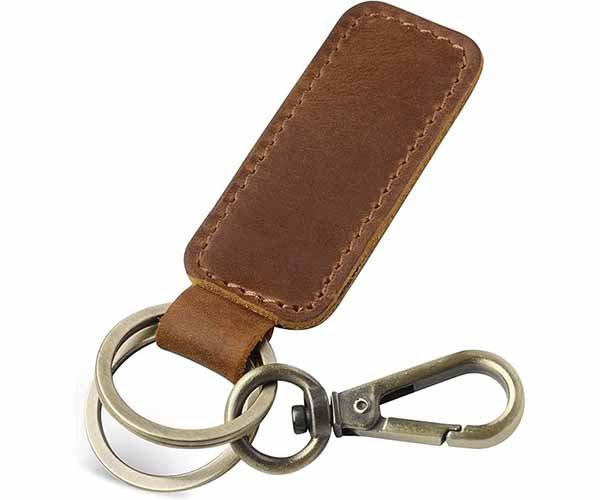
Leather keychains look simple, but they behave like a “daily-use billboard” for a brand. Customers touch them in the car, at the office, at home, and in stores—often more times per day than they touch a wallet. That’s why a good leather keychain can sell faster than more expensive leather accessories: it’s small, useful, easy to gift, and easy to justify as an add-on purchase.
Most product teams don’t fail because they pick the “wrong” keychain shape. They fail because they miss what shoppers actually care about: comfort in the pocket, hardware reliability, leather edge quality, logo clarity, and whether the keychain still looks decent after months of being dropped, scraped, and rubbed against coins and keys.
Best-selling leather keychain styles for brands in 2026 are simple, durable designs that carry clean branding and reliable hardware. The strongest sellers include leather key rings, loop straps, key fobs, tag-style keychains, and minimalist charms. These styles perform well because they are affordable, giftable, easy to customize (logo, color, packaging), and hold up in daily friction when built with the right leather and edge finishing.
Here’s the fun part: the best-selling keychains often come from tiny details—like a 2 mm edge paint upgrade, a better split ring, or a cleaner emboss area—details most brands only notice after they see returns or bad reviews. Let’s start with what leather keychains are used for today, and why that matters for your 2026 product plan.
What Are Leather Keychains Used For?
Leather keychains are used as everyday key organizers, brand merchandise, retail add-ons, and gift items. For brands, they’re a low-risk product that delivers constant brand exposure, supports premium positioning, and works well for customization (logo, colors, packaging). Because keychains are handled frequently, build quality and comfort matter more than complex styling.
Why Leather Keychains Sell
When people buy a keychain, they’re not buying “fashion.” They’re buying a daily habit tool. The top reasons customers choose leather keychains are practical:
- Comfort: softer than metal in pockets and hands
- Noise control: less clanking in cars and bags
- Grip: easier to grab quickly than a bare ring
- Feel: leather signals quality even at a small price
- Looks over time: leather ages; cheap plastics scratch and chip
How Often Are Keychains Used Compared to Other Leather Goods?
This is why keychains are powerful for brands: the touch frequency is high.
| Item | Typical daily touches (real use) | Why it matters |
|---|---|---|
| Leather keychains | 5–15 | constant brand exposure |
| Wallets | 2–6 | depends on payment habits |
| Belts | 1 | worn once, rarely handled |
| Small bags | 1–3 | less direct touch |
If your logo placement is clean and subtle, keychains become one of the most “seen and used” branded items.
How Brands Use Leather Keychains
Leather keychains are not only “accessories.” They’re often used as product strategy tools.
1) Retail Add-On Products
Keychains work extremely well at checkout because:
- low price feels safe
- size is easy (no fit issues)
- it matches bags/wallet collections
- customers can gift it later
Brands often see better add-on performance when the keychain:
- matches the leather tone of hero products
- is displayed near wallet/bag sections
- has clean, premium packaging
2) Entry Products
If a wallet is $60–$200, a keychain can be $12–$35 (brand-dependent). This helps brands:
- attract new customers
- build loyalty
- create “small gift” options
3) Gift Programs and Corporate Gifting
Leather keychains are popular for gifting because:
- no size selection
- easy to ship in small boxes
- fits many audiences
For corporate gifting, the most requested branding options are:
- deboss logo (quiet, premium)
- foil stamp (higher visibility)
- custom gift box insert (better presentation)
4) Product Bundles
Keychains often sell best when bundled:
- wallet + keychain set
- bag + keychain set
- gift box sets for holidays
Bundles also reduce the risk of “keychain feels expensive alone” pricing.
What Customers Notice First
Customers rarely complain “the leather is wrong.” They complain about usability.
Top “good” signals customers notice
- keyring feels solid and not loose
- leather edge is smooth, not fuzzy
- logo is crisp, not shallow
- stitching is straight and even
- keychain feels balanced (not too big/heavy)
Top complaint triggers
- split rings that bend or rust
- edges that fray or peel
- leather that cracks at the fold
- hardware that scratches quickly
- logo that fades or looks cheap
The Small Details That Decide Whether It Feels Premium
For leather keychains, tiny upgrades can change perception more than changing the whole design.
| Detail | Low-cost version | Better version | What customers feel |
|---|---|---|---|
| Split ring | thin, soft metal | thicker spring steel | “solid” vs “cheap” |
| Edge finish | raw edge | edge paint / edge burnish | clean vs fuzzy |
| Stitching | loose spacing | tighter, consistent spacing | refined quality |
| Logo method | weak print | deboss / emboss | premium branding |
| Hardware plating | thin | stable plating | less scratches |
This is why factories often recommend two tiers: a standard option and a premium option.
How SzoneierLeather Fits This Product Category
For brands and small-to-mid wholesale customers, keychains are often the fastest way to test:
- leather colors
- logo methods
- hardware finishes
- packaging styles
At SzoneierLeather, keychains can be developed with the same leather supply chain and production control used for wallets, belts, straps, and leather accessories—so a brand can keep materials consistent across a whole collection.
Which Leather Keychain Styles Sell Best?
The best-selling leather keychain styles are simple, durable designs that fit daily habits and carry branding naturally. Flat key rings, loop strap keychains, leather key fobs, tag-style keychains, and minimal leather charms consistently outperform complex or novelty designs. These styles sell because they are easy to use, comfortable to carry, affordable, and reliable in long-term daily wear.
Top Best-Selling Leather Keychain Styles
1) Flat Leather Key Ring (Single or Double Layer)
Why it sells
- Slim profile fits pockets easily
- Lowest cost to produce
- Minimal leather waste
- Easy logo placement
Typical buyers
- Lifestyle brands
- Promotional programs
- Retail checkout add-ons
| Common Specs | Typical Range |
|---|---|
| Length | 6–9 cm |
| Leather thickness | 2.0–3.0 mm |
| Hardware | split ring |
This style sells best when edges are cleanly finished. Poor edge paint or raw edges quickly lead to negative reviews.
2) Leather Loop Strap Keychain
Why it sells
- Easy to grab quickly
- Feels more substantial than flat rings
- Looks premium without high cost
Typical buyers
- Bag and wallet brands
- Everyday carry brands
- Gift collections
| Common Specs | Typical Range |
|---|---|
| Strap width | 15–25 mm |
| Fold reinforcement | stitched + interlining |
| Hardware | split ring or D-ring |
Loop straps are one of the highest reorder-rate styles, especially when matched to bag or wallet leather colors.
3) Leather Key Fob (Automotive Style)
Why it sells
- Strong association with cars and mobility
- High perceived value
- Clear logo area
Typical buyers
- Automotive brands
- Corporate gifting programs
- Premium merchandise
| Feature | Best Practice |
|---|---|
| Closure | snap button |
| Reinforcement | hidden stiffener |
| Leather | firm full-grain |
Common failure to avoid: Unreinforced snap areas crack quickly. Successful key fobs always include reinforcement.
4) Leather Tag Keychain (Rectangle / Oval / Round)
Why it sells
- Clean, modern appearance
- Balanced cost and presentation
- Good branding surface
Typical buyers
- Fashion brands
- Online stores
- Event merchandise
| Tag Size | Buyer Preference |
|---|---|
| 40–60 mm | best balance |
| >70 mm | often too bulky |
This style performs best with controlled thickness. Overly thick tags feel heavy and awkward.
5) Minimal Leather Charm Keychain
Why it sells (short term)
- Trend-driven appeal
- Works well with handbags
- Popular with younger buyers
Typical buyers
- Fashion labels
- Seasonal collections
| Design Type | Reorder Risk |
|---|---|
| simple shapes | low |
| novelty shapes | high |
Charms sell fast during trends, but brands should limit volume to avoid leftover stock.
Best-Selling Styles by Sales Channel
Matching style to channel improves sell-through significantly.
| Sales Channel | Top-Performing Styles |
|---|---|
| Retail checkout | flat ring, loop strap |
| Online store | tag style, key fob |
| Corporate gifting | key fob, padded loop |
| Fashion drops | charm styles |
| Bundled sets | loop strap, flat ring |
Brands that mix 2–3 styles instead of pushing one usually perform better.
Why Certain Styles Get Reordered
Reorders are driven by failure rate, not aesthetics.
| Style | Reorder Likelihood | Reason |
|---|---|---|
| loop strap | very high | durable + comfortable |
| flat ring | high | simple, low complaint rate |
| key fob | medium–high | premium feel |
| tag style | medium | depends on thickness |
| novelty charm | low | trend fades |
If a keychain survives daily use without complaints, brands reorder—even if the design is basic.
Style Selection Mistakes Brands Commonly Make
- Choosing oversized designs for visibility → poor daily comfort
- Overloading charms → noise complaints
- Using thin leather on loop styles → stretching
- Ignoring reinforcement on fobs → snap failure
The best-selling styles avoid these risks by staying simple and balanced.
What Materials Make Leather Keychains Sell Better?
Leather keychains sell better when materials balance durability, touch feel, edge performance, and hardware reliability, not just leather grade alone. In real sales and reorders, customers care less about technical leather names and more about whether the keychain feels solid, stays good-looking, and survives daily abuse. Full-grain or top-grain leather paired with reliable hardware and proper edge finishing consistently outperforms cheaper material shortcuts.
Leather Types That Actually Perform Well in Daily Use
Full-Grain & Top-Grain Leather
Why they sell better
- Dense fiber structure resists cracking
- Surface ages naturally instead of peeling
- Holds embossing and debossing cleanly
Best use cases
- Retail keychains
- Brand merchandise
- Gift items
Customer feedback pattern
- “Feels solid”
- “Still looks good after months”
- “Worth the price”
| Aspect | Performance |
|---|---|
| Durability | High |
| Aging | Natural patina |
| Cost | Medium–High |
| Return rate | Low |
Split Leather (Coated or Finished)
Why brands still use it
- Lower cost
- Stable supply
- Uniform appearance
Where it works
- Promotional programs
- High-volume giveaways
Where it fails
- Edges peel if not sealed well
- Surface coating cracks over time
| Aspect | Performance |
|---|---|
| Durability | Medium |
| Aging | Surface wear |
| Cost | Low–Medium |
| Risk | Edge failure |
Key point: Split leather can sell—but only when edge paint and stitching are done properly.
PU / Vegan Leather
Why it sells (short term)
- Lowest cost
- Color flexibility
- Easy logo printing
Common problems
- Cracking after bending
- Sticky surface in heat
- Short lifespan
| Aspect | Performance |
|---|---|
| Durability | Low–Medium |
| Aging | Degrades |
| Cost | Low |
| Best for | short-term campaigns |
PU keychains often sell once but rarely get reorders.
Hardware Quality: The 1 Reason Keychains Get Returned
In customer complaints, hardware fails more often than leather.
Split Rings & Clips
| Hardware Type | Customer Reaction |
|---|---|
| Thin soft ring | bends, feels cheap |
| Thick spring steel ring | solid, trusted |
| Poor plating | scratches quickly |
| Stable plating | stays clean |
A thicker split ring costs only slightly more but dramatically improves perceived quality.
Hardware Weight & Balance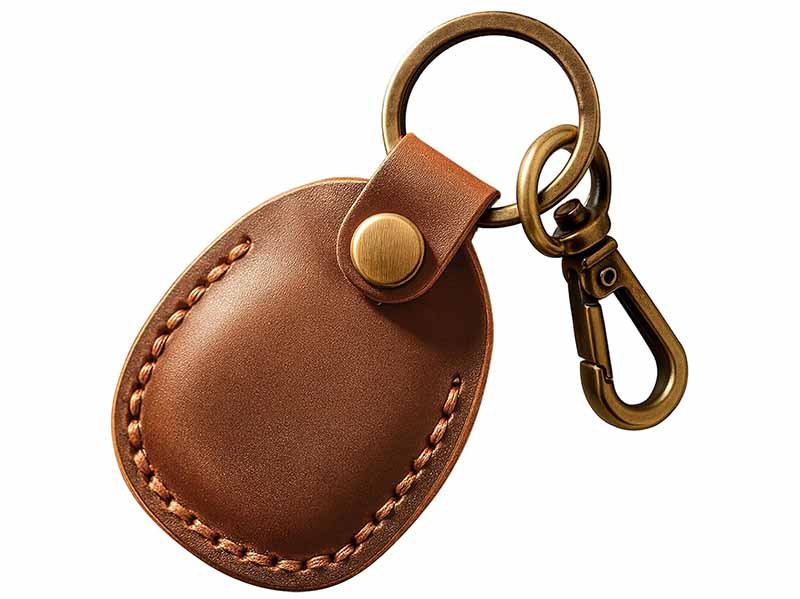
Customers notice when a keychain:
- Feels too light → cheap
- Feels too heavy → annoying
The best-selling keychains have balanced weight, where leather and metal feel intentional together.
Edge Finishing: The Silent Dealbreaker
Edges are the first failure point on leather keychains.
Edge Options Compared
| Edge Type | Look Over Time | Customer Reaction |
|---|---|---|
| Raw edge | fuzzes quickly | negative |
| Basic paint | cracks | mixed |
| Multi-layer edge paint | stays clean | positive |
| Burnished edge | natural aging | premium |
From returns analysis, poor edge finishing is one of the top reasons for negative reviews.
Stitching and Reinforcement: Small Cost, Big Impact
Keychains fail at stress points:
- Loop fold
- Ring connection
- Stitch start/end
What sells better
- Tighter stitch spacing
- Reinforced fold area
- Hidden interlining inside the loop
| Construction Detail | Effect |
|---|---|
| No reinforcement | leather stretches |
| Reinforced loop | longer lifespan |
| Loose stitching | early failure |
| Tight stitching | durable |
Logo Methods That Match Material Choice
Branding must suit the material.
| Logo Method | Best Material Match | Result |
|---|---|---|
| Deboss / emboss | full-grain leather | clean, premium |
| Foil stamp | smooth leather | visible, decorative |
| Printed logo | PU / coated leather | low cost |
On keychains, smaller logos perform better long term than oversized marks.
Material Choices That Improve Reorders
From long-term client data, keychains get repeat orders when:
- Leather does not crack at folds
- Hardware does not rust or deform
- Edges stay clean
- Logo remains visible
These outcomes depend more on material combination than on style.
What Sizes and Features Do Leather Keychain Buyers Prefer?
Buyers prefer leather keychains that are compact, easy to grip, and comfortable in pockets. The best-selling sizes are small to medium formats with secure hardware, clean edges, and simple branding. Features that improve daily use—such as reinforced loops, reliable split rings, and subtle logo placement—consistently outperform decorative add-ons.
Size Preferences That Actually Sell
Keychains succeed when they disappear in use—not when they demand attention. Oversized designs tend to look good in photos but underperform after purchase.
| Size Category | Typical Dimensions | Buyer Feedback |
|---|---|---|
| Small | 5–7 cm | pocket-friendly, minimal |
| Medium | 7–10 cm | easiest to grab, best balance |
| Large | 10–14 cm | bulky, lower reorders |
Practical note: Medium sizes (7–10 cm) deliver the best mix of comfort, visibility, and durability for daily carry.
Features Buyers Value in Real Use
Shoppers rarely ask for features by name—but their behavior shows what matters.
Most valued features
- Secure hardware: thick split rings, solid clips
- Comfortable edges: painted or burnished, not raw
- Balanced weight: not too light (cheap), not heavy (annoying)
- Stable attachment: reinforced loop or stitched fold
Features that don’t drive sales
- Excessive charms or layers
- Moving parts that rattle
- Sharp corners or metal edges
Logo Placement That Works
Keychains are handled constantly, so branding must be clean and restrained.
| Logo Method | Buyer Perception | Best Use |
|---|---|---|
| Deboss / emboss | premium, subtle | retail & gifting |
| Foil stamp | visible, decorative | promotions |
| Printed logo | lowest cost | short-term campaigns |
Large logos reduce long-term appeal. Most repeat orders use small, centered logos.
Packaging: When It Matters
Packaging affects perception, but not every order needs a box.
| Scenario | Recommended Packaging |
|---|---|
| Retail sales | small box or card backing |
| Corporate gifting | gift box + insert |
| Bulk promotion | polybag or paper sleeve |
Over-packaging raises cost without improving sell-through for add-on products.
How Professional Factories Make Leather Keychains
Professional factories make leather keychains by controlling materials, structure, and process consistency rather than focusing only on appearance. From leather selection and reinforcement design to edge finishing, hardware testing, and final inspection, each step is optimized to ensure keychains survive daily use, scale smoothly in bulk production, and maintain the same quality from sample to mass order.
Step 1: Start With Use Scenarios, Not Just Design
Experienced factories never start with “how it looks.” They start with how it will be used.
Before sampling, key questions are clarified:
- Pocket carry or bag carry?
- Car keys or multiple metal keys?
- Entry-level price or premium gift?
- Daily heavy use or occasional use?
These answers decide:
- leather thickness
- reinforcement type
- hardware strength
- edge finishing method
Skipping this step is the main reason samples feel fine but bulk orders get complaints.
Step 2: Select Leather Based on Stress, Not Size
Keychains are small, but stress is high. Professional factories choose leather based on fiber density and fold resistance, not surface appearance alone.
| Key Area | Leather Requirement |
|---|---|
| loop / fold | high tensile strength |
| logo area | stable grain |
| edges | good edge absorption |
For example, very soft leather may look nice but stretches at the loop over time. Factories often recommend firmer full-grain or reinforced split leather for loop and fob styles.
Step 3: Design Internal Reinforcement Where It Matters
Unlike bags or wallets, keychains usually fail at one point: the loop connection.
Professional factories commonly add:
- hidden interlining inside the fold
- reinforced stitch-back areas
- controlled leather overlap length
| Style | Reinforcement Focus |
|---|---|
| flat ring | stitch line strength |
| loop strap | fold reinforcement |
| key fob | snap area + fold |
| tag style | edge stability |
This reinforcement is invisible to customers but critical for lifespan.
Step 4: Match Hardware Strength to Keychain Style
Hardware is selected after style and leather, not before.
Factories test:
- split ring elasticity
- plating scratch resistance
- hook opening/closing cycles
| Hardware Issue | Result |
|---|---|
| thin split ring | bends, complaints |
| poor plating | visible scratches |
| weak snap | early failure |
Reliable factories always source tested, consistent hardware, even if it costs slightly more.
Step 5: Edge Finishing Is a Quality Divider
Edge finishing is where low-end and professional production separate clearly.
Common factory approaches:
- raw edge → fastest, lowest durability
- single-layer edge paint → average
- multi-layer edge paint or burnishing → long-lasting
Factories choose edge treatment based on:
- leather type
- thickness
- price positioning
Poor edge work is the #1 visible defect reported by customers.
Step 6: Control Stitching Tension and Spacing
In bulk production, stitching quality often drops if not controlled.
Professional factories lock:
- stitch spacing (e.g. 3.5–4.0 mm)
- thread thickness
- back-tack length
Loose stitching leads to:
- stretched loops
- broken seams
- uneven appearance
Good stitching is one of the easiest ways customers judge “cheap vs solid.”
Step 7: Test Samples Like Customers Will Use Them
Before approving bulk production, experienced factories perform simple but effective tests:
- repeated pull test on the loop
- key weight hanging test
- bend test at fold area
- edge rub test against metal
These tests catch 80% of future complaints early.
Step 8: Lock Specifications Before Mass Production
To avoid “sample is good, bulk is different,” factories document:
- leather thickness tolerance
- reinforcement placement
- hardware model
- edge finish method
This ensures every batch feels the same, even on repeat orders months later.
Step 9: Final Inspection Focuses on Real Failure Points
Final QC does not just check appearance. It focuses on:
- loop strength
- edge integrity
- hardware firmness
- logo clarity
Keychains that fail these checks are reworked or rejected.
How Should Brands Choose Leather Keychain Styles?
Brands should choose leather keychain styles based on customer use, price positioning, and how the keychain fits into the wider product line. The strongest results come from selecting simple styles that match existing leather colors, hardware finishes, and brand tone—then offering small upgrades for premium positioning.
Start With Brand Positioning, Not Trends
A keychain should look like it belongs to your brand.
| Brand Type | Best Style Direction |
|---|---|
| Luxury | key fob, padded loop |
| Lifestyle | loop strap, tag |
| Fashion | charm, seasonal shapes |
| Corporate | flat ring, key fob |
| Promotional | simple tag or loop |
Matching leather color and hardware to wallets or bags improves bundle sales.
Price Bands That Make Sense in 2026
Keychains sell best within clear price logic.
| Positioning | Typical Retail Range |
|---|---|
| Entry | $8–15 |
| Core | $15–30 |
| Premium | $30–50 |
Trying to push keychains beyond this range usually limits volume unless tied to luxury branding.
A Simple Style Selection Rule
If unsure, follow this:
- First order: classic loop or flat ring
- Second order: key fob or tag style
- Limited drop: charm or color variation
This approach minimizes risk and keeps reorders easy.
What Leather Keychain Trends Matter in 2026?
In 2026, leather keychain trends focus on durability, simplicity, and sustainability rather than novelty. Buyers prefer timeless shapes, neutral colors, and subtle branding. Traceable materials, recycled hardware, and clean construction details are becoming more important than decorative complexity.
Trends That Are Growing
- Minimal shapes: loops, tags, clean silhouettes
- Neutral tones: black, brown, tan, navy
- Material honesty: visible grain, fewer coatings
- Better hardware: thicker rings, smoother plating
These trends favor long-term sellers, not seasonal hype.
Trends Losing Momentum
- Oversized novelty shapes
- Loud graphics
- Thin hardware
- Short-lifespan materials
These items see quick interest but weak repeat orders.
Sustainability Without Sacrificing Quality
Buyers increasingly ask:
- Is the leather responsibly sourced?
- Can hardware be recycled?
- Is packaging minimal?
Keychains are often used as test products for sustainability initiatives because risk and cost are lower than bags or wallets.
Ready to Develop Custom Leather Keychains with SzoneierLeather?
At SzoneierLeather, leather keychains are developed with the same attention to material sourcing, reinforcement, stitching, and quality control as wallets, bags, belts, straps, and leather boxes. With over 18 years of manufacturing experience, we help brands turn small accessories into reliable sellers.
If you’re planning:
- Private label leather keychains
- Promotional or corporate gifting items
- Matching accessories for wallets or bags
- OEM / ODM leather keychain projects
Share your target style, price range, and branding needs. We’ll recommend suitable materials, develop samples quickly, and support scalable production.
Contact SzoneierLeather today to request a quote or start your custom leather keychain project.