
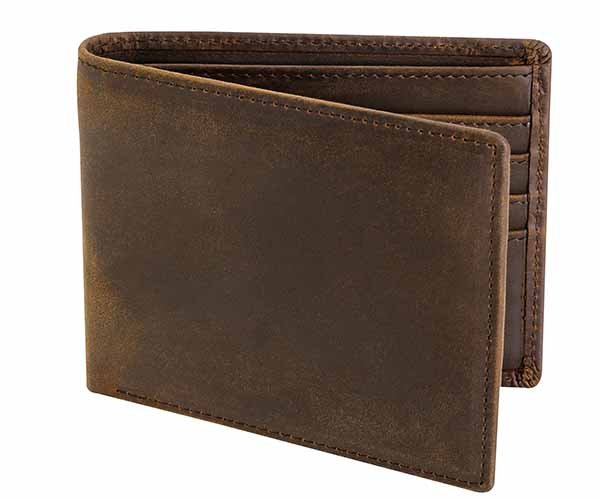
A leather wallet can look expensive on the outside and still fail in a customer’s pocket. Most wallet complaints don’t start with the leather grain—they start with feel and function: the wallet becomes floppy, the fold cracks, card slots stretch, corners curl, or the wallet turns bulky after a few months. These issues usually come from one place: the reinforcement materials inside.
Reinforcement is the “invisible structure” that keeps a wallet crisp without feeling like a board, and strong without becoming thick. The right combination of boards, films, and interlinings decides how the wallet folds, how the edges stay flat, how tight the card slots remain, and whether the wallet still looks clean after daily compression in jeans or a bag.
Boards, films, and interlinings reinforce leather wallets by controlling stiffness, thickness, and long-term shape. Boards add body and flatness, films stabilize panels and folds to reduce wrinkling and cracking, and interlinings balance feel while supporting card slots and pockets. The best reinforcement depends on wallet style (slim or classic), expected daily use, and the thickness target you need to hit.
If you’ve ever had a sample that felt perfect but bulk production felt different—or customers said “it looks worn too fast”—this reinforcement guide will help you fix that before you spend money on tooling and mass orders.
What Is Reinforcement in Leather Wallets?
Reinforcement in leather wallets is the internal structure layer—boards, films, and interlinings—added between leather and lining to keep panels flat, protect the fold, hold card-slot tension, and control thickness. Good reinforcement makes a wallet feel stable and premium while staying comfortable in a pocket. Poor reinforcement leads to cracking folds, stretched slots, curling edges, and early shape loss.
What Reinforcement Solves
Wallet reinforcement exists because wallets live a hard life:
- Bent open/closed many times daily
- Compressed in back pockets and bags
- Rubbed against denim seams, keys, coins
- Exposed to sweat, humidity, body heat
Here are the most common customer complaints and what reinforcement is usually responsible for:
| Customer complaint (what they say) | What’s happening inside | Reinforcement fix |
|---|---|---|
| “Wallet feels floppy now” | panels lost stiffness | add/upgrade board or stiffer interlining |
| “Fold cracked / ugly crease” | stress concentrated at spine | film or spine reinforcement to spread stress |
| “Cards fall out” | slot panel stretched | interlining behind slot panel + better board placement |
| “Corners curl” | edges lose flatness | stronger board at outer panel + correct grain direction |
| “Wallet is too bulky” | reinforcement too thick | thinner board/film, or restructure layers |
Where Reinforcement Goes Inside a Wallet
Professional construction uses reinforcement only where it matters. Over-reinforcing makes wallets uncomfortable and thick; under-reinforcing causes early failure.
| Wallet area | Why it needs reinforcement | Typical reinforcement used |
|---|---|---|
| Outer panel | keeps wallet flat and clean | board or film |
| Spine / fold line | prevents cracking and “memory crease” | film or fold reinforcement |
| Card slot panel | controls stretch and keeps slot tight | interlining + thin film |
| Coin pocket flap | keeps flap aligned and crisp | thin board or film |
| ID window frame | prevents warping and wave | thin film or board |
A good wallet feels “structured” but still folds smoothly—this balance comes from placement.
Reinforcement vs Leather Thickness
Many brands try to fix structure problems by choosing thicker leather. That often backfires:
- thicker leather = heavier wallet
- thicker leather = harder fold
- thicker leather = bulky edges at seams
A better approach is moderate leather + engineered reinforcement, which can reduce overall thickness while keeping stiffness.
Practical thickness logic
Typical finished thickness targets vary by style:
| Wallet style | Common finished thickness goal | What reinforcement approach usually works |
|---|---|---|
| Slim bifold | ~8–12 mm | thin board + thin film + light interlining |
| Classic bifold | ~12–18 mm | medium board + interlining at slots |
| Trifold | ~18–25 mm | careful thin reinforcement to avoid bulk |
| Card holder | ~4–8 mm | very thin film/interlining, minimal board |
| Zip wallet | ~15–22 mm | board at shell + interlining at pocket walls |
(Actual final thickness depends on leather thickness and slot count, but this table helps planning early.)
How Reinforcement Changes “Feel”
Customers don’t talk about boards and films. They talk about:
- “It feels expensive”
- “It feels stiff”
- “It feels heavy”
- “It feels cheap”
Those feelings are measurable through structure choices:
| Feel in hand | Typical cause | Reinforcement adjustment |
|---|---|---|
| Too stiff / uncomfortable | board too thick or too rigid | switch to thinner board or softer interlining |
| Too soft / cheap feel | board missing or too weak | add board to outer panel, reinforce slot panel |
| Bulky edges | too many layers stacked at seams | reduce board area, switch film, redesign seam lines |
| Good balance | stiffness + smooth fold | combine board + film + interlining by zones |
Early-Wear Timeline
In everyday use, reinforcement failures tend to show up in predictable timeframes:
| Time after purchase | Common visible issue | Root cause |
|---|---|---|
| 2–6 weeks | edges start curling | weak outer reinforcement or poor edge design |
| 2–4 months | fold line looks “tired” | spine stress not stabilized |
| 3–9 months | card slots loosen | slot panel not reinforced |
| 6–12 months | wallet loses flat shape | board too soft / breaks down |
If you design reinforcement correctly, you prevent most of these issues before production.
What Brands Should Confirm Before Sampling
When you send a tech pack or request a quote, include these details:
- Wallet type + slot count: bifold/trifold/zip/card holder
- Target thickness: “I want ≤12 mm closed” (example)
- Target feel: crisp / soft / medium
- Use scenario: pocket carry, travel, daily heavy use
- Logo areas: hot stamp / emboss needs stable base
- Humidity market: tropical vs dry climate
Then ask your factory to propose:
- board type and thickness options
- film type for fold stability
- interlining type for slot strength
This approach is faster than guessing materials yourself.
What Are Boards in Leather Wallets?
Boards in leather wallets are internal stiffening layers used to keep panels flat, control shape, and provide a stable base for card slots and logos. Wallet boards sit between leather and lining, adding structure without relying on thick leather. The right board thickness and material help wallets stay crisp while remaining comfortable to fold and carry.
Common Types of Wallet Boards Used in Production
Not all boards behave the same. Choosing the wrong one leads to cracking, moisture damage, or bulk.
| Board Type | Typical Thickness | Behavior in Use | Common Application |
|---|---|---|---|
| Paper board | 0.3–0.6 mm | light, flexible, moisture-sensitive | light wallets, low-cost items |
| Fiber board | 0.4–0.8 mm | balanced stiffness, stable | most mid–high wallets |
| Plastic board (PP/PET) | 0.2–0.5 mm | moisture-proof, rigid | slim wallets, humid markets |
| Composite board | varies | tuned stiffness | premium or custom projects |
Key factory insight: Paper board is cheap but risky in humid climates. Fiber and plastic boards are more stable for long-term use.
Board Thickness: The Most Common Wallet Mistake
Most wallet structure problems come from wrong board thickness, not bad leather.
| Board Too Thin | Board Too Thick |
|---|---|
| Wallet feels floppy | Wallet feels uncomfortable |
| Panels lose shape | Fold becomes stiff |
| Logo area collapses | Edges become bulky |
| Short lifespan | Poor pocket carry |
Factories usually adjust board thickness by ±0.1 mm to fine-tune feel—small changes matter.
Where Boards Are Placed Inside a Wallet
Boards are not placed everywhere. Smart placement avoids bulk while maximizing effect.
| Placement Area | Purpose |
|---|---|
| Outer shell panel | keep wallet flat |
| Behind logo area | stabilize emboss / hot stamp |
| Back of card slot stack | prevent stretching |
| Coin pocket flap | keep flap aligned |
Boards are usually not placed directly on fold lines to avoid cracking.
Board Direction and Grain Matter More Than Most Buyers Think
Boards have a “machine direction.” If installed incorrectly:
- Panels curl
- Wallet twists after use
- Fold lines become uneven
Professional factories align board direction with wallet orientation to prevent long-term deformation.
Board Performance Over Time
| Time in Use | What Happens With Proper Board | With Poor Board |
|---|---|---|
| 1–3 months | shape remains flat | edges begin curling |
| 3–6 months | card slots stable | slot stack loosens |
| 6–12 months | fold still clean | panel warping visible |
This is why board choice is locked early in development.
What Are Films in Leather Wallet Reinforcement?
Reinforcement films in leather wallets are thin structural layers used to stabilize panels, protect fold areas, and prevent wrinkling or cracking. Films add strength without bulk and are often used where boards are too thick, especially in slim wallets, fold spines, and logo areas.
Why Films Are Used Instead of Boards
Boards add stiffness. Films add control.
Films are used when:
- Wallet must stay thin
- Fold needs reinforcement without stiffness
- Surface needs wrinkle control
- Logo area needs stability
In many modern slim wallets, films replace boards entirely.
Common Types of Films Used in Wallets
| Film Type | Thickness | Key Behavior | Typical Use |
|---|---|---|---|
| TPU film | 0.05–0.2 mm | flexible, durable | fold reinforcement |
| PET film | 0.05–0.15 mm | stable, crisp | logo backing |
| PU-coated film | varies | soft surface | luxury wallets |
| Composite film | varies | tuned stiffness | custom structures |
Films are often laminated or stitched between layers.
Where Films Are Applied Inside Wallets
| Area | Why Film Works |
|---|---|
| Fold spine | reduces cracking |
| Outer shell | controls wrinkling |
| Logo area | improves emboss clarity |
| Card slot layers | limits stretch |
| ID window frame | keeps window flat |
Films allow reinforcement without changing hand feel dramatically.
Film vs Board: How Factories Decide
| Design Need | Film | Board |
|---|---|---|
| Ultra-thin wallet | ✓ | ✕ |
| Strong flat panel | ✕ | ✓ |
| Fold protection | ✓ | ✕ |
| Moisture resistance | ✓ | depends |
| Cost control | ✓ | ✓ |
Most wallets use both, but in different zones.
Fold Cracking: How Films Solve the Biggest Wallet Problem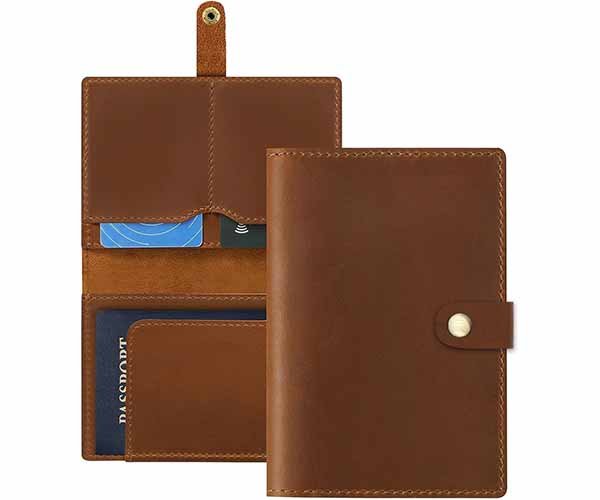
The fold is the highest stress area in any wallet.
Without film:
- Leather fibers fatigue
- Crease deepens
- Cracks appear
With film:
- Stress spreads across a wider area
- Fold memory improves
- Wallet opens smoothly longer
Factories often test fold durability by 500–1,000 bend cycles during sampling.
Film Thickness Control
| Film Thickness | Result |
|---|---|
| Too thin | little reinforcement |
| Balanced | stable fold, clean surface |
| Too thick | stiff fold, unnatural feel |
Typical effective range: 0.08–0.12 mm for slim wallets.
Common Film Mistakes Seen in Production
- Using film across entire panel → stiff, plastic feel
- Using film too close to edges → visible edge lines
- No compatibility test with leather → bubbling or delamination
These are process issues, not film quality issues.
When Films Should Not Be Used Alone
Films are not a replacement for boards in:
- Large panels needing flatness
- Heavy card stacks
- Long wallets with wide surfaces
In these cases, films must be combined with boards or interlinings.
What Are Interlinings in Leather Wallets?
Interlinings in leather wallets are soft or semi-rigid internal layers placed between leather and lining to balance hand feel, reinforce card slots, and improve durability without adding bulk. Unlike boards and films, interlinings focus less on stiffness and more on comfort, pocket strength, and long-term usability.
Why Interlinings Matter in Wallet Construction
If boards are the “bones” and films are the “tendons,” interlinings are the muscle and cushioning of a wallet. They decide whether a wallet feels comfortable in hand and pocket, or sharp and awkward.
From production experience, wallets without proper interlining often feel:
- Too stiff at first, then suddenly too soft
- Uneven when stacked with cards
- Uncomfortable in slim designs
Interlinings help smooth out the transition between leather layers and reinforcement materials.
Common Types of Wallet Interlinings
| Interlining Type | Thickness | Feel | Typical Use |
|---|---|---|---|
| Nonwoven interlining | thin–medium | balanced | card slots, inner panels |
| Fabric interlining | medium | soft | premium wallets |
| Foam interlining | medium–thick | cushioned | zip wallets, travel wallets |
| Composite interlining | varies | tuned | custom structures |
Factory note: Nonwoven interlining is the most widely used because it balances strength and thinness well.
Where Interlinings Are Placed Inside Wallets
Interlinings are used in contact-heavy areas, not flat panels.
| Area | Purpose |
|---|---|
| Card slot stacks | prevent stretching |
| Inner bill compartment | improve hand feel |
| Coin pocket walls | absorb stress |
| Middle panels | smooth folding |
Interlining placement is often adjusted by 5–10 mm during sampling to optimize feel.
Interlining vs Board vs Film: Different Roles
| Material | Primary Role | What It Does Best |
|---|---|---|
| Board | structure | flatness, stiffness |
| Film | control | fold stability, anti-wrinkle |
| Interlining | comfort | slot strength, hand feel |
High-quality wallets almost never rely on just one.
Common Interlining Mistakes
- Too thick → bulky wallet
- Too soft → slots stretch quickly
- No interlining → harsh feel, uneven folding
Interlining quality often shows after 3–6 months, not during sampling.
Which Reinforcement Material Is Best for Leather Wallets?
No single reinforcement material is “best” for all leather wallets. The right choice depends on wallet type, thickness target, daily use, and customer expectations. Most high-quality wallets combine boards for shape, films for fold stability, and interlinings for comfort and slot strength.
Start With Wallet Type, Not Material Names
Professional factories select reinforcement from the outside in—starting with use.
| Wallet Type | Best Reinforcement Mix | Reason |
|---|---|---|
| Slim bifold | thin film + light interlining | thin, flexible |
| Classic bifold | board + interlining | balance shape and comfort |
| Trifold | thin board + film | avoid bulk at folds |
| Card holder | film + micro interlining | tight slots |
| Zip wallet | board + foam interlining | structure + cushioning |
Thickness Targets That Guide Reinforcement Choice
| Wallet Style | Practical Thickness Goal |
|---|---|
| Ultra-slim wallet | 6–10 mm |
| Slim bifold | 8–12 mm |
| Classic bifold | 12–18 mm |
| Trifold | 18–25 mm |
| Zip wallet | 15–22 mm |
Reinforcement decisions are adjusted backward from these targets.
Climate and Use Matter More Than Many Brands Expect
| Use Condition | Reinforcement Preference |
|---|---|
| Hot / humid climate | plastic board + film |
| Pocket carry | film at fold + soft interlining |
| Heavy card load | board + interlining |
| Minimalist use | film only |
Ignoring climate often leads to warped wallets or early breakdown.
A Simple Decision Shortcut
If you’re unsure:
- Feels too soft? Add board or stronger interlining
- Feels too stiff? Reduce board, add interlining
- Too bulky? Replace board with film
- Fold cracking? Add spine film
This logic solves most wallet structure problems.
How Professional Factories Develop Wallet Reinforcement
Professional factories treat wallet reinforcement as engineering, not decoration.
Step 1: Define Use and Thickness Target
Factories start by confirming:
- Wallet style
- Slot count
- Target closed thickness
- Carry method (pocket / bag)
This defines the reinforcement budget immediately.
Step 2: Select and Combine Materials
Rather than “board or film,” factories test combinations:
- board + interlining
- film + interlining
- board + film (limited areas)
Step 3: Prototype and Stress Test
During sampling, factories check:
- fold durability (hundreds of bends)
- slot tension after card insertion
- edge curling after compression
- logo stability after embossing
Most reinforcement changes happen at this stage.
Step 4: Lock Specs for Bulk
Once validated, factories lock:
- board thickness tolerance
- film type and placement
- interlining weight
This prevents “sample vs bulk” inconsistency.
Step 5: Production Quality Control
Factories inspect:
- reinforcement placement accuracy
- thickness consistency
- fold behavior after assembly
Wallets failing early checks are reworked or rejected.
Reinforcement Is the Difference Customers Feel
Customers may never mention boards, films, or interlinings—but they feel the result every day. The right reinforcement:
- Keeps wallets flat and clean
- Protects folds from cracking
- Maintains card slot tension
- Balances comfort and durability
The wrong reinforcement turns good leather into a bad product.
Ready to Develop Custom Leather Wallets with SzoneierLeather?
At SzoneierLeather, wallet reinforcement is part of our core development process—not an afterthought. With over 18 years of experience in leather wallets, bags, belts, straps, accessories, and leather boxes, we help brands design wallet structures that feel right, last longer, and perform consistently in bulk production.
If you are planning:
- Slim wallets
- Luxury bifolds
- Card holders
- Zip wallets
- Custom OEM / ODM wallet projects
You can share your concept, thickness target, and usage scenario. We’ll recommend the right reinforcement structure, develop samples, and provide a clear production plan.
Contact SzoneierLeather today to request a quote or start your custom wallet development.