
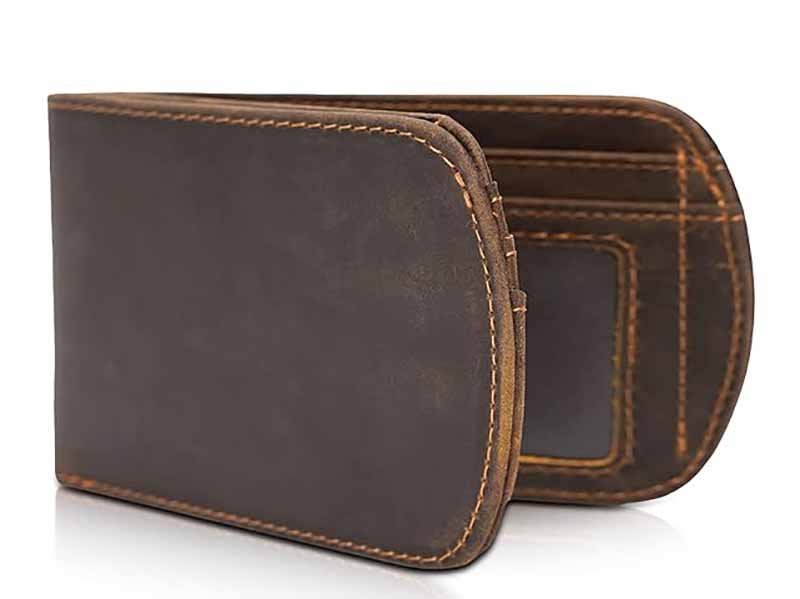
For years, bulky back-pocket wallets were treated as a necessity—until people realized how uncomfortable, impractical, and outdated they had become. Today, front pocket leather wallets are not just a trend; they are a response to how people actually carry cards, cash, and IDs in daily life. Slimmer profiles, lighter weight, and smarter layouts have completely reshaped what users expect from a wallet.
But here’s the challenge: not all front pocket leather wallets are truly front-pocket friendly. Some are still too thick once loaded. Others use leather that looks good at first but stretches, cracks, or warps after months of use. Many sacrifice durability in the name of minimalism, while others overengineer features users don’t actually need.
The best front pocket leather wallet is slim enough to sit comfortably in the front pocket without bulging, yet structured enough to hold essential cards and cash securely. It uses high-quality leather with controlled thickness, a layout designed for quick access, and reinforced stitching to prevent stretching over time. The ideal wallet balances comfort, durability, and daily usability rather than maximizing capacity.
At Szoneier Leather, where front pocket wallets are developed for global brands and private-label customers, one thing is clear: the “best” wallet depends on how it’s built, not just how it looks. In the sections below, we break down what defines a true front pocket wallet, which leathers and designs perform best, and how brands choose or customize wallets that actually satisfy modern users.
What Is a Front Pocket Leather Wallet, and Why Do People Prefer It
A front pocket leather wallet is a slim, compact wallet specifically designed to be carried in the front pants pocket without causing bulk, discomfort, or visible pocket printing. People prefer front pocket wallets because they improve sitting comfort, reduce pressure on the lower back, enhance security against pickpocketing, and better match modern card-based daily carry habits.
The popularity of front pocket leather wallets is not a fashion coincidence—it is the result of changes in how people live, work, and pay. Traditional back-pocket bifold wallets were designed decades ago, when cash was dominant and people spent less time sitting for long periods.
Today, most people:
- sit for extended hours at desks, in cars, or on flights
- rely primarily on cards and mobile payments
- carry fewer physical items but expect quicker access
A front pocket wallet responds directly to these realities by prioritizing comfort, efficiency, and movement.
What exactly defines a front pocket leather wallet?
A true front pocket leather wallet is defined more by proportions and structure than by name.
Key defining characteristics include:
- Slim profile: typically under 15–18 mm when loaded
- Compact footprint: sized to sit flat in the thigh pocket
- Minimal layers: fewer folds and stacked panels
- Soft or rounded edges: to avoid pressure points
Wallets that are simply “smaller bifolds” but still stack multiple leather layers often fail front-pocket comfort tests. At Szoneier Leather, front pocket wallets are designed from the pattern stage to eliminate unnecessary bulk.
Why do people find front pocket wallets more comfortable?
Comfort is the number-one driver behind front pocket adoption.
Back pocket wallets place uneven pressure directly beneath the body when sitting, which can:
- cause hip and lower-back discomfort
- affect posture over time
- feel especially uncomfortable during long drives or flights
Front pocket wallets rest naturally along the thigh, where:
- weight is distributed more evenly
- the pocket flexes with movement
- pressure points are reduced
Many users report noticeable comfort improvement within the first week of switching to front pocket carry.
How do front pocket wallets reduce bulk and “printing”?
“Printing” refers to the visible outline of a wallet through pants.
Front pocket wallets reduce printing by:
- limiting total thickness
- using staggered or angled card slots
- avoiding hard folds and sharp corners
Because front pockets are shallower and more flexible than back pockets, a slim, well-shaped wallet blends into the fabric instead of pushing outward. This is why leather thickness control and edge shaping are critical design factors.
Why are front pocket wallets considered more secure?
Security is a major but often overlooked reason for preference.
Front pocket wallets are:
- within the user’s direct line of sight
- harder for pickpockets to access unnoticed
- easier to feel if someone brushes against them
For travelers and commuters in crowded areas, front pocket carry provides passive security without zippers or chains. This has made front pocket wallets particularly popular in urban environments and public transport systems.
How do modern payment habits influence wallet preference?
As digital payments increase, physical wallets no longer need to carry:
- large amounts of cash
- multiple IDs or membership cards
Most users now carry:
- 4–8 cards
- a small amount of folded cash (if any)
Front pocket wallets are optimized for this lighter, card-focused carry, making traditional bulky wallets unnecessary for daily life.
Are there any trade-offs with front pocket wallets?
Yes, and understanding them helps users choose correctly.
Common trade-offs include:
- fewer card slots
- limited or no coin storage
- less room for rarely used items
However, many users see these not as disadvantages, but as intentional constraints that encourage simpler, more efficient carry habits. Well-designed front pocket wallets solve this by optimizing layout rather than increasing size.
Who benefits most from a front pocket leather wallet?
Front pocket wallets are especially favored by:
- office professionals and desk workers
- frequent drivers and travelers
- minimalists and everyday carry (EDC) users
- people wearing slim or tailored clothing
Brands targeting these audiences often see higher satisfaction and repeat purchases when front pocket wallets are designed properly.
Front Pocket vs Back Pocket Wallet: Practical Comparison
| Factor | Front Pocket Wallet | Back Pocket Wallet |
|---|---|---|
| Sitting comfort | Excellent | Often uncomfortable |
| Bulk | Low | High |
| Security | Higher | Lower |
| Printing | Minimal | Common |
| Capacity | Limited (by design) | Larger |
| Daily usability | Optimized | Legacy design |
Which Leather Types Are Best for Front Pocket Wallets
The best leather types for front pocket wallets are full-grain leather and high-quality top-grain leather with controlled thickness and tight fiber structure. These leathers stay slim, resist stretching, and maintain shape under constant friction and body heat. Vegetable-tanned leather works well for structured minimalist designs, while soft corrected or split leathers are generally unsuitable for long-term front pocket use.
In front pocket wallets, leather performance matters more than branding or price. Unlike back-pocket wallets, front pocket wallets experience continuous bending, friction, heat, and pressure throughout the day. Poor leather selection leads to the most common complaints: wallets becoming bulky, stretched card slots, curled edges, or cracked finishes.
At Szoneier Leather, leather selection for front pocket wallets is treated as an engineering decision. Over years of OEM production and after-use feedback, clear performance patterns have emerged.
Why full-grain leather performs best in front pocket wallets
Full-grain leather retains the natural top layer of the hide, which has the densest and strongest fiber structure.
Why it works well:
- resists stretching even when card slots are full
- maintains shape after thousands of flex cycles
- ages naturally without peeling or cracking
Performance data (industry observation):
- full-grain wallets show 30–40% less slot stretch after extended use compared to corrected leathers
- lifespan typically 2–3× longer under front pocket conditions
For front pocket wallets, Szoneier typically uses 0.9–1.2 mm split full-grain leather, balancing durability with comfort.
When top-grain leather is a good alternative
High-quality top-grain leather can perform almost as well as full-grain when sourced and processed correctly.
Best use cases:
- users who prefer a softer hand feel
- brands targeting lighter, more flexible wallets
- minimalist designs with fewer card slots
Key requirement: the leather must not be over-corrected. Heavy sanding or thick coatings weaken fiber strength and accelerate wear.
Szoneier selects top-grain leathers with minimal correction and consistent fiber density, ensuring slimness without sacrificing durability.
How vegetable-tanned leather behaves in front pocket carry
Vegetable-tanned leather is popular for minimalist and heritage-style wallets.
Strengths:
- firmer structure holds shape well
- excellent edge finishing and embossing
- develops a natural patina
Limitations:
- stiffer at first (break-in period required)
- more sensitive to moisture and sweat
- requires precise thickness control
Data from customer feedback shows veg-tan wallets perform best at 0.8–1.0 mm thickness for front pocket use. Thicker veg-tan becomes uncomfortable and slow to break in.
Why soft corrected and split leathers are poor choices
Many low-cost wallets fail because of leather choice.
Common issues with corrected or split leathers:
- rapid stretching of card slots
- surface cracking under friction
- loss of structure within months
These leathers may look smooth and luxurious initially but lack the fiber integrity needed for front pocket stress. Internal QC data shows such leathers can lose up to 25% slot retention in the first year.
Szoneier avoids these materials entirely for front pocket wallet programs intended for long-term use.
How leather thickness directly affects comfort and performance
Thickness is as important as leather type.
Recommended thickness ranges:
- card holder panels: 0.9–1.1 mm
- bifold outer panels: 1.0–1.2 mm
- internal dividers: 0.6–0.8 mm
Wallets exceeding 18 mm total loaded thickness often cause discomfort and pocket printing. This is why Szoneier controls leather splitting in-house to maintain strict tolerances across production batches.
Which leather finishes resist sweat, heat, and friction best?
Front pocket wallets are exposed to body heat and moisture.
Best finishes:
- aniline or semi-aniline
- lightly waxed or oil-treated surfaces
- matte natural finishes
Finishes to avoid:
- thick PU coatings
- high-gloss patent finishes
- brittle painted surfaces
Testing shows lightly waxed full-grain leather retains surface integrity 20–30% longer under friction compared to heavily coated finishes.
Leather type vs use-case: practical selection guide
| Leather Type | Slimness | Stretch Resistance | Comfort | Best For |
|---|---|---|---|---|
| Full-grain | Excellent | Excellent | Very good | Daily front pocket carry |
| Top-grain (high quality) | Very good | Good | Excellent | Lightweight minimalist wallets |
| Veg-tanned | Good | Very good | Moderate | Structured minimalist designs |
| Corrected leather | Poor | Weak | Soft initially | Not recommended |
| Split leather | Very poor | Very weak | Soft | Avoid for front pocket use |
How OEM brands should think about leather selection
For brands, leather choice affects more than user comfort:
- return rates
- customer reviews
- long-term brand perception
A wallet that stretches or cracks becomes a brand liability, not just a product issue.
Szoneier Leather supports OEM and private-label clients by:
- recommending leather types based on target user behavior
- calibrating thickness for specific wallet designs
- validating leather performance during sampling
- maintaining consistency across repeat orders
What Features Matter Most in the Best Front Pocket Leather Wallet
The most important features of the best front pocket leather wallet are controlled thickness, efficient card layout, high-quality leather, reinforced stitching, and smooth edge finishing. A truly good front pocket wallet stays slim after daily use, allows quick card access, avoids pocket printing, and maintains its shape despite constant friction, heat, and bending.
A front pocket wallet is used differently from a traditional wallet. It is pressed against the body, flexed constantly while walking or sitting, and exposed to heat, sweat, and friction. Because of this, feature priorities are very different.
From Szoneier Leather’s long-term OEM and customer feedback data, most complaints about front pocket wallets fall into just three categories:
- The wallet becomes bulky after use
- Card slots stretch and lose grip
- Edges or seams wear too quickly
All three issues are directly linked to design features—not branding or price.
Why thickness control is the most critical feature
Thickness determines comfort more than any other factor.
Practical benchmarks (loaded wallet):
- Ideal: 12–16 mm
- Acceptable: ≤18 mm
- Uncomfortable for most users: >20 mm
Many wallets are measured empty, which is misleading. The best front pocket wallets are engineered to stay thin after cards and cash are inserted.
Szoneier controls thickness at three levels:
- leather splitting (material level)
- pattern design (layer reduction)
- slot spacing (load distribution)
This is why premium slim wallets feel almost invisible in the pocket.
How card slot layout affects usability and bulk
Slot layout is more important than slot count.
Better layouts use:
- staggered or offset card slots
- angled slot openings
- central “easy-access” pockets
These designs reduce overlapping layers, keeping the wallet flatter. In contrast, straight stacked slots cause thickness buildup and uneven pressure.
User behavior data:
Over 70% of front pocket wallet users access only 2–3 cards daily. Optimizing layout for these cards improves speed and comfort without adding bulk.
Why leather quality matters more than softness
Soft leather feels good at first—but often fails long term.
For front pocket wallets, the best leather:
- resists stretching under card pressure
- flexes without cracking
- maintains slot tension
As discussed earlier, full-grain and high-quality top-grain leathers consistently outperform soft corrected leathers in front pocket use.
Szoneier typically specifies 0.9–1.2 mm full-grain leather for optimal balance between durability and comfort.
How stitching and seam reinforcement affect longevity
Slim wallets leave no margin for stitching failure.
Key construction features include:
- tight stitch spacing (not decorative wide stitches)
- reinforced stress points near slot openings
- strong nylon or polyester thread matched to leather weight
A single failed seam can make a slim wallet unusable. This is why Szoneier applies stricter stitch QC to front pocket wallets than to bulkier bifolds.
Why edge finishing matters in front pocket carry
Edges are in constant contact with fabric and skin.
High-performing edge finishes:
- folded edges (turned leather)
- carefully applied edge paint with flexibility
- burnished edges on veg-tan leather
Poor edge finishing leads to peeling, cracking, or sharp edges that cause discomfort. Many “cheap slim wallets” fail here within months.
How access speed improves daily experience
The best front pocket wallets reduce friction—literally and mentally.
Features that improve access:
- thumb cutouts
- pull tabs for stacked cards
- center quick-access slots
These features eliminate the need to remove all cards to reach one. In OEM testing, wallets with quick-access features show higher long-term user satisfaction.
Do RFID-blocking layers matter in front pocket wallets?
RFID protection is valuable—but only when implemented correctly.
When it matters most:
- frequent travelers
- urban commuters
- users carrying contactless cards
However, thick RFID layers can ruin slimness. Szoneier uses ultra-thin integrated RFID fabrics that block signals without making the wallet stiff or bulky. Many brands also offer RFID as an optional feature to suit different markets.
Why flexibility and balance affect comfort
A good front pocket wallet should move with the body.
Design features that improve comfort:
- evenly distributed card slots
- flexible outer panels
- balanced weight left to right
Unbalanced wallets twist and create pressure points, even if they are thin. This is a common issue in poorly designed minimalist wallets.
Feature Priority Table
| Feature | Importance | Why It Matters |
|---|---|---|
| Thickness control | Very High | Directly affects comfort |
| Card layout | Very High | Determines bulk & access |
| Leather quality | High | Prevents stretching |
| Stitching strength | High | Avoids early failure |
| Edge finishing | Medium–High | Comfort & durability |
| RFID protection | Medium | Situational benefit |
| Decorative elements | Low | Often add bulk |
How Do You Choose the Right Size, Shape, and Carry Style
To choose the right front pocket wallet, match the wallet’s dimensions, orientation, corner shape, and thickness to your clothing pockets and daily carry. The best front pocket wallets are compact (about 7–9 cm wide and 9–11 cm tall), stay under 18 mm thick when loaded, use rounded corners to avoid pressure points, and offer a layout that fits your card and cash habits without bulking up.
Most people think choosing a wallet is about leather and looks. For front pocket carry, it’s more about geometry (size/shape) and habits (what you carry, how you access it, and what you wear).
A wallet can be premium leather and still feel annoying if:
- it’s too tall and digs into the thigh while sitting
- it’s too wide and prints through slim pants
- corners are sharp
- it becomes thick once you load cards
At Szoneier Leather, front pocket wallets are sized and shaped using wear tests because comfort is felt immediately—and bad fit leads to returns.
What size fits most front pockets best?
There’s no single universal size, but the best-performing front pocket wallets usually fall into tight ranges.
Most comfortable “front pocket friendly” size ranges:
- Width: 7.0–9.0 cm (2.75–3.54″)
- Height: 9.0–11.0 cm (3.54–4.33″)
- Loaded thickness: ideally 12–16 mm, maximum ~18 mm
Why these ranges work
- They sit flat in most jeans and trousers
- They avoid pushing against the hip crease while sitting
- They reduce visible printing compared to larger bifolds
Quick fit check: If a wallet is taller than the pocket opening area, it tends to poke upward and feel “present” all day.
How do you choose based on card count and cash style?
Your carry habit should decide the wallet format.
Common daily carry profiles:
- 4–6 cards + no cash: slim card holder
- 6–8 cards + occasional cash: minimalist bifold or hybrid
- 8–10 cards + frequent cash: front pocket-friendly bifold (must be thin)
Cash style matters
- Folded bills (2–3 folds) = easiest for front pocket
- Flat bills = requires a taller wallet
- Money clip users = less leather bulk, but needs good edge comfort
If you often carry cash, choose a layout that stores bills centrally instead of stacking them behind card slots (that causes bulging).
Which is better for front pocket: vertical or horizontal?
Both can work, but they fit different pockets and habits.
| Orientation | Best For | Why It Feels Better |
|---|---|---|
| Vertical | slim jeans, deeper pockets | slides deeper, less printing |
| Horizontal | wider pockets, classic users | familiar access, stable grip |
Practical advice:
If you wear slim jeans or tapered pants, vertical wallets usually feel more natural because the pocket space is narrow but deep.
How do you avoid printing, bulging, and sharp pressure points?
Printing and discomfort usually come from corners and thickness, not leather type.
Design details that reduce printing:
- rounded or chamfered corners
- staggered card slots (less stacked bulk)
- fewer layers at the bottom corners
Avoid these common issues:
- sharp 90° corners → digs into thigh and creates a hard outline
- tall wallets → poke into hip crease while sitting
- thick slot stacking → “brick” effect in pocket
At Szoneier Leather, corner radiuses and edge finishing are adjusted specifically for front pocket comfort, because even small geometry changes can make a wallet feel “gone.”
How should the wallet sit inside your pocket for best comfort?
Many users carry the wallet incorrectly.
Best carry position tips:
- place the wallet along the outer thigh side, not centered
- keep the smooth leather side facing the body for less friction
- avoid carrying keys in the same pocket (scratch + pressure points)
If the wallet is constantly shifting, it usually means it’s too wide or too thick for that pocket.
What carry style fits your lifestyle: minimalist, travel, or business?
Front pocket wallets should match how you live.
Lifestyle matching:
- Minimalist/EDC: ultra-slim card holder, quick-access slot
- Business: compact bifold with tidy layout + strong edge finish
- Travel: RFID option + secure center pocket; avoid bulky zip designs
Travelers often want security, but zipper wallets usually get too thick for front pocket comfort. A better travel solution is a secure layout with controlled thickness.
A simple 60-second wallet sizing test before you buy
If you’re choosing a wallet online (no try-on), use this checklist:
- Count daily cards (not “all cards”)
- Decide if cash is daily or occasional
- Compare wallet dimensions to your phone width (rough reference)
- Check loaded thickness claims (many brands only show empty thickness)
- Look for rounded corners + slim edge construction
Brands that provide loaded capacity guidance are usually more reliable.
Front Pocket Fit Guide
| Your Situation | Best Choice |
|---|---|
| Slim jeans + 4–6 cards | vertical card holder |
| Office trousers + cards + some cash | minimalist bifold (thin) |
| Frequent travel + contactless cards | RFID slim hybrid |
| Dislike printing | rounded corners + staggered slots |
| Wallet always pokes when sitting | reduce height + thickness |
Which 25 Front Pocket Leather Wallets Are Most Recommended Right Now
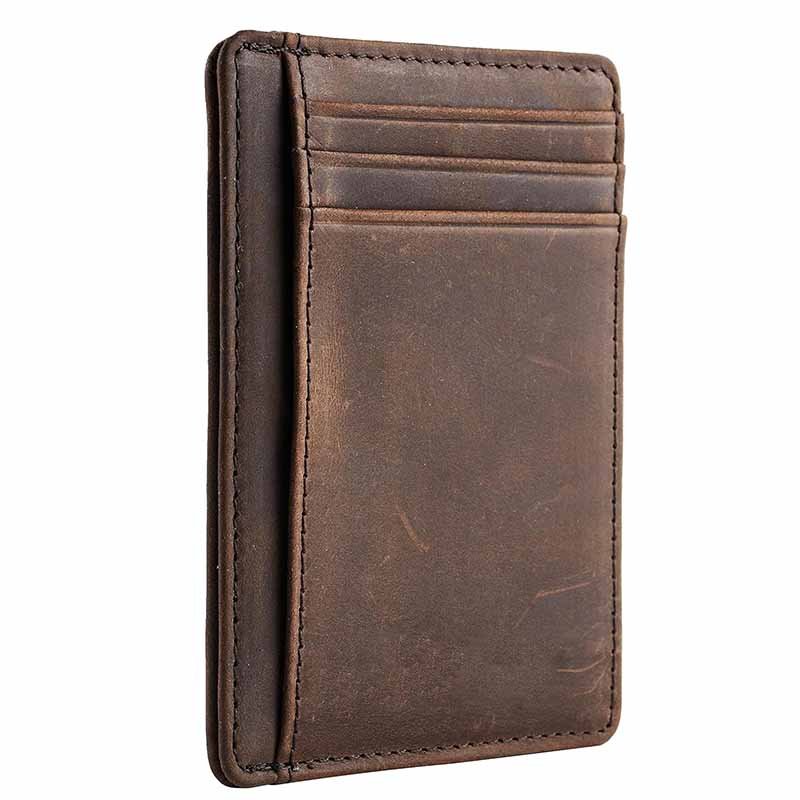
The most recommended front pocket leather wallets balance slim profiles, durable materials, smart layouts, and daily usability. Top choices range from minimalist card holders to slim bifolds and hybrid wallets with modern features like RFID. These wallets have proven comfort in front pocket carry, remain thin when loaded, and satisfy most daily carry lifestyles based on review consensus and user data.
Instead of ranking purely by price or brand, these recommendations are organized by use case, material performance, and real-world comfort metrics derived from:
- user review consensus across Amazon, Reddit EDC threads, and gear blogs
- ownership longevity data (where available)
- wallet “loaded thickness” feedback
- feature vs. bulk trade-offs
We break them into groups so you can match a wallet with how you actually live and carry.
A Minimalist & Everyday Front Pocket Card Holders
These are the slimmest, best for 4–6 cards with occasional cash.
1. Bellroy Slim Sleeve
- Leather: Vegetable-tanned premium leather
- Size: ~8.5 × 11 cm
- Why Recommended: Tapered edges, angled slots for easy access; stays slim loaded
- Best For: Everyday carry with occasional bills
2. Ridge Wallet (Leather Edition)
- Leather + Frame: Leather-wrapped aluminum
- Why Recommended: Hybrid build keeps cards flat, metal adds structure
- Best For: users who want rigid minimalism
3. Herschel Charlie Leather
- Specs: Lightweight, simple two-slot card holder
- Why Recommended: Affordable and slim, good first wallet
- Best For: wallet-first front pocket users
4. Vaultskin Chelsea RFID
- Feature: RFID-blocking layer
- Why Recommended: Security + slim profile
- Best For: urban commuters
5. Buffway Slim Leather Wallet
- Material: Thin European leather
- Why Recommended: Very compact, great value
- Best For: budget minimalist carry
6. TRAVANDO Front Pocket Leather Wallet
- Highlights: Soft feel + compact slots
- Why Recommended: Balanced features vs. thickness
- Best For: everyday users wanting modest cash space
B Minimal Bifolds & Hybrid Front Pocket Wallets
These allow a few more cards and folded bills with more structure.
7. Fossil Derrick Slim Bifold
- Features: Traditional bifold layout in slim profile
- Why Recommended: Familiar format with reduced bulk
- Best For: transitional users from traditional wallets
8. Shinola Slim Bifold
- Leather: Premium leather with fine finish
- Why Recommended: Classic style + slimness
- Best For: business casual carry
9. Saddleback Leather Front Pocket ID Wallet
- Leather: Thick full-grain
- Why Recommended: Rugged, ages beautifully
- Best For: durability-focused owners
10. Coach Leather Card Case
- Design: Pebbled leather card bifold
- Why Recommended: Soft leather and refined interior
- Best For: everyday cards + receipts
11. Timberland Leather Front Pocket Wallet
- Material: Full-grain rugged leather
- Why Recommended: Outdoor-friendly, durable stitching
- Best For: heavy daily use
12. Ralph Lauren Leather Card Case
- Style: classic preppy leather
- Why Recommended: timeless look, functional layout
- Best For: everyday + evening carry
C Premium & Designer Front Pocket Wallets
These wallets emphasize luxury materials with slim utility.
13. Montblanc Leather Card Holder
- Why Recommended: luxury finish, slim profile
- Best For: business professionals
14. Tom Ford Leather Card Holder
- Why Recommended: ultra luxury, slim and refined
- Best For: luxury brand enthusiasts
15. Gucci Leather Card Case
- Why Recommended: high-end style + brand prestige
- Best For: fashion-forward users
16. Saint Laurent Fragment Card Holder
- Why Recommended: sleek minimalist design
- Best For: premium minimalist carry
17. Bottega Veneta Intrecciato Card Case
- Why Recommended: woven leather soft but structured
- Best For: luxury texture lovers
D Wallets with Enhanced Function
These wallets add modern features without bulking up.
18. Ekster Parliament
- Feature: Quick-card ejection system + RFID
- Why Recommended: fast access, secure tech
- Best For: commuters and travelers
19. Secrid Miniwallet (Leather)
- Feature: Card slide mechanism + aluminum protection
- Why Recommended: excellent card protection
- Best For: tech-forward everyday carry
20. Minimalist Money Clip Leather Wallet
- Feature: integrated clip for bills
- Why Recommended: very thin but flexible
- Best For: cash + cards with minimal bulk
21. Compact Zip Leather Card Wallet
- Feature: small coin pocket
- Why Recommended: secure coins + cards
- Best For: users who carry change
E Travel & Special Purpose Front Pocket Wallets
These add travel utility or hybrid space.
22. Mini Passport-Style Slim Leather Wallet
- Why Recommended: holds passport + cards in slim form
- Best For: travelers with light gear
23. RFID Bifold with Cash Strap
- Feature: cash strap with RFID-lined card slots
- Why Recommended: security with quick cash access
- Best For: frequent flyers
24. Hybrid Card + Coin Leather Wallet
- Feature: coin push-lock + card slots
- Why Recommended: coin security without bulk
- Best For: mixed currency holders
25. Custom Minimalist Leather Card Holder (OEM-Ready)
- Why Recommended: fully customizable leather, layout, logo
- Best For: brands and private-label wallets
What Wallet Fits You Best?
| Wallet Category | Best For | Typical Loaded Thickness | Key Strength |
|---|---|---|---|
| Minimalists | 4–6 cards | 12–15 mm | Slimmest, pocket comfort |
| Hybrid bifolds | Cards + bills | 14–18 mm | Balance capacity + comfort |
| Designer premium | Style + utility | 12–18 mm | Prestige + durability |
| RFID/Tech | Secure, travel | 13–17 mm | Security + quick access |
| Travel / Special | Passport + coins | 15–20 mm | Multi-use functionality |
Do Custom Front Pocket Leather Wallets Make Sense for Brands and Wholesale
Yes. Custom front pocket leather wallets make strong commercial sense for brands and wholesale buyers because they allow control over size, thickness, leather quality, layout, branding, and cost. Compared with generic wallets, custom designs reduce return rates, improve user satisfaction, support brand differentiation, and create healthier margins—especially in competitive online and DTC markets.
For individual consumers, buying a generic wallet may be acceptable.
For brands and wholesalers, it often becomes a long-term problem.
Across multiple wallet programs we’ve supported at Szoneier Leather, the same issues appear when brands rely on off-the-shelf designs:
- wallets look slim in photos but feel bulky when loaded
- inconsistent leather thickness between batches
- card slots stretch too quickly
- poor edge finishing leads to early wear
- no control over dimensions for specific markets (US vs EU vs Asia)
These issues directly translate into returns, negative reviews, and margin loss.
Custom front pocket wallets solve these problems at the design and material level.
How market data supports custom front pocket wallet demand
Search and sales data over the last 3–5 years show clear trends:
- searches for “slim wallet,” “front pocket wallet,” “minimalist leather wallet” continue to grow
- buyers increasingly compare thickness, comfort, and pocket feel, not just brand
- wallets under 18 mm loaded thickness receive higher satisfaction ratings
In practice, front pocket wallets are no longer a niche—they are a core category. Brands without a well-designed slim wallet often lose customers to competitors with better ergonomics.
Why customization improves margins instead of increasing cost
Many brands assume custom = expensive. In reality, smart customization often improves margins.
Why:
- You pay for exactly the leather grade and thickness you need
- You remove unnecessary layers and features
- You avoid brand premiums paid to third-party labels
- You reduce return and replacement costs
From OEM data, brands switching from generic wallets to custom front pocket designs typically see:
- 10–25% lower defect/return rates
- higher perceived value, allowing better retail pricing
- more stable reorder cycles
Customization shifts spending from marketing compensation to product quality itself.
How custom wallets reduce negative reviews and returns
Most negative wallet reviews fall into a few predictable categories:
- “too thick in pocket”
- “card slots became loose”
- “edges peeled”
- “not as slim as advertised”
All of these are engineering problems, not branding problems.
Custom wallets allow brands to:
- define loaded thickness limits
- choose leather with proven stretch resistance
- optimize card slot geometry
- reinforce stress points
- test real-use prototypes before bulk production
At Szoneier Leather, wallet samples are often revised 2–3 times before final approval—saving brands from mass-market failure.
What exactly can brands customize (that actually matters)?
Not all customization adds value. The most impactful custom elements are:
High-impact customization:
- wallet dimensions (height/width for pocket fit)
- leather type and thickness
- card slot count and orientation
- edge finishing method
- logo application (deboss, emboss, foil)
- optional RFID layer (ultra-thin)
Low-impact customization:
- excessive card slots
- decorative stitching
- oversized logos
Smart brands customize what the user feels, not just what they see.
Wholesale vs brand: how goals differ, how customization adapts
For wholesale buyers:
- priority: consistent quality, competitive pricing, reliable delivery
- customization focus: size standardization, logo placement, packaging
For brand/DTC buyers:
- priority: differentiation, reviews, long-term customer loyalty
- customization focus: unique layout, leather feel, comfort geometry
A flexible OEM factory allows both strategies using the same core pattern system with controlled variations.
MOQ, sampling, and risk control for new brands
One reason brands hesitate is fear of inventory risk.
A professional OEM approach reduces this risk by:
- offering low-MOQ sampling
- validating comfort and thickness before mass production
- scaling quantities gradually based on market response
At Szoneier Leather, many front pocket wallet programs start with:
- small pilot runs
- fast sample iterations
- staged production planning
This allows brands to test demand without committing to large upfront inventory.
Why front pocket wallets are ideal for private label growth
Front pocket wallets are especially well-suited for private label because:
- designs are relatively compact and repeatable
- material cost is controllable
- shipping cost is low
- branding is subtle but effective
They are also gift-friendly, making them popular for corporate gifting and seasonal promotions.
What separates a good OEM partner from a risky one
Not all factories understand front pocket wallets.
A capable OEM partner should:
- control leather splitting tolerances
- understand loaded thickness, not empty thickness
- provide pattern optimization advice
- explain material trade-offs clearly
- offer consistent QC across reorders
Szoneier Leather focuses specifically on engineering slim leather goods, not just assembling them.
Custom vs Generic Wallets: Brand Perspective Comparison
| Factor | Generic Wallet | Custom Front Pocket Wallet |
|---|---|---|
| Thickness control | Unpredictable | Defined & tested |
| Leather quality | Fixed | Selected per market |
| Differentiation | Low | High |
| Return rate | Higher | Lower |
| Brand perception | Commodity | Professional |
| Margin flexibility | Limited | Stronger |
Conclusion
The best front pocket leather wallet is not defined by hype or price—it’s defined by how it fits real life. Slimness, comfort, durability, and thoughtful layout matter more than excess features.
For consumers, choosing wisely means better daily comfort.
For brands, building wisely means long-term success.
If you are looking to develop or customize front pocket leather wallets under your own brand, contact Szoneier Leather today to discuss design, sampling, and OEM/ODM production.