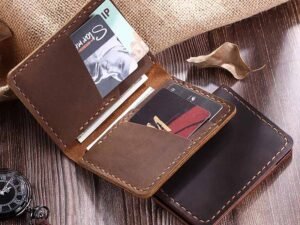
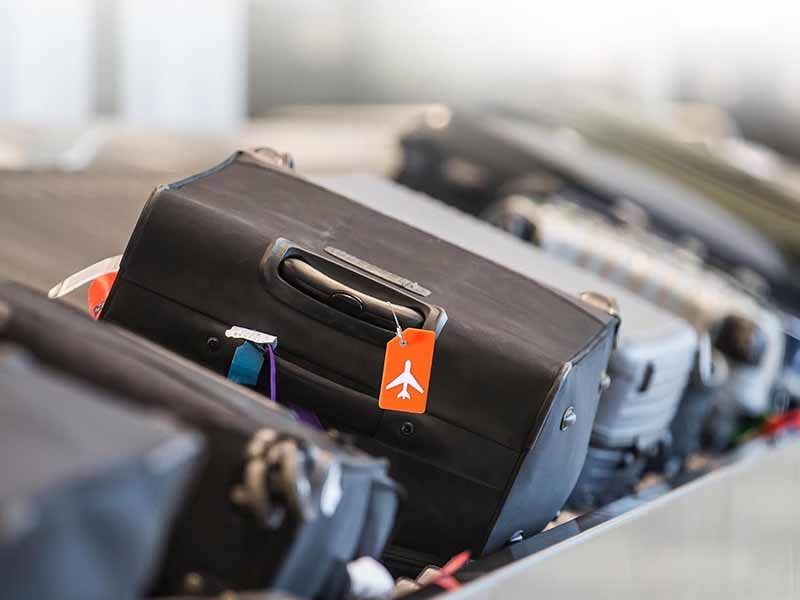
Lost luggage is one of the most frustrating travel experiences—and one of the most common. Despite advances in airline tracking systems, millions of bags are delayed or misplaced every year. In this environment, a small accessory plays a surprisingly important role: the luggage tag. Often overlooked, a luggage tag is not just a name card attached to a suitcase; it is a practical identification tool, a travel safety measure, and increasingly, a brand and lifestyle statement.
For individual travelers, luggage tags help ensure bags are returned quickly when separated from their owner. For hotels, airlines, and tour operators, luggage tags are essential for sorting, tracking, and managing large volumes of baggage efficiently. For brands and retailers, especially in the leather goods space, luggage tags have evolved into high-value accessories—used as premium add-ons, corporate gifts, or branded travel products.
A luggage tag is an identification label attached to luggage to display the owner’s contact information. It helps airlines, hotels, and travelers identify bags quickly when they are lost, delayed, or mixed with others. Luggage tags are commonly used at airports, hotels, and during travel, and are made from materials such as leather, plastic, silicone, or metal. Leather luggage tags are especially valued for durability and premium appearance.
Behind this simple definition are important questions: what exactly is a luggage tag used for, how should it be used at airports and hotels, what information should be included, and why many brands now prefer leather luggage tags. Let’s start from the basics.
What Is a Luggage Tag

A luggage tag is an identification accessory attached to luggage, suitcases, or travel bags to display ownership and contact information. Its primary purpose is to help identify and recover luggage if it is lost, delayed, or mixed up during travel. Luggage tags are widely used at airports, hotels, cruise terminals, and tours, and are commonly made from materials such as leather, plastic, silicone, or metal.
What does “luggage tag” mean in travel terms?
In practical travel terms, a luggage tag is a permanent personal identifier for your bag.
Unlike airline baggage tags—which are temporary and system-generated—a personal luggage tag stays with the bag across multiple journeys and travel providers.
It serves as:
- a visual ownership marker
- a backup identification method
- a quick contact bridge between the bag and its owner
This is why luggage tags remain relevant even with modern tracking technology.
What is the primary purpose of a luggage tag?
The core purpose of a luggage tag is fast identification and recovery.
When luggage is:
- sent to the wrong carousel
- misplaced by airlines
- stored by hotels or tour operators
a clearly labeled luggage tag allows staff or other travelers to identify the owner quickly and make contact without relying on internal systems.
Where are luggage tags commonly used?
Luggage tags are used far beyond airports.
Common scenarios include:
- airports: checked and carry-on luggage
- hotels: luggage storage and bell service
- cruise ships: cabin and port identification
- group tours: sorting and managing multiple bags
In commercial settings, luggage tags improve organization and reduce errors.
How does a luggage tag differ from airline baggage tags?
| Aspect | Airline Baggage Tag | Personal Luggage Tag |
|---|---|---|
| Purpose | System tracking | Owner identification |
| Duration | Single trip | Long-term |
| Information | Barcode & routing | Contact details |
| Reliability | System-dependent | Human-readable |
Most experienced travelers use both, not one or the other.
What types of information can a luggage tag carry?
A luggage tag typically includes:
- owner’s name
- phone number
- email address
Some designs also allow:
- address (optional)
- company or hotel name
- logo or branding
Well-designed luggage tags balance visibility and privacy, often using flaps or hidden ID windows.
Why are luggage tags important even today?
Despite digital tracking systems, luggage tags remain important because:
- systems can fail
- tags can detach
- human intervention is still required
A visible luggage tag provides immediate clarity in situations where technology alone is insufficient.
Why have luggage tags become a lifestyle and brand accessory?
In recent years, luggage tags—especially leather luggage tags—have evolved into:
- travel style statements
- premium brand accessories
- corporate and hotel branding tools
For leather goods brands and hospitality companies, luggage tags combine utility with identity, making them small but high-impact products.
How Do You Attach a Luggage Tag
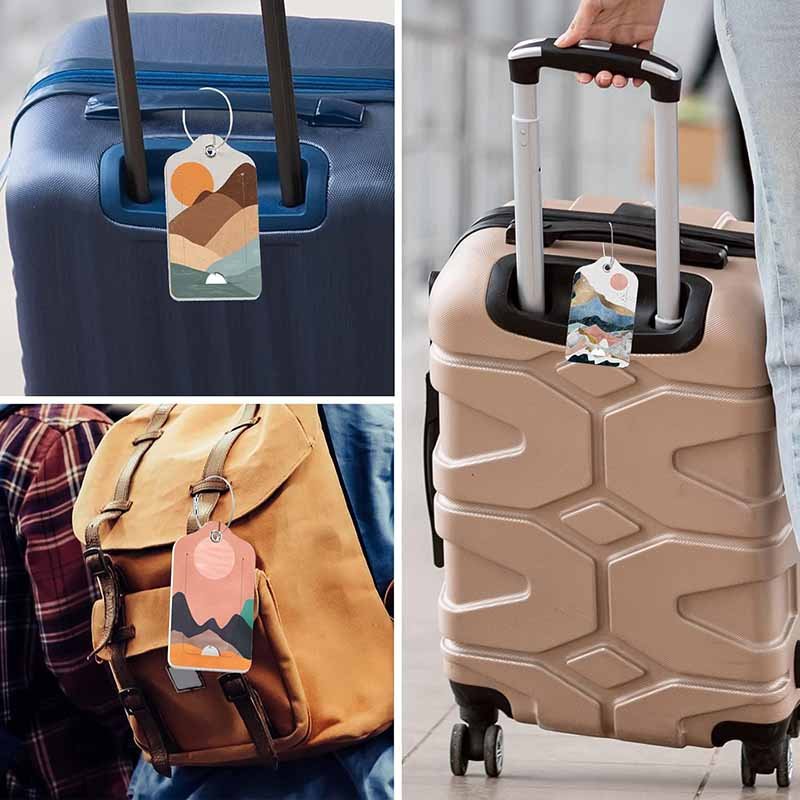
A luggage tag is attached by securing it to a suitcase handle, strap, or fixed loop using a strap, buckle, snap, or cable. The tag should be tightened firmly so it cannot slip off during handling while remaining visible for identification. Proper attachment helps prevent loss and ensures the tag stays intact throughout airport, hotel, and transit handling.
Where should you attach a luggage tag on a suitcase?
The best attachment point is the main carry handle on top of the suitcase.
This location is:
- easy to spot
- less likely to snag on conveyor belts
- accessible for airline and hotel staff
Avoid attaching tags to:
- zipper pulls (can break)
- side handles (more friction during transport)
- loose fabric straps
For backpacks or duffel bags, use a reinforced loop or fixed strap.
What attachment methods are most common?
Luggage tags use several fastening methods, each suited to different needs:
- Leather strap with buckle or snap Durable, flexible, and visually premium. Common in leather luggage tags and ideal for frequent travelers.
- Plastic or silicone loop Lightweight and economical; suitable for casual travel or promotional use.
- Metal cable or wire loop Extremely secure but less flexible; best for checked luggage on long-haul flights.
Choosing the right attachment method helps prevent accidental loss.
How tight should a luggage tag be attached?
A luggage tag should be tight enough not to slide or rotate freely, but not so tight that it stresses the strap or handle.
Best practice:
- pull the strap fully through the loop
- fasten securely with no slack
- ensure no sharp bends that weaken the strap
After attaching, gently tug the tag to confirm it is secure.
How to attach a luggage tag for airport travel?
Airport handling is rough and automated.
To reduce risk:
- attach the tag flat against the suitcase
- avoid long dangling straps
- ensure the tag does not cover airline barcode tags
Experienced travelers often attach one tag externally and place a second ID card inside the luggage as backup.
How do hotels and tour operators attach luggage tags?
In hotels and group travel, luggage tags are often attached by staff.
Common practices include:
- attaching tags to top handles
- writing guest name or room number
- using durable straps to withstand storage and transport
Luxury hotels increasingly prefer leather luggage tags for better durability and brand presentation.
How do you attach a luggage tag to different bag types?
- Hard-shell suitcase: top handle or built-in loop
- Soft suitcase: reinforced handle or sewn strap
- Backpack: fixed loop near top panel
- Duffel bag: end handle or central strap
The goal is always visibility without interference.
What common mistakes should you avoid when attaching a luggage tag?
Common mistakes include:
- attaching to fragile zipper pulls
- leaving straps too loose
- placing tags where they snag easily
- using low-quality fasteners
These mistakes are a major reason luggage tags are lost during transit.
What Information Should Be on a Luggage Tag
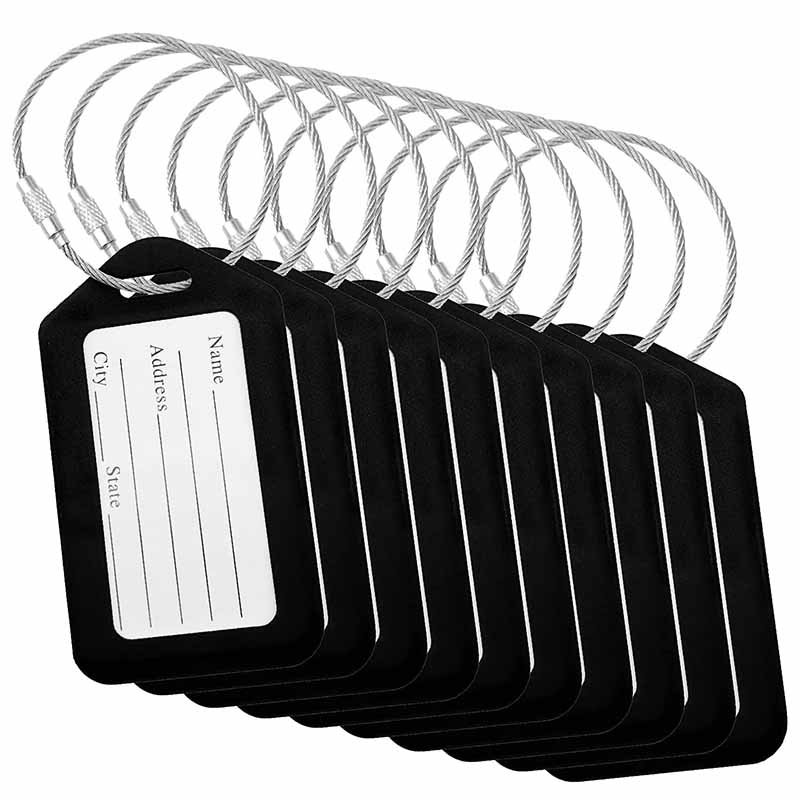
A luggage tag should include essential contact information such as the owner’s full name, phone number, and email address. Home address is optional and often avoided for privacy reasons. The goal is to provide enough information for airlines, hotels, or travelers to contact the owner quickly if luggage is lost, without exposing unnecessary personal details.
What contact details are essential on a luggage tag?
The most important rule is clarity over quantity.
Essential information includes:
- Full name (first and last name)
- Mobile phone number (preferably with country code)
- Email address
These details allow airlines, hotel staff, or other travelers to reach you quickly, regardless of location or time zone.
For international travel, adding a country code to your phone number significantly improves recovery chances.
Should you put your home address on a luggage tag?
In most cases, no.
While home addresses were once common, many travelers now avoid them due to privacy and security concerns. A visible address can:
- expose where you live
- indicate that you are away from home
- increase the risk of identity misuse
If an address is required, some travelers use a work address or keep address details on a hidden interior card instead.
What information is useful for airline and airport staff?
Airline staff typically need:
- a clear name
- a reachable phone number
They do not rely on personal luggage tags for routing (that’s handled by barcode tags), but luggage tags are critical when:
- airline tags detach
- bags are manually rerouted
- system errors occur
Human-readable contact details often resolve issues faster than digital systems alone.
What information is helpful in hotels and tours?
In hotels, luggage tags often include:
- guest name
- room number
- check-in or storage date
For tours and group travel, tags may also show:
- group name
- destination
- tour operator
Custom luggage tags designed for hotels frequently include writable or replaceable information cards.
How can luggage tags protect privacy while staying useful?
Modern luggage tag designs solve privacy concerns through:
- privacy flaps or covers
- hidden ID windows
- interior cards instead of exposed print
Leather luggage tags are especially popular because they easily incorporate flaps that hide personal details while maintaining a premium look.
Should you include branding or logos on luggage tags?
For brands, hotels, and corporate use, logos are a major advantage.
Common branding elements include:
- embossed or debossed logos
- foil stamping
- company or hotel name
Branding should never replace essential contact information but can coexist without affecting functionality.
What information should you avoid putting on a luggage tag?
Avoid including:
- full home address (in most cases)
- passport number
- ID numbers
- sensitive personal data
Luggage tags are meant for contact, not identity verification.
How do different luggage tag designs affect information display?
| Tag Design | Information Visibility | Privacy Level |
|---|---|---|
| Open window | High | Low |
| Flap-covered | Medium | High |
| Interior card | Medium | Very High |
| Digital/QR hybrid | Selective | Configurable |
Choosing the right design depends on travel habits and privacy preferences.
Are Luggage Tags Used in Hotels and Commercial Settings

Yes, luggage tags are widely used in hotels, resorts, cruise lines, and other commercial settings to identify, organize, and manage guest luggage. They help staff track bags during storage, transfer, and delivery, reducing errors and loss. In premium hotels and branded environments, leather luggage tags are also used to enhance service quality and brand image.
What is a luggage tag in a hotel?
In hotels, a luggage tag is typically a temporary or branded identification tag attached to guest luggage during check-in, concierge service, or storage.
Hotel luggage tags usually include:
- guest name
- room number or reservation ID
- date and time
- staff or bell desk reference
These tags ensure that luggage is returned to the correct guest, especially in busy environments with high guest turnover.
Why do hotels rely on luggage tags for daily operations?
Hotels handle dozens—or hundreds—of bags daily. Without luggage tags, errors increase quickly.
Luggage tags help hotels:
- prevent luggage mix-ups
- organize stored baggage
- improve accountability among staff
- speed up check-in and check-out services
For hotels, luggage tags are operational tools, not accessories.
How are luggage tags used in luxury hotels and resorts?
Luxury hotels often use custom leather luggage tags instead of disposable paper or plastic tags.
Benefits include:
- stronger durability during storage and transport
- refined appearance aligned with brand standards
- reusable design for repeat guests or VIP services
In these settings, luggage tags become part of the overall guest experience.
How are luggage tags used in commercial and group travel settings?
Beyond hotels, luggage tags are widely used in:
- cruise ships
- tour groups
- event logistics
- corporate travel programs
They help operators identify bags by group, destination, or schedule—reducing confusion in large-scale operations.
What information do commercial luggage tags usually display?
Commercial luggage tags often show:
- guest or group name
- room, cabin, or seat number
- service type (storage, delivery, transfer)
- date or location code
Many designs use replaceable information cards to allow reuse.
Why are leather luggage tags preferred in premium commercial use?
Leather luggage tags offer:
- superior durability under repeated handling
- better resistance to tearing and moisture
- premium visual appeal
For hotels and brands, leather signals quality, attention to detail, and long-term value.
How do custom luggage tags support brand identity?
Custom luggage tags can feature:
- embossed or debossed logos
- brand colors and stitching
- coordinated packaging
This turns a functional item into a brand touchpoint, reinforcing identity every time luggage is handled.
Are luggage tags used as part of brand merchandising or gifting?
Yes. Many brands use luggage tags as:
- corporate gifts
- loyalty program rewards
- hotel welcome amenities
- travel accessory bundles
Leather luggage tags are especially popular because they combine low unit cost with high perceived value.
What should businesses consider when choosing luggage tags?
Key factors include:
- durability for repeated use
- ease of information replacement
- branding options
- compliance with service workflows
Experienced manufacturers like Szoneier Leather help align design with operational needs.
Is a Leather Luggage Tag Better

Yes, a leather luggage tag is generally better than plastic or silicone options in terms of durability, appearance, and long-term value. Leather resists tearing, maintains its shape over time, and offers a premium look that suits frequent travelers, hotels, and brands. While leather tags cost more upfront, they last longer and enhance brand perception, making them a better overall choice in many use cases.
Are leather luggage tags more durable for real travel conditions?
Leather is naturally strong and flexible, which makes it well-suited for the rough handling luggage experiences during travel.
Key durability advantages:
- high tear resistance
- flexible without cracking
- strong performance under repeated bending
Quality leather luggage tags can withstand conveyor belts, stacking, and repeated handling far better than thin plastic tags.
How does leather compare with plastic, silicone, and metal tags?
| Material | Durability | Appearance | Comfort | Typical Use |
|---|---|---|---|---|
| Plastic | Low | Basic | Light | Short-term |
| Silicone | Medium | Casual | Soft | Promotional |
| Metal | High | Industrial | Rigid | Heavy-duty |
| Leather | High | Premium | Comfortable | Travel & Branding |
Leather provides the most balanced combination of strength, aesthetics, and comfort.
Does leather improve the travel experience?
Leather luggage tags feel better in hand and age naturally over time. Instead of looking worn, quality leather develops character, which many travelers associate with premium travel gear.
This emotional value is one reason luxury brands and frequent travelers prefer leather over disposable materials.
Are leather luggage tags better for frequent travelers?
Yes. Frequent travelers benefit from:
- long service life
- secure strap systems
- consistent appearance after many trips
Leather tags reduce the need for frequent replacement, making them more practical over time.
Why do hotels and brands prefer leather luggage tags?
Leather communicates:
- craftsmanship
- quality
- attention to detail
For hotels and brands, leather luggage tags reinforce premium positioning while remaining functional.
Are leather luggage tags more secure?
Leather straps with buckles or snaps are less likely to break or stretch compared to thin plastic loops. This improves security during automated baggage handling.
Are leather luggage tags environmentally responsible?
While leather is a natural material, its sustainability depends on sourcing and processing. However, because leather luggage tags last much longer, their per-use environmental impact can be lower than disposable plastic alternatives.
When might leather not be the best choice?
Leather may not be ideal when:
- lowest possible cost is required
- lightweight promotional giveaways are the goal
- disposable use is acceptable
In these cases, plastic or silicone may be more suitable.
How Do You Choose the Right Luggage Tag
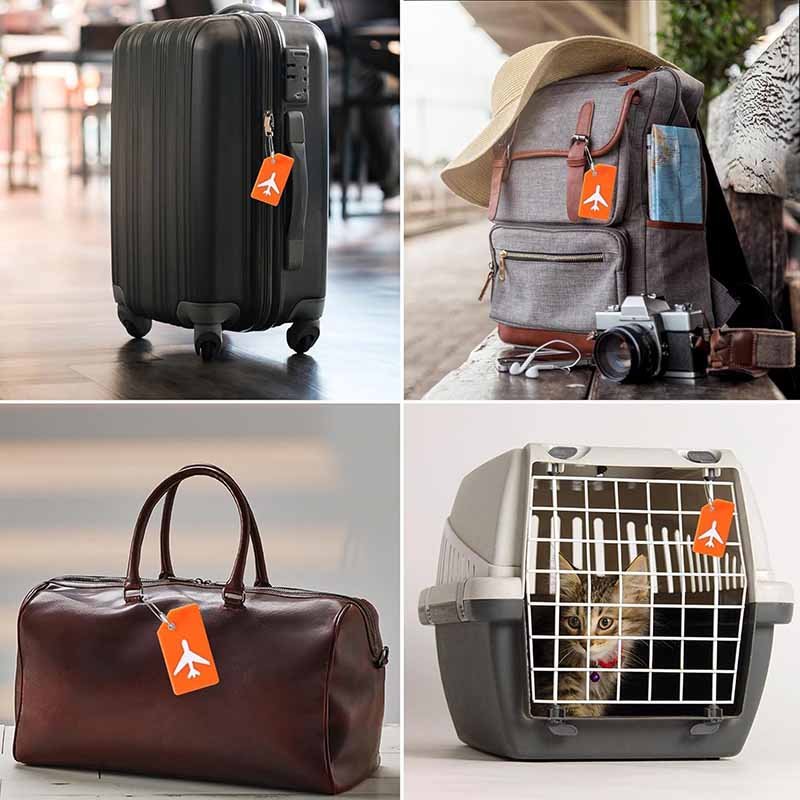
To choose the right luggage tag, consider how often you travel, where the luggage will be used, how much durability is required, and how much personal information needs to be displayed. The best luggage tag balances strength, visibility, privacy, and style while matching real travel conditions. Choosing correctly reduces the risk of loss and improves long-term usability.
Do I need to put a luggage tag on my luggage?
Yes—especially for checked luggage.
Reasons include:
- airline barcode tags can detach
- many suitcases look similar
- luggage often passes through multiple handlers
A personal luggage tag provides immediate, human-readable identification when systems fail or bags are separated from their owners.
How should travel frequency influence your choice?
- Frequent travelers: Choose leather luggage tags with secure straps and privacy flaps.
- Occasional travelers: Medium-duty leather, silicone, or reinforced plastic tags are sufficient.
- Business travelers: Leather tags with minimal, professional design are preferred.
Durability needs increase with travel frequency.
How important is material selection?
Material determines lifespan and appearance.
- Leather: durable, premium, long-term use
- Silicone: flexible, casual, short-term
- Plastic: lightweight, low-cost, limited durability
- Metal: strong, rigid, industrial look
Leather offers the best balance for most travelers and brands.
How should privacy and information display be balanced?
Look for designs with:
- privacy flaps
- hidden ID cards
- secure closures
Avoid tags that expose full personal details openly. A well-designed tag protects privacy without sacrificing usability.
How does attachment method affect your choice?
Choose tags with:
- strong leather straps or metal loops
- secure buckles or snaps
- minimal dangling parts
Attachment quality directly affects whether a tag stays on throughout a trip.
How should luggage type influence tag selection?
- Hard-shell suitcases: compact, secure tags
- Soft luggage: flexible straps
- Backpacks & duffels: reinforced loops
The tag should fit the bag, not fight against it.
How should brands choose luggage tags for custom projects?
Brands should consider:
- target customer and price point
- logo application method
- packaging and presentation
Leather luggage tags are especially effective for private label, hospitality, and corporate gifting projects.
What mistakes should be avoided when choosing a luggage tag?
Common mistakes include:
- choosing based on appearance only
- ignoring attachment strength
- oversharing personal information
- selecting low-quality materials for frequent use
These mistakes often lead to lost tags and poor user experience.
Are Luggage Tags Profitable to Produce
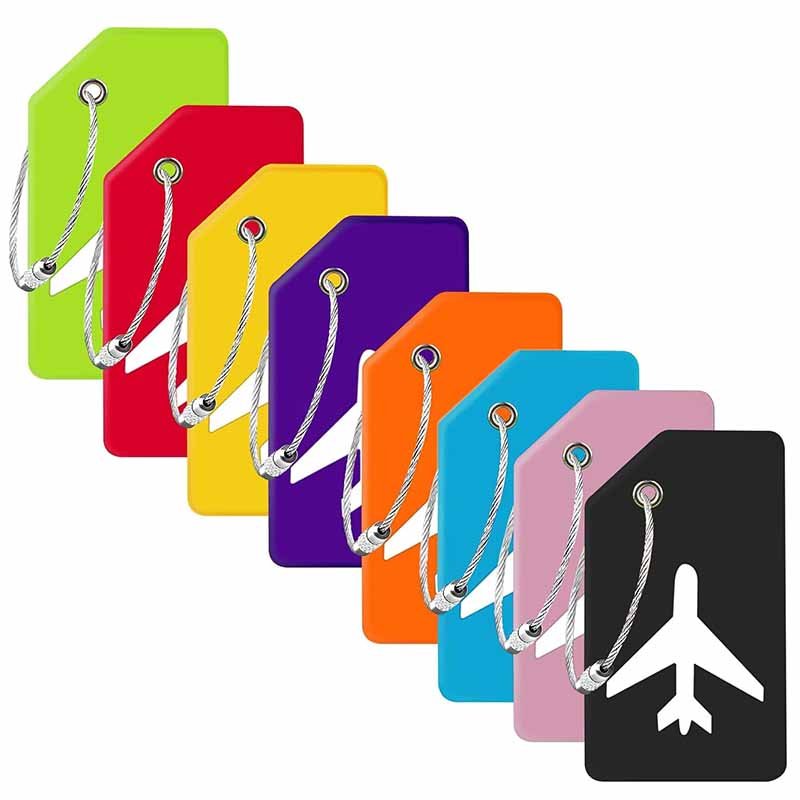
Yes, luggage tags are profitable to produce, especially leather luggage tags. They require relatively small material volume, simple construction, and short production cycles while offering high perceived value. Profitability increases with customization, branding, and bulk production. For brands, hotels, and private label buyers, luggage tags deliver strong margins when specifications are optimized for scale rather than over-engineered.
Why are luggage tags considered cost-efficient to manufacture?
Luggage tags are structurally simple products.
From a manufacturing perspective, they typically involve:
- small leather pieces or panels
- basic cutting and edge finishing
- strap assembly and fastening
- optional logo application
Compared with bags or wallets, luggage tags consume far less material and labor, which keeps unit costs low while maintaining functional integrity.
How does material choice affect profitability?
Material selection directly impacts margin.
- Leather luggage tags
- higher perceived value
- stronger brand positioning
- better long-term margins
- Plastic or silicone tags
- lower unit cost
- lower resale value
- price-sensitive markets
Leather offers a strong balance between cost control and premium pricing potential.
How does customization increase profit margins?
Customization significantly boosts perceived value with limited cost increase.
High-impact, low-cost options include:
- logo embossing or debossing
- foil stamping
- custom stitching colors
- branded packaging
These features allow brands to price luggage tags well above basic cost, improving margins in retail, gifting, and hospitality channels.
How does order volume influence unit cost and profit?
Volume is a key profitability driver.
- Low volume: higher unit cost, lower margin
- Medium volume: balanced cost and flexibility
- High volume: optimized material usage, lower labor cost per unit
Bulk production allows factories to reduce waste, streamline workflows, and improve yield—benefits that are often shared with buyers.
Are luggage tags profitable for brands and resellers?
Yes, especially as:
- add-on products
- bundled travel accessories
- corporate or hotel gifts
Because luggage tags are affordable to produce and easy to ship, they are ideal for testing new markets or enhancing average order value.
Why are leather luggage tags ideal for OEM and private label projects?
Leather luggage tags are:
- easy to standardize
- fast to sample
- scalable in production
They fit well into OEM and private label programs where branding, consistency, and repeat orders matter.
What common mistakes reduce profitability?
Profit is often reduced by:
- unclear specifications
- frequent design changes
- over-specifying leather thickness
- ignoring real usage needs
Early technical alignment between buyer and manufacturer prevents these issues.
Why do many brands choose China to manufacture luggage tags?
China offers:
- mature leather supply chains
- skilled craftsmanship at scale
- efficient sampling and production
- competitive cost-to-quality ratio
Factories like Szoneier Leather, with over 18 years of leather product manufacturing experience, help brands maximize profit while maintaining consistent quality.
When might luggage tags be less profitable?
Luggage tags may be less profitable when:
- produced in very small quantities
- over-designed beyond market needs
- positioned purely as low-cost giveaways
Matching product design to market positioning is critical.
Conclusion
A luggage tag may be small, but producing one that lasts, looks refined, and reflects your brand requires real manufacturing expertise.
Looking to develop or customize leather luggage tags for your brand, hotel, or corporate gift program?
Szoneier Leather, with over 18 years of experience in leather product R&D and manufacturing.Contact Szoneier Leather today to discuss materials, design options, and production solutions tailored to your market.