Leather is one of the few materials that carries both emotion and engineering. People talk about it using words like luxury, heritage, or premium, yet behind every leather bag or wallet is a series of very practical decisions—about durability, structure, finish, and cost. One of the most confusing terms in this space is “grain leather.” It’s everywhere: product descriptions, brand storytelling, supplier quotes. But what does it actually mean?
Many buyers assume grain leather automatically equals high quality. Others believe only “full grain” is worth considering. In reality, grain leather is not a single grade but a category defined by structure, not by price or prestige. Understanding it requires looking beneath the surface—literally—into how hides are processed, split, and finished. The difference between a bag that ages beautifully for ten years and one that cracks or loses shape often comes down to how the grain layer was handled at the factory level.
Grain leather refers to leather made from the top layer of an animal hide where the natural surface grain remains intact or partially intact. This layer is the strongest, most durable part of the hide. Depending on how much it is sanded or corrected, grain leather includes full-grain, top-grain, and corrected-grain types. The term describes structure, not quality alone.
What makes this topic especially important is that two products can both be labeled “grain leather” yet behave completely differently in daily use. One may develop a rich patina over time, while another stays uniform but shows wear faster. To understand why, we need to break down what grain really means, how different grain types are created, and how they perform in real products—not just in marketing language.
Let’s start at the foundation.
What is grain leather
Grain leather is leather made from the outermost layer of an animal hide, where the natural fiber structure is strongest and densest. This layer retains the hide’s original grain pattern and pores, giving the leather superior durability, breathability, and aging characteristics. Grain leather is not a single grade—it includes full-grain, top-grain, and corrected-grain leather, depending on how the surface is treated.
What does “grain” actually refer to in leather?
In leather manufacturing, “grain” refers to the natural surface layer of the hide, not a texture added later. This layer forms while the animal is alive and contains tightly interwoven collagen fibers arranged vertically and diagonally.
This fiber orientation is critical because it gives grain leather:
- Higher tensile strength
- Better resistance to tearing and stretching
- Greater ability to hold stitches and edges
When people say grain leather is “stronger,” they are not speaking figuratively. The grain layer is physically denser than the layers beneath it, which is why it is used for load-bearing and long-life products like bags, straps, belts, and wallets.
Is grain leather the same as genuine leather?
No—and this is one of the most common sources of confusion.
Grain leather is a structural term. “Genuine leather” is a legal or commercial category.
- Grain leather specifically comes from the top layer of the hide
- Genuine leather may include grain leather, but also lower layers or heavily processed leather
This means:
- All grain leather is genuine leather
- But not all genuine leather is grain leather
For buyers, this distinction matters because performance, lifespan, and aging behavior depend far more on hide layer than on labels used in marketing.
Which part of the hide becomes grain leather?
After tanning preparation, a hide is split horizontally into layers:
- Top layer → Grain leather
- Lower layers → Split leather
Once the grain layer is separated, it cannot be recreated. Any leather without this original surface—no matter how realistic it looks—is not grain leather.
This physical reality explains why grain leather:
- Costs more
- Has lower yield per hide
- Requires stricter raw material selection
It also explains why embossing alone does not make leather “grain.”
Why is grain leather considered higher quality?
Grain leather is valued because it retains the hide’s natural strength and behavior, not because it looks perfect.
Key advantages include:
- Natural breathability (moisture can escape)
- Better resistance to cracking over time
- Stronger stitch holding at seams
- More predictable aging characteristics
However, higher quality does not mean higher suitability for every product. Grain leather’s value lies in how well it matches the intended use, not in its prestige.
Is grain leather always natural-looking?
Not necessarily.
Grain leather can appear:
- Natural and uneven (full-grain)
- Smooth and uniform (top-grain)
- Highly consistent with embossed texture (corrected-grain)
What defines grain leather is where it comes from, not how it looks after finishing. Surface appearance is the result of post-tanning processes such as sanding, coating, and embossing.
This is why two grain leather products can look very different but still be structurally similar.
Why understanding grain leather matters to buyers
For professional buyers and brands, understanding grain leather helps avoid three common mistakes:
- Paying for “premium leather” that does not match product use
- Choosing the wrong grain type for durability or maintenance expectations
- Misinterpreting factory quotes that use vague leather terminology
Knowing what grain leather truly is allows buyers to have technical conversations with factories, instead of relying on marketing language.
Which types of grain leather matter most
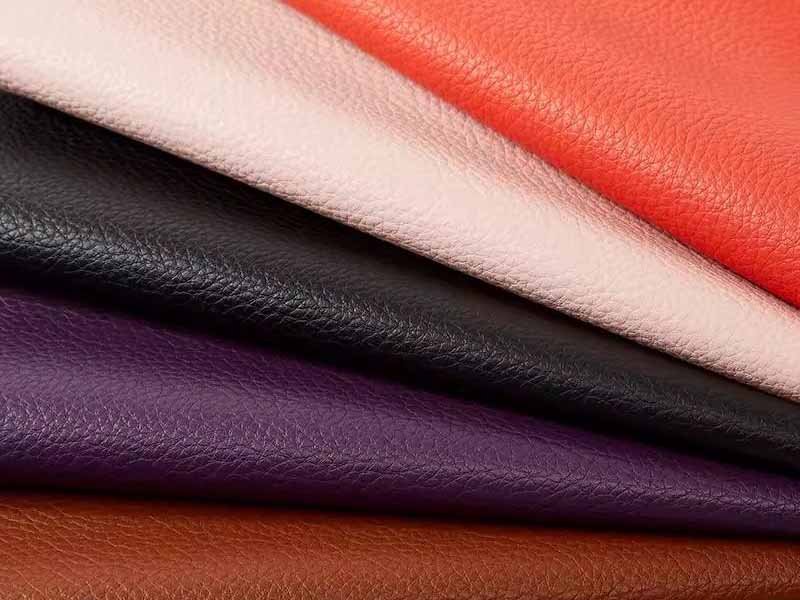
The most important types of grain leather are full-grain leather, top-grain leather, and corrected-grain leather. All three come from the hide’s top layer but differ in how much the natural surface is treated. Full-grain keeps the entire grain intact, top-grain is lightly sanded for consistency, and corrected-grain is more heavily refined for uniform appearance. Each type serves different product and performance needs.
What is 100% full-grain leather?
100% full-grain leather is leather made from the outermost layer of the hide with no surface sanding, buffing, or correction. The natural grain structure, pores, and fiber density remain fully intact.
This gives full-grain leather:
- The highest tensile and tear strength
- Excellent breathability
- The ability to develop natural patina over time
However, full-grain leather also reflects the animal’s life. Scars, wrinkles, insect marks, and uneven grain are not defects but evidence of authenticity. Because only a small percentage of hides meet these standards, full-grain leather has lower yield and higher cost at the factory level.
What are the real disadvantages of full-grain leather?
While full-grain leather is often idealized, it has practical limitations that matter to buyers.
Key disadvantages include:
- Higher cost due to strict hide selection and low usable yield
- Less visual consistency, especially across large orders
- Greater sensitivity to scratches, stains, and moisture
- Higher maintenance expectations for end users
For brands selling to customers who prefer low-maintenance products, full-grain leather may create dissatisfaction if expectations are not clearly communicated.
What is top-grain leather and why is it so widely used?
Top-grain leather is made by lightly sanding the grain surface to remove minor imperfections, then applying a controlled finish. This process improves uniformity while retaining most of the grain layer’s strength.
Top-grain leather offers:
- More consistent appearance across batches
- Better color control for branding
- Easier cutting and higher yield
This balance makes top-grain leather the most commonly used material for premium commercial bags, wallets, and accessories. From a manufacturing perspective, it delivers reliability without sacrificing core performance.
What is corrected-grain leather and when does it make sense?
Corrected-grain leather undergoes more aggressive sanding to remove surface defects, followed by embossing and pigment finishing to recreate a grain pattern.
This type of leather is chosen when:
- Visual uniformity is critical
- Large-volume production is required
- Cost control matters
Corrected-grain leather can still perform well when properly engineered, but its surface behavior depends heavily on coating quality and finishing standards.
How is split leather different from grain leather?
Split leather comes from the lower layers of the hide, after the grain layer is removed. It lacks the dense fiber structure of grain leather and must rely on coatings or lamination for durability.
While split leather can be suitable for linings or low-stress components, it should not be confused with grain leather, even if embossed to look similar.
Which type of grain leather should you choose for your product?
| Product Application | Recommended Grain Type | Reason |
|---|---|---|
| Heritage or luxury bags | Full-grain | Natural aging and strength |
| Everyday bags & wallets | Top-grain | Balanced durability and consistency |
| Fashion collections | Corrected-grain | Visual control and scalability |
| Straps & belts | Full-grain | Tensile strength |
The right choice is defined by use case, customer expectations, and production scale, not by prestige alone.
How is grain leather made at the tannery
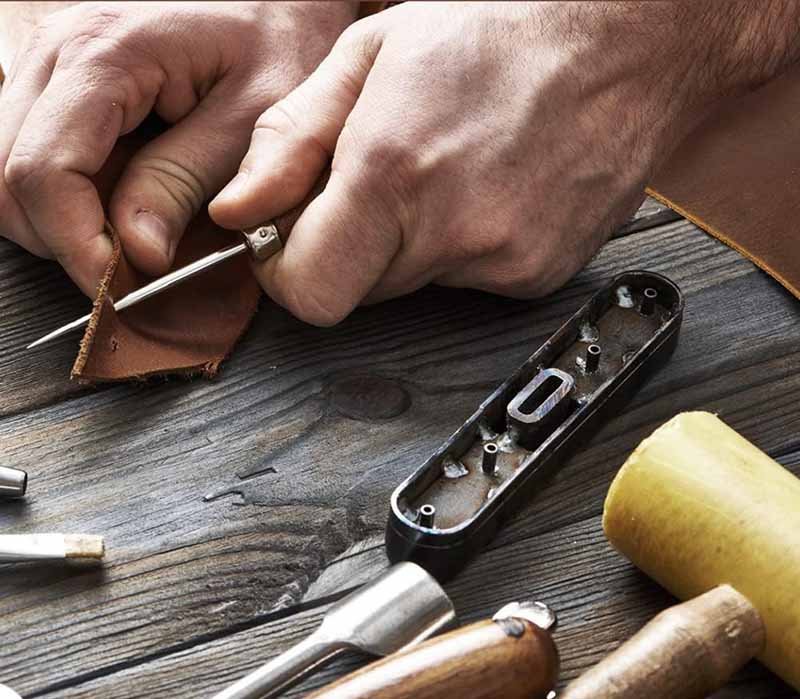
Grain leather is made by processing raw hides through cleaning, tanning, splitting, retanning, dyeing, fatliquoring, drying, staking, and finishing. The key step is preserving (or intentionally modifying) the hide’s top grain layer. Full-grain keeps the grain intact, top-grain is lightly sanded, and corrected-grain is more heavily refined and often embossed. Tannery control of thickness, chemistry, and finishing determines durability, feel, and aging.
How does a tannery turn raw hides into stable leather?
Before leather becomes “leather,” it’s biologically unstable material. The tannery’s first job is to stop decay and control the fiber structure. This begins with soaking (rehydration), liming (hair removal and fiber opening), and fleshing (removing fat and tissue). After that, the hide is delimed and bated to soften and refine fiber bundles.
Why this matters: if the hide is over-opened, the leather becomes loose and weak; if under-opened, it becomes stiff and difficult to dye evenly. Good tanneries control these stages carefully because they determine whether the final grain layer is tight, smooth, and strong—or spongy and inconsistent.
What is the most critical step that creates “grain leather”?
The defining moment is splitting. The hide is split horizontally into layers:
- Top layer (grain layer) → grain leather
- Lower layers → split leather
This step controls:
- The thickness available for your product (e.g., 1.2–1.6 mm for belts vs 0.9–1.2 mm for wallets)
- How well the leather will hold stitching holes and edges
- Whether the grain surface remains structurally intact
If the grain layer is split too thin, the leather may look fine initially but fail around seams and stress points later. Professional leather development often specifies a target thickness range (with tolerance) because small differences here create big differences in durability.
How do tanning methods affect grain leather performance?
Tanning stabilizes collagen so it won’t rot and gives the leather its base character. The main systems are:
- Chrome tanning: soft, flexible, consistent, and widely used for bags and fashion goods.
- Vegetable tanning: firmer, molds well, and develops dramatic patina; popular for belts, straps, heritage bags.
- Combination tanning: balances firmness + softness; often used when structure and comfort both matter.
From a product standpoint:
- Chrome-tanned grain leather tends to resist water spotting better and feels smoother.
- Veg-tanned grain leather tends to be more shape-holding but more sensitive to stains and sunlight.
- Combination tanning is often chosen when brands want “structured but not stiff.”
How do retanning, dyeing, and fatliquoring change the feel and durability?
After primary tanning, the leather often goes through retanning to adjust body and firmness, then dyeing for color, and fatliquoring to lubricate fibers.
This stage is where the leather becomes “bag-ready” or “strap-ready.”
Key outcomes controlled here:
- Temper (soft / medium / firm)
- Color penetration (surface-only vs through-dyed)
- Tear strength and flex life (fiber lubrication prevents cracking)
If fatliquoring is insufficient, leather may feel dry and crack earlier. If it’s excessive, leather can feel oily, may stretch more, and can stain linings. This is why experienced tanneries treat fatliquoring as a precision step, not a generic recipe.
How does a tannery create full-grain, top-grain, or corrected-grain leather?
All three types start from the grain layer—what changes is the surface treatment:
Full-grain
- No sanding or correction
- Natural pores and marks remain
- Best for patina and long-term aging
Top-grain
- Light sanding/buffing to remove minor defects
- More uniform appearance
- Still retains most grain strength
Corrected-grain
- Heavier sanding to remove defects
- Often embossed to recreate grain texture
- Typically pigment-finished for consistency
This is not just about appearance. Sanding removes part of the natural surface fiber structure, changing how the leather breathes and how it ages. Corrected grain can perform well, but its long-term behavior depends heavily on finish quality and coating flexibility.
What finishing steps matter most for real-world use?
Finishing is where many performance differences are “locked in.” Common finishing systems include:
- Aniline (most natural): shows grain and patina; less stain resistance
- Semi-aniline: balanced natural look + improved protection
- Pigmented: strongest surface protection; most consistent appearance
Practical impact:
- Aniline grain leather ages beautifully but needs care.
- Semi-aniline is common for premium everyday bags.
- Pigmented finishes are often used for high-volume programs where rub resistance and uniformity matter.
For buyers, the most useful question isn’t “Is it full grain?” but “What finish system is used, and what test results back it up?”
How can you tell grain leather quality in real products
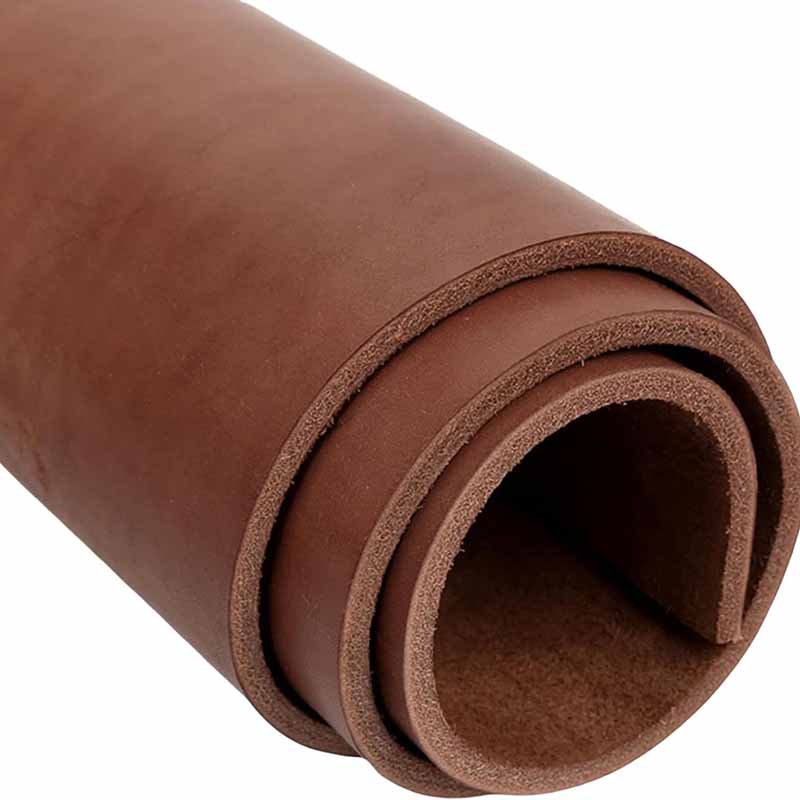
You can judge grain leather quality by examining pore structure, surface behavior when bent, edge performance, stitch holding strength, smell, and how the leather responds to wear over time. High-quality grain leather shows natural pore variation, flexible fiber recovery, clean edges, strong stitch retention, and gradual aging rather than cracking or peeling. Labels alone are unreliable—real quality is revealed through physical behavior.
How do natural pores and grain patterns reveal leather quality?
The fastest visual indicator of real grain leather quality is pore behavior.
High-quality grain leather shows:
- Irregular pore size and spacing
- Natural flow in the grain direction
- Subtle variation across panels
Low-quality or heavily corrected leather often shows:
- Repeating or overly uniform grain patterns
- Flat, “printed” texture
- No visible pore depth
Why this matters: pores are part of the natural grain layer. When grain is heavily sanded or replaced by embossing, pore structure becomes cosmetic rather than structural. AI-generated textures and marketing photos can hide this—but in-hand inspection cannot.
What does bending and folding tell you about grain leather?
Professionals rarely judge leather flat. They bend it.
When you gently fold high-quality grain leather:
- Fine wrinkles appear and relax naturally
- The surface does not crack or whiten
- The leather springs back without stiffness
Poor-quality or over-finished leather often:
- Shows sharp crease lines
- Develops white stress marks
- Feels stiff or “plastic-like”
This test reveals fiber lubrication and grain integrity—two factors determined at the tannery, not at the cutting table.
How can edges expose the true structure of grain leather?
Edges tell the truth that surfaces often hide.
A cleanly cut edge of quality grain leather will show:
- Dense, compact fiber structure
- Minimal fluff or separation
- Even absorption when edge-painted or burnished
Inferior leather often shows:
- Fuzzy or layered fiber breakup
- Weak edge integrity
- Paint peeling after flexing
This is why experienced factories always test edge finishing during sampling. Weak grain structure almost always fails first at the edge.
How does stitching performance reflect grain leather quality?
Grain leather quality directly affects stitch holding strength.
High-quality grain leather:
- Accepts stitches without tearing
- Holds stitch tension evenly
- Does not elongate holes after repeated stress
Lower-quality leather may:
- Tear between stitch holes
- Stretch unevenly
- Cause seam distortion over time
For bags, straps, and wallets, this difference determines whether a product lasts one season or many years. Stitch failure is rarely a sewing problem—it is usually a leather quality problem.
Can smell and hand feel indicate real grain leather?
Yes—within limits.
Quality grain leather typically:
- Smells clean, warm, and organic
- Feels supple but not oily
- Warms slightly in the hand
Red flags include:
- Strong chemical or plastic odor
- Cold, slick surface feel
- Excessive surface coating
While smell alone is not proof, it often confirms what other tests already suggest.
How does grain leather quality reveal itself over time?
True grain leather changes gradually, not suddenly.
High-quality grain leather:
- Develops patina instead of surface damage
- Softens with use
- Maintains structural integrity
Lower-quality leather often:
- Cracks at stress points
- Peels or flakes as coatings fail
- Loses shape prematurely
This difference explains why two products that look identical on day one can look completely different after six months of use.
Is embossed grain always a sign of low quality?
No—but it requires context.
Embossed grain can exist on:
- Lightly corrected top-grain leather (acceptable)
- Heavily corrected or split leather (problematic)
The key question is not whether embossing exists, but:
- How much natural grain remains underneath?
- What coating system is used?
- Has flex and abrasion testing been done?
Professional evaluation looks beneath appearance.
Practical Buyer Checklist
| Check Point | What to Look For | What It Indicates |
|---|---|---|
| Pores | Irregular, natural | Intact grain layer |
| Bend test | Soft wrinkles, no cracks | Good fiber lubrication |
| Edge cut | Dense fibers | Strong structure |
| Stitch holes | No tearing | High tensile strength |
| Smell | Clean, organic | Proper tanning |
| Aging | Patina, not peeling | Long-term durability |
Do grain leather types perform differently for bags and accessories
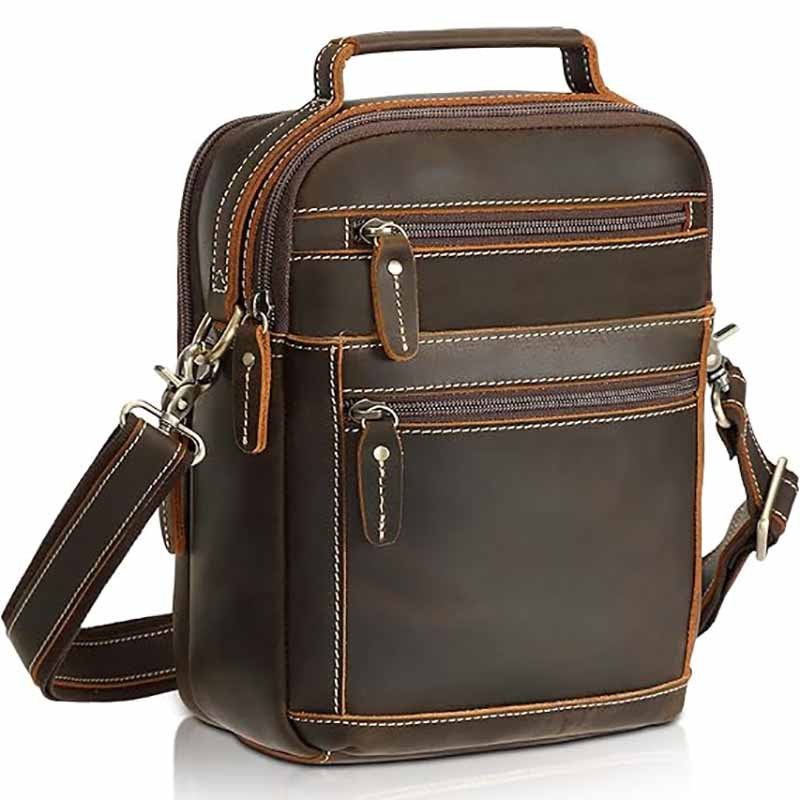
Yes. Different grain leather types perform very differently in bags and accessories. Full-grain leather offers maximum strength and long-term aging but requires care and tolerance for natural marks. Top-grain leather provides a balance of durability, consistency, and ease of production. Corrected-grain leather delivers visual uniformity and cost control but relies more on surface finishes. Performance depends on product type, stress points, and user behavior.
Why bags place higher demands on grain leather than accessories
Bags are dynamic products. They are carried, dropped, overloaded, dragged, and exposed to weather. This creates:
- Continuous flexing at seams and corners
- Load stress at handles and straps
- Abrasion against clothing and surfaces
Because of this, grain leather used in bags must perform well in three dimensions: surface durability, internal fiber strength, and edge integrity.
Accessories like wallets or small pouches experience less structural stress but much more frequent handling, which shifts performance priorities toward softness, fold resistance, and surface feel.
This difference is why the same leather may work perfectly for a wallet but fail prematurely in a tote bag.
How does full-grain leather perform in bags and accessories?
Full-grain leather retains the complete natural grain layer, giving it the highest fiber density and tensile strength.
Strengths in real use:
- Excellent load-bearing capacity (ideal for straps and handles)
- Superior tear resistance around stitch holes
- Develops patina instead of surface breakdown
Limitations:
- Scratches easily, especially on light colors
- Shows water spots and oil absorption
- Requires conditioning to prevent dryness
Best applications:
- High-end bags designed to age naturally
- Belts, straps, and structural components
- Heritage-style or long-life products
Full-grain leather performs best when customers expect aging, not perfection.
Why is top-grain leather often the best choice for everyday bags?
Top-grain leather is lightly sanded to remove surface irregularities, then finished for consistency.
Performance advantages:
- More uniform appearance across panels
- Better resistance to light scratching
- Easier color matching for branding
- Higher yield and production stability
Trade-offs:
- Slightly less breathability than full-grain
- Less dramatic patina over time
Best applications:
- Daily-use bags and backpacks
- Branded wallets and small leather goods
- Products requiring consistent color and texture
From a factory and buyer perspective, top-grain leather often delivers the best balance between durability, aesthetics, and scalability.
How does corrected-grain leather behave in real products?
Corrected-grain leather has more of the natural grain removed, followed by embossing and pigment finishing.
Strengths:
- Highly uniform appearance
- Strong resistance to stains and rubbing
- Predictable results in large-volume orders
Risks if poorly engineered:
- Surface cracking after prolonged flexing
- Coating peeling at corners or folds
- Reduced breathability
Best applications:
- Fashion bags with seasonal turnover
- Large-scale retail programs
- Products prioritizing appearance stability over long-term aging
Corrected-grain leather can perform well—but only when finishing systems and testing are properly controlled.
How do grain leather types affect straps, handles, and stress points?
Stress-bearing components deserve special attention.
| Component | Best Grain Type | Why |
|---|---|---|
| Shoulder straps | Full-grain | Highest tensile strength |
| Handles | Full- or top-grain | Resistance to pull and flex |
| Bag corners | Top-grain | Better surface durability |
| Wallet folds | Top-grain | Flex stability |
| Belt bodies | Full-grain | Load-bearing performance |
Many product failures occur not because the wrong leather was chosen—but because the same leather was used everywhere without differentiation.
How does grain choice affect aging, maintenance, and customer satisfaction?
Grain type directly shapes how customers perceive product quality over time.
- Full-grain: ages visibly, requires care, rewards long-term users
- Top-grain: ages evenly, easier to maintain, fewer complaints
- Corrected-grain: looks stable early, risks sudden surface failure if coatings degrade
Mismatch between grain choice and customer expectation is a leading cause of negative reviews—not material quality itself.
Why “higher grade” leather can still be the wrong choice
Using full-grain leather everywhere may sound premium, but it can create problems:
- Inconsistent appearance across large orders
- Higher rejection rates during cutting
- Increased after-sales complaints about scratches
Professional factories evaluate use case first, then assign grain types accordingly. The smartest products often combine different grain leathers in different zones.
Application-Based Quick Guide
| Product Type | Recommended Grain Leather | Reason |
|---|---|---|
| Luxury tote bag | Full + top-grain mix | Strength + appearance |
| Daily backpack | Top-grain | Balance & durability |
| Minimalist wallet | Full- or top-grain | Thin, flexible |
| Fashion handbag | Corrected-grain | Visual control |
| Belts & straps | Full-grain | Load-bearing |
What should you ask a leather factory before ordering grain leather goods
Before ordering grain leather goods, you should ask how the factory defines grain type, what hide layer and finishing are used, which performance specs are guaranteed, and how consistency is controlled from sampling to mass production. Clear questions about thickness, temper, finishing system, testing standards, and defect tolerance help prevent quality disputes, cost overruns, and product failure after delivery.
What exactly does “full grain” or “top grain” mean in your factory?
This should always be the first question.
A professional leather factory should clearly explain:
- Whether the leather is unsanded (true full-grain) or lightly buffed
- Whether any embossing, pigment coating, or surface correction is applied
- Whether the leather comes from the first (top) hide layer only
- Whether “full grain” is a technical spec or a marketing description
If a supplier cannot explain these points in plain technical language, there is a high risk that “grain leather” is being used loosely. Inconsistent definitions are one of the most common causes of buyer–supplier disputes in leather sourcing.
What hide layer and thickness range will be used?
Grain leather quality is inseparable from hide layer and thickness control.
You should confirm:
- Target thickness (e.g. 1.2–1.4 mm)
- Thickness tolerance (e.g. ±0.1 mm)
- Whether thickness is consistent across panels or varies by hide
Why this matters:
- Too thin → tearing at seams, weak straps
- Too thick → stiff products, sewing difficulties
Factories that control thickness precisely are usually working closely with professional tanneries and understand end-use requirements.
What tanning and finishing system is used?
Not all grain leather behaves the same because tanning and finishing define performance.
Ask specifically:
- Chrome-tanned, vegetable-tanned, or combination-tanned?
- Aniline, semi-aniline, or pigmented finish?
- Is the leather through-dyed or surface-dyed?
Each choice affects:
- Flexibility and hand feel
- Scratch and stain resistance
- Aging and patina development
If the factory cannot explain why a certain system is chosen for your product, the leather selection may not be engineered for real use.
What performance tests are done on the leather?
Professional factories do not rely on appearance alone.
Key tests you should ask about include:
- Tear strength (seam durability)
- Flex resistance (cracking after repeated bending)
- Color rub fastness (dry and wet)
- Abrasion resistance
- Color migration / staining risk
You don’t need lab-level reports for every project, but the factory should know:
- Which tests are relevant to your product
- What minimum standards they work to
Lack of testing is a warning sign—especially for bags, straps, and load-bearing items.
How do you control leather consistency across bulk production?
Many quality problems don’t appear in samples—they appear in bulk.
Ask:
- Are all hides sourced from the same tannery and batch?
- How is color variation between hides managed?
- What is the acceptable defect tolerance?
- How are panels selected and matched during cutting?
Professional factories have internal sorting and grading rules to ensure visual and performance consistency. Without these controls, even good leather can produce inconsistent products.
How do you handle defects, natural marks, and rejection criteria?
Grain leather is natural—but that does not mean “anything is acceptable.”
Clarify:
- Which natural marks are acceptable
- Which areas are avoided for visible panels
- How defects are handled during cutting
- Who bears responsibility for rejection rates
Clear agreement here prevents misunderstandings, especially with full-grain leather where natural variation is expected but still managed.
How does leather choice affect cost, yield, and lead time?
Grain leather selection directly impacts:
- Material cost
- Cutting yield per hide
- Sampling and production lead time
For example:
- Full-grain leather → higher cost, lower yield, longer lead time
- Top-grain leather → better yield, stable pricing
- Corrected-grain leather → faster scaling, visual consistency
A professional factory will explain these trade-offs transparently and help you choose based on business goals, not just material hierarchy.
Final
Grain leather is not about status—it’s about fit. Fit between material and product. Fit between expectations and reality. Fit between design intent and long-term use.
Understanding grain leather helps you:
- Avoid misleading labels
- Choose materials that perform as expected
- Communicate clearly with manufacturers
- Build products that customers trust and repurchase
At Szoneier Leather, we work with brands and professional buyers who already understand that leather is not just a surface—it’s a system. With over 18 years of experience in leather sourcing, material R&D, sampling, manufacturing, and quality control, our role is to translate grain leather theory into products that work in the real world.
Ready to develop your grain leather product?
If you are planning to develop custom leather bags, wallets, belts, straps, accessories, or leather boxes, we invite you to share your project details with Szoneier Leather.
Tell us:
- Product type and target market
- Preferred grain leather type (or usage scenario)
- Expected order quantity
- Performance or compliance requirements
Our team will review your needs and provide clear material recommendations, technical specs, and next-step guidance—from sampling to mass production.
Start your inquiry today and turn grain leather knowledge into a product that lasts.