
How to Tell a Good Quality Leather Belt : Expert Guide
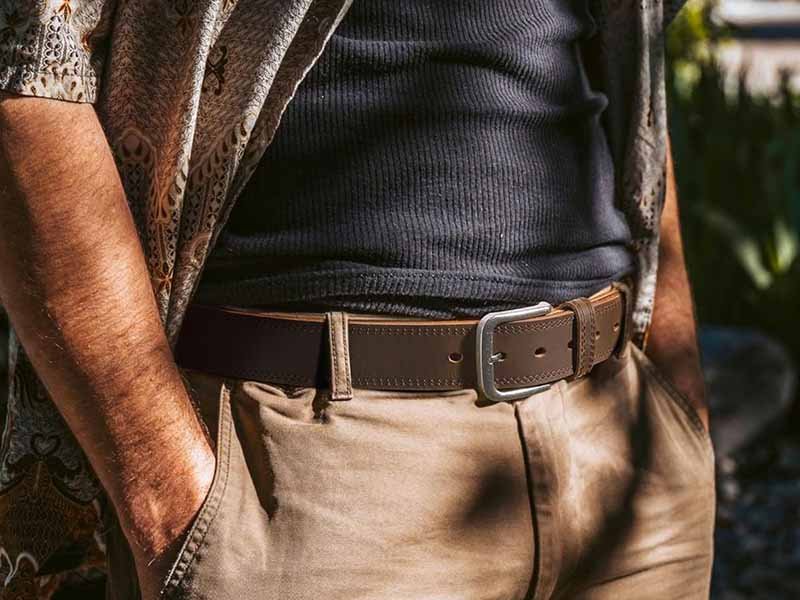
A good leather belt should feel substantial, age beautifully, and last many years—but in today’s market flooded with “genuine leather” labels, bonded leather belts, and mass-produced accessories, most buyers struggle to distinguish a truly high-quality belt from one that will peel or crack within months. Many belts look similar at first glance, yet their internal structure, leather grade, and craftsmanship vary dramatically. Understanding these hidden differences is the key to making an informed purchase—whether you’re a consumer, a retailer, or a brand sourcing belts from an OEM factory.
You can tell a good quality leather belt by checking the leather grade (full-grain or top-grain), thickness, stitching consistency, edge finishing, buckle material, and whether the belt is made from one solid leather piece rather than bonded layers. High-quality belts feel firm yet flexible, develop a patina, resist cracking, and use durable metal hardware. Cheap belts often peel, crease quickly, or use lightweight buckles that fail over time.
At its core, a high-quality leather belt is an engineered product—not an accessory made by accident. Every detail from leather selection to buckle construction influences durability. In this guide, we’ll explore how buyers can confidently identify quality belts and avoid the traps of low-grade leather. Whether you are building your own belt line or purchasing for personal use, you’ll gain expert-level evaluation skills that last a lifetime.
What Defines a Good Quality Leather Belt?
A good quality leather belt is defined by full-grain or top-grain leather, strong fiber density, clean edge finishing, premium stitching, a solid metal buckle, and a construction method that uses a single leather piece rather than layers or bonded materials. High-quality belts feel firm yet flexible, age naturally, resist cracking, and maintain shape under daily stress. True craftsmanship and authentic leather are the core indicators of long-lasting belt quality.
A leather belt may look simple, but its quality depends on a combination of material grade, physical structure, engineering details, and craftsmanship consistency. Below is a complete breakdown of the factors that separate premium belts from low-grade or fast-fashion belts, helping both consumers and brands evaluate quality with confidence.
1. Leather Grade and Authenticity
The leather itself determines more than 70% of the belt’s performance. High-quality belts use:
Full-Grain Leather
- Made from the strongest outer layer of the hide
- Shows natural grain and variations
- Develops a rich patina over time
- Highly resistant to stretching and cracking
- Can last 10–20+ years
This is the top choice for luxury belts, heritage belts, and long-term everyday wear.
Top-Grain Leather
- Lightly sanded for smoothness
- More uniform in color
- Slightly less durable than full-grain, but still excellent
- Lifespan: 7–15 years
Ideal for dress belts and brands that prioritize aesthetics.
What to Avoid
- Genuine leather: technically “real leather” but weak fiber structure
- Split leather: lacks strength, often PU-coated
- Bonded leather: leather scraps glued together; cracks quickly
These lower-grade materials significantly reduce belt lifespan and cannot be considered “good quality.”
2. Belt Construction
Even high-grade leather will fail if construction is poor.
Single-Piece Leather Construction
The best belts are cut from one solid piece of leather. Benefits:
- Stronger, more durable
- No delamination
- Uniform aging
Multi-Layer or PU-Laminated Belts
These belts peel, crack, and lose shape quickly. They indicate cost-cutting manufacturing.
Ideal Belt Thickness
- Dress belts: 2.8–3.2 mm
- Casual belts: 3.5–4.5 mm
- Work/utility belts: 4.5–6 mm
Thickness is directly tied to structural integrity but must balance flexibility and comfort.
3. Stitching Quality
High-quality stitching enhances durability and visual appeal.
Indicators of Excellence
- Even stitch spacing
- High-tension bonded nylon or polyester thread
- Reinforced stitching at the buckle and holes
- No loose ends or skipped stitches
Hand Stitching vs Machine Stitching
- Hand stitching (saddle stitch): strongest method, used for luxury belts
- Machine stitching: durable when done with correct tension and alignment
Poor stitching is one of the fastest ways a belt deteriorates.
4. Edge Finishing
Professional belt makers invest time into edge craftsmanship.
High-Quality Edge Finishes Include:
- Multi-layer edge paint (3–6 coats)
- Heat-sealed or burnished edges
- Smooth, rounded edges that resist moisture and abrasion
Low-Quality Edges Look Like:
- Rough cuts
- Thin PU coating that peels
- Cracked paint after light use
Edge finishing directly affects lifespan, especially in humid or high-friction environments.
5. Buckle Quality
A belt buckle must withstand tension, sweat, and daily wear.
Premium Buckle Materials:
- Solid brass (corrosion-resistant, heavy, long-lasting)
- Stainless steel (modern, strong, scratch-resistant)
- High-grade zinc alloy (reliable when well-plated)
Construction Details to Check:
- Screwed rather than glued attachment
- Reinforced buckle fold area
- Smooth roller for thicker belts
- Even plating without bubbles or discoloration
Weak hardware can cause failure even if the leather is excellent.
6. Hole Reinforcement and Structural Stability
Stress points reveal the truth about belt quality.
High-Quality Belts Show:
- Oval or round holes cut cleanly
- Heat-sealed edges around holes
- No stretching or cracking after bending
Low-Quality Belts Show:
- Irregular hole shape
- Cracking around punch marks
- Peeling coating around holes
This area experiences the most stress and should always be inspected.
7. Flexibility, Feel, and Structural Behavior
A premium belt feels balanced, not too stiff or too soft.
High-Quality Leather Feels:
- Firm but pliable
- Smooth bend without surface cracks
- Dense yet flexible fiber structure
Low-Quality Leather Feels:
- Spongy
- Plastic-like
- Overly glossy due to heavy coating
Touch and handling are often the quickest ways to spot quality.
8. Natural Aging and Patina Development
One of leather’s most defining features is how it ages.
Signs of Quality Aging:
- Leather darkens and softens gracefully
- Surface develops character
- No peeling or flaking
- Fibers compress instead of cracking
Poor-Quality Aging:
- Cracking
- Flaking surface
- Color fading unevenly
- Fibers separating
Patina is unique to real leather—synthetic belts cannot replicate this.
How Do Leather Types Affect Belt Quality?
Leather type is the biggest factor influencing a belt’s durability, flexibility, aging behavior, and overall quality. Full-grain leather delivers maximum strength and long lifespan, top-grain offers a refined look with good durability, and genuine, split, or bonded leather provide lower performance that cracks or peels over time. The tighter and more intact the leather fiber structure is, the stronger and longer-lasting the belt will be. Choosing the right leather type directly determines how the belt performs and ages.
Different leather types vary dramatically in fiber density, finishing methods, structural integrity, and long-term behavior. For brands and consumers, this means belt quality can range from 10–20+ years of reliable use to just 6–12 months depending on the material selected.
Below is an in-depth guide of how each major leather type impacts belt performance.
1. Full-Grain Leather — The Highest Quality for Premium Belts
Full-grain leather uses the top, strongest layer of the hide that retains all its natural fibers.
Key Characteristics
- Tightest fiber structure → maximum strength
- Natural surface with unique grain
- Ages beautifully with a rich patina
- Highly resistant to cracking, stretching, and tearing
Impact on Belt Quality
- Lifespan: 10–20+ years
- The belt remains structurally stable even under daily tension
- Excellent for premium dress belts, heritage belts, work belts
Why Buyers Prefer It
Full-grain belts stay firm yet flexible, and their patina adds value over time. No artificial coatings are needed to hide imperfections, which signals authenticity and craftsmanship.
2. Top-Grain Leather — Premium but More Processed
Top-grain leather is lightly sanded and refinished for a smoother, more uniform appearance.
Key Characteristics
- Slightly reduced fiber density due to surface sanding
- Smoother, more polished look
- Takes dye and finishing consistently
Impact on Belt Quality
- Lifespan: 7–15 years
- Still strong and stable but not as durable as full-grain
- More resistant to stains but less natural patina
Best Uses
- Dress belts
- Luxury private-label brands seeking uniform aesthetics
- Belts with specific color or finish requirements
Quality Note
Top-grain is the second-best option and remains far superior to any split or bonded leather.
3. Genuine Leather — Real Leather, but Low Quality
The term “genuine leather” is technically correct but often misleading.
Key Characteristics
- Made from lower layers of the hide
- Fibers are loose and less durable
- Often painted or embossed to resemble higher grades
Impact on Belt Quality
- Lifespan: 1–3 years
- Prone to stretching, cracking, peeling
- Does not develop natural patina
- Weak under daily wear and buckle tension
Where It’s Commonly Used
- Budget belts
- Mass-market retail
- Promotional products
Industry Insight
Many fast-fashion belts claim “genuine leather” to appear premium, but real performance is nowhere near full-grain or top-grain.
4. Split Leather — Thin, Weak, and Often Coated
Split leather comes from the bottom layers of the hide after the top is removed.
Key Characteristics
- Very weak fiber structure
- Often requires heavy PU/PVC coating to mimic real leather
- Stiff and inconsistent in flexibility
Impact on Belt Quality
- Lifespan: 6–18 months
- Cracks easily, especially near holes and buckle area
- Coating peels when bent repeatedly
Usage Context
Suitable only for extremely low-cost belts where longevity is not required.
5. Bonded Leather — The Lowest-Quality Option
Bonded leather is not real leather in any performance sense.
Key Characteristics
- Made from leather dust and scraps glued together
- Coated with a PU top layer
- Contains as little as 10–20% actual leather fibers
Impact on Belt Quality
- Lifespan: 3–12 months
- Delaminates, cracks, and peels rapidly
- Zero natural aging ability
Consumer Reality Check
Bonded belts are disposable products, not long-term accessories.
6. Exotic Leathers — High Status but Often High Maintenance
Exotic hides include crocodile, ostrich, lizard, and snakeskin.
Key Characteristics
- Unique grain patterns
- High luxury appeal
- Very durable when processed correctly
Impact on Belt Quality
- Lifespan: 10–25 years
- Must be backed with strong lining leather
- Requires more care than cowhide
Buyer Note
Performance varies by species and tanning method, making sourcing crucial.
7. Vegetable-Tanned vs Chrome-Tanned Leather — Tanning Affects Strength & Aging
Vegetable-Tanned Leather
- Stiffer at first, softens with use
- Ages with premium patina
- Excellent for structured belts
- Environmentally friendly
Chrome-Tanned Leather
- Softer and more flexible
- Available in more colors
- More water-resistant
- Great for fashion belts
Impact on Quality
Vegetable-tanned belts outperform chrome-tanned in strength and longevity, while chrome-tanned offers color range and comfort.
How Leather Type Affects Belt Price and Brand Positioning
| Leather Type | Durability | Cost Level | Common Uses |
|---|---|---|---|
| Full-Grain | ⭐⭐⭐⭐⭐ | High | Luxury belts, heritage brands |
| Top-Grain | ⭐⭐⭐⭐ | Mid-High | Premium dress belts |
| Genuine Leather | ⭐⭐ | Mid-Low | Mass retail |
| Split Leather | ⭐ | Low | Budget belts |
| Bonded Leather | ⭐ | Lowest | Promotional belts |
| Exotic Leather | ⭐⭐⭐⭐⭐ | Very High | Luxury statement belts |
What Construction Details Reveal Belt Quality?
Construction details such as whether the belt is made from a single leather piece, the thickness and density of the leather, stitching quality, edge finishing, buckle attachment method, and reinforcement at stress points are the clearest indicators of belt quality. Premium belts use full-grain single-piece construction, precise stitching, smooth burnished edges, and solid hardware. These details ensure durability, prevent cracking or peeling, and determine how long the belt will maintain its structure and appearance.
Why Construction Details Matter More Than Appearance
Many belts look similar on shelves, but their internal construction determines how they perform under real-life tension, moisture, sweat, and repeated bending. For brand buyers, understanding construction details is the key to distinguishing retail-grade belts from premium-grade belts that last 10–20+ years.
Below, we break down the construction elements that truly reveal craftsmanship and longevity.
1. Single-Piece vs. Multi-Layer Construction
Single-Piece (One-Piece) Leather Construction
A premium leather belt is cut from one continuous piece of full-grain or top-grain leather.
Benefits:
- No glued layers → no peeling
- Strong fiber alignment → structurally stable
- Ages naturally and beautifully
- Handles daily bending without cracking
Why it matters: One-piece belts maintain integrity under stress, making them ideal for dress, casual, and work belts.
Multi-Layer or Bonded Construction (Low Quality)
Lower-tier belts use multiple glued layers or bonded leather.
Problems:
- Layers separate over time
- PU top coat cracks and flakes
- Belt loses shape quickly
- Cannot withstand buckle tension
OEM/ODM Insight: Brands targeting budget consumers may accept layered belts, but premium markets require one-piece construction to avoid returns and complaints.
2. Belt Thickness and Structural Density
Recommended Belt Thickness by Application
| Belt Type | Ideal Thickness | Performance Benefit |
|---|---|---|
| Dress Belt | 2.8–3.2 mm | Slim yet durable |
| Casual Everyday Belt | 3.2–4.0 mm | Strong structure, balanced flexibility |
| Heavy Duty / Work Belt | 4.0–6.0 mm | Maximum strength and load resistance |
Why Thickness Matters
- Prevents stretching at buckle holes
- Ensures belt holds shape
- Supports heavy buckles without tearing
- Indicates higher leather grade and denser fibers
A belt that is too thin often indicates split leather, while overly thick belts may use compressed or laminated layers.
3. Stitching Quality
Signs of High-Quality Stitching
- Even stitch spacing
- Straight, consistent lines
- Reinforced stitching at buckle area
- Bonded nylon or polyester thread
- No loose ends or skipped stitches
Hand Stitching vs Machine Stitching
- Hand Saddle Stitching: extremely durable, used in luxury belts
- High-End Machine Stitching: acceptable when tension and thread quality are correct
How Stitching Affects Longevity
Poor stitching causes:
- Thread unraveling
- Edge separation
- Faster cracking at stress points
For premium belts, stitching is equally functional and aesthetic.
4. Edge Finishing Technique
High-Quality Edge Treatments Include:
Burnished Edges
Edges are sanded, polished, and sealed—classic for full-grain belts.
Heat-Sealed Edges
Thermal finishing ensures durability and resistance to moisture.
Multi-Coated Edge Paint (3–6 coats)
Used in modern and luxury belts for a sleek look:
Benefits:
- Prevents fraying
- Enhances water resistance
- Protects from cracking
Low-Quality Edge Signs:
- Uneven paint application
- Cracking after bending
- Rough, unfinished cuts
- PU coating that peels
Edge finishing is often the easiest way to distinguish factory-grade from artisan-level craftsmanship.
5. Buckle Attachment Method
Premium Buckle Attachment Methods:
- Chicago screws (reliable, replaceable buckle)
- Stitched + reinforced leather loop
- Solid brass or steel buckle riveted securely
Why It Matters:
The buckle area suffers the most mechanical stress.
Signs of Strong Construction:
- Clean stitching around the fold
- Extra leather reinforcement panel
- No excessive stretching around holes
What to Avoid:
- Glued-only buckle loops
- Weak rivets
- Hollow, zinc-coated low-cost buckles
Hardware failure often happens before leather failure in low-grade belts.
6. Belt Hole Reinforcement and Punch Quality
Indicators of High-Quality Hole Construction:
- Clean, precise cuts
- Reinforced or heat-sealed edges
- Holes spaced evenly at 1-inch intervals
- No cracking during bending tests
Indicators of Poor Quality:
- Frayed or ragged hole edges
- Cracks appearing after short-term use
- Discoloration due to thin coating
Hole strength is a direct reflection of leather grade, construction method, and proper finishing.
7. Lining Material
High-Quality Belts Use:
- Natural leather lining
- High-density fibers that resist sweat and moisture absorption
Low-Quality Belts Use:
- PU or synthetic lining
- Foam filler to fake thickness
Issue: PU lining peels quickly and traps moisture, accelerating leather degradation.
OEM Note:
Top-tier belts typically use leather-lined construction—this increases cost but dramatically improves longevity.
8. Construction Precision — Shape, Symmetry, and Structural Integrity
Quality Indicators:
- Perfectly aligned edges
- Symmetrical tapering (for dress belts)
- Consistent width along the entire belt
- Tight, clean belt loop construction
Why It Matters:
These details reflect factory capability and QC rigor. Even slight inconsistencies indicate mass-market manufacturing rather than premium craftsmanship.
9. Flexibility and “Bend Test” Results
High-Quality Leather Belt Will:
- Bend smoothly without cracking
- Show natural fiber compression, not surface peeling
- Recover shape after tension
Low-Quality Belt Will:
- Show micro-cracking
- Reveal PU coating separation
- Feel spongy or rigid due to filler layers
This test is commonly used by professional belt buyers.
Construction Features That Reveal Belt Quality
| Construction Element | High Quality | Low Quality |
|---|---|---|
| Leather Structure | Single-piece full/top grain | Layered, glued, bonded |
| Thickness | 2.8–4.5 mm | Too thin or artificially thick |
| Stitching | Even, reinforced | Loose, uneven |
| Edges | Burnished, painted | Rough, peeling |
| Buckle Attachment | Screws, rivets | Glue-only |
| Holes | Clean, reinforced | Cracking, stretched |
| Lining | Leather lining | PU foam lining |
| Flexibility | Smooth bending | Cracking/peeling |
How Do Buckle Materials and Finishes Affect Belt Quality?
Buckle materials and finishes directly affect a belt’s durability, corrosion resistance, weight, comfort, and overall lifespan. High-quality belts use solid brass, stainless steel, or high-grade zinc alloy buckles with durable plating or natural finishes that prevent rust, peeling, and discoloration. Low-quality buckles made from hollow metal or thin plated alloys break easily and degrade quickly. The buckle’s material, construction, and finish collectively determine the belt’s long-term performance and premium feel.
Solid Brass Buckles
Solid brass remains the most respected buckle material for high-end, heritage, and luxury belts.
Why Solid Brass Is Superior
- Corrosion-resistant (brass does not rust)
- Heavy and durable → gives a premium feel
- Naturally antimicrobial
- Ages beautifully with an authentic patina
- Strong under tension, ideal for everyday and work belts
Impact on Belt Quality
- Lifespan: 20+ years
- Zero peeling (no plating required)
- Best for full-grain belts and premium private-label brands
Buyer Insight
A belt with a solid brass buckle instantly signals craftsmanship. It is the gold standard for quality.
Stainless Steel Buckles
Stainless steel is a top choice for belts requiring maximum structural strength.
Performance Characteristics
- Rust-proof, even with contact from sweat or moisture
- Very high strength-to-weight ratio
- Scratch-resistant
- Maintains a clean, modern finish
Impact on Belt Quality
- Ideal for: tactical belts, outdoor belts, men’s everyday belts
- Will not discolor clothing
- Offers long-term durability even in harsh environments
Zinc Alloy Buckles
Zinc alloy buckles can be extremely reliable if engineered well and finished properly.
Advantages
- Allows complex shapes (logos, cut-out designs)
- Lightweight compared to brass
- Strong when created with thick casting
Risks
Low-grade zinc alloy buckles can be:
- Hollow (weak)
- Thinly plated (plating peels off)
- Prone to corrosion
Impact on Belt Quality
- Common in fashion belts and mid-range private-label brands
- Good balance between cost and performance when quality-controlled
- Requires high-quality plating to last more than 2–4 years
OEM/ODM Note
Many brands prefer zinc alloy because it accepts custom molds easily.
Iron, Steel, and Hollow Metal Buckles
Cheaper belts often use hollow buckles or low-carbon iron.
Problems with Low-End Metals
- Prone to rust within months
- Lightweight and fragile
- Easily bent or broken
- Plating chips off quickly
Impact on Belt Quality
- Lifespan: 3–12 months
- Creates customer complaints (rust stains, breakage)
- Not suitable for premium belts or long-term use
Buckle Finishes
Even the best metal can fail early without proper finishing.
Here are the most common buckle finishes and what they mean for quality:
Electroplating (Chrome, Nickel, Gunmetal)
High-Quality Electroplating:
- Thick, even layers
- High resistance to corrosion
- Smooth, consistent shine
- Does not chip easily
Low-Quality Electroplating:
- Thin coating that peels
- Bubbles or discoloration
- Flakes under moisture
Use Cases:
- Dress belts
- Fashion belts
- Modern minimalist styles
PVD Coating (Premium Finish Found in Luxury Brands)
PVD (Physical Vapor Deposition) is one of the most durable buckle coatings.
Benefits of PVD:
- Highly scratch-resistant
- Uniform color tone
- Fade-proof
- Extremely long-lasting
Appearance Options:
Black, gold, rose gold, gunmetal, brushed steel.
Impact on Belt Quality:
Extends buckle life to 10+ years without visible wear.
Brushed and Matte Finishes
Soft, non-reflective finish typically seen in high-end or minimalist designs.
Benefits:
- Hides scratches
- Premium visual feel
- Modern aesthetic
Material Compatibility:
Ideal with stainless steel or solid brass.
Raw (Uncoated) Brass Finish
No plating, no coating — just natural brass.
Benefits:
- Beautiful patina over time
- Never peels
- Ideal for heritage or vintage belts
Impact:
Aging becomes part of the product’s charm.
Buckle Construction Type — Solid vs Hollow, Cast vs. Stamped
Solid Cast Buckles (Premium)
- Dense and strong
- No internal cavities
- Ideal for full-grain belts
Hollow Buckles (Budget)
- Lightweight and weak
- Bend easily
- Often used on promotional belts
Stamped Steel Buckles
- Durable when thick
- Cost-effective
- Often used for casual and work belts
CNC-Machined Buckles (High-End)
- Precision-made
- Perfect symmetry and smooth edges
- Ideal for luxury belts
Roller, Frame, and Prong Design
Roller Buckles (Functional + Durable)
- Roller reduces friction on leather
- Prevents cracking near buckle holes
- Ideal for thick belts and work belts
Double-Prong Buckles
- Superior tension distribution
- Prevents stretching
- Ideal for utility belts, weightlifting belts
Single-Prong Classic Buckle
- Clean aesthetic
- Reliable for dress belts and everyday wear
Plate Buckles, Automatic Buckles, and Ratchet Systems
- Popular for modern fashion belts
- Quality varies widely based on mechanism
Corrosion Resistance
Sweat, humidity, and body oils cause low-quality buckles to deteriorate quickly.
Corrosion-Resistant Metals:
- Stainless steel
- Solid brass
- High-quality zinc alloy with thick plating
Corrosion-Prone Metals:
- Iron
- Hollow alloy
- Thinly plated base metals
Impact on Belt Quality:
A buckle that rusts not only fails mechanically but stains clothing — a major problem for consumers.
Weight and Ergonomics
Premium Buckles Feel:
- Solid, not overly heavy
- Balanced with belt width
- Smooth edges that do not catch on clothes
Cheap Buckles Feel:
- Too light
- Hollow
- Rattling or loose components
Weight is a psychological and functional indicator of quality.
How Can You Test a Belt’s Quality in Real Life?
1. Inspect the Leather’s Authenticity, Grain, Flexibility, and Internal Structure
The first step in real-life belt testing is evaluating the leather itself, because leather grade accounts for over 70% of a belt’s lifespan. Start by examining the grain pattern—full-grain and top-grain leather show natural pore variations and subtle irregularities, while synthetic or coated leather displays repetitive, machine-pressed texture. Next, perform a bend test by gently folding the belt in both directions; high-quality leather bends smoothly without showing cracks, color breaks, or surface peeling. Genuine leather fibers compress naturally, while bonded or PU-coated leather shows stress lines or immediate cracking. You can also test authenticity through smell: real leather has a warm, organic scent, whereas synthetic materials smell like chemicals or plastic. If possible, inspect the belt’s cross-section (at an edge or punched hole). Premium belts have a dense, fibrous interior with no layers, fabric backing, or foam fillers. Low-quality belts reveal glued layers or PU film—clear signs that the product will peel or split over time. These simple, tactile inspections are powerful indicators of long-term durability.
2. Evaluate Construction Quality: Stitching, Edges, Hole Reinforcement, and Buckle Attachment
A belt’s construction reveals how well it will withstand daily stress from bending, pulling, and friction. Begin with the stitching test: quality stitching is tight, evenly spaced, and reinforced at the buckle fold. Loose threads, crooked lines, skipped stitches, or frayed ends indicate weak craftsmanship that will fail under tension. Next, run your finger along the edges to check for proper finishing. High-quality belts use burnished, heat-sealed, or multi-layer painted edges that resist moisture and abrasion; low-quality edges feel rough, peel easily, or show visible delamination. Another crucial test is examining the belt holes, which endure the greatest stress. High-quality belts have cleanly punched, reinforced holes that maintain shape even after significant bending. Cheap belts stretch, crack, or show tearing around the holes almost immediately. Finally, inspect the buckle attachment. Premium belts use Chicago screws, reinforced stitching, or secure rivets, while low-quality belts rely on glue alone or loose-fitting hardware. Wiggle the buckle—any rattling, looseness, or sharp edges signals poor mechanical integrity. These construction-focused tests instantly differentiate artisan-quality belts from mass-produced, short-lived products.
3. Test Functional Durability: Strength, Stretch Resistance, Buckle Performance, and Real-Life Handling
After confirming leather and construction quality, assess the belt’s real-world performance under stress. Start with a tension test: hold the belt at both ends and apply firm pulling pressure. High-quality belts maintain structure with minimal stretching, while inferior materials elongate noticeably, weakening the belt permanently. Perform a buckling simulation by fastening and unfastening the belt multiple times—premium belts glide smoothly, the prong fits securely into the holes, and the buckle frame remains stable. Cheap hardware often shows wobbling, metal bending, or plating flaking off during repeated handling. For long-term durability prediction, apply the flex test repeatedly along the belt’s length. Quality leather softens and molds naturally to the hand; low-grade leather shows stiffness, cracking, or surface splitting. If testing multiple belts, compare weight and balance—premium belts feel solid, stable, and evenly constructed, while low-quality belts feel either unnaturally light (from hollow metal) or overly stiff (from artificial fillers). These real-life performance tests reflect how the belt will behave after months or years of use, helping buyers identify belts that offer genuine longevity and craftsmanship.
Conclusion
A good leather belt is defined by authentic leather, meticulous craftsmanship, durable hardware, and construction that stands the test of time. With so many low-quality belts on the market, buyers and brands need a reliable, expert manufacturing partner to ensure quality and consistency.
Szoneier Leather brings 18+ years of material expertise, design engineering, OEM/ODM capability, and strict QC to help brands produce premium leather belts that customers trust.
If you want to customize, private label, or develop a high-quality leather belt collection, contact Szoneier today—we can help you build products that stand out in durability, style, and market value.
What Can I Do For You?
Here, developing your OEM/ODM private label leather goods collection is no longer a challenge,it’s an excellent opportunity to bring your creative vision to life.
Make A Sample First?
If you have your own tech packs, logo design artwork, or just an idea,please provide details about your project requirements, including preferred fabric, color, and customization options,we’re excited to assist you in bringing your leather goods designs to life through our sample production process.