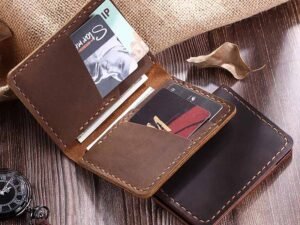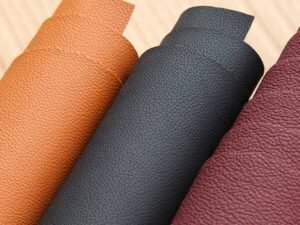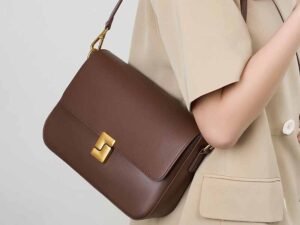
When you walk into a showroom or browse an online catalog, the word “leather” appears everywhere — smooth, textured, vegan, synthetic, PU, faux, eco… it’s a vocabulary that looks familiar yet feels confusing. To the untrained eye, these materials may appear identical. But for designers, brand buyers, and product developers, understanding their differences means the difference between a product that delights and one that disappoints.
Today’s market blurs the line between real and engineered materials more than ever. As sustainability and animal ethics reshape global sourcing, synthetic leathers like PU and faux leather have evolved from cheap alternatives to high-tech fabrics engineered for performance, design, and conscience.
PU leather is a type of faux leather made by coating a base fabric with polyurethane to simulate real leather’s look and feel. “Faux leather” is a broader category that includes PU, PVC, and microfiber materials. Both are animal-free, affordable, and customizable, but differ in durability, breathability, and environmental impact. Choosing the right one depends on your design goals, price point, and sustainability priorities.
At Szoneier Leather, we’ve watched this transformation firsthand over 18 years of manufacturing. When we first began, PU leather was mainly used for budget bags; now, we develop microfiber-reinforced vegan leathers for premium European brands demanding REACH-compliant, low-VOC materials. This isn’t just evolution — it’s revolution.
So, what exactly separates PU leather from faux leather? How do they compare in performance, aesthetics, and longevity? And most importantly, which one is right for your brand’s next collection? Let’s break down the science, design logic, and real-world performance — from the factory floor to the fashion runway.
What Do “PU Leather” and “Faux Leather” Mean?
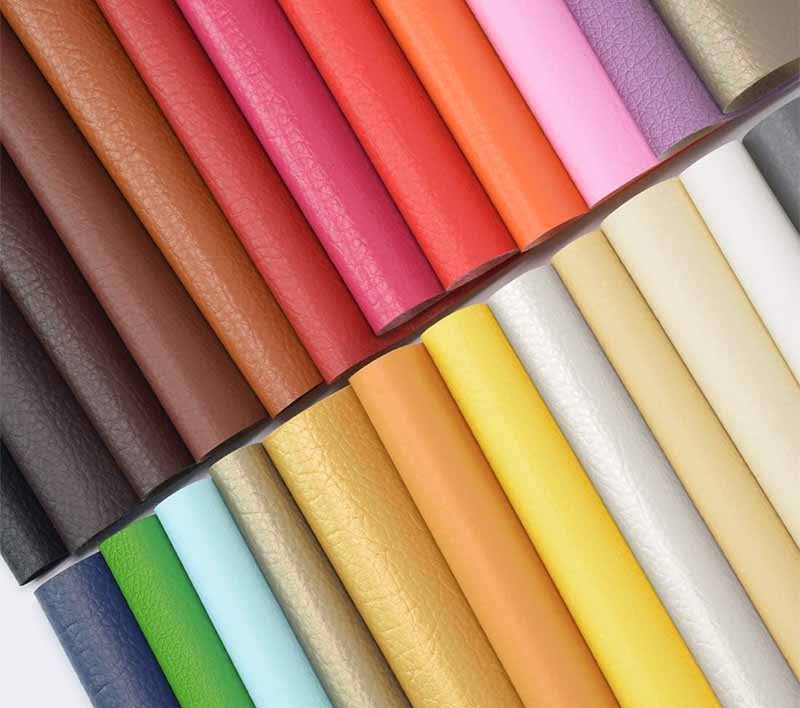
PU leather (polyurethane leather) is a type of faux leather made by coating a fabric base—usually polyester or cotton—with polyurethane resin to mimic the texture of real leather. Faux leather, on the other hand, is a broad term encompassing all non-animal artificial leathers, including PU, PVC, and microfiber materials. Both PU and faux leather are synthetic, affordable, vegan-friendly alternatives that allow brands to achieve leather aesthetics without the cost or ethical concerns of genuine hides.
Understanding PU Leather — the Most Common Type of Faux Leather
PU leather, short for polyurethane leather, is not made from animal hides but rather constructed through coating technology. Manufacturers take a textile base fabric (often cotton, polyester, or microfiber) and apply a polyurethane resin layer on top. This resin can be smooth or embossed to resemble different leather grains — pebble, napa, or saffiano, for example.
The process allows for precise control over texture, gloss, and softness, something that genuine leather can’t offer consistently due to natural variation. PU leather’s main advantages include:
- Soft, supple touch similar to high-grade cowhide.
- Uniform surface ideal for color consistency and large production runs.
- Lower cost, typically 50–70% cheaper than genuine leather.
- Customizable properties — matte, glossy, patterned, or metallic finishes.
Unlike PVC leather, PU remains flexible even in cold conditions and doesn’t have the rigid, plastic feel associated with older synthetic leathers.
What Exactly Is “Faux Leather”?
“Faux leather” isn’t a single material — it’s a category term that refers to any man-made alternative to genuine leather. Within this category, there are three major subtypes, each engineered for different applications:
| Type | Main Composition | Key Features | Common Applications |
|---|---|---|---|
| PU Leather | Polyurethane-coated fabric | Soft, flexible, lightweight | Fashion bags, wallets, upholstery |
| PVC Leather | Vinyl chloride coating over fabric | Rigid, waterproof, heat resistant | Car interiors, furniture |
| Microfiber Leather | Fine nonwoven fibers + PU resin | Breathable, high durability | Premium handbags, footwear |
Among these, PU leather dominates the fashion and accessories sector, while PVC leads in automotive and upholstery due to its heat resistance and toughness. Microfiber leather, sometimes branded as “ultra-fine PU”, represents the latest generation — offering premium texture and mechanical performance close to genuine leather.
Is Faux Leather the Same as Real Leather?
Absolutely not. Faux leather contains zero animal hide — it’s 100% synthetic. While both share a similar appearance, their origins differ:
- Real leather is a natural product derived from animal skins and tanned to preserve and strengthen fibers.
- Faux leather is industrially engineered from polymeric resins and textiles.
Real leather has a porous structure with visible natural pores and unique grain patterns, while faux leather’s surface is mechanically embossed, resulting in a more uniform texture.
Despite this, high-quality faux leathers today — especially microfiber PU — are visually indistinguishable from top-grain hides, and even outperform them in color stability and environmental resistance.
Industry Perspective: In European markets, brands now label products as “vegan leather” or “eco leather” instead of faux leather, emphasizing sustainability and ethics rather than synthetic origin.
PU Leather vs Faux Leather: Relationship and Key Difference
It’s accurate to say that PU leather is a type of faux leather, but not all faux leather is PU. Think of it like this:
- All PU leather = faux leather
- But not all faux leather = PU leather
Here’s how they relate:
| Aspect | PU Leather | Faux Leather (General Term) |
|---|---|---|
| Definition | Polyurethane-coated synthetic leather | Any artificial substitute for animal leather |
| Composition | Polyurethane + fabric base | PU, PVC, microfiber, or other polymers |
| Softness | Very soft and flexible | Varies by type |
| Breathability | Moderate | Ranges from low (PVC) to high (microfiber) |
| Durability | 2–5 years | Up to 10 years (microfiber) |
| Eco Aspect | Vegan, solvent-free versions available | Depends on formulation |
PU leather’s popularity stems from its versatility — it strikes a balance between aesthetics, cost, and functionality. Faux leather, as a whole, is simply the family name encompassing PU, PVC, and microfiber products.
Which Synthetic Leather Performs Best in Daily Use?
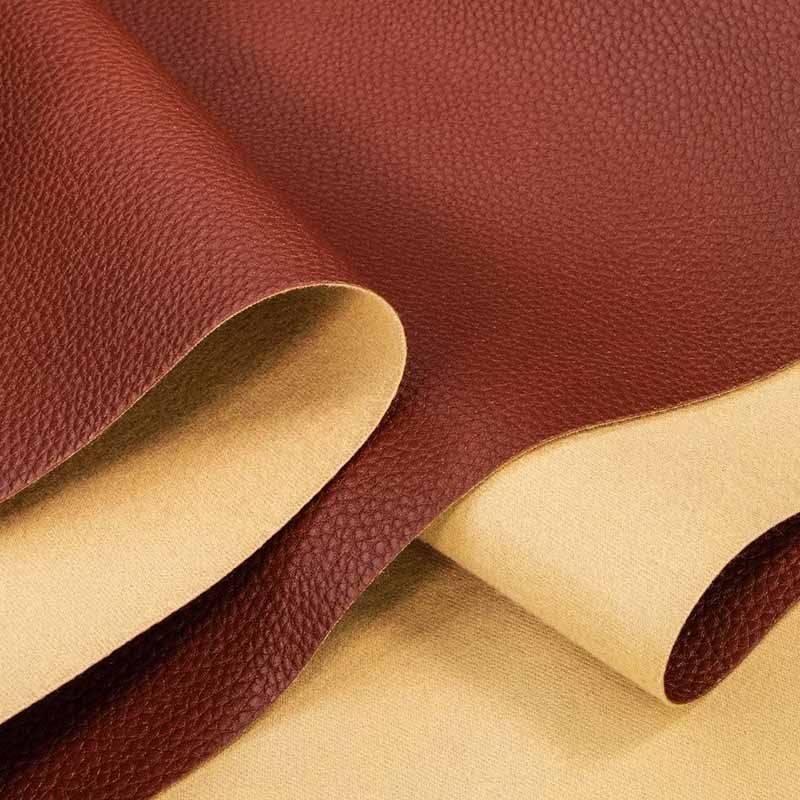
Among synthetic leathers, PU leather offers softness and versatility, PVC leather provides toughness and waterproof strength, while microfiber leather delivers the closest durability and comfort to real leather. For most daily-use products like handbags, wallets, and upholstery, high-quality PU leather performs best for its balance between comfort, flexibility, and price. Microfiber leather, however, outlasts standard PU, making it the preferred option for premium, long-term applications.
Comparative Guide: PU vs PVC vs Microfiber
| Property | PU Leather | PVC Leather | Microfiber Leather |
|---|---|---|---|
| Durability (Avg lifespan) | 2–5 years | 5–10 years | 8–10 years |
| Flexibility | Excellent | Fair | Excellent |
| Breathability | Moderate | Low | High |
| Water Resistance | Good | Excellent | Good |
| Temperature Resistance | -10°C to 60°C | -20°C to 80°C | -30°C to 90°C |
| Surface Feel | Soft, warm | Glossy, firm | Natural, textured |
| Weight | Light | Heavy | Medium |
| Eco Impact | Solvent-free versions available | Contains chlorine | Water-based and low-VOC options |
| Common Uses | Bags, wallets, jackets | Upholstery, car seats | Premium accessories, footwear |
PU Leather — The All-Rounder for Everyday Fashion Use
PU leather is the most commonly used synthetic leather worldwide, striking the best balance between cost, comfort, and flexibility. Its surface is coated with a thin polyurethane layer that gives a supple feel and consistent appearance — making it the go-to material for handbags, wallets, belts, and lifestyle accessories.
Key Advantages:
- Soft and pliable, comfortable for items that bend or flex often (e.g., straps, handles).
- Lightweight and easy to sew, emboss, or print.
- Excellent for vibrant colors, matte/gloss effects, and detailed branding.
Limitations:
- May peel or crack under prolonged humidity and friction.
- Slightly less heat-resistant compared to PVC or microfiber.
PVC Leather — The Heavy-Duty Workhorse
PVC (Polyvinyl Chloride) leather is the oldest and most durable synthetic leather, originally developed for industrial and automotive applications. It’s thicker, heavier, and highly resistant to moisture, oil, and temperature fluctuations, making it perfect for upholstery, luggage, and car interiors.
Strengths:
- Withstands heat, UV rays, and heavy abrasion.
- Easy to clean — dirt and liquids can’t penetrate its sealed surface.
- Maintains structural stiffness ideal for boxes, storage covers, or seat covers.
Weaknesses:
- Rigid and less breathable.
- Contains chlorine-based compounds, making it less eco-friendly.
Where It Excels:
- Automotive interiors and furniture.
- Industrial bags and tool cases.
- Waterproof outdoor products.
Technical Note: PVC performs best when thickness exceeds 1.2 mm, and it can last 8–10 years in dry environments. However, its low breathability means it’s rarely used in direct-contact fashion products like jackets or wallets.
Microfiber Leather — The Premium Vegan Alternative
Microfiber leather represents the third-generation synthetic leather, engineered with advanced nonwoven fiber matrices coated in polyurethane resin. Its microscopic structure mimics real collagen fibers, giving it superior tensile strength, breathability, and softness.
Why It Outperforms:
- Highly resistant to peeling, cracking, and hydrolysis.
- Maintains color and texture even after prolonged wear.
- Feels remarkably similar to genuine top-grain leather.
Durability Tests (Szoneier Factory Data):
- Flex Endurance: 100,000+ bending cycles without cracks (vs. 30,000 for PU).
- Tensile Strength: Up to 4x higher than standard PU leather.
- Abrasion Resistance: 2x improvement over PVC.
Ideal Applications:
- Luxury handbags and belts.
- Automotive interiors and sports footwear.
- Vegan premium lines for sustainable brands.
Eco Insight: Szoneier’s microfiber PU leathers use water-based, DMF-free coatings, meeting strict EU environmental standards and offering VOC emissions 60% lower than solvent-based PU.
How Long Can Each Material Really Last?
Real-world performance depends on three main factors:
- Usage intensity — how often the product flexes, folds, or stretches.
- Environmental exposure — humidity, UV, and temperature.
- Base fabric quality — microfiber bases outperform polyester by 30–50%.
| Product Type | Typical Material | Realistic Lifespan | Notes |
|---|---|---|---|
| Wallets | PU or Microfiber PU | 3–6 years | PU shows edge wear first |
| Handbags / Backpacks | PU / Microfiber PU | 4–8 years | Microfiber holds shape longer |
| Belts / Straps | Reinforced PU | 3–5 years | Surface may scuff before cracking |
| Furniture / Car Seats | PVC / Microfiber | 8–10 years | Best resistance to abrasion |
| Gift Boxes / Accessories | PVC / PU | 5–7 years | Depends on storage humidity |
Choosing the Right Synthetic for Your Market
When selecting synthetic leather for your brand, consider the buyer’s expectation of lifespan and price. A premium brand can justify microfiber PU costs by emphasizing sustainability and longevity, while a fast-fashion line may prefer standard PU for its softness and affordability.
| Brand Type | Best Option | Why |
|---|---|---|
| Entry-Level / Promo | PU | Affordable, visually attractive |
| Mid-Range Fashion | Double-layer PU or PU-microfiber blend | Softer touch, better durability |
| Luxury / Eco Brands | Microfiber PU | Long-lasting, sustainable, vegan |
| Industrial / Heavy Use | PVC | Water- and heat-resistant |
Szoneier Advantage: Szoneier’s engineers analyze application environment + design requirements + target market before recommending materials. For instance, a brand producing “waterproof travel wallets” might receive a custom microfiber-PU hybrid combining softness and waterproof reliability.
What Are the Disadvantages of PU Leather Compared to Real Leather?
| Limitation | Description |
|---|---|
| Shorter lifespan | 2–5 years vs 10+ for genuine leather |
| Less breathable | PU’s polymer surface traps heat |
| No natural patina | Surface stays uniform; doesn’t age beautifully |
| Sensitive to scratches | Coating may scuff if unprotected |
| Not biodegradable | Synthetic polymers take decades to break down |
How Do Look, Feel, and Aging Compare?
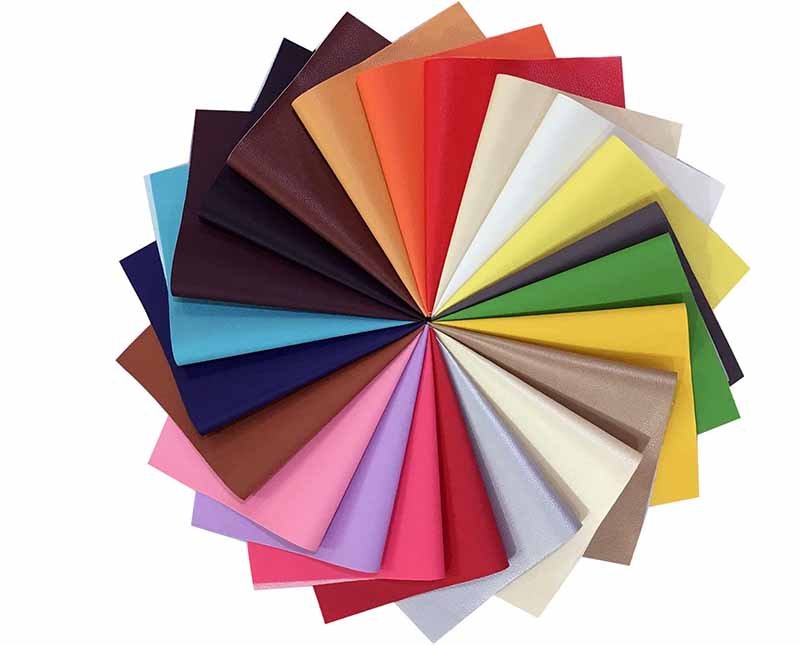
PU leather looks smooth and consistent, while microfiber faux leather mimics genuine hide grain more closely. Real leather has natural variations, pores, and develops patina with age; synthetics stay uniform over time. PU feels soft and lightweight but less “warm” than genuine leather, while microfiber leather offers a near-natural texture with superior flexibility. In aging, genuine leather gains character, while PU and faux versions retain a stable, newer appearance for years.
The Visual Factor — How They Look to the Eye
When viewed side-by-side, PU leather and real leather may appear almost identical, especially to casual consumers. Manufacturers achieve this realism through embossing rollers that imprint natural grain textures — pebble, saffiano, napa, or full-grain — onto polyurethane surfaces.
However, differences appear under close inspection:
| Feature | Genuine Leather | PU Leather | Microfiber Leather |
|---|---|---|---|
| Surface Grain | Natural, irregular pores | Mechanically embossed, consistent | Highly detailed embossed grain |
| Color Depth | Multi-tonal, rich variations | Uniform solid tone | Slightly variegated, realistic tone |
| Finish | Natural gloss, subtle sheen | Matte or semi-gloss (adjustable) | Can replicate waxed or oily finish |
| Edges | Fibrous, organic | Fabric-based, sealed edges | Smooth, dense microstructure |
While real leather’s beauty lies in its imperfection, PU and microfiber leather’s appeal is predictability — consistent tone, flawless finish, and minimal surface waste during cutting.
The Tactile Experience — How They Feel to the Hand
The feel of leather is where buyers make emotional decisions. It’s tactile psychology — the softness, warmth, and weight determine perceived value.
PU Leather Feel
PU leather feels smooth and pliable, with a synthetic silkiness. It’s soft when new but can stiffen over years if exposed to heat or low humidity. Its polyurethane surface does not “breathe,” meaning it stays cooler to the touch than natural leather.
Microfiber Leather Feel
Microfiber leather mimics the elastic micro-fiber structure of real collagen, creating an extremely fine, suede-like handfeel. It bends and rebounds naturally, without the “plastic snap” typical of cheaper PU. Many premium vegan bag brands choose microfiber because customers often can’t distinguish it from genuine leather by touch.
Real Leather Feel
Real leather feels warm, grainy, and slightly resistant when pressed. Its pores allow micro air exchange, resulting in a breathable, natural comfort unmatched by synthetics.
| Attribute | PU Leather | Microfiber Leather | Genuine Leather |
|---|---|---|---|
| Softness | 7/10 | 9/10 | 10/10 |
| Elastic Recovery | Moderate | Excellent | Excellent |
| Temperature Sensation | Cool | Neutral | Warm |
| Weight (g/cm³) | 0.6–0.8 | 0.8–0.9 | 1.0–1.2 |
| Breathability | Medium | High | Very High |
The Sound and Movement Factor
The sound of leather movement — a soft creak or muffled rustle — influences the perceived authenticity.
- PU leather often produces a slightly sharper “squeak” due to its smooth surface layers rubbing together.
- Microfiber and real leather create a low, dense creak associated with luxury goods.
This minor acoustic difference, though subtle, strongly affects the customer’s subconscious impression of quality.
The Aging Process — How Each Material Changes Over Time
Here lies the defining distinction between real and synthetic leathers.
Genuine Leather Aging
Real leather ages organically, developing a patina — a soft sheen formed from oils, sunlight, and touch. It darkens slightly, becomes more supple, and tells a story of use. Luxury brands celebrate this trait as “living material.” No two products age the same.
PU Leather Aging
PU leather maintains its original appearance for most of its lifespan. It does not darken, soften, or evolve — which can be a benefit for buyers who prefer long-term color and shape consistency. However, over years, low-quality PU may peel or crack, especially in humid climates or under heavy friction. Proper storage (dry, ventilated, below 30°C) slows this degradation.
Microfiber Leather Aging
Microfiber PU is the bridge between real and synthetic aging. It stays visually stable but softens gently with use, acquiring a subtle hand-worn comfort without visible wear lines. Its ultra-dense fiber network prevents peeling, making it suitable for 10+ year lifespan products like premium belts or automotive interiors.
| Aspect | PU Leather | Microfiber Leather | Genuine Leather |
|---|---|---|---|
| Patina Formation | None | Minimal, subtle softening | Prominent sheen, darkens |
| Color Change Over Time | Stable | Slight warm tone | Natural oxidation |
| Surface Wear Pattern | May peel if low-grade | Resistant to cracking | Softens, wrinkles attractively |
| Maintenance Needs | Low | Low | Moderate (conditioning required) |
Perception and Branding
The emotional aspect of leather is equally important to its technical side.
- PU Leather is associated with modern fashion — light, trendy, and affordable. It appeals to young consumers who value aesthetics and ethics.
- Microfiber Leather carries a premium vegan image, used by eco-friendly and luxury brands positioning themselves as sustainable innovators.
- Genuine Leather remains a symbol of heritage and craftsmanship, often used by legacy brands emphasizing tradition.
From a branding standpoint, microfiber PU is closing the perception gap. Many top European designers now market microfiber as “next-generation leather,” emphasizing its advanced structure rather than its synthetic origin.
Practical Summary: How Look, Feel, and Aging Affect Real-World Use
| Use Case | Recommended Material | Rationale |
|---|---|---|
| Handbags / Totes | PU or Microfiber PU | Smooth finish, easy color customization |
| Wallets / Small Leather Goods | Microfiber PU | Fine grain detail, long-term flexibility |
| Belts / Watch Straps | Microfiber or Split Leather Base PU | Strength, minimal cracking |
| Decor / Upholstery | PVC or PU | UV and water resistance |
| Luxury Accessories | Microfiber PU | Closest aesthetic to natural patina |
Is PU or Faux Leather Better for Sustainability and Health?
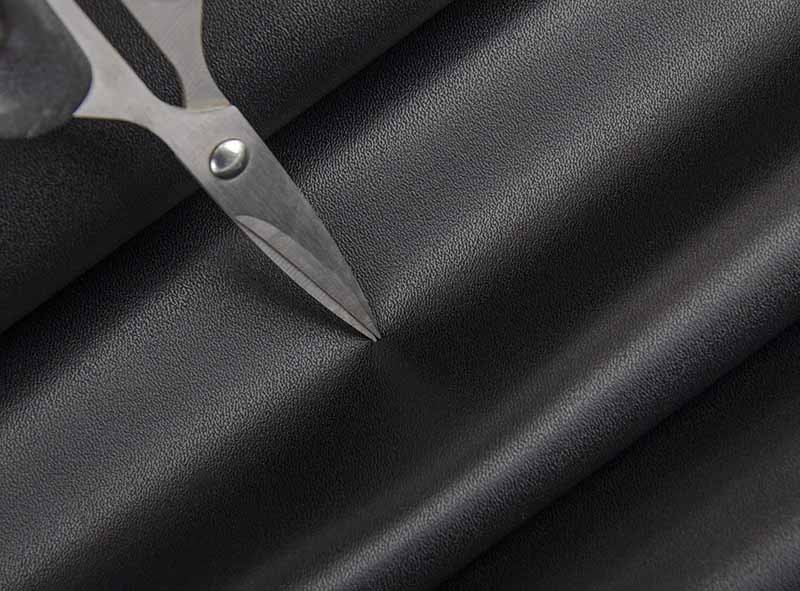
PU and faux leathers are animal-free but vary in environmental impact. Traditional PU and PVC use petroleum-based resins, while newer water-based and solvent-free PUs are more eco-friendly. PU is non-toxic once processed, though improper disposal can pollute. Modern factories, like Szoneier’s, use low-VOC coatings and REACH-compliant materials to ensure safety for both consumers and workers.
Is Faux Leather Vegan and Eco-Friendly?
Yes — by definition, faux leather avoids animal hides. However, “vegan” doesn’t always mean sustainable. The environmental impact depends on whether it’s solvent-based or water-based PU. Water-based PU has up to 40% lower VOC emissions than solvent-based variants.
Szoneier Certification: All PU and microfiber materials used by Szoneier comply with REACH, RoHS, and California Prop 65 environmental standards.
Is PU Leather Unhealthy or Toxic for Users or the Environment?
When manufactured under modern conditions, PU leather is safe and non-toxic. Issues arise only from low-cost PU containing residual solvents or plasticizers. High-quality PU leathers are fully cured and inert, posing no health hazard to users.
Environmental risk mainly concerns end-of-life disposal — PU does not biodegrade quickly, so recycling or repurposing programs are essential.
PU vs PVC: Which Has Lower Environmental Impact?
PU wins. PVC contains chlorine, which releases harmful dioxins when burned or degraded. PU, especially water-based or recycled PU, is cleaner and easier to handle during disposal.
| Material | Contains Chlorine | VOC Emission | Recyclability |
|---|---|---|---|
| PVC | Yes | Medium–High | Poor |
| PU | No | Low | Moderate |
| Water-based PU | No | Very Low | High |
Are There Low-VOC or Recycled Options in Faux Leather Today?
Yes — leading suppliers now produce recycled PU (from production scrap) and bio-based PU using corn or castor oil. These next-gen materials offer up to 35% renewable content while maintaining mechanical performance.
Which Material Should You Choose for Each Product Line?
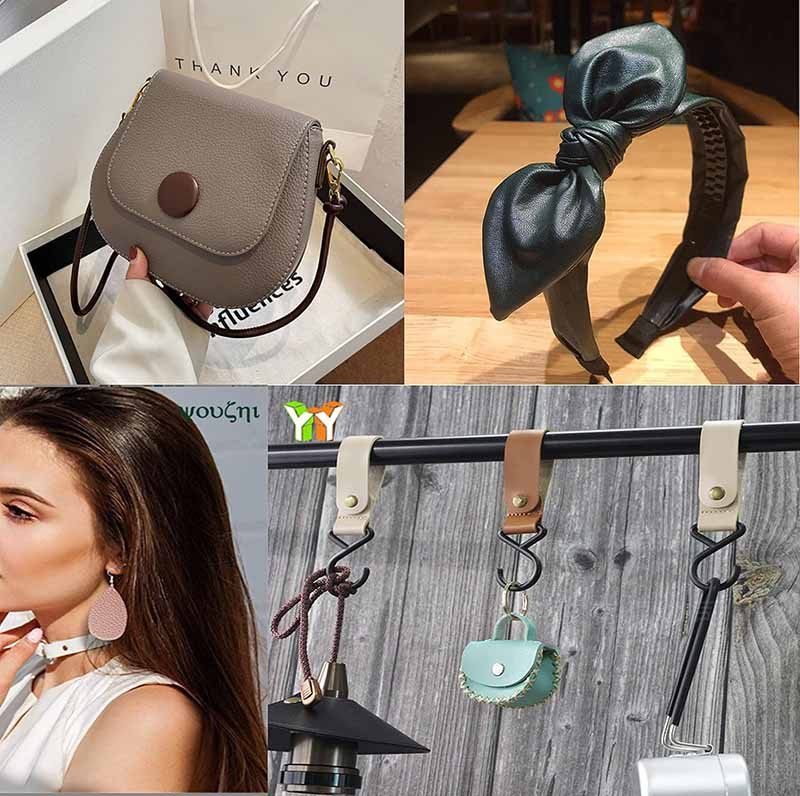
Choosing between PU, faux, microfiber, or real leather depends on your product category, target audience, and brand positioning. PU leather suits fashion bags and affordable accessories; microfiber leather excels in premium goods requiring durability; PVC is ideal for structured or waterproof products; and genuine leather remains unmatched for timeless luxury. A professional manufacturer like Szoneier Leather can help balance aesthetics, strength, sustainability, and cost for your specific collection needs.
Product-by-Product Breakdown: Matching Function to Material
| Product Type | Best Material | Why It Works | Common Thickness |
|---|---|---|---|
| Handbags & Totes | PU Leather or Microfiber PU | Lightweight, flexible, color-rich, can mimic full-grain | 0.8–1.0 mm |
| Wallets & Card Holders | Microfiber PU | Fine grain detail, high fold endurance (no cracking at folds) | 0.7–0.9 mm |
| Belts & Straps | Reinforced PU or Split Leather Base PU | Requires tensile strength, stable under bending | 1.2–1.6 mm |
| Travel Bags & Backpacks | PU or PVC Composite | Structured shape, abrasion resistance | 1.0–1.4 mm |
| Gift Boxes & Packaging | PVC or PU Composite | Holds form, sharp edges, visual gloss | 0.6–1.2 mm |
| Luxury Accessories (Premium Line) | Microfiber PU | Closest texture to real leather, eco-friendly | 0.8–1.2 mm |
Bags & Backpacks
For fashion bags, PU leather remains the global favorite, offering a balance of softness, print versatility, and affordability.
- PU Advantages: Easy to emboss, dye, and laser-cut; available in matte, glossy, or metallic finishes.
- Microfiber Upgrade: For luxury or sustainable lines, microfiber PU delivers superior folding endurance (over 100,000 cycles) and retains shape even under load.
PU bags typically maintain aesthetic appeal for 3–5 years, while microfiber PU models often exceed 7–8 years.
Szoneier Case Study: A German outdoor brand partnered with Szoneier to develop recycled PU travel duffels that passed EN ISO 12947 abrasion tests — achieving a 30% increase in durability while cutting VOC emissions by 40%.
Wallets, Card Holders & Small Leather Goods
Wallets and card cases demand exceptional fold endurance and edge stability. Thin PU leathers can crack along seams after heavy bending, but microfiber leather, with its fine fiber matrix, resists this deformation.
Why Microfiber Works Best:
- Survives 10x more folding cycles than standard PU.
- Has a high-density structure that prevents delamination.
- Can achieve extremely fine embossing for luxury textures.
Tip: Szoneier uses microfiber leathers rated ≥100,000 flex cycles without surface cracking, ideal for premium wallets or long-use corporate gifts.
Belts, Watch Straps & Handles
These components experience continuous tensile stress, especially around holes or buckles. While full-grain leather traditionally dominated this category, modern microfiber or split-leather-backed PU provides comparable tensile strength at a fraction of the cost.
| Material | Tensile Strength (MPa) | Elongation at Break (%) | Ideal Use |
|---|---|---|---|
| PU Leather (0.8 mm) | 12–15 | 250 | Fashion belts, handles |
| Microfiber PU (1.2 mm) | 18–25 | 280 | High-end straps |
| Split Leather (coated) | 20–30 | 300 | Luxury belts |
Szoneier Engineering Tip: For heavy-use components, Szoneier often laminates PU with woven polyester reinforcement, ensuring stability under repeated stress without stretching or cracking.
Travel & Outdoor Products
Travel and outdoor products require leathers that resist water, UV, and abrasion. In this field, PVC-coated PU composites or thick TPU blends are often superior to basic PU alone.
Recommended for:
- Duffel bags, camera cases, dry bags, and luggage.
- Outdoor seat covers and equipment pouches.
Performance Notes:
- PVC layer provides complete waterproofing.
- PU surface allows aesthetic flexibility and logo embossing.
- Heat-sealed seams prevent moisture penetration.
Gift Boxes, Packaging & Home Accessories
When creating rigid gift boxes, jewelry cases, or cosmetic organizers, material stiffness and finish are critical.
- PVC leather is ideal for form-stable packaging due to its density and gloss.
- PU composites offer softer textures for high-end packaging where tactile experience matters.
PVC also provides easy cleaning, color stability, and precise edge folding for sharp geometric box shapes — often used by perfume or watch brands.
Szoneier Example: A French luxury cosmetics brand sourced high-gloss PVC-coated PU from Szoneier for its holiday box series, achieving a mirror-like finish with 0.5 mm precision edge wrapping.
Luxury & Sustainable Lines
Microfiber PU has redefined modern luxury. It’s now the go-to choice for premium vegan brands, combining high mechanical strength with refined texture and sustainable production.
Why It Excels:
- Long lifespan (8–10 years).
- Superior tear resistance and dimensional stability.
- Breathable and soft, mimicking full-grain leather.
- Manufactured using water-based PU resin and solvent-free finishing.
Szoneier’s Green Commitment: Our microfiber PU leathers are produced under DMF-free, REACH, and ISO 14001-certified systems. Several clients have already replaced traditional leather with these eco alternatives for their high-end handbags and belts.
Aligning Material with Market Position & Customer Expectations
| Brand Segment | Key Customer Expectation | Recommended Material | Typical Lifespan | Aesthetic Goal |
|---|---|---|---|---|
| Fast Fashion / Entry-Level | Affordable, trendy, cruelty-free | PU Leather | 3–5 years | Smooth, colorful, lightweight |
| Mid-Tier / Everyday Premium | Balance of softness & quality | Microfiber PU or Double PU | 5–8 years | Natural grain, semi-matte finish |
| High-End / Sustainable Luxury | Longevity, eco-certification | Microfiber PU / Recycled PU | 8–10 years | Natural texture, subtle gloss |
| Industrial / Travel | Resistance, waterproofing | PVC or TPU Composite | 6–10 years | Glossy, structured, rugged |
Conclusion
Whether you choose PU for affordability, microfiber for durability, or recycled faux leather for sustainability, your material defines your brand’s story.
At Szoneier Leather, we bridge craftsmanship and innovation — helping clients design products that meet global standards while respecting environmental goals. From bags and belts to bespoke accessories, our team ensures every surface, stitch, and structure reflects the quality your label stands for.
Start Your Custom PU or Faux Leather Project Today.