
How to Make Leather Goods:Step by Step Process for High End Manufacturing
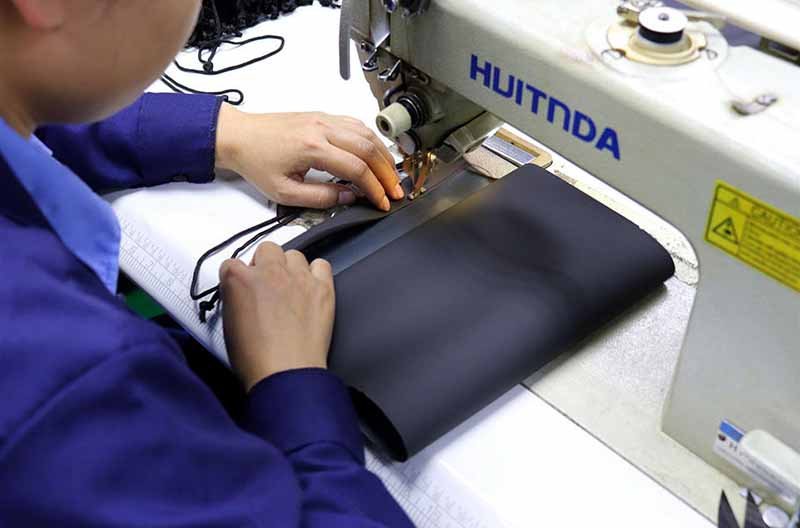
The art of leather craftsmanship has captivated brands, designers, and makers for centuries. From the rich aroma of tanned hides to the subtle texture of grain, few materials embody luxury and durability the way leather does. But in today’s market, making leather goods is not just about craft — it’s about engineering, scalability, and brand differentiation. Whether you’re a boutique launching your first collection or a global label expanding product lines, understanding how leather goods are made can transform your approach to quality, cost, and customization.
Making leather goods involves five essential stages — material selection, pattern design, cutting and assembly, stitching and finishing, and quality control. The process combines artisanal craftsmanship with modern manufacturing technology. Choosing the right leather, machinery, and OEM partner ensures durability, precision, and aesthetic excellence. Successful brands like Szoneier Leather integrate all these steps into one seamless production system for consistent, scalable results.
Behind every premium leather bag or wallet lies a story — of design ambition, material mastery, and hands that shape luxury from raw hide. Let’s explore what makes leather goods truly exceptional — and how you can make your own.
What Are Leather Goods and How Are They Classified?
Leather goods refer to products made primarily from animal hides or synthetic alternatives designed to mimic natural leather. They are classified by function (bags, wallets, belts, accessories), material (full-grain, top-grain, split, or PU), and production method (handcrafted or machine-made). Each category serves distinct markets — from luxury fashion to utility travel gear. Understanding these classifications helps brands choose the right materials, pricing strategy, and manufacturing process for their target audience.
Understanding the World of Leather Goods
“Leather goods” encompass a wide variety of products — from the sleek business portfolio on an executive’s desk to the rugged duffle bag in an adventurer’s hand. Essentially, any product whose structure is primarily made of leather qualifies as a leather good. These products stand out for their tactile richness, natural durability, and aesthetic versatility.
Leather’s unique texture, resilience, and longevity make it one of the most sought-after materials across industries — fashion, travel, automotive, corporate gifting, and lifestyle accessories. The difference lies not in what leather goods are made of, but in how they’re conceptualized and classified.
Classification by Function
This is the most common way to define leather goods in both retail and manufacturing.
| Category | Examples | Market Focus |
|---|---|---|
| Fashion & Everyday Use | Handbags, shoulder bags, clutches, wallets | Luxury & retail fashion |
| Travel & Utility | Backpacks, duffles, toiletry bags, passport holders | Functional and unisex |
| Corporate & Office | Briefcases, portfolios, laptop sleeves | Business professionals |
| Personal Accessories | Belts, straps, keychains, card holders | Gift and branding items |
| Home & Decorative | Leather trays, coasters, boxes | Lifestyle and gifting |
Classification by Leather Type
Leather quality determines both cost and perception. A single product — say, a wallet — can vary dramatically in price depending on its leather type.
| Leather Type | Characteristics | Applications |
|---|---|---|
| Full-Grain Leather | Unaltered surface, visible natural grain, highest durability | Luxury bags, belts |
| Top-Grain Leather | Sanded and finished surface, smooth touch | Wallets, straps |
| Split Leather | Derived from the lower layer of hide, less durable | Inner linings, budget items |
| Bonded Leather | Made from recycled fibers and PU coating | Promotional goods |
| Vegan / PU Leather | Synthetic imitation of natural leather | Eco or cost-conscious lines |
Understanding this hierarchy helps brands align product value with market expectation. For instance, a full-grain briefcase communicates craftsmanship and exclusivity, while a PU travel bag targets affordability and sustainability.
Classification by Manufacturing Method
Leather goods can be handmade, machine-assisted, or fully industrialized — each method offering unique strengths:
- Handcrafted Leather Goods Created by artisans using manual tools and traditional stitching. Every piece is slightly unique. Perfect for limited editions or heritage collections.
- Semi-Industrial / Small-Batch Production Combines manual finishing with machine precision — ideal for brands seeking scalability without sacrificing authenticity.
- Industrial or OEM Production Fully mechanized process with standardized quality control. Used by professional manufacturers like Szoneier Leather to deliver consistent quality across thousands of pieces.
Why It Matters: For small designers, handmade methods build exclusivity. For global retailers, OEM/ODM production ensures volume, consistency, and certification compliance.
Classification by Consumer Segment
Leather goods also vary by price point and customer type:
| Segment | Price Range (USD) | Positioning |
|---|---|---|
| Luxury / Premium | $200–$1,500+ | High-end brands (Italian, bespoke) |
| Mid-Range | $80–$250 | Fashion retail and department stores |
| Entry-Level / Utility | $30–$80 | Corporate gifting, mass retail |
For brands, choosing a market segment early on influences leather grade, production methods, and customization options.
Classification by Purpose and Use Case
The final layer of classification concerns how the product is meant to perform:
- Protective: laptop sleeves, travel pouches, cases
- Decorative: embossed trays, watch rolls
- Functional: belts, straps, tool holders
- Organizational: wallets, card sleeves, toiletry kits
Each function demands different performance metrics — flexibility, tensile strength, resistance to abrasion, or surface finish consistency.
Example: A belt requires vegetable-tanned cowhide (rigid and dense), while a handbag benefits from supple top-grain leather that molds naturally.
A Note on Emerging Sub-Categories
The leather goods landscape in 2026 is expanding beyond tradition. Eco-conscious and tech-integrated leather goods are rising fast:
- Apple Watch bands made with metal-free tanned leather
- RFID-blocking wallets for security-conscious consumers
- Vegan leather tote bags blending sustainability with fashion
- Convertible travel gear integrating hidden pockets or power banks
Brands that adapt to these sub-categories capture modern buyers who value both style and ethics.
The Szoneier Perspective — Classifying for Production Efficiency
At Szoneier Leather, classification isn’t just theoretical — it’s practical. Our factory organizes production according to product families and leather grades, enabling precise workflow management and optimized cost structures. For example:
- Bag lines operate under heavier machinery and structured mold pressing.
- Wallet and accessory lines use micro-stitching and compact skiving systems.
- Belt and strap divisions maintain tensile test equipment to ensure strength.
Which Types of Leather Are Best for Different Leather Goods?
The best type of leather depends on the product’s function, design, and price tier. Full-grain leather is ideal for luxury bags and belts because it’s durable and develops a rich patina. Top-grain leather suits wallets and accessories where flexibility matters. Split and bonded leathers serve cost-efficient lines, while suede and nubuck add texture. Vegetable-tanned hides emphasize eco-appeal, and chrome-tanned hides provide softness and vibrant color. Selecting the right grade ensures each leather product performs and ages beautifully.
The Five Major Leather Grades
Every leather good starts with a hide that’s processed, split, and finished in different ways. Understanding each grade helps you match performance vs price.
| Leather Type | Description | Texture & Feel | Durability | Ideal Applications |
|---|---|---|---|---|
| Full-Grain | Top surface of hide, natural grain intact | Firm, slightly textured | ★★★★★ | Luxury bags, belts, premium wallets |
| Top-Grain | Sanded & finished upper hide | Smooth and even | ★★★★☆ | Wallets, straps, small goods |
| Split Leather | Lower hide layer | Soft but less dense | ★★★☆☆ | Lining, budget bags |
| Corrected-Grain | Buffed surface + synthetic finish | Glossy, uniform | ★★★☆☆ | Entry-level fashion |
| Bonded / PU | Reconstituted fibers + PU coating | Smooth synthetic | ★★☆☆☆ | Promotional items, mass retail |
Szoneier Leather Tip: For brand clients, we often recommend full-grain or high-grade top-grain.
Full-Grain Leather
Full-grain leather is prized for its natural beauty, density, and longevity. It retains the original grain pattern, meaning no sanding or correction — each piece carries its own character.
Advantages
- Ages into a deep patina over time.
- Strongest structure; resists tearing and stretching.
- Breathable surface reduces cracking risk.
Drawbacks
- Higher cost and lower yield (due to natural marks).
- Requires skilled cutting & finishing to minimize waste.
Best Used For Luxury handbags, structured briefcases, premium belts, or watch straps where heritage quality defines brand perception.
Top-Grain Leather
Top-grain leather is the most widely used grade in the fashion and accessories industry. It’s lightly sanded to remove imperfections, resulting in a smoother surface suitable for dyeing and embossing.
Advantages
- Even color and grain pattern.
- Easier to clean and maintain.
- Accepts heat-press logos and foil stamping cleanly.
Best Used For Wallets, toiletry bags, laptop sleeves, belts, and structured pouches — anywhere brands need a balance between cost, elegance, and functionality.
Performance Comparison
| Property | Full-Grain | Top-Grain |
|---|---|---|
| Patina Over Time | Excellent | Moderate |
| Water Resistance | Good | Better (with finish coating) |
| Stretch Resistance | Excellent | Very Good |
| Branding Compatibility | Limited | Excellent |
Split, Corrected, and Bonded Leathers
These leathers are often used for cost-efficient product lines or inner layers in structured designs.
- Split Leather: Cut from the lower hide; used for linings or secondary surfaces.
- Corrected-Grain: Sanded and embossed to mimic higher-grade grain.
- Bonded Leather: Made from reconstituted leather fibers bound with polyurethane.
Pros: Affordable, flexible, uniform color. Cons: Lower tensile strength, weaker aging performance.
Used effectively, these materials enable brands to serve entry-level markets without losing aesthetic appeal — especially when combined with reinforced stitching and edge-painting.
Szoneier Engineering Note: We often laminate split leather with PU film to achieve high surface uniformity and scratch resistance for large corporate projects.
Specialty Leathers
Suede
Created from the underside of the hide, suede offers a soft nap and luxurious feel. Ideal for interiors of bags, fashion details, and soft clutches. Requires protective treatment to resist stains and water damage.
Nubuck
Top-grain leather that’s lightly buffed on the grain side, giving a velvety texture with greater durability than suede. Favored for premium wallets and handbags.
Exotic Leathers
Includes crocodile, python, ostrich, and stingray. Used for limited-edition or luxury goods due to cost and legal regulations (CITES certification required).
Market Trend 2026: Brands are embracing embossed cowhide with croc patterns as a sustainable alternative to true exotics.
Vegetable vs Chrome Tanning
Tanning defines a leather’s texture, color, and longevity.
| Tanning Type | Process | Key Traits | Ideal Use |
|---|---|---|---|
| Vegetable-Tanned | Natural plant extracts (tannins) | Eco-friendly, stiff at first, ages beautifully | Belts, heritage bags, luxury lines |
| Chrome-Tanned | Chromium salts (quick process) | Soft, flexible, vibrant colors | Wallets, fashion bags |
| Combination Tan | Hybrid process | Balanced strength & color depth | Versatile collections |
Matching Leather Type to Product Category
| Product | Recommended Leather | Why It Works |
|---|---|---|
| Tote Bag / Backpack | Full-grain cowhide or oil-pull-up | Structural integrity + natural patina |
| Wallet / Card Holder | Top-grain calf or goat skin | Thin and flexible yet durable |
| Belt / Strap | Veg-tanned cowhide | Stiff body + edge burnishability |
| Dopp Kit / Toiletry Bag | Chrome-tanned leather with lining | Water resistance + easy maintenance |
| Watch Band | Calf or lamb leather lined with suede | Comfort and soft contact surface |
| Leather Box / Accessory Case | Split leather + PU film | Formability + cost efficiency |
What Tools and Equipment Do You Need to Make Leather Goods?
Making leather goods requires a mix of traditional hand tools and modern industrial equipment. Hand tools like knives, awls, and edge bevelers allow detailed crafting, while machines such as CNC cutters, skiving machines, sewing machines, and heat presses ensure precision and scale. Professional factories integrate both approaches for efficiency and consistency. At Szoneier Leather, each production line combines artisanal expertise with automated machinery to guarantee flawless finishing, durability, and brand-ready presentation.
The Two Worlds of Leather Production
Leather craftsmanship operates between two extremes:
- Handcrafting, where artisans rely on manual tools and intuition.
- Industrial manufacturing, where technology delivers scale, precision, and repeatability.
A successful brand often merges both. For prototypes or limited collections, hand tools enable flexibility and artistic control. For mass production, industrial tools provide consistency, uniform stitch length, and material yield optimization.
At Szoneier Leather, both worlds coexist: sample workshops replicate artisan studios, while production halls operate with CNC and German-made machines for bulk runs.
Essential Hand Tools for Leathercraft
Even in a modern factory, traditional hand tools remain indispensable for sampling, prototyping, and finishing.
| Tool | Purpose | Usage Notes |
|---|---|---|
| Utility / Head Knife | Cutting leather panels along patterns | Must be razor-sharp; cuts on glass or granite base |
| Wing Divider | Marks parallel lines for stitching | Keeps seam distance consistent |
| Edge Beveler | Rounds sharp edges before burnishing | Key for belts and wallets |
| Awl / Scratch Awl | Punches holes and marks leather | Used for precision marking |
| Pricking Iron / Chisel | Guides stitching spacing | Typically 3–4 mm for wallets, 5 mm for belts |
| Mallet / Hammer | Flattens seams, sets rivets | Wooden or nylon preferred to avoid marks |
| Burnishing Stick / Bone Folder | Smooths and polishes edges | Used with wax or gum tragacanth |
| Needles & Waxed Thread | Hand-stitching leather seams | Requires saddle stitch technique |
Szoneier Tip: Each sampling artisan keeps a personal tool kit — a reflection of skill and craftsmanship. Even in mass production, these tools are used during finishing and repair, ensuring every edge and seam feels hand-touched.
Industrial Machinery for Precision and Scale
Industrialization transforms leathercraft into a repeatable science. Each machine handles a specific stage — cutting, skiving, stitching, edge painting, embossing, or pressing — ensuring thousands of units maintain identical quality.
1. Cutting Equipment
- CNC Laser / Oscillating Knife Cutters: Convert CAD patterns into physical cuts with ±0.5 mm accuracy. Automatically optimize nesting to reduce leather waste by up to 30%.
- Hydraulic Clicking Press (Die Cutting): Uses metal dies for high-speed cutting. Ideal for repetitive shapes (belts, straps).
- Manual Cutters / Guillotine Trimmers: Used for small batch or curved patterns.
| Machine Type | Speed (cuts/min) | Precision (mm) |
|---|---|---|
| CNC Cutter | 300–500 | ±0.5 |
| Clicking Press | 200–400 | ±1.0 |
| Manual | 60–100 | Depends on operator |
2.Skiving, Splitting, and Thinning
Leather rarely comes at the perfect thickness. Skiving machines reduce bulk at folds or edges; splitters ensure consistent thickness across panels.
- Bell Skiving Machine: Gradually thins leather edges for folding.
- Band Knife Splitter: Ensures uniform thickness across large hides.
- Edge Grinder: Levels surfaces for stitching precision.
Example: A wallet panel might be split to 1.2 mm, while a belt requires 3.5 mm thickness for structure.
3.Stitching & Sewing Machines
Perhaps the heart of leather manufacturing. Different models handle different weights and configurations:
| Machine | Purpose | Example Model |
|---|---|---|
| Flatbed Machine | General stitching for flat panels | Juki DNU-1541 |
| Cylinder-Arm Machine | Curved or tubular areas (bags, straps) | Adler 869 |
| Post-Bed Machine | Top-stitching and decorative seams | Durkopp Adler 272 |
| Double-Needle Machine | Parallel stitches on belts | Typical GC20606 |
| Bar-Tack Machine | Reinforcement at stress points | Brother 430D |
Each workstation is calibrated to maintain 6–9 stitches per inch (SPI), with uniform thread tension. Szoneier’s operators undergo precision training — ensuring every stitch passes a mechanical pull test (>8 kg).
4.Edge Painting & Finishing Equipment
Edges define the tactile luxury of leather goods. Modern factories employ:
- Automatic Edge Painting Lines: Evenly coat multiple layers of PU or acrylic paint.
- IR Drying Conveyors: Speed up drying without cracking paint.
- Edge Burnishers: Apply friction and wax for a polished natural edge.
| Finish Type | Durability | Used For |
|---|---|---|
| PU Painted Edge | 10,000 bends | Wallets, straps |
| Wax Burnished | 8,000 bends | Belts, vintage goods |
| Folded Edge | Lifetime | Luxury handbag |
5.Branding & Embossing Tools
A leather good becomes your brand the moment it carries your logo. Common branding systems include:
- Hot Stamping Presses – Use brass molds under 120–150°C for deep embossing.
- Foil Printing Machines – Apply metallic or colored foil for premium branding.
- Laser Engravers – Create micro-precise logos or QR codes without pressure.
Szoneier Capability: Our in-house branding units handle up to 2,000 embossing cycles per day, guaranteeing logo alignment and depth uniformity.
6.Hardware & Assembly Tools
Riveting, punching, and zipper setting are crucial for strength and aesthetics. Factories use:
- Pneumatic Rivet Setters
- Eyelet Press Machines
- Zipper Sewing Machines
- Snap Button Machines
Each assembly station is equipped with torque-controlled presses, preventing leather overstress and ensuring hardware longevity.
Finishing, Inspection & Packaging Equipment
After stitching and branding, every product enters the finishing zone for final QC and detailing.
| Equipment | Function |
|---|---|
| Polishing Wheel | Smooths and buffs leather surfaces |
| Cleaning Gun | Removes dust and adhesive residue |
| QC Light Booth | Detects color differences (ΔE < 1.0) |
| Heat Shrink Wrapper | Protects from moisture during shipment |
| Carton Sealer & Barcode Labeler | Ensures efficient packing logistics |
The Cost and Benefit of Tool Selection
A brand’s tooling choices influence everything from product pricing to scalability.
| Production Scale | Recommended Setup | Initial Cost | Unit Consistency |
|---|---|---|---|
| Handmade (≤100 pcs) | Basic hand tools | $300–500 | Variable |
| Semi-Industrial (100–1,000 pcs) | Manual + small machines | $5,000–15,000 | High |
| Full Factory (>1,000 pcs) | CNC + industrial setup | $50,000+ | Perfectly consistent |
How Is a Leather Product Made Step by Step?
Making a leather product — whether it’s a bag, wallet, belt, or strap — is not a single action, but a controlled sequence of stages. Each step builds on the previous one: from idea, to pattern, to cutting, to sewing, to finishing, to QC. When done right, the result feels effortless. When done wrong, small mistakes in early stages become expensive defects at the end.
Design and Pattern Creation — Turning Idea into Structure
Every leather product begins as a design concept: a silhouette, a capacity requirement, a usage scenario (work, travel, luxury, utility).
For a professional workflow, this stage usually includes:
- Market & Brand Brief
- Who will use the product? (gender, age, lifestyle)
- For what purpose? (daily commute, business travel, gifting, fashion)
- At what price point? (premium, mid-range, entry-level)
- Sketch & Specification
- Overall dimensions
- Compartment layout (pockets, dividers, card slots)
- Closure system (zipper, snap, magnet, flap)
- Branding locations (logo patch, embossing area, puller, hardware)
- Pattern Making (2D/3D) In a factory like Szoneier, patterns are created using CAD software, ensuring each piece (front panel, gusset, base, strap, flap) fits together with precise seam allowances (usually 4–8 mm).
- Prototype Evaluation A first sample is sewn, checked for:
- Capacity vs intended use
- Comfort (handle length, strap drop)
- Balance (does it lean, sag, or twist?)
- Aesthetic (proportions, curve lines, logo size)
Cutting, Splitting, and Skiving — Preparing the Leather
Once patterns are approved, leather is prepared to match them.
A. Leather Selection & Orientation
- Inspect hides for defects (scars, bites, wrinkles).
- Decide how to place patterns following the backbone and fiber direction to prevent stretch or distortion when used.
B. Cutting
- Small-scale / DIY: Hand cutting with knives along paper or acrylic patterns.
- Factory scale: CNC or die-cutting presses follow CAD layouts to achieve clean, repeatable pieces.
Good cutting reduces wasted leather and ensures panel symmetry, which is critical for bags, belts, and wallets.
C. Splitting & Skiving
- Splitting: Reduces the whole panel to target thickness (e.g. 1.6 mm for wallet panels, 2.2–3.0 mm for belts).
- Skiving: Thins edges and fold zones, so seams are not bulky and folds lie flat.
Poor skiving leads to ugly bulges or weak seams — especially at corners or strap attachments.
Stitching & Assembly
Sewing is where people visually see the product forming — but it’s also where many technical mistakes can happen if not controlled.
A. Common Mistakes When Sewing Leather
Some typical problems
| Mistake | Result | Prevented By |
|---|---|---|
| Wrong needle type/size | Holes too big, tearing | Use leather needles (size 18–22) |
| Uneven tension | Puckering or loose stitches | Proper machine calibration |
| Misaligned layers | Twisted seams, crooked shape | Use guides, fixtures, and jigs |
| No backstitching or bar-tack | Seams open with use | Reinforce stress points |
| Over-piercing in repair | Leather weakened | Plan seams, avoid re-stitching same holes |
B. Assembly Logic
Assembly usually follows an inside-out logic:
- Prepare Sub-Assemblies
- Zip panel + gusset
- Card slots on wallet interior
- Strap with hardware attached
- Join Panels
- Sew lining to leather (if lined).
- Sew inner pockets before closing outer shell.
- Close Main Body
- Side seams and base seams are sewn.
- Corners are clipped or folded to achieve volume.
- Structural Reinforcement
- EVA, cardboard, or PP board inserted into base or sides.
- Handles or straps are reinforced with extra stitching or rivets.
Edge, Surface, and Hardware Finishing
This is where a product transitions from “factory-made” to premium-looking.
A. Edge Treatment
Edges can be:
- Raw + Burnished: Smoothed with friction and wax — good for veg-tan belts.
- Painted Edges: Multiple coats of PU edge paint with sanding between layers — common for handbags, wallets.
- Folded Edges: Leather folded over and stitched — the most luxurious and durable, but labor-intensive.
A good edge is smooth, even, and free of gaps or bubbles. This is often the first place a customer touches, so it directly affects perceived quality.
B. Surface Inspection & Cleaning
- Remove glue marks, pencil lines, or dust.
- Check grain consistency and color uniformity (ΔE color difference testing in factory).
- Polish with creams or sprays if needed.
C. Hardware Setting
Hardware like zippers, snaps, D-rings, rivets, and buckles must be:
- Aligned symmetrically
- Set with correct pressure (too loose = wobbly; too tight = leather damage)
- Color-matched (same plating tone across all metal parts)
In Szoneier’s lines, hardware is torque- and pull-tested to avoid customer complaints like “my handle ring popped out after 3 months.”
Final QC, Fitting, and Packing
Before a leather product leaves the factory:
- Functional Checks
- Does the zipper run smoothly end-to-end?
- Do straps adjust correctly?
- Do lids, flaps, or snaps close naturally?
- Visual QC
- Stitching straight and clean?
- Edges fully sealed?
- Logos clear and centered?
- Stress and Spot Checks
- Handles and straps pulled with set force.
- Random units undergo extra tests (e.g., abrasion, flex).
- Packing
- Stuffing to keep shape (paper, air bags, foam).
- Dust bags or polybags.
- Export carton with correct labeling, barcodes, and protection.
DIY Making vs OEM/ODM Factory Process
DIY leatherworking:
- Pro: High uniqueness, strong storytelling, ideal for artisan brands.
- Con: Slow, limited volume, variable consistency, difficult to meet large orders.
OEM/ODM with a factory like Szoneier:
Pro:
- Consistent quality with CAD + CNC + QC system
- Scalable capacity (small MOQs to big orders)
- Access to professional material sourcing and testing
- Lower per-unit cost once patterns and molds are set
Con:
- Requires clearer planning (tech pack, target price, lead time) — but we help with that.
How Do You Ensure Quality, Fit, and Durability in Leather Goods?
Quality assurance in leather goods includes inspecting material consistency, stitching strength, edge finish, and color accuracy. Tests like abrasion resistance and tear strength validate performance. A professional factory ensures quality at every step, from incoming material inspection to pre-shipment testing, guaranteeing long-lasting, compliant products.
Quality Testing Standards
| Test | Purpose | Standard |
|---|---|---|
| Tensile Strength | Handle stress | ≥ 25 N/cm |
| Abrasion Resistance | Surface durability | ≥ 300 cycles |
| Colorfastness | Prevent fading | Grade 4 or higher |
| Stitch Pull Test | Seam strength | ≥ 8 kg |
| Odor Test | Chemical safety | REACH compliant |
Lining, Packaging, and Branding Importance
High-end brands understand that luxury extends to touchpoints — from soft suede linings to embossed packaging. A customer’s first tactile impression defines perceived quality.
Reducing Defects
Szoneier’s ISO 9001 quality management ensures <0.3% defect rate — achieved through triple QC checks and skilled finishers.
How Can Brands Develop and Manufacture Leather Goods with a Factory Partner?
Partnering with the right factory can turn a creative idea into a profitable, scalable product line. Yet many brands — even experienced ones — struggle to balance creative freedom with manufacturing control. The best partnerships go far beyond a purchase order. They’re built on transparent collaboration, technical alignment, and long-term trust.
Step 1:Define Your Brand Vision and Product Direction
Before engaging a factory, a brand should clearly define what it wants to create and why.
Key questions every brand should answer:
- What type of product line are you building? (bags, wallets, belts, accessories, boxes, etc.)
- Who is your target audience — luxury, eco-conscious, or functional?
- What materials and finishes align with your brand DNA?
- What’s your realistic retail and production budget?
- Do you need custom hardware, packaging, or branding details?
Factories like Szoneier appreciate detailed briefs. The more specifics you provide — size, intended use, leather type, color palette, target retail price — the faster the team can respond with suitable materials, samples, and quotations.
Example: A premium brand might specify “full-grain vegetable-tanned leather, YKK zippers, solid brass hardware, and matte logo embossing.”
Step 2:Technical Design, Sampling, and Material Sourcing
After aligning on product concept, the next stage is sampling — where the design becomes tangible.
A. Technical Drawings & Spec Sheets
Factories require a tech pack, which typically includes:
- Product sketches (front, side, and internal views)
- Dimensions and tolerances
- Leather and lining specifications
- Stitching details and color codes
- Branding or logo placement
- Hardware type and finish
- Quantity per order / colorway
At Szoneier Leather, the design team can create or refine these drawings for clients who only have rough sketches or mood boards. This ensures that artistic vision matches industrial feasibility.
B. Material Selection
Factories typically source from their network of certified tanneries and hardware suppliers. Szoneier offers access to:
- Full-grain, top-grain, suede, and embossed leathers
- Vegan / microfiber leathers for eco lines
- Brass, zinc, and stainless-steel hardware
- Custom zippers and branded pullers
Each leather batch is lab-tested for colorfastness, tear strength, and REACH compliance.
C. Sampling and Approval
A prototype sample (or “golden sample”) is produced for review. Brands should check:
- Stitch accuracy
- Edge painting consistency
- Color match under different lighting
- Zipper glide and hardware quality
- Weight and tactile feel
Feedback is exchanged, and 1–2 revisions usually refine the design before mass production.
Step 3:Costing, Negotiation, and Production Planning
Once the sample is approved, the factory prepares a formal quotation. This includes:
- Unit price (based on material, labor, and packaging)
- MOQ (Minimum Order Quantity)
- Lead time (production + shipping)
- Payment terms
| Order Scale | Typical MOQ | Lead Time |
|---|---|---|
| Custom prototype | 1–3 pcs | 7–10 days |
| Small batch | 100–300 pcs | 20–30 days |
| Full production | 500+ pcs | 30–45 days |
Factories like Szoneier also offer low-MOQ customization, ideal for boutique or emerging brands that want to test markets without overstocking.
Negotiations aren’t just about price — they’re about value:
- How consistent is quality across reorders?
- How transparent is material sourcing?
- Does the supplier support logo embossing, gift packaging, or custom labels?
Step 4:Production and Quality Control
Once production begins, factories move through several controlled phases:
A. Material Preparation
- Hides are inspected and moisture-balanced.
- Panels are cut by CNC or clicking press.
- Edges are skived and reinforced for clean folding.
B. Assembly and Stitching
Each workstation handles a defined task:
- Panel joining
- Lining and pocket installation
- Zipper and handle stitching
- Logo embossing
- Edge finishing
To maintain consistency, inline QC inspectors check every 10–15 units for:
- Stitch density and alignment
- Edge sealing thickness
- Hardware alignment
- Thread trimming and glue residue
C. Final Inspection
The factory performs 100% inspection before packing. Common checkpoints include:
| Test | Purpose | Standard |
|---|---|---|
| Stitch Strength | Prevent seam failure | >8kgf pull |
| Colorfastness | Avoid dye transfer | ISO 105-X12 |
| Hardware Pull | Verify rivet security | >15kgf |
| Zipper Cycle | Durability | 10,000 open/close |
| Edge Paint Adhesion | Long-term wear | 5-layer rub test |
Each finished batch is packed with humidity absorbers and dust bags for export protection.
Step 5:Packaging, Shipping, and After-Sales Coordination
Packaging is an overlooked but powerful branding moment. Factories like Szoneier offer:
- Custom-printed boxes or drawstring dust bags
- Recycled or FSC-certified packaging
- Barcodes, hang tags, and QR codes
- Bulk carton or FBA prep service for Amazon sellers
Shipping options:
- EXW / FOB / CIF / DDP based on client’s logistics preference
- Air / Sea / Courier for sampling or urgent shipments
- Global experience in US, EU, UK, Canada, Japan, Korea markets
After shipment, clients receive full documentation:
- Packing list
- Invoice
- Inspection report
- Material compliance certificates
This transparency strengthens brand confidence and simplifies customs clearance.
Step 6:Building a Long-Term Partnership
The most successful brands don’t change factories every season — they build strategic partnerships based on reliability, shared innovation, and mutual growth.
Szoneier’s model for partnership includes:
- Continuous R&D support for new materials (e.g., water-based PU, eco-tanned hides)
- Confidential design protection under NDAs
- Transparent communication through digital production tracking
- Fast reorders with color consistency
- Co-development of new product categories (e.g., matching belts, boxes, or straps)
Conclusion — Are You Ready to Create Your Own Leather Goods Line?
Creating leather goods is not just about making products — it’s about crafting identity. The process demands precision, creativity, and partnership with a manufacturer who understands both design and discipline.
At Szoneier Leather, we combine craftsmanship with industrial excellence, offering brands the freedom to create premium leather bags, wallets, belts, and accessories that reflect their vision.
Contact Szoneier Leather today to start your project
Let’s turn your design into timeless craftsmanship — your next leather goods collection begins here.
What Can I Do For You?
Here, developing your OEM/ODM private label leather goods collection is no longer a challenge,it’s an excellent opportunity to bring your creative vision to life.
Make A Sample First?
If you have your own tech packs, logo design artwork, or just an idea,please provide details about your project requirements, including preferred fabric, color, and customization options,we’re excited to assist you in bringing your leather goods designs to life through our sample production process.