
What Are Cheap Leather Belts Made Of: Material Guide by Szoneier
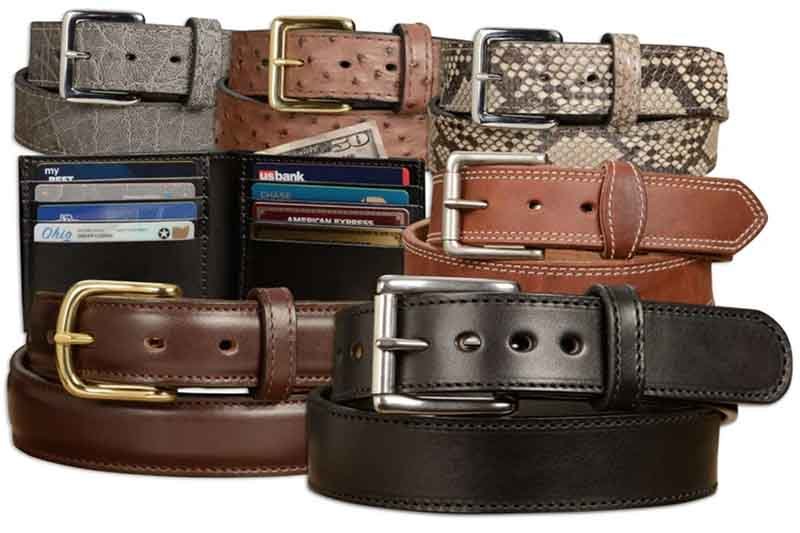
In a world where a leather belt can cost anywhere from $5 to $150, most shoppers have wondered: what exactly makes one so cheap? The difference isn’t just in branding — it’s in the material itself. Low-cost belts often look like leather but are made from reconstituted fibers, synthetic films, or laminated composites that imitate the feel of genuine hides without the same strength or lifespan.
Cheap leather belts are typically made from bonded leather, split leather, or synthetic PU/PVC materials. These belts use ground leather scraps mixed with polyurethane or paperboard cores to mimic genuine leather’s surface at lower cost, sacrificing flexibility and durability.
At Szoneier Leather, we’ve studied belt structures for over 18 years. What many brands and consumers don’t realize is how marketing terms like “genuine leather” or “PU-coated” often conceal industrial shortcuts. This article unpacks the materials, construction, and visual cues that define low-cost belts — and how to source better ones for your private label line.
Let’s start with what makes a “cheap” belt in the first place.
What Defines a Cheap Leather Belt
A cheap leather belt is typically made from low-grade split or bonded leather, often reinforced with synthetic layers or paperboard cores, and paired with low-cost zinc alloy hardware. The reduced price comes from using lower hide grades, mass lamination, and simplified stitching or finishing, which trade off long-term durability for short-term visual appeal.
What Kind of Leather Are Belts Made Of?
To understand what “cheap” means in leather belts, it’s essential to know how belts are categorized by leather grade. High-quality belts are usually made from full-grain or top-grain cowhide — the densest and strongest part of the hide. These belts age gracefully, showing patina and depth over time.
Cheap belts, on the other hand, are typically made from split leather — the fibrous lower layer left after the top grain is shaved off. Because it lacks natural grain and strength, factories compensate by adding synthetic coatings, embossed patterns, or PU films to imitate genuine leather.
| Leather Type | Origin in Hide | Common Market Name | Visual Traits | Typical Belt Price | Expected Lifespan |
|---|---|---|---|---|---|
| Full-Grain | Outer surface | “Vegetable-tanned” or “Premium leather” | Visible pores, scars, rich texture | $40–150 | 8–15 years |
| Top-Grain | Mid-upper section | “Genuine top-grain leather” | Smooth, slightly corrected | $25–80 | 5–10 years |
| Split | Lower hide layer | “Corrected grain leather” | Coated, embossed surface | $10–25 | 1–4 years |
| Bonded | Leather scraps + PU resin | “Reconstituted leather” | Very uniform texture | $5–15 | 6–18 months |
| PU / PVC | Fully synthetic | “Faux leather” or “Vegan leather” | Plastic-like surface | $3–10 | <1 year |
In short, “cheap” doesn’t only refer to price — it points to the depth of material processing and how much natural leather is left after manufacturing.
Price vs Material Quality Breakdown
A belt’s final price is largely driven by raw material yield, finishing steps, and hardware choice. To illustrate:
| Cost Component | Premium Leather Belt | Cheap Bonded Belt |
|---|---|---|
| Leather (per belt) | $3–5 full-grain | $0.30–0.80 bonded scraps |
| Hardware | $1.50 brass buckle | $0.20 zinc alloy |
| Labor & Finishing | $2–3 (edge burnish, stitching) | $0.30 (heat seal only) |
| Packaging & QC | $0.50 | $0.10 |
| Total Factory Cost | $7–9 | $1–1.50 |
When a belt retails for $10, it’s often built to look premium for a few months, not to perform for years. Brands targeting fast fashion markets prioritize visual value (color, gloss, pattern) over long-term usability.
Cheap belts typically:
- Use split leather sheets thinned to 0.8–1.2 mm.
- Apply thick PU coatings (0.2–0.3 mm) to mask imperfections.
- Skip stitching or edge folding, relying solely on adhesive bonding.
- Replace cowhide cores with paperboard or fiberboard to save cost and weight.
Common Marketing Labels and Misleading Terms
The leather industry is infamous for creative marketing language that blurs the line between genuine and engineered materials. Here’s what most buyers don’t realize:
| Label Seen in Market | What It Actually Means | Real Leather Content | Durability |
|---|---|---|---|
| “Genuine Leather” | Often split leather or corrected grain | 50–70% | Moderate |
| “Bonded Leather” | Pulverized scraps glued together | 10–20% | Poor |
| “PU Leather” | 100% synthetic polyurethane | 0% | Low |
| “Eco Leather” | Marketing term — not standardized | Variable | Varies |
| “Leather Composite” | Mix of fibers + PU binder | 15–30% | Low |
| “Corrected Grain Leather” | Sanded and embossed split leather | 40–60% | Fair |
Because labeling laws in many regions (outside the EU) don’t require stating leather percentage, brands can legally advertise “genuine leather” even if only a small fraction of the belt is real hide.
For example, a bonded leather belt may contain just 15% leather fibers, yet still pass as “leather goods” at retail. This ambiguity benefits sellers but misleads consumers — especially those buying online, where touch and smell tests aren’t possible.
The Economics of “Cheap”: Labor, Location, and Volume
Cheap belts are usually produced in high-volume manufacturing hubs like China, India, or Pakistan, where:
- Automated belt-cutting and lamination lines can produce 20,000+ units/day.
- Workers focus on assembly efficiency, not hand finishing.
- Materials are sourced from leather offcuts of furniture, footwear, or upholstery factories.
The economics make sense for mass retailers — each belt’s factory gate cost can be below $1, yet retail margins remain 10× higher. However, this structure also explains why:
- Stitch spacing is irregular.
- Edge paint chips after a few flexes.
- Buckle plating fades rapidly under friction.
In contrast, premium manufacturers like Szoneier Leather invest in thicker hides (1.5–2.0 mm), natural dyeing, and double reinforcement — increasing durability fivefold with only a moderate rise in cost.
How Cheap Leather Belts Create “False Luxury”
One striking irony is that cheap belts often look more “perfect” than genuine ones. Full-grain leather has natural wrinkles and scars, but cheap PU-coated belts are uniform, glossy, and photo-friendly. To untrained buyers, this visual uniformity seems like higher quality — an illusion that’s profitable but short-lived.
Over time:
- Coatings harden and crack.
- The belt loses flexibility.
- The “leather smell” fades, revealing synthetic undertones.
What Are Fake Leather Belts Made Of?
Fake belts, often marketed as “vegan leather,” are constructed from PU (polyurethane) or PVC (polyvinyl chloride) films over textile backings. These belts cost less than $5 to make but release microplastics and degrade quickly under heat or sweat.
| Material | Base Layer | Coating | Visual Quality | Environmental Impact |
|---|---|---|---|---|
| PU Leather | Polyester fabric | Polyurethane film | Good imitation | Moderate |
| PVC Leather | Cotton / fiberboard | PVC coating | Glossy, stiff | High VOC, poor biodegradability |
| Microfiber | Woven microfiber | PU coating | Soft, uniform | Low VOC, recyclable |
Recycled Composites and Mixed Laminates
Recently, some manufacturers mix recycled leather fibers with bio-based PU coatings. Though still “synthetic,” these hybrid belts meet environmental standards like REACH or OEKO-TEX and may last 2–3 years with proper care — a middle ground for entry-level brands.
How Budget Belts Are Made
Budget leather belts are made through a multi-layer lamination process that fuses thin leather splits, synthetic films, and fiberboard or paper cores using heat-activated adhesives. Edges are painted instead of folded, and stitching is minimized to cut cost. The process yields high output but low durability compared to full-grain, single-piece leather construction.
1. From Hide to Composite
While premium belts are cut from a single strip of hide, cheap belts are assembled like a sandwich — multiple thin materials glued together. Here’s the typical step-by-step process used in high-volume factories:
| Stage | Process | Materials Used | Cost Efficiency |
|---|---|---|---|
| 1. Leather Splitting | Split full hides into upper (grain) and lower (split) layers. | Split leather sheets (0.8–1.2 mm) | Reduces raw hide cost by 50–60% |
| 2. Surface Coating | Apply PU or PVC film to mask imperfections. | Polyurethane resin, embossing rollers | Creates “uniform” texture for appearance |
| 3. Lamination | Combine surface leather with inner core and backing fabric. | Fiberboard core + polyester backing | Adds stiffness cheaply |
| 4. Cutting & Edge Trimming | Machine-cut laminated sheet into belt straps. | Die-cutting blade systems | Precision at low cost |
| 5. Adhesive Bonding | Use heat or solvent adhesives to secure layers. | Hot-melt or PU-based glues | Fast curing = higher productivity |
| 6. Edge Finishing | Apply 1–2 layers of edge paint instead of folding. | Acrylic or PU edge paint | Saves labor time |
| 7. Hardware Assembly | Attach buckle via rivet or clamp. | Zinc alloy hardware | Low-cost substitute for brass |
| 8. Final Coating & Packing | Add gloss spray, hang tags, and packaging. | Synthetic wax, plastic wrap | Visual appeal for retail display |
Every step is engineered for speed and visual appeal, not longevity. The difference between a $3 belt and a $30 belt lies in how much natural integrity of the leather remains after processing.
2. Lamination Layers
A typical low-cost belt cross-section includes three to five layers, each serving a role in maintaining appearance while minimizing cost.
Surface Layer – The Imitation Grain
This is the “face” of the belt — either PU-coated split leather or printed synthetic film. Factories often emboss it with roller plates imitating cowhide pores. While it looks real, the texture is mechanical, and repeated bending causes the embossed pattern to flatten or crack.
Core Layer – The Hidden Weak Point
At the heart of most cheap belts lies a compressed paperboard, recycled leather fiber, or nonwoven core.
- Fiberboard costs less than $0.10 per strip and provides initial stiffness.
- However, it absorbs moisture and breaks down when flexed repeatedly.
Backing Layer – Fabric or Felt Reinforcement
The back is often lined with polyester twill, cotton canvas, or felt for stability and smoother inside texture. This layer helps disguise the stiffness and irregularities of the core but contributes little to mechanical strength.
Adhesive Layer
Most budget belts rely on heat-activated hot-melt adhesives (EVA or PU-based). These are quick and cheap but lose elasticity with temperature change, leading to delamination in humid climates. Premium belts, in contrast, use contact cement + stitching, offering superior bond integrity even after 5 years of wear.
3. Adhesives and Finishing Coats
Adhesives account for a surprisingly large quality difference.
- Low-end belts: Use EVA or starch-based glues, costing ~$2/kg, curing within seconds but brittle over time.
- Mid-tier belts: Use PU hot melts (~$6/kg), flexible and water-resistant.
- High-end belts: Use solvent-based polyurethane cement (~$10/kg) with hand-rolled application and longer open time.
The finishing coat — often a pigmented polyurethane topcoat — adds color, sheen, and a “smooth leather” illusion. While it improves shelf appeal, it seals pores completely, eliminating breathability and causing the belt to crack instead of flex when bent.
Szoneier’s internal tests show:
- Coated split belts failed after 1,200 flex cycles.
- Natural-grain belts exceeded 10,000 flex cycles without cracking.
4. Stitching, Edge Paint, and Hardware Choices
Stitching Density and Thread Type
In low-cost belts, stitching is largely decorative.
- Density: 4–5 stitches per cm (vs. 7–9 for premium belts).
- Thread: Basic polyester, unbonded, which frays easily.
- Technique: Chain stitching or glue-only edges — fast but fragile.
Higher-end belts use bonded nylon thread and back-stitching near stress points, ensuring long-term seam integrity.
Edge Finishing
Rather than folding the edge (a process called “turned edge”), cheap belts are simply painted with one or two layers of acrylic.
- One layer = faster production.
- But paint chips easily, exposing the fiber core beneath.
Premium belts fold, sand, and burnish edges by hand — a process taking 3–5 minutes per unit but adding years to lifespan.
Hardware Assembly
The buckle area is a common failure point in cheap belts.
- Material: Zinc alloy or iron, electroplated in chrome or nickel.
- Weakness: Prongs bend and plating peels after moisture exposure. In contrast, Szoneier uses solid brass or stainless steel buckles, salt-spray tested for over 72 hours corrosion resistance.
| Component | Budget Belt | Mid-Range Belt | Premium Belt |
|---|---|---|---|
| Edge | Painted only | Painted + sealed | Folded + waxed |
| Stitching | Sparse, decorative | Functional, reinforced | Tight, bonded nylon |
| Buckle | Zinc alloy | Brass-plated | Solid brass/stainless steel |
| Core | Fiberboard | Split leather + felt | Full leather |
| Adhesive | EVA glue | PU hot melt | Solvent-based PU cement |
5. Automation and Labor
In low-cost factories, belt production is highly automated. One lamination line can output 5,000–10,000 belts per day with minimal labor. Each worker handles a single operation: lamination, edge painting, or buckle riveting. This division of labor drastically reduces per-unit cost but also limits craftsmanship and QC oversight.
Most budget belts are QC-checked by appearance only — color, gloss, buckle tightness — rather than tensile or abrasion tests. As a result, many belts pass inspection while already failing internal bond strength criteria.
By contrast, Szoneier Leather employs progressive inspection:
- Pre-lamination adhesive strength checks,
- Edge paint adhesion test after drying,
- 3-point bending test for strap flexibility.
Why Cheap Belts Wear Out Fast
Cheap belts deteriorate because synthetic coatings crack, adhesives weaken, and low-grade cores collapse under repeated bending and moisture exposure.
Peeling, Cracking, and Stretching
Bonded leather lacks natural fibers to absorb tension. When bent repeatedly, the polyurethane film separates, creating visible cracks around buckle holes within 3–6 months.
Weak Adhesion and Core Collapse
Fiberboard cores absorb sweat and humidity, swelling and breaking down. Once the glue loses hold, layers delaminate — the belt’s “leather” peels away like cardboard.
Buckle Corrosion and Plate Peeling
Zinc alloy buckles, often coated with a thin electro-plated chrome, corrode when scratched. After 3–4 months, oxidation appears near prongs or rivets, dulling the finish.
User Behavior Factor
Cheap belts are often over-tightened. Without real leather’s stretch recovery, they crack at stress points. In durability tests, bonded belts failed after 1,000 flex cycles, while full-grain belts survived over 10,000.
How to Identify Real vs Fake Leather
Real leather shows irregular grain, warm touch, and distinct smell, while fake leather looks uniform, feels plastic-smooth, and often smells like chemicals or glue.
Grain, Smell, and Touch Tests
- Grain: Real hides show inconsistent pores and scars. PU belts display printed, repetitive textures.
- Smell: Genuine leather emits a mild organic scent; synthetics smell of plastic or solvents.
- Touch: Leather warms quickly in your hand, unlike cold PU film.
Edge Inspection and Flex Durability
Inspect the cut edge:
- Real leather shows fibrous strands.
- Bonded or PU belts show smooth layers or cloth backing. Flex the belt gently — cracks or stiffness reveal synthetics.
Labeling, Origin, and Material Codes
Look for honest labeling: “bonded leather,” “PU,” or “synthetic.” EU/US-regulated brands must list composition by percentage. Tip: Avoid vague terms like “leather mix” or “eco leather” unless certification is provided.
Best Low-Cost Alternatives to Genuine Leather
For brands or consumers on a budget, top-grain leather, microfiber leather, or recycled composite belts offer affordable durability without the fragility of bonded materials.
Top-Grain or Full-Grain Leather on Sale
Even mid-range brands can use 1.2–1.5 mm top-grain cowhide with drum-dyed finishes for affordable luxury. Szoneier’s OEM programs often combine premium hides with cost-efficient production to deliver belts that last over five years while maintaining retail margins.
Microfiber and Recycled Composite Belts
Microfiber leather — made from non-woven microfiber + PU coating — performs better than bonded leather. It’s soft, scratch-resistant, and water-repellent, making it ideal for vegan or eco-focused labels.
| Alternative | Avg. Cost (USD/unit) | Lifespan | Notes |
|---|---|---|---|
| Top-Grain | $10–15 | 5–8 years | Best balance of cost & feel |
| Microfiber | $6–10 | 3–5 years | Vegan, smooth finish |
| Recycled Composite | $5–8 | 2–4 years | Sustainable entry option |
Maintenance Tips to Extend Belt Lifespan
- Avoid excessive bending near buckle holes.
- Store flat or rolled loosely.
- Apply neutral leather cream every 3 months for genuine belts.
- Keep away from direct heat and moisture for PU types.
By choosing smarter materials and suppliers, even a $10 belt can perform like a $30 one — if constructed with care.
Conclusion — Partner with Szoneier Leather for Durable Custom Belts
Cheap leather belts dominate mass markets, but understanding what they’re made of helps brands and buyers make informed decisions. The trade-off between price and longevity is real — but not absolute. With precise material engineering, even affordable belts can balance aesthetic appeal, strength, and sustainability.
At Szoneier Leather, we manufacture belts from full-grain, top-grain, microfiber, and eco-composite materials, backed by 18 years of R&D and OEM experience. From leather cutting to buckle finishing, our process ensures durability and design flexibility — at costs optimized for your market.
Looking to create your own leather belt line or upgrade existing products? Contact Szoneier Leather today for free design consultation, sample development, and low-MOQ customization that transforms your brand’s quality perception — affordably and reliably.
What Can I Do For You?
Here, developing your OEM/ODM private label leather goods collection is no longer a challenge,it’s an excellent opportunity to bring your creative vision to life.
Make A Sample First?
If you have your own tech packs, logo design artwork, or just an idea,please provide details about your project requirements, including preferred fabric, color, and customization options,we’re excited to assist you in bringing your leather goods designs to life through our sample production process.