
How Leather Is Made from Animals: What You Need to Know
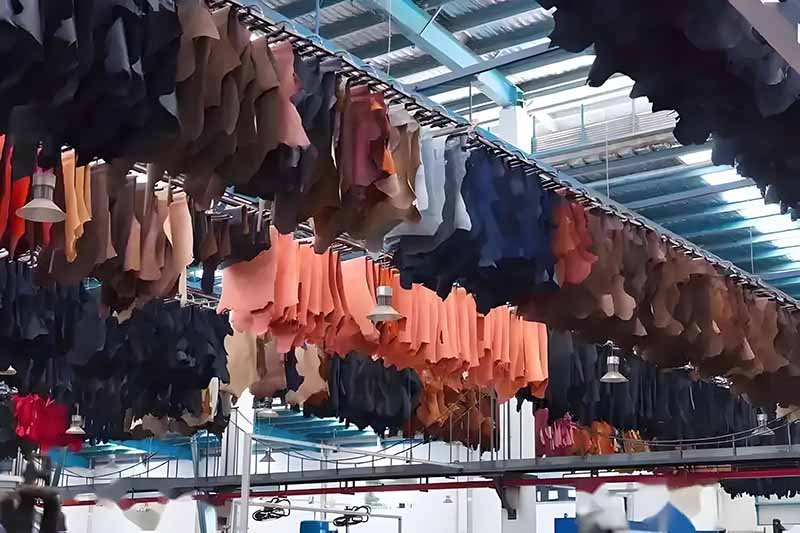
Leather has shaped human civilization for thousands of years — from armor and saddles to luxury handbags and car interiors. Yet few people outside the industry truly understand what turns an animal hide into a durable, elegant, and breathable material prized by both artisans and global brands.
Leather is made from animal hides that undergo cleaning, tanning, and finishing processes to transform perishable skin into a strong, flexible, and long-lasting material. Through chemical and mechanical treatments such as liming, tanning, and dyeing, collagen fibers are stabilized — preventing decay while enhancing softness, durability, and aesthetic appeal.
Today, consumers and brand buyers ask deeper questions: Is real leather cruelty-free? How does genuine leather differ from Italian leather? And what steps ensure sustainability? To explore these answers, let’s dive inside the factory floor of Szoneier Leather, a manufacturer with over 18 years of expertise in leather R&D, product design, and OEM/ODM production for brands worldwide.
What is animal leather and which hides are most used?
Animal leather is a natural material created by tanning animal hides — most often cow, goat, sheep, and pig — to stabilize collagen fibers and prevent decay. Around 65% of all leather globally comes from cattle, followed by 13% from sheep, 11% from goats, and 9% from pigs. Each hide type carries distinct tactile, mechanical, and visual properties, influencing how manufacturers and buyers choose materials for specific products.
Leather begins its story not in the tannery, but on the farm. Every type of leather is a by-product of livestock raised primarily for meat or dairy, making leather both a natural and resource-efficient material. Instead of discarding hides as waste, tanneries transform them into durable, breathable, and aesthetically rich materials that can last for decades — a true model of circular resource use when managed responsibly.
What Animals Supply Most Commercial Hides?
The global leather industry depends on a few key species, each offering different textures, thicknesses, and finishes suitable for particular product categories.
| Animal | Hide Thickness (avg.) | Key Traits | Typical Use |
|---|---|---|---|
| Cowhide | 1.4–2.0 mm | Strong grain, thick, durable | Bags, furniture, belts, shoes |
| Goatskin | 0.8–1.2 mm | Supple, pebbly texture, lightweight | Gloves, jackets, wallets |
| Sheepskin | 0.7–1.0 mm | Soft, elastic, natural insulation | Garments, linings, luxury covers |
| Pigskin | 1.0–1.3 mm | Porous, breathable, low-cost | Linings, casual bags, budget footwear |
1. Cowhide — The Global Standard
Cowhide is the backbone of the leather market, accounting for nearly two-thirds of global production. Its dense fiber structure gives it superior tensile strength and resistance to stretching. Buyers prefer cowhide for products requiring durability and structure — such as handbags, belts, car seats, and upholstery. High-end full-grain cowhide retains natural marks and texture, while corrected-grain versions offer more uniform appearance for mass production. At Szoneier, carefully graded cowhides ensure consistent thickness and dye absorption for every OEM project.
2. Goatskin — Lightweight and Resilient
Goatskin combines flexibility with durability. Its distinct pebble-grain pattern and natural lanolin content make it resistant to water and soft to touch. This leather type is popular for gloves, small leather goods, and fashion accessories requiring a balance of strength and pliability. Buyers often choose goatskin when a premium look is needed without heavy weight — a key feature for luxury wallets or fashion belts.
3. Sheepskin — Soft Luxury
Sheepskin offers unmatched softness and warmth. Its fiber network is finer and more elastic, giving it a buttery texture suitable for high-end jackets, apparel linings, or lambskin handbags. However, it’s more delicate and prone to stretching, requiring precise cutting and lining techniques during manufacturing. Szoneier’s R&D team often reinforces sheepskin with textile backing for long-lasting wear in fashion applications.
4. Pigskin — Affordable and Breathable
Though less prestigious, pigskin remains a vital category, especially for footwear and lining applications. Its porous surface allows exceptional breathability. When finished properly, pigskin can mimic the appearance of higher-end hides at a fraction of the cost — making it ideal for value-driven buyers.
Is 100% Leather Made from Animals?
Yes. 100% leather means the material originates solely from animal hide, processed through tanning to become non-decaying and flexible. No synthetic binders or plastic films define its composition. This is distinct from “synthetic leather” or “PU leather,” which are petroleum-based materials imitating natural leather’s texture but lack its fiber complexity, aging characteristics, and breathability. Authentic leather contains interwoven collagen fibers, visible under microscopy, that provide elasticity and resilience over decades of use — something impossible to replicate with plastics.
Is 100% Genuine Leather Real Leather?
Yes — but “genuine leather” is a broad commercial term, not a quality grade. While it is indeed made from animal hide, it usually refers to the lower layer of split leather coated or embossed for surface appearance.
Let’s clarify industry terminology:
| Label | Composition | Quality Level | Typical Use |
|---|---|---|---|
| Full-Grain Leather | Top layer, intact grain | ★★★★★ | Luxury bags, belts, shoes |
| Top-Grain Leather | Slightly sanded surface | ★★★★☆ | Handbags, accessories |
| Genuine Leather | Split layer, pigmented surface | ★★★☆☆ | Budget wallets, belts |
| Bonded Leather | Leather scraps + PU resin | ★★☆☆☆ | Furniture, low-cost goods |
So while “genuine leather” is technically real, it often lacks the breathability, patina, and lifespan of top-grade hides. This distinction is crucial for buyers sourcing high-end products: knowing that “100% leather” ≠ “premium leather.”
Which Exotic Leathers Are Common in Luxury?
The world of luxury leathers expands beyond standard hides into exotic and rare species:
- Crocodile and Alligator: Iconic for high-end handbags and watch straps; known for unique scales and glossy finish.
- Ostrich: Recognizable by its quill follicle texture; lightweight and luxurious.
- Python and Snake: Used for fashion accessories with distinctive patterns.
- Stingray: Extremely durable with natural pearl-like sheen.
Exotic hides represent less than 1% of total leather trade but command premium pricing. All exports are regulated by CITES (Convention on International Trade in Endangered Species), ensuring ethical and traceable sourcing — a growing requirement among luxury brands.
What Is the Difference Between Italian Leather and Genuine Leather?
“Italian leather” isn’t a specific animal species but a mark of origin and craftsmanship. Italy has built a centuries-old reputation for producing vegetable-tanned leather — especially in the Tuscany region (Santa Croce sull’Arno, Arzignano).
The difference lies in:
- Processing: Italian tanneries favor natural tannins, small-batch tanning, and artisanal finishing.
- Aesthetic: Rich color depth, subtle aroma, and ability to age beautifully.
- Traceability: Most Italian producers comply with LWG Gold Ratings and EU REACH standards.
By contrast, “genuine leather” is a generic term for any real leather, regardless of origin or quality. Thus, “Italian leather” often represents superior craftsmanship, not just authenticity.
What Terms (Hide, Skin, Crust) Do You Need to Know?
To communicate precisely with manufacturers like Szoneier, buyers should understand these foundational industry terms:
| Term | Definition | Buyer Relevance |
|---|---|---|
| Hide | Large animal skin (cow, buffalo, horse) | Common for belts, furniture |
| Skin | Smaller animal (goat, sheep, pig) | Common for gloves, garments |
| Crust | Semi-tanned leather before finishing | Indicates flexible production stage |
| Split | Inner hide layer after top grain removed | Often used for suede or coated leathers |
| Grain Side | Outer surface of hide | Determines final look and strength |
| Flesh Side | Inner surface | Used for suede or lining |
How are raw hides sourced and prepared before tanning?
Raw hides used for leather are mainly by-products of the meat and dairy industries. They are preserved through salting or chilling immediately after slaughter to prevent bacterial decay, then processed in several wet-end steps — soaking, fleshing, liming, unhairing, deliming, bating, and pickling — to clean, de-fat, and open the fiber structure so it can later absorb tanning agents. This early preparation stage determines up to 70% of final leather quality.
Before a hide ever touches a tanning drum, it undergoes an intricate series of biological and mechanical transformations. Every step — from slaughterhouse handling to chemical soaking — affects the texture, softness, and grain consistency of the final leather. For brands and sourcing professionals, understanding this stage is crucial: a poorly prepared hide cannot be corrected later, no matter how advanced the finishing process.
How Are Raw Hides Collected and Graded?
Sourcing and Traceability
Most hides originate as by-products of cattle, sheep, goats, or pigs processed for food. Ethical leather does not drive animal slaughter; it utilizes waste that would otherwise decompose. Large tanneries source hides through certified slaughterhouses and traders that follow traceability systems — often including barcoded tags recording the animal’s origin, age, and health status.
Premium buyers, particularly in Europe and North America, now demand farm-to-finish traceability, verified through LWG (Leather Working Group) audits or blockchain-based sourcing platforms. Szoneier Leather’s supplier network follows these standards to ensure all hides meet both regulatory and ethical expectations.
Grading
After flaying, hides are graded according to:
- Size: Measured in square feet (avg. cowhide = 45–55 sq.ft).
- Defects: Cuts, insect bites, branding marks.
- Weight and Thickness: Thicker hides yield stronger leathers.
Higher grades fetch premium prices because fewer defects reduce processing losses.
| Grade | Description | Typical Use |
|---|---|---|
| A / 1st Quality | Smooth surface, minimal marks | Luxury bags, belts |
| B / 2nd Quality | Minor scars or wrinkles | Mid-range goods |
| C / 3rd Quality | Noticeable imperfections | Budget goods, suede |
| Reject | Deep cuts, open scars | Split or bonded leather |
How Do Salting and Chilling Prevent Putrefaction?
Immediately after flaying, hides contain 60–70% water and abundant proteins — perfect breeding grounds for bacteria. Without preservation, they begin decomposing within hours.
Salting
Salting remains the most common preservation method. Workers stack hides flesh-side up and apply 40–50% by weight of sodium chloride. Salt draws out moisture and creates an environment hostile to microbial growth. Properly salted hides can be stored for up to 30 days without significant degradation.
Modern tanneries prefer wet-salted hides (with ~40% moisture content) for consistent results. Dry-salted hides are lighter to ship but harder to rehydrate later. Szoneier’s partners use automated brine drums that evenly distribute salt, reducing labor and contamination risk.
Chilling / Refrigeration
High-end tanneries near slaughterhouses often use chilling instead of salting to reduce salt discharge. Hides are cooled to 2–4°C, halting bacterial activity for 2–3 days — suitable for short-distance transport and environmentally safer.
Alternative Methods
Emerging eco-methods include enzymatic preservation and biocide sprays, cutting salt use by up to 80%, though these are costlier and still developing.
How Do Soaking, Fleshing, Liming, and Unhairing Work?
Once preserved hides reach the tannery, the wet-end process begins.
Soaking
Soaking rehydrates the hide, removes salt and dirt, and restores the elasticity lost during preservation. It uses large rotating drums or paddles with water (28–32°C) and mild surfactants. Modern soaking tanks often recycle water through filtration systems, reducing waste by up to 60% compared with older open-pit methods.
Fleshing
Mechanical blades remove remaining fat, flesh, and connective tissue from the inner side. Proper fleshing is vital — leftover fat causes uneven tanning and oil spots later. Szoneier’s partner factories use stainless-steel fleshing machines that ensure consistent thickness before liming.
Liming
Liming swells the hide’s fiber structure and loosens hair roots. This involves immersing hides in a mixture of lime (calcium hydroxide) and sodium sulfide for 8–16 hours. The reaction breaks down keratin in hair and dissolves non-collagen proteins, preparing the skin for unhairing. This stage increases hide thickness by up to 25–30%, creating the characteristic plump, rubbery “pelt.”
Unhairing
Following liming, mechanical rollers or rotating paddles remove loosened hair and epidermal layers. Modern “hair-save” systems separate hair fibers instead of dissolving them, reducing sulfide effluent load by 40% and enabling partial reuse of protein waste in fertilizers.
How Do Deliming, Bating, and Pickling Ready the Pelt?
These finishing steps adjust pH and texture so tanning agents can penetrate evenly.
Deliming
After liming, the hide’s pH is about 12 — too alkaline for tanning. Deliming uses weak acids like ammonium sulfate to gradually neutralize the pH to 8–9. This step prevents sudden acid shock that could damage fibers.
Bating
Bating introduces proteolytic enzymes that digest remaining non-collagen proteins. The result is a smoother, more elastic hide with uniform grain. This is especially critical for garment leathers and fine-grain handbags, where softness and drape are key. Factories control bating temperature precisely at 35–38°C to maintain enzyme efficiency.
Pickling
Finally, pickling lowers pH further to 2.5–3 using sulfuric acid and salt, creating an acidic environment ideal for chrome tanning absorption. Properly pickled hides are pale, clean, and flexible — referred to as “wet blue ready.”
| Step | Target pH | Key Function |
|---|---|---|
| Deliming | 8–9 | Neutralizes lime |
| Bating | 7–8 | Softens fiber |
| Pickling | 2.5–3 | Prepares for tanning |
Environmental Control and Modernization
Traditional wet processes consume 25–40 liters of water per kg of hide. Modern tanneries aim to cut this by half through:
- Closed-loop water systems
- Enzyme-based unhairing (reduces sulfide by 80%)
- Biological wastewater treatment removing over 95% COD/BOD
Common Defects and Quality Risks During Preparation
| Defect | Cause | Prevention |
|---|---|---|
| Bacterial Grain Damage | Delay in preservation | Immediate salting or chilling |
| Fatty Spue | Poor fleshing | Proper degreasing |
| Uneven Swelling | Poor lime mixing | Drum rotation control |
| Loose Grain | Over-bating | Enzyme dosage adjustment |
| Acid Burns | Rapid pH drop during pickling | Gradual acid addition |
Each issue can compromise grain integrity or cause rejects. A single improperly delimed hide can result in patchy tanning or dye blotches. Experienced manufacturers like Szoneier maintain digital pH monitoring systems and batch records, ensuring every hide maintains optimal conditions through the entire pre-tanning process.
The Hidden Role of Collagen
At the molecular level, leather’s strength comes from collagen, a triple-helix protein structure forming 90% of the dermis. Liming and bating loosen this structure just enough to allow tanning agents to bond later. If over-processed, the helix collapses — resulting in weak, spongy leather. The precision with which each chemical reaction is timed and monitored directly determines softness, tensile strength, and long-term durability.
How does tanning transform skin into durable leather?
Tanning is the process that chemically stabilizes the collagen fibers in animal hide, transforming perishable skin into strong, flexible, and decay-resistant leather. Through tanning, the protein structure binds with tanning agents — such as chromium salts, vegetable tannins, or aldehydes — preventing bacterial decomposition and giving leather its hallmark softness, color depth, and durability that can last for decades.
Before tanning, a raw hide is simply organic matter — prone to rot, harden, and decompose like any untreated animal tissue. The tanning process is what makes leather a functional material, one capable of surviving wear, moisture, and time. It’s both an art and a science: a balance between chemistry, craftsmanship, and precision control.
Let’s explore in detail how this transformation happens.
1. The Purpose and Science of Tanning
At its core, tanning aims to:
- Preserve collagen by replacing water molecules with tanning agents that bond permanently to protein fibers.
- Stabilize the hide against heat and humidity, raising its shrinkage temperature from ~65°C (untreated skin) to over 100°C (tanned leather).
- Enhance flexibility, resistance to wear, and dye affinity for long-term use.
Untanned hide (called a pelt) is vulnerable to decay because its collagen fibers are hydrophilic. Once tanned, those fibers become hydrophobic and thermally stable — the reason a high-end leather bag can endure decades of handling without rotting or cracking.
2. The Three Main Types of Tanning
Modern tanneries use three dominant tanning systems — chrome tanning, vegetable tanning, and synthetic/aldehyde tanning. Each produces distinct physical properties suited for different product categories.
| Tanning Type | Main Agent | Process Time | Shrinkage Temperature | Typical Applications | Environmental Notes |
|---|---|---|---|---|---|
| Chrome Tanning | Chromium (III) sulfate | 1–2 days | 100–110°C | Handbags, footwear, furniture | Requires controlled wastewater treatment |
| Vegetable Tanning | Natural tannins (oak, mimosa, chestnut bark) | 30–60 days | 75–85°C | Belts, straps, wallets | Eco-friendly, slow process |
| Aldehyde/Synthetic Tanning | Aldehydes or phenolic syntans | 1–3 days | 90–95°C | Automotive interiors, baby products | Metal-free, low VOC emissions |
3. Chrome Tanning — The Industry Standard
Process Guide
Chrome tanning dominates the global market, accounting for around 80–85% of all leather production. The process begins after pickling, when hides are introduced into rotating drums containing a chromium(III) sulfate solution at pH 2.8–3.2. Over several hours, chrome ions penetrate deep into the fiber network. The pH is then gradually raised to 4.0–4.2 — a step called basification — to fix the chromium permanently within collagen fibers.
Result
The tanned hides emerge a distinctive pale blue color, known in the trade as “wet blue.” Chrome-tanned leather offers:
- Superior softness and flexibility
- Excellent water and heat resistance
- Uniform dyeing and thickness
Applications
Ideal for handbags, upholstery, apparel, and shoes where soft drape and color variety matter.
Environmental Considerations
Chrome tanning, while efficient, requires careful effluent control. Responsible tanneries use closed-loop chrome recovery systems that reclaim over 95% of chromium salts, minimizing waste. Szoneier’s partner facilities meet LWG Gold and ISO14001 standards to ensure zero chromium (VI) contamination — a key compliance factor for EU and U.S. imports.
4. Vegetable Tanning — The Traditional Craft
Process Overview
Vegetable tanning is one of the oldest methods, dating back to ancient Egypt. It uses natural tannins extracted from bark, wood, or fruit pods (oak, chestnut, mimosa, quebracho). Hides are soaked in a series of pits or drums containing increasingly concentrated tannin liquors. The full process can take 30–60 days or longer, depending on thickness.
Result
Vegetable-tanned leather is firm, dense, and rich in aroma, with a natural earthy tone that darkens beautifully over time. Its structure retains high tensile strength but less flexibility than chrome-tanned leather.
Applications
Perfect for belts, straps, saddlery, watch bands, and high-end wallets — where rigidity and natural patina are valued.
Advantages
- Chemical-free and biodegradable
- Develops a unique patina with age
- Excellent embossing and tooling response
Limitations
- Sensitive to water and humidity
- Less suitable for apparel or soft bags
At Szoneier, vegetable-tanned hides are popular among clients seeking sustainable branding — particularly in luxury accessories emphasizing craftsmanship and natural materials.
5. Synthetic and Aldehyde (Metal-Free) Tanning
Why It Matters
With increasing environmental scrutiny, metal-free tanning is gaining traction. These methods use synthetic agents such as glutaraldehyde, phenolic syntans, or resin complexes to cross-link collagen fibers without chromium or heavy metals.
Characteristics
- Lighter color, ideal for pastel shades
- Excellent resistance to UV and yellowing
- Low emission (VOC) — safe for baby or automotive use
Applications
Used in car interiors, infant shoes, and medical leathers requiring hypoallergenic properties. Hides treated this way are often referred to as “wet white” due to their pale ivory tone.
6. Retanning, Dyeing, and Fatliquoring
While initial tanning stabilizes the hide, retanning fine-tunes its characteristics for texture, weight, and hand feel.
Retanning
Here, tanners reintroduce vegetable or synthetic tannins into “wet blue” hides to achieve specific fullness or firmness levels. For example:
- Handbags may require softer, pliable retan formulas.
- Belts and straps need tighter, compact fibers.
Dyeing
Color is added using acid or direct dyes. The hides are tumbled in large rotary drums, ensuring uniform color penetration. The dye stage can involve multiple cycles for vibrant shades — from natural brown to deep navy or custom Pantone-matched tones for branded collections.
Fatliquoring
This is a key step for softness. Oils and emulsified fats (like synthetic sulfonated oils or natural fish oil) are introduced into the leather to lubricate fibers. It prevents brittleness, improves tear strength, and gives the leather a pleasant hand-feel. High-quality fatliquoring can increase leather flexibility by 30–40% and extend product life substantially.
The “Wet-Blue” vs “Wet-White” vs “Vegetable” Paths
Buyers often encounter these terms in quotations or sample sheets:
| Stage/Type | Description | Visual Color | Market Use |
|---|---|---|---|
| Wet Blue | Chrome-tanned hide | Light blue | Most general-purpose leathers |
| Wet White | Metal-free / aldehyde-tanned | Pale cream | Automotive, babywear, eco collections |
| Vegetable Tanned | Plant-based tannins | Beige-brown | Belts, straps, luxury handmade goods |
Environmental and Quality Control
Tanning once had a poor environmental reputation due to chemical discharge. Today, progressive factories like Szoneier’s partners follow clean tanning principles:
- Water recycling: 60–70% reuse rate.
- Solid waste recovery: Shavings converted into collagen hydrolysates or fertilizer.
- Zero Liquid Discharge (ZLD): Evaporation + membrane filtration for effluent.
- Energy efficiency: Use of solar-assisted drum heating reduces energy use by 20%.
In addition, chromium (III) — used in modern chrome tanning — is non-toxic and tightly regulated. Dangerous chromium (VI) is strictly avoided by pH control and antioxidant stabilization.
How Tanning Affects Leather’s Final Properties
| Property | Chrome-Tanned | Vegetable-Tanned | Aldehyde-Tanned |
|---|---|---|---|
| Softness | Excellent | Moderate | Excellent |
| Color Range | Wide | Natural tones | Light / pastel |
| Water Resistance | High | Low–medium | High |
| Aging / Patina | Minimal | Rich patina | Slight yellowing |
| Tensile Strength | Very high | High | Moderate |
| Eco Profile | Controlled effluent | Renewable agents | Metal-free |
Which leather cuts, grades, and finishes affect quality?
Leather quality is determined by which layer of the hide is used (cut), how the hide is graded, and the type of surface finish applied. The topmost layer — full-grain leather — preserves the natural fiber strength and texture, making it the most durable and premium. Lower layers like top-grain, split, or bonded leather are progressively thinner and less durable, while finishes such as aniline, semi-aniline, corrected grain, nubuck, and suede define surface look, softness, and resistance to wear.
Leather is not a single homogeneous material. A single cowhide can produce several types of leather depending on how it’s split, sanded, and finished. Understanding these layers and finishes is essential for buyers, especially those sourcing from factories like Szoneier Leather, where consistency, feel, and finish determine how end consumers perceive product quality.
Understanding Leather Cuts and Layers
A full cowhide is 5–6 mm thick. During processing, it is split horizontally into layers, each with different fiber density and performance characteristics.
| Leather Type | Layer Used | Grain Visibility | Durability | Common Applications |
|---|---|---|---|---|
| Full-Grain Leather | Entire top layer with natural grain | Natural imperfections visible | ★★★★★ | Premium bags, belts, shoes |
| Top-Grain Leather | Sanded/smoothed top surface | Slightly corrected | ★★★★☆ | Handbags, upholstery |
| Split Leather | Inner fibrous layer (after top grain removed) | No natural grain | ★★☆☆☆ | Suede, coated leathers |
| Bonded Leather | Shredded scraps + PU binder | Artificial grain | ★☆☆☆☆ | Budget goods, furniture |
Full-Grain Leather
Full-grain leather is the highest grade because it uses the entire grain layer, including the outermost surface where the hide’s fibers are densest. This structure gives it superior strength, natural breathability, and the ability to develop a rich patina over time.
Key traits:
- Visible natural pores and scars — proof of authenticity
- Uncoated surface allows full dye penetration
- Ages beautifully with oils from hands and environment
Full-grain leather is typically used in luxury bags, belts, and heritage products where natural texture adds value. Szoneier often uses this leather for clients demanding long-lasting, natural aesthetics — especially for European and American heritage-style brands.
Top-Grain Leather
Top-grain leather is slightly corrected — the topmost surface is sanded or buffed to remove imperfections such as scars or blemishes. The result is a smoother, more uniform appearance, with slightly less breathability and patina potential.
Advantages:
- More stain-resistant and uniform than full-grain
- Softer, pliable handfeel suitable for bags or seats
- Ideal for clients needing both consistency and elegance
Top-grain leathers are often treated with a light protective coating or embossed pattern. They’re widely used for premium handbags and furniture upholstery where natural grain consistency matters for batch production.
Split Leather
After the top layer is removed, the remaining hide (split) can still be used. It lacks a natural grain, so it’s often embossed or coated with polyurethane to simulate grain texture.
Applications: low- to mid-range goods, such as lining leather, promotional belts, or budget handbags.
Variations of Split Leather
- Finished Split: Pigment-coated for uniformity and protection.
- Suede: The flesh side is buffed to create a soft, velvety nap (see below).
Although less durable, split leather can be cost-effective for large orders where appearance is prioritized over longevity.
Bonded Leather
Bonded leather is made from shredded leather scraps combined with polyurethane resin and pressed into sheets. While it can look like real leather at first glance, it lacks structural integrity and tends to peel or flake over time.
Key facts:
- Only 10–20% real leather content
- Common in low-cost furniture and accessories
- Short lifespan and poor repairability
Leather Grades: How Hides Are Classified
Leather grading happens after tanning and splitting, when inspectors evaluate hides for defects, thickness, and appearance. Grading systems vary slightly by region but generally follow a letter or numerical code.
| Grade | Description | Suitable Uses |
|---|---|---|
| Grade A (1st Quality) | Minimal defects, uniform color, consistent thickness | Luxury goods, visible surfaces |
| Grade B (2nd Quality) | Minor scars or uneven grain | Mid-range products |
| Grade C (3rd Quality) | Noticeable marks or wrinkles | Inner parts, lining leather |
| Reject / Utility | Major defects, holes, inconsistent thickness | Split or bonded use |
Common grading criteria:
- Surface condition: Natural scars, wrinkles, brands.
- Thickness uniformity: Essential for automated cutting.
- Softness and temper: Determines drape and product form.
- Color consistency: Key for batch production repeatability.
Leather Finishes: How the Surface Defines Character
After tanning, leather undergoes finishing to enhance look, feel, and protection. The choice of finish directly influences durability, maintenance, and brand positioning.
Aniline Leather
Aniline leather is dyed with soluble dyes that allow the natural grain to remain visible. Traits:
- No pigment coating; retains authentic texture and pore pattern
- Soft, breathable, and luxurious handfeel
- Requires careful handling — easily stains or scratches
Best for: luxury handbags, designer shoes, high-end furniture. Buyer tip: aniline leather is a mark of authenticity and craftsmanship; suitable for brands emphasizing “natural luxury.”
Semi-Aniline Leather
Semi-aniline leather is lightly coated with pigment or polymer, preserving natural grain but adding stain resistance.
Traits:
- Balanced natural appearance and durability
- Mild surface protection for daily-use items
- Excellent color uniformity for production scaling
Best for: premium automotive interiors, handbags, or furniture.
Corrected-Grain Leather
This finish involves buffing away imperfections and applying pigment layers or embossing. It’s the most uniform, though less natural in look.
Traits:
- Durable and easy to clean
- Artificially embossed texture (e.g., pebble, saffiano, litchi)
- Less breathable but ideal for mass production
Best for: fashion accessories, business bags, or promotional items. Szoneier offers over 120+ embossing patterns including crocodile, ostrich, and pebble grains to match brand-specific texture demands.
Nubuck and Suede
Both are “nap leathers,” meaning the surface is buffed to raise fibers and create a soft, velvety feel.
| Type | Base Material | Texture | Durability | Typical Use |
|---|---|---|---|---|
| Nubuck | Grain side of top-grain leather | Fine nap, matte finish | ★★★★☆ | Luxury shoes, soft bags |
| Suede | Flesh side of split leather | Looser nap, softer | ★★★☆☆ | Jackets, linings, gloves |
Maintenance: Both absorb moisture easily, so protective coatings are essential for long-term performance. Brands often apply nano-resistant coatings to improve water repellence.
Surface Coatings and Modern Enhancements
Beyond traditional finishes, modern technology offers additional treatments that extend performance and aesthetic variety.
| Coating Type | Function | Common Applications |
|---|---|---|
| Polyurethane (PU) Coating | Scratch and stain resistance | Automotive, travel bags |
| UV Coating | Prevents fading and yellowing | Outdoor furniture, fashion |
| Nano Waterproof Coating | Repels liquids while retaining breathability | Suede/nubuck shoes, handbags |
| Foil or Metallic Film Lamination | Adds reflective or mirror effects | Fashion accessories, trims |
| Emboss + Print Finishes | Custom logos or grain replication | OEM brand designs |
How Can You Tell If Leather Is Real?
For professional buyers and even end consumers, identifying authentic leather is critical.
Simple field tests:
- Smell: Genuine leather has a rich, earthy scent; synthetics smell like plastic.
- Pore pattern: Real leather shows irregular pores; artificial grain is uniform.
- Touch: Leather feels warm and slightly oily, not cold and smooth.
- Wrinkle test: When pressed, real leather wrinkles slightly and recovers; PU stays flat.
- Water test: A small water drop should absorb slowly into real leather.
In factory QC, Szoneier uses FTIR spectroscopy and microscopic fiber analysis to verify authenticity for brand orders.
How Grades and Finishes Influence Product Pricing
| Leather Grade / Finish | Avg. Cost per sq.ft (USD) | Expected Product Tier |
|---|---|---|
| Full-Grain (Aniline) | $3.50–$6.00 | Luxury / Designer |
| Top-Grain (Semi-Aniline) | $2.50–$4.50 | Premium |
| Split (Corrected Grain) | $1.50–$2.80 | Mid-range |
| Bonded / PU-Coated | $0.80–$1.50 | Entry-level |
How to Choose the Right Leather Cut and Finish
| Product Category | Recommended Leather | Why It Works |
|---|---|---|
| Luxury Handbags | Full-grain or top-grain (aniline/semi-aniline) | Rich texture, longevity |
| Belts & Straps | Vegetable-tanned full-grain | Firmness, structure |
| Shoes & Boots | Nubuck or top-grain | Comfort, flexibility |
| Wallets & Small Goods | Corrected-grain top-grain | Consistency, low waste |
| Automotive & Furniture | Semi-aniline or PU-coated | Easy cleaning, UV resistance |
How do post-tanning steps shape performance and look?
After tanning stabilizes collagen fibers, post-tanning operations — including retanning, dyeing, fatliquoring, drying, staking, buffing, and finishing — define how leather feels, looks, and performs in real-world use. These steps determine color depth, softness, elasticity, strength, and resistance to water, abrasion, or fading. For manufacturers like Szoneier Leather, the post-tanning phase is where chemistry meets artistry, transforming “wet blue” hides into the luxury materials that consumers recognize as premium leather.
Once hides are tanned, they are chemically stable but far from ready for manufacturing. At this stage, they are heavy, blue-grey (or ivory for metal-free), and still hold 50-60% water. The post-tanning phase fine-tunes every mechanical and sensory property — adjusting firmness, softness, thickness, and color consistency — to meet a buyer’s end-use specification.
1. Retanning
Purpose and Function
Retanning gives the leather its “body.” It uses synthetic or vegetable agents to re-tighten or soften the fiber network depending on product requirements.
| Retanning Agent | Function | Typical Use |
|---|---|---|
| Synthetic (Syntans) | Enhances fullness, reduces chrome smell | Upholstery, handbags |
| Vegetable Extracts | Adds firmness, rich color tone | Belts, straps |
| Resin Retans | Increase compactness and tear strength | Footwear, belts |
During this stage, the hide’s internal chemistry is fine-tuned to achieve targeted physical properties such as tensile strength (≥15 N/mm) and softness (measured by handfeel meters in OEM labs).
2. Neutralization
After retanning, hides still retain residual acids from previous processes. Neutralization uses mild alkaline solutions (like sodium bicarbonate) to raise the pH to about 4.5–6.0.
This ensures:
- Uniform dye penetration later.
- Prevents acid damage to fibers.
- Optimizes softness and color brightness.
Inconsistent neutralization can cause mottled dyeing or grain looseness, so continuous digital pH monitoring is vital — a standard practice at Szoneier’s audited tanneries.
3. Dyeing
Process
Dyeing occurs in rotating drums where hides tumble in dye liquor, ensuring deep and even color penetration. Common dye classes include:
- Acid dyes for chrome-tanned leathers.
- Basic dyes for vegetable-tanned leathers.
- Metal-complex dyes for vibrant hues with high fastness.
Typical dye liquor ratios are 200–300% water to leather weight, with temperature maintained around 50 °C.
4. Fatliquoring
Fatliquoring introduces oils and lubricants into the leather fibers, replacing the natural fats removed earlier. These oils coat individual collagen fibrils, allowing them to slide smoothly against each other — preventing brittleness and improving drape.
| Oil Type | Source | Benefit |
|---|---|---|
| Sulfonated Fish Oil | Marine | Deep, lasting softness |
| Synthetic Esters | Industrial | Odor-free, stable color |
| Lanolin-Based Oils | Animal | Natural gloss, water resistance |
Performance Gains:
- Increases tear strength by 30–40%.
- Enhances flexibility for folding or stitching.
- Improves water resistance and breathability balance.
5. Setting, Samming, and Shaving
After wet processing, hides are passed through sammying machines to squeeze out 50% of water, then stretched (setting) to smooth wrinkles.
Shaving
Rotating cylinder blades trim hides to a uniform thickness (commonly 1.2–1.6 mm for bags; 1.8–2.0 mm for belts). Precision is crucial because ±0.1 mm variation can affect sewing and weight tolerance in mass production.
6. Drying
Multiple drying methods are used depending on leather type:
| Method | Process Description | Effect |
|---|---|---|
| Toggle Drying | Hides pinned on frames under tension | Smooth surface, no shrinkage |
| Vacuum Drying | Water removed under vacuum heat | Compact grain, smooth gloss |
| Paste Drying | Leather pasted on glass plates | Flat, fine finish for luxury goods |
| Air Drying | Slow drying in controlled rooms | Soft handfeel, minimal compression |
Controlled drying prevents fiber collapse and ensures consistent color tone. Szoneier’s partner tanneries use humidity-controlled drying chambers maintaining 45–55% RH for precision.
7. Conditioning and Staking
Once dried, leather can become stiff. Conditioning reintroduces moisture (10–18%) using steam or mist. Then, mechanical staking machines knead the hide to break fiber stiffness and restore pliability.
Outcome:
- Leather regains natural drape and hand softness.
- Tensile resilience increases by up to 20%.
- Ensures smoothness for garment and bag manufacturing.
8. Buffing, Embossing, and Finishing
This is where the material’s visual character is born — whether it becomes matte, glossy, embossed, or metallic.
Buffing
Fine sanding with emery rollers evens out minor imperfections and opens pores for finish adhesion. Different grit levels produce varied effects:
- Coarse for nubuck (soft, velvety)
- Fine for corrected-grain (smooth, uniform)
Embossing
Steel plates or rollers imprint grain patterns such as:
- Pebble, Litchi, Saffiano, Ostrich, Crocodile, Carbon texture Embossing enhances aesthetic and hides imperfections while allowing branding (e.g., logo patterns).
Finishing
Final coating layers include:
- Base Coat: Pigment or polymer foundation for color uniformity.
- Top Coat: Protective layer providing gloss, matte, or wax feel.
- Special Effects: Metallic foils, two-tone, or pull-up finishes.
| Finish Type | Gloss Level | Durability | Common Uses |
|---|---|---|---|
| Aniline | Low | Natural look | Luxury bags |
| Semi-Aniline | Medium | Balanced | Furniture, apparel |
| Pigmented | Variable | High | Belts, automotive |
| Wax/Pull-Up | Low-medium | Develops patina | Vintage goods |
9. Laboratory Testing
Every post-tanned batch undergoes laboratory testing to verify performance before cutting or shipment.
| Property | Test Method | Target Value | Purpose |
|---|---|---|---|
| Tensile Strength | ISO 3376 | ≥ 15 N/mm² | Durability |
| Tear Resistance | ISO 3377 | ≥ 25 N/mm | Structural reliability |
| Crocking (Color Rub) | ISO 11640 | ≥ 4 Grade | Colorfastness |
| Water Absorption | ISO 5403 | ≤ 15% | Resistance to rain/sweat |
| Flex Endurance | ISO 5402 | ≥ 20 000 cycles | Fold durability |
10. Eco-Friendly Post-Tanning Practices
Modern sustainability doesn’t end with tanning. Responsible factories integrate greener steps throughout the finishing line:
- Low-VOC Coatings: Replace solvent-based pigments with waterborne finishes.
- Recycled Oils: Use biodegradable fatliquors from renewable resources.
- Energy Recovery Systems: Capture exhaust heat from drying tunnels.
- Waste Sludge Reuse: Convert trimming waste into collagen fertilizers or gelatins.
Conclusion
Leather is not merely a material; it is a living history of craftsmanship, sustainability, and design precision. Every inch of finished hide represents the transformation of nature’s most organic form — raw animal skin — into a product that embodies durability, beauty, and cultural value. From the moment a hide leaves the abattoir to the instant it becomes a polished handbag or belt, it undergoes hundreds of meticulously controlled steps that combine science and artistry.
From the farm to the finishing room, leather’s journey is one of respect — for material, for people, and for detail. Each hide carries the story of transformation: nature giving form to art. Partner with Szoneier — where nature meets craftsmanship, and your ideas become timeless leather creations.
What Can I Do For You?
Here, developing your OEM/ODM private label leather goods collection is no longer a challenge,it’s an excellent opportunity to bring your creative vision to life.
Make A Sample First?
If you have your own tech packs, logo design artwork, or just an idea,please provide details about your project requirements, including preferred fabric, color, and customization options,we’re excited to assist you in bringing your leather goods designs to life through our sample production process.