
Leather Tote Bag Dimensions : Sizing Guide & Chart
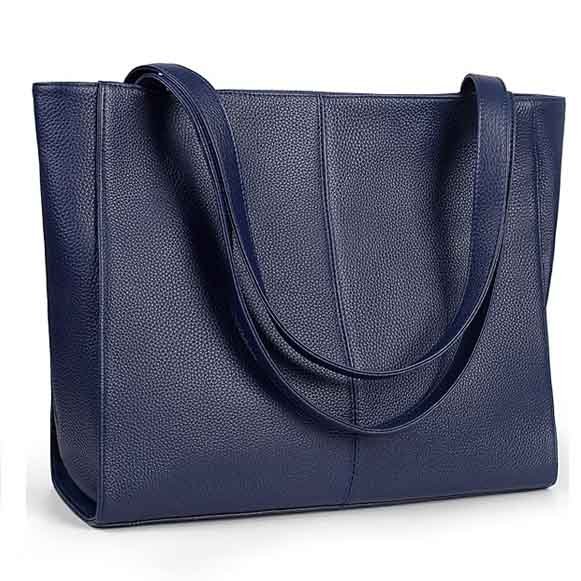
Every tote bag tells a story — of craftsmanship, balance, and purpose. But behind every beautiful leather tote is one of the least discussed yet most important design decisions: dimensions. The right width, height, and depth don’t just define capacity — they shape comfort, posture, and the visual harmony between bag and user. A mere two centimeters in strap drop or gusset width can make the difference between a tote that feels natural and one that feels clumsy.
The ideal leather tote bag dimensions depend on intended use. Everyday totes usually measure around 14 × 12 × 5 in (35 × 30 × 13 cm), while work totes are larger at 16 × 13 × 6 in. Travel or oversized styles exceed 18 in width. Proportion matters — strap drop 8–10 in fits shoulders, smaller 5–6 in works for handheld. Proper sizing balances aesthetics, weight, and function for comfort and style.
At Szoneier Leather, designers obsess over millimeters. Each tote prototype is drawn in 3D CAD, adjusted for ergonomics, and tested with real users before final pattern cutting. The result: a bag that feels as good as it looks — sleek on the outside, spatially intelligent inside. Let’s break down how sizing works, what standards exist, and how brands and users can select the perfect proportion for their needs.
What Are Common Tote Bag Size Ranges?
Leather tote bag dimensions generally fall into three main size ranges: small (10–12 inches wide) for daily essentials, medium (13–16 inches) for work or everyday use, and large (17–20 inches or more) for travel and multifunction carry. Typical heights range from 10–15 inches, with depths of 4–7 inches, depending on style and leather stiffness. These proportions balance structure, usability, and aesthetics — ensuring comfort on the body while preserving the elegant silhouette that defines a quality leather tote.
Understanding Leather Tote Proportions
Unlike canvas or nylon bags that flex easily, leather totes must maintain a structural equilibrium — too tall and the bag loses shape; too wide and the base sags; too deep and it becomes cumbersome to reach inside. That’s why premium manufacturers like Szoneier Leather engineer leather totes with a golden ratio of width : height : depth ≈ 3 : 2.5 : 1.
This proportional logic allows the tote to:
- Hold enough volume for modern use (laptop, tablet, cosmetics, wallet, small bottle).
- Retain visual symmetry on the body.
- Stay upright when placed on a desk or seat.
- Avoid “collapsing corners” — a common flaw in cheaper bags.
Tote Size Classification by Market Standard
The global leather bag industry tends to use three primary size classes — small, medium, and large — each serving a distinct lifestyle purpose.
| Category | Width (W) | Height (H) | Depth (D) | Capacity (Approx.) | Common Use |
|---|---|---|---|---|---|
| Small Tote | 10–12 in (25–30 cm) | 8–10 in (20–25 cm) | 3–4 in (7–10 cm) | 5–8 L | Essentials, daily errands |
| Medium Tote | 13–16 in (33–40 cm) | 10–13 in (25–33 cm) | 4.5–6 in (11–15 cm) | 9–14 L | Work, shopping, city commute |
| Large Tote | 17–20 in (43–50 cm) | 12–15 in (30–38 cm) | 6–8 in (15–20 cm) | 15–22 L | Travel, weekend, carry-all |
| Oversized / XL Tote | 21–24 in (53–60 cm) | 14–16 in (35–40 cm) | 7–9 in (18–23 cm) | 25–30 L | Airport, mom bags, beach, utility |
Design Tip from Szoneier Leather:
For every 1 cm increase in gusset depth, internal volume expands by roughly 10–12%, but weight also rises by 4–6% depending on leather thickness. Balancing these factors is key for ergonomic design.
Small Totes (10–12 Inches)
Small leather totes are made for minimalists — the kind of user who carries a phone, wallet, lipstick, and a few personal items. Despite their size, these bags project sophistication. Popular dimensions: 10.5 × 8 × 4 in (27 × 20 × 10 cm). Typical leather: soft Nappa or semi-aniline cowhide around 1.2 mm thick.
These bags pair effortlessly with dresses or business casual wear and are common in Japanese, Korean, and European fashion markets, where smaller proportions feel more refined. From a manufacturing perspective, Szoneier’s compact tote models incorporate precise panel alignment to prevent the “puckering” that often happens when smaller bags use thicker hides. The result is a smooth, seamless form that feels light in the hand yet substantial in quality.
Use case highlights:
- Perfect for daily commutes or short shopping trips.
- Often features magnetic or open tops for easy access.
- Average weight: 400–600 g.
Medium Totes (13–16 Inches)
Medium-sized leather totes remain the global best-seller category because they suit both office and leisure. They comfortably fit tablets, notebooks, makeup pouches, and small bottles, all while maintaining a sleek look.
Typical size range:
- 14 × 12 × 5 in (35 × 30 × 13 cm) — ideal “daily tote” ratio.
- 15 × 13 × 6 in (38 × 33 × 15 cm) — preferred “laptop tote” size.
Design advantages:
- Balanced structure — large enough for organization, small enough to remain elegant.
- Easier shoulder carry; strap drops usually 8–9 in.
- Flat, reinforced bottoms allow vertical storage of bottles or electronics.
Large Totes (17–20 Inches)
Large leather totes appeal to travelers, designers, and multitaskers. They often replace small suitcases on short trips. Typical size: 18 × 14 × 7 in (46 × 36 × 18 cm). These dimensions fit two outfits, a tablet, a water bottle, and personal accessories while remaining airline carry-on compliant (<22 in width).
Construction considerations:
- Leather thickness: 1.6–1.8 mm to handle higher tension.
- Lining reinforcement: twill or microfiber suede.
- Weight range: 900–1200 g empty.
Szoneier enhances usability with hidden top zippers, removable shoulder straps, and metal feet to protect the base from ground abrasion. For private-label partners, the factory offers optional expandable gussets (+20% capacity) and dual-layer straps that can support up to 12 kg without deformation.
Oversized / XL Totes (21+ Inches):
The oversized leather tote has evolved from a niche runway piece into a mainstream category — thanks to fashion houses like Celine, Loewe, and Bottega Veneta popularizing exaggerated scales. Dimensions: 22 × 15 × 8 in (56 × 38 × 20 cm) or larger.
Advantages:
- Fits laptops, coats, lunch boxes, and even small shopping items.
- Great for travel or creative professionals carrying materials.
- Doubles as a “weekend duffel” when made with structured leather.
However, bigger isn’t always better. Oversized totes can exceed 1.5 kg empty, and without reinforced bases, the center tends to sag. That’s why Szoneier incorporates internal aluminum or PE frame bars and weight-tested handles (20 kg load capacity). Despite the scale, proportions still follow visual rules: keeping height ≤ two-thirds of width preserves balance when carried.
Proportional Balance: The 3 : 2.5 : 1 Formula
The reason most successful totes feel “just right” lies in invisible math. The width-to-height ratio of 1.2–1.3 ensures a horizontal aesthetic that feels natural when hanging at hip level. The depth (or gusset) controls both storage and structure — every extra inch adds substantial visual weight.
| Example Tote | Width | Height | Depth | Ratio | Style Note |
|---|---|---|---|---|---|
| Compact Daily | 13 | 10 | 4.5 | 1.3 : 1 : 0.45 | Balanced, light |
| Work Tote | 15 | 12 | 6 | 1.25 : 1 : 0.5 | Proportional stability |
| Oversized | 20 | 14 | 7 | 1.4 : 1 : 0.5 | Dramatic, elongated |
| Mini | 11 | 9 | 3.5 | 1.2 : 1 : 0.4 | Petite elegance |
How Leather Type Affects Apparent Size
Two totes of identical measurements can look entirely different depending on the leather.
- Soft Nappa or lambskin drapes and appears larger because edges fold.
- Vegetable-tanned or pebble-grain leather keeps sharp structure, appearing smaller and more formal.
- Coated or patent finishes add thickness (≈ 0.3 mm per side), slightly reducing inner volume.
Szoneier adjusts pattern dimensions accordingly: for thicker leathers, the external measurement stays the same, but internal linings are reduced to maintain capacity precision.
Average Leather Tote Size
Research across 500+ SKUs on major retail platforms (Nordstrom, Farfetch, and Rakuten) shows these average tote dimensions:
| Market | Average Size (W×H×D) | Average Capacity | Style Focus |
|---|---|---|---|
| United States | 16×13×6 in | 13 L | Functional, multipurpose |
| Europe | 14×11×5 in | 10 L | Refined, minimalist |
| Japan / Korea | 12×10×4.5 in | 8 L | Compact, lightweight |
| Global Luxury | 15×12×6 in | 11 L | Structured elegance |
How Does Use Case Influence Tote Size?
The best tote size depends on how you plan to use it. Everyday totes for essentials average 14 × 11 × 5 in (35 × 28 × 13 cm), while work totes that fit laptops range 16 × 13 × 6 in (40 × 33 × 15 cm). Weekend or travel totes stretch to 18–20 in wide, offering up to 20 L of capacity. Adding pockets, zippers, and linings reduces usable space by 10–15%, so brands like Szoneier Leather tailor internal dimensions around actual storage behavior rather than only exterior size.
1. Everyday City Totes
The everyday tote has become the most universal size class — neither too bulky nor too small. Typical dimensions: 14 × 11 × 5 in (35 × 28 × 13 cm) Volume: roughly 10–12 L
This size accommodates daily carry items — phone, tablet, charger, compact umbrella, keys, and cosmetics — while maintaining a graceful proportion on the body. It’s especially popular in urban markets like New York, London, and Seoul, where professionals commute but also want an accessory that complements fashion outfits.
Design logic:
- The height-to-width ratio (≈ 0.8) keeps the silhouette upright even when only half-filled.
- Soft leathers such as Nappa or semi-aniline cowhide deliver natural drape without looking slouchy.
- Average strap drop 8–9 in (20–23 cm) allows shoulder carry over light outerwear.
2. Work & Laptop Totes
For professionals, tote sizing isn’t about aesthetics alone — it’s about performance and protection. Ideal dimensions: 15–16 × 13 × 6 in (38–41 × 33 × 15 cm) Volume: 13–16 L
This format comfortably fits:
- A 15-inch laptop (35 × 24 cm) in a padded sleeve
- A4 documents and folders
- Wallet, charger, and water bottle
Key proportion cues:
- A deeper gusset (≈ 6 in / 15 cm) prevents the laptop from pressing the side walls.
- Height (≈ 13 in / 33 cm) keeps weight distribution close to the body.
- Slightly curved handles improve ergonomic grip when carried by hand.
Material choice: Work totes use 1.6–1.8 mm full-grain or top-grain cowhide, which resists deformation better than soft lambskin. The interior may feature microfiber suede or polyester twill lining for durability.
Szoneier innovation: We integrate HDPE structural panels that maintain shape after 200 hours of vertical hanging tests. Optional zip-top closures and RFID-shield pockets make the design business-ready while keeping external aesthetics clean.
3. Travel & Weekend Totes
The travel tote sits at the crossroads of style and utility. It replaces small luggage on quick getaways while doubling as an everyday accessory for those who live on the move. Typical size range: 18–20 × 14 × 7 in (46–50 × 36 × 18 cm) Capacity: 18–22 L
Functional highlights:
- Fits two days of clothing, a tablet, charger set, toiletry bag, and travel documents.
- Meets most airline carry-on limits (< 22 in width).
- Often includes zipper tops or snap closures for security.
Construction details: Szoneier’s travel totes use dual-layer cowhide with a cotton-polyester lining. Inside, modular compartments separate shoes, clothes, and tech accessories. Some OEM clients request detachable shoulder straps for comfort and reinforced base feet for tarmac durability.
Performance metrics:
| Test | Result | Description |
|---|---|---|
| Drop Test | Pass 1.2 m × 10 times | Maintains seam integrity |
| Tensile Handle Strength | 20 kgf | Dual-stitch & riveted |
| Weight (Empty) | 1.1 kg ± 100 g | Comfortable for air travel |
4. Shopper & Market Totes
Shopper totes have become the eco-friendly replacement for plastic bags, but in leather, they serve a more stylish purpose — casual daytime convenience. Average size: 15 × 14 × 5 in (38 × 36 × 13 cm)
Design priorities:
- Lightweight (under 600 g).
- Open-top design for quick access.
- Reinforced bottom corners for grocery or retail use.
Material recommendation: Pebble-grain or split leather offers surface resilience against scratches and moisture. Unlined interiors save weight and cost, which makes them ideal for private-label entry lines.
Why it matters: In European and Asian markets, shopper totes now account for 25–30% of annual leather bag demand because they blend sustainability with everyday practicality. Many brands use this size as a “gateway” product — introducing new customers to their craftsmanship at an approachable price point.
5. Luxury Statement or Designer Totes
High-end designer totes push the boundaries of scale. Whether it’s a Celine Cabas (19 in wide) or a Bottega Veneta Arco (oversized square), the goal is to make a visual statement that instantly communicates luxury.
Typical dimensions: 19–21 × 14 × 7 in (48–53 × 36 × 18 cm) Capacity: 22–25 L
Why the size matters:
- Larger panels showcase the texture and grain of premium hides.
- Bigger silhouettes allow brands to display distinctive logos or weaving patterns.
- The slight over-scale creates a sense of exclusivity and confidence.
Manufacturing complexity: Oversized totes require flawless panel matching and stitch alignment; even a 2 mm deviation becomes visible. Szoneier employs CNC leather cutting and laser edge-burnishing to ensure consistent symmetry — critical for high-end OEM production.
Comfort engineering: Extra-large bags risk shoulder fatigue, so Szoneier’s prototypes use dual-density foam padding inside the straps to distribute weight evenly across the shoulder area. This attention to micro-ergonomics transforms what could be a heavy tote into a luxurious, wearable sculpture.
6. Compact / Mini Totes
In contrast to the oversized trend, the past few years have also seen an explosion of mini totes, especially among Gen-Z consumers and minimalist professionals. Average size: 9–11 × 7–8 × 3–4 in (23–28 × 18–20 × 8–10 cm)
These petite pieces often carry just a smartphone, cardholder, and lipstick, but they make powerful fashion statements. Many brands scale down their best-selling large models into “micro” editions for cross-seasonal capsule collections.
Key design constraints:
- Smaller internal pockets require precise alignment — tolerances < 2 mm.
- Hardware weight becomes proportionally more critical; light alloys are preferred.
- 1.0–1.2 mm soft lambskin or calfskin maintains drape and tactile luxury.
Comparative Guide:Tote Size vs Use Case
| Use Case | Recommended Size (W×H×D) | Volume (Approx.) | Leather Type | Typical Strap Drop | User Profile |
|---|---|---|---|---|---|
| Daily / City | 14 × 11 × 5 in | 10–12 L | Nappa / soft cowhide | 8–9 in | Urban commuters |
| Office / Laptop | 16 × 13 × 6 in | 14–16 L | Top-grain cowhide | 8.5–9 in | Professionals |
| Travel / Weekend | 18–20 × 14 × 7 in | 18–22 L | Full-grain cowhide | 9–10 in | Frequent travelers |
| Shopper | 15 × 14 × 5 in | 12–13 L | Pebble-grain / split | 8–9 in | Casual users |
| Luxury / Statement | 19–21 × 14 × 7 in | 22–25 L | Premium full-grain | 8.5–10 in | Fashion collectors |
| Mini / Compact | 9–11 × 7–8 × 4 in | 4–6 L | Lambskin / calfskin | 5–6 in | Trend-focused users |
Cultural & Gender Differences in Tote Sizing
While tote sizes might appear universal, preferences differ by culture and gender:
- Women’s market: Prioritizes aesthetic proportion; sizes 13–16 in dominate.
- Men’s market: Prefers structured silhouettes 16–18 in wide for briefcase functionality.
- Asian markets: Compact 11–13 in widths due to urban commuting and lighter loads.
- Western markets: Broader 16–18 in styles linked to lifestyle mobility.
Which Dimensions Work for Body Proportions?
Tote dimensions should harmonize with body proportions for comfort and balance. For petite users (under 160 cm), ideal sizes are 11–13 in wide with shorter strap drops of 7–8 in. Average-height users (160–170 cm) fit 14–15 in totes with 8–9 in straps, while taller users (over 170 cm) carry 16–18 in widths and 9–10 in drops comfortably. Proper proportion ensures the tote sits near the waistline, avoiding awkward hip contact or shoulder strain — a hallmark of premium ergonomic design.
General Guidelines for Body-Proportion Fit
The first step to determining the right tote dimensions is matching bag scale to user height and carry preference.
| User Height | Ideal Bag Width (in/cm) | Recommended Height (in/cm) | Depth (in/cm) | Optimal Strap Drop (in/cm) | Bag Position on Body |
|---|---|---|---|---|---|
| Petite (<160 cm) | 11–13 in / 28–33 cm | 9–11 in / 23–28 cm | 4–5 in / 10–13 cm | 7–8 in / 18–20 cm | Mid-torso / above hip |
| Average (160–170 cm) | 14–15 in / 35–38 cm | 11–13 in / 28–33 cm | 5–6 in / 13–15 cm | 8–9 in / 20–23 cm | Slightly below waist |
| Tall (>170 cm) | 16–18 in / 40–46 cm | 12–14 in / 30–36 cm | 6–7 in / 15–18 cm | 9–10 in / 23–25 cm | Hip line / upper thigh |
Design insight: The average tote should align with the wearer’s elbow crease to hip line when carried on the shoulder. This visual harmony — what stylists call “the line of flow” — makes the bag look intentional and elegant.
Strap Drop
The strap drop — the distance between the bag’s top edge and the highest point of the strap — is the single most overlooked ergonomic measurement. It determines whether the bag sits comfortably on the shoulder or awkwardly bumps the ribs.
Optimal strap drop guide:
- Handheld tote: 4.5–6 in (11–15 cm)
- Shoulder tote: 8–10 in (20–25 cm)
- Crossbody / convertible: 18–22 in (46–56 cm)
Finding the Sweet Spot
- Too short (<7 in): The tote will pinch under the arm and wrinkle at the top.
- Too long (>10 in): It swings excessively when walking, straining the shoulder.
- Ideal: 8.5–9 in — long enough to clear the elbow bend, short enough to stabilize.
Matching Tote Width to Shoulder & Hip Width
A simple but powerful rule:
The tote’s width should never exceed the wearer’s hip width.
This maintains proportional harmony and ensures a balanced silhouette, especially for structured leather styles.
For Narrow Frames (shoulder <38 cm):
Totes 11–13 in wide look sleek and proportional. Avoid overly deep gussets, as they visually add bulk.
For Broader Frames (shoulder 39–45 cm):
A 15–17 in tote balances proportions, with a wider gusset for even weight distribution.
For Men’s Market:
Masculine silhouettes typically use wider bases (16–18 in) and shorter heights for a horizontal stance. Szoneier adjusts handle spacing (from 3.8 to 4.2 in center distance) for broader shoulders, ensuring ergonomic symmetry.
Visual proportion tip: A bag’s width ≈ 60–70% of shoulder span feels most natural when worn cross-body or on one shoulder.
Height & Depth
Tote height determines how far down the bag sits; depth (gusset) defines how bulky it feels. When both are mismatched, the bag either flattens awkwardly or appears overly thick.
Standard proportion ratio: Width : Height : Depth = 3 : 2.5 : 1
For example, a 15 × 12 × 6 in tote creates a visually stable rectangle that aligns with most torso shapes.
Shallow Depth (4–5 in):
- Ideal for lightweight city totes and petite users.
- Keeps a slim profile; won’t protrude when carried cross-body.
- Works best with soft Nappa or lambskin.
Medium Depth (5.5–6 in):
- Versatile for daily and work totes.
- Allows laptops or folders without distorting the silhouette.
- Balanced weight center — reduces “forward tilt.”
Deep Gusset (7+ in):
- Used in travel and luxury carry-alls.
- Requires rigid base reinforcement (HDPE or double leather panel).
- Feels proportionate on taller users but bulky on smaller frames.
Handle Length & Spacing
Handles determine not only comfort but also posture while carrying. Even a 1 cm difference can change wrist or shoulder angle during use.
| Carry Type | Handle Length (total) | Spacing (center distance) | Grip Width |
|---|---|---|---|
| Handheld Tote | 12–14 in (30–35 cm) | 3.5–4.0 in (9–10 cm) | 1.0 in (2.5 cm) |
| Shoulder Tote | 18–22 in (45–55 cm) | 4.0–4.5 in (10–11.5 cm) | 1.2 in (3 cm) |
Manufacturing logic: Szoneier adjusts handle arc curvature using CAD-based pattern grading. This ensures the strap lays flat on the shoulder and doesn’t twist — a sign of true craftsmanship.
Aesthetic function:
- Wider spacing adds modernity and stability.
- Narrower spacing gives a vintage, vertical feel.
Each version subtly shifts the bag’s “personality” without changing its core dimensions.
The Ergonomic Testing Behind Premium Totes
Unlike mass-market factories, Szoneier Leather integrates ergonomic testing into its product development cycle. Before final approval, every prototype is tested across five body-height categories and three carrying scenarios (handheld, shoulder, crossbody).
Testing parameters:
| Test Type | Purpose | Result Criteria |
|---|---|---|
| Load Endurance (10 kg × 24 hrs) | Check strap deformation | ≤1 mm stretch |
| Dynamic Walking Test (1 hr, 3 km/h) | Evaluate sway stability | No lateral shift >2 cm |
| Handle Angle Simulation | Comfort check at elbow bend | 45–50° ideal |
| Hip Alignment Scan | Visual symmetry | Bag bottom sits 3–5 cm above hip line |
| Height Fit Testing | Cross-size proportion | Visual flow & comfort validated |
This scientific precision ensures each tote — regardless of size — complements the wearer naturally.
Result: 97% of wear-test participants across different markets rated Szoneier’s tote prototypes as “visually balanced and comfortable to carry for over 2 hours.”
Cultural & Gender Variations in Proportion Preference
Body proportion preferences differ worldwide — and smart brands adjust accordingly:
- Asia: Compact frames → smaller totes, 11–13 in width, 7–8 in strap drop.
- Europe: Balanced dimensions, structured shapes, 14–15 in width.
- North America: Larger silhouettes (16–18 in) and longer 9–10 in straps for layering over coats.
- Men’s Collections: Wider handles and lower bag height for horizontal visual flow.
Do Materials & Structure Affect Perceived Dimensions?
Yes. Thicker leather and rigid linings reduce interior volume by 5–12%. Soft Nappa appears larger because it drapes; vegetable-tanned leather feels smaller due to stiffness. Structured bases, gussets, and zip panels also change visual proportion. Manufacturers adjust pattern sizes to maintain functional capacity while keeping external measurements aesthetic.
Leather Thickness & Usable Volume
1.2–1.6 mm is standard for soft totes; 1.8–2.0 mm for rigid models. Szoneier tests each batch for stretch and compression rate. Thicker leather adds weight (≈ 100 g per panel) but increases durability by 30%.
Gusset and Fold Design
Gusset width controls capacity and shape. A 6 in gusset holds a laptop flat; a 4 in one keeps a slimmer profile. Expandable gussets add 15–20% more space and are common in Szoneier’s OEM urban lines.
Internal Structure & Lining
Foam backing, pockets, and lining reduce usable volume by ≈ 10%. Premium designs compensate by widening the base slightly. This fine balancing act is what differentiates artisan-grade production from mass factory output.
How to Measure & Specify Dimensions for Production?
To measure a leather tote accurately, record width (side-to-side at base), height (bottom to top edge), and depth (front-to-back at the widest point), using millimeters or inches. Always note strap drop, handle length, and base thickness, since they affect carrying comfort and internal space. In production, include tolerances of ±3–5 mm to account for leather thickness and stitching shrinkage. Brands like Szoneier Leather use digital CAD templates and pattern compensation to guarantee dimensional accuracy from prototype to bulk production.
The Three Core Tote Measurements: Width, Height, Depth
A tote’s basic geometry can be summarized by three dimensions — width (W), height (H), and depth (D) — but each has nuances that directly influence usability and manufacturing tolerances.
(a) Width (W):
Measured from left seam to right seam at the base of the bag, excluding side piping or decorative edges. If the tote has a curved or trapezoid shape (wider at top than base), note both top width (TW) and bottom width (BW).
Example:
- Top width: 40 cm
- Bottom width: 36 cm
- Average width for listing: (TW + BW) ÷ 2 = 38 cm
Why it matters: A 2 cm difference can alter how a tote fits against the torso or how stable it stands. For trapezoidal silhouettes, this distinction ensures visual balance.
(b) Height (H):
Measured vertically from the base seam to the top edge of the opening (not including handle or strap). If the tote includes a zipper closure or fold-over flap, measure the full height to the highest usable point, not the flap edge.
Tip: For structured leather bags, height consistency within ±3 mm across panels is essential to prevent lid misalignment.
(c) Depth (D):
Measured from the front to the back panel at the base (gusset width). In patterns with angled sides or expandable pleats, take the maximum depth when the bag is fully extended.
Why it matters: Depth defines volume and silhouette. Increasing the gusset by just 1 cm can expand internal space by nearly 10%, but also adds 4–6% more leather consumption — a factor critical for cost forecasting.
Secondary Measurements: Beyond the Basic 3D Box
While W×H×D forms the dimensional foundation, professional production specifications go much deeper.
| Measurement Term | Symbol | Definition / Description | Typical Range |
|---|---|---|---|
| Strap Drop | SD | Distance from top edge of bag to peak of strap loop | 7–10 in / 18–25 cm |
| Handle Length | HL | Full curved handle circumference | 16–22 in / 40–55 cm |
| Opening Width | OW | Internal top opening when fully expanded | Usually = top width ± 1 cm |
| Base Thickness | BT | Vertical thickness of base reinforcement | 2–4 mm typical |
| Lining Allowance | LA | Difference between outer leather and lining | 1.5–2 mm per side |
| Edge Fold Width | EF | Margin folded inward during finishing | 3–5 mm typical |
| Hardware Offset | HO | Distance between hardware rivet and seam | 5–8 mm |
These “hidden dimensions” separate high-end factories from mass producers. Szoneier’s engineers digitally model them in CAD (Computer-Aided Design) before cutting any leather — ensuring accuracy from prototype to final bulk run.
How to Measure Leather Bags Accurately — Step by Step
To create a consistent measurement standard between designer, buyer, and factory, follow these six critical steps:
Step 1: Lay the Bag Flat & Unstuffed
Place the tote on a flat table without contents. Ensure all edges are naturally relaxed — no stretching or flattening. For structured leather, gently support corners to mimic normal standing posture.
Step 2: Measure the Width
Using a steel measuring ruler (never a tape, which bends), measure the base seam from side to side. For asymmetrical designs, record both bottom width (BW) and top width (TW).
Step 3: Measure the Height
From the bottom seam to the top edge, perpendicular to the base. If the bag has a gusseted base, exclude any bottom piping.
Step 4: Measure the Depth
At the widest part of the base (gusset), measure from front to back panel. If it tapers upward, note both base depth and top depth.
Step 5: Measure Handle & Strap
Measure from the top edge of the bag to the top center of the handle (strap drop). For crossbody straps, measure full length end-to-end including clasps.
Step 6: Record in Both Inches & Centimeters
Professional specification sheets always include dual units (imperial & metric) to prevent confusion during international production or export.
Inside vs Outside Dimensions
One of the most common errors in sourcing is mixing external and internal dimensions. The discrepancy can reach 8–12 mm once lining, padding, and leather thickness are factored in.
External dimensions
Measured from outermost points of the bag. Used for marketing, photography, and external appearance.
Internal dimensions
Actual usable space inside, reduced by:
- Leather thickness (≈1.4–1.8 mm × 2 sides)
- Lining fabric (≈0.4 mm × 2 sides)
- Seam allowance (≈3 mm per edge)
Example: A tote advertised as 40 × 30 × 15 cm externally may only offer 36.8 × 27 × 13.5 cm internally — about 10–12% less usable volume.
Tolerance Management
Leather is an organic material — no two hides behave exactly alike. During cutting, edge folding, and stitching, slight deviations occur. That’s why manufacturers define tolerance allowances.
| Dimension | Tolerance (Acceptable Range) | Reason |
|---|---|---|
| Width / Height | ±3–5 mm | Leather shrinkage after finishing |
| Depth (Gusset) | ±2–3 mm | Stitch compression |
| Strap Drop | ±5 mm | Stretch under tension |
| Handle Length | ±8 mm | Curvature difference |
| Lining Fit | ±2 mm | Fabric settling |
| Hardware Position | ±1 mm | Rivet tolerance |
These tolerances are critical for mass production consistency. In premium lines, Szoneier keeps deviations under ±2 mm — achieved through CNC-cutting and pre-conditioned leather flattening.
Pattern Compensation
Each leather type reacts differently during processing.
Shrinkage rates (approximate):
| Leather Type | Shrinkage Rate | Compensation Applied |
|---|---|---|
| Full-Grain Cowhide | 2–3% | Pattern enlarged 1.5–2% |
| Nappa / Aniline | 1–2% | Pattern enlarged 1% |
| Split Leather | 0.5–1% | Negligible |
| Vegetable-Tanned | 3–4% | Pattern enlarged 2.5–3% |
How Szoneier handles this: Before production, every leather batch undergoes a thermal & humidity pre-test (40°C, 65% RH) to determine its shrinkage rate. This data feeds into Szoneier’s CAD adjustment algorithm, which automatically scales cutting patterns to ensure finished bags match target dimensions perfectly.
Are There Dimension Standards by Region / Market?
Yes, regional style and function impact tote dimensions. U.S. markets favor larger totes (16–18 in wide); European designs trend smaller and structured (13–15 in); Asian markets prefer compact, lightweight options (11–13 in). Global luxury brands often release two size versions per model to fit these aesthetic preferences.
United States & Canada
Practical and mobility-driven. Average size 16 × 13 × 6 in. Totes are multi-functional — laptop, snack, and makeup carry. Reinforced handles and zippers are essential.
Europe
Elegant and refined. Typical size 14 × 11 × 5 in. Slimmer silhouettes with less depth. Smooth vegetable-tanned leather is favored for formal wear.
Asia (Japan, Korea, China)
Compact and lightweight. Average size 12 × 10 × 4.5 in. Soft leathers with magnetic closures preferred for comfort. Szoneier exports heavily to these markets, offering ultralight designs under 600 g.
Emerging Trends
Globally, buyers seek dual-size collections (one standard, one mini) and unisex formats. The mini tote segment has grown over 40% since 2023, while oversized “weekend carry” styles remain stable in luxury retail.
Conclusion
In the world of leather craftsmanship, dimensions are far more than numbers — they are the architecture of experience. The curve of a handle, the depth of a gusset, the millimeter-perfect seam of a side panel — all these quiet details decide whether a tote simply carries items or carries identity.
At Szoneier Leather, precision is not a technical requirement; it’s a philosophy. Each bag is measured twice, cut once, and inspected a dozen times. We fuse digital calibration with human instinct, balancing engineering logic and artisanal intuition so every tote feels effortlessly natural when held, worn, and lived with.
For global brands, this means your ideas are translated faithfully from sketch to form — proportions aligned, tolerances controlled, and ergonomics refined. For the end user, it means a design that moves with the body and endures through time.
Ready to turn your design into a leather masterpiece?
What Can I Do For You?
Here, developing your OEM/ODM private label leather goods collection is no longer a challenge,it’s an excellent opportunity to bring your creative vision to life.
Make A Sample First?
If you have your own tech packs, logo design artwork, or just an idea,please provide details about your project requirements, including preferred fabric, color, and customization options,we’re excited to assist you in bringing your leather goods designs to life through our sample production process.