
Why Is Leather So Durable:The Science Behind Its Strength
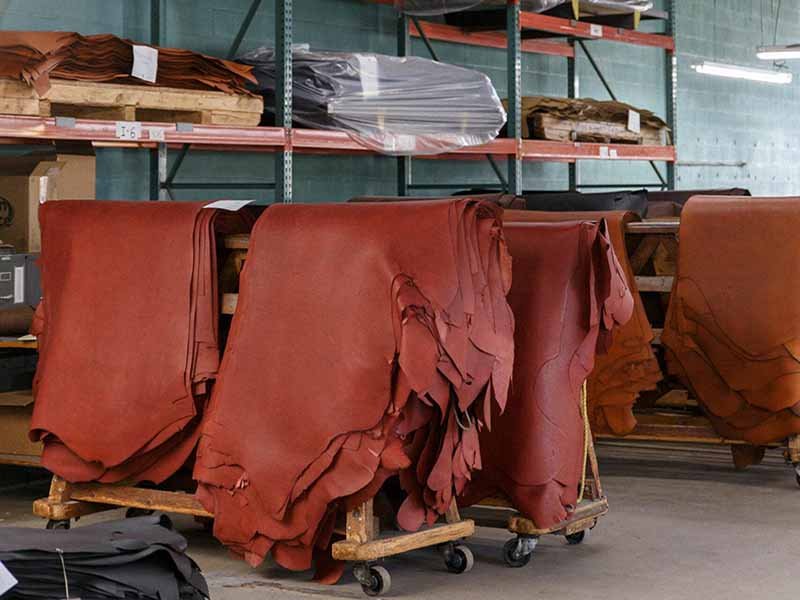
Leather has captivated craftsmen and consumers for centuries because of one unique trait: it lasts. From ancient armor to modern handbags, leather’s strength and longevity set it apart from almost every other natural material. It ages with grace, softens with use, and often becomes even more beautiful over time.
But what exactly makes leather so durable? Why can a well-made leather wallet or belt last decades, while synthetic materials often crack or peel within a few years?
Leather is durable because of its natural collagen fiber structure, tanning process, and dense grain composition, which provide tensile strength, flexibility, and resistance to tearing and abrasion. High-quality full-grain or vegetable-tanned leathers can last 20–30 years or more with proper care, far exceeding synthetic alternatives.
This article unpacks the science, craftsmanship, and care behind leather’s durability — exploring how different types, animal sources, and finishing methods influence strength, and how buyers can ensure longevity through proper maintenance and manufacturing choices.
What Makes Leather Naturally Strong and Durable?
Leather’s natural strength comes from its collagen fiber structure, a dense interwoven network in animal hide that provides both flexibility and tensile resistance. Through tanning, these fibers are stabilized, making leather resistant to tearing, stretching, and abrasion. The grain layer, with its compact fiber density, acts like armor, while the fibrous underlayer provides elasticity — together forming a material that can last decades without losing integrity.
The Science Behind Leather’s Strength
Leather begins as skin — a complex biological composite made primarily of collagen, elastin, proteins, and natural fats.
In animals, this structure must withstand constant movement, tension, and environmental exposure. When processed correctly, these same properties translate into material strength that man-made synthetics struggle to replicate.
How the Fiber Structure of Animal Hide Creates Tensile Strength
Under a microscope, the dermis layer of skin resembles a three-dimensional mesh. Each collagen bundle twists and interlocks with others, distributing force evenly in all directions.
This random orientation means leather doesn’t have a “weak grain,” unlike woven textiles which tear along warp or weft lines.
Typical tensile strength values for commercial-grade leathers:
| Leather Type | Tensile Strength (MPa) | Equivalent Load (N/mm²) | Typical Use |
|---|---|---|---|
| Full-Grain Cowhide | 18–25 | 20–28 | Belts, luxury bags |
| Goat Leather | 12–18 | 13–20 | Gloves, wallets |
| Sheep/Lamb | 8–12 | 10–15 | Jackets, linings |
| Buffalo Hide | 20–30 | 22–32 | Saddlery, heavy gear |
A megapascal (MPa) is one million pascals — roughly equal to the pressure from 10 kg per square centimeter.
This explains why a 2 mm-thick leather strap can hold a person’s body weight without tearing.
Collagen: Nature’s High-Performance Polymer
Why Collagen Fibers Give Leather Its Flexibility and Resistance
Collagen is a triple-helix protein molecule — imagine three intertwined ropes twisting into one cable.
In raw hide, collagen absorbs and releases moisture dynamically, keeping the material elastic.
Tanning chemically bonds collagen’s free amino groups, locking them in place and preventing decay.
This transforms raw skin into a stable, durable material that maintains shape and strength even under stress.
- Elastic memory: Leather stretches slightly under pressure but returns to its original form.
- Shear resistance: Crosslinking prevents fiber slippage, preserving grain compactness.
- Shock absorption: Collagen’s helix geometry dissipates impact energy through micro-flexing, ideal for products like belts, straps, and soles.
Laboratory tests show that after 100,000 flexes, high-quality tanned leather loses less than 3% of its tensile integrity — far better than PU or PVC, which can lose 20–30% after the same test.
The Role of the Grain Layer in Durability
Leather is not uniform throughout its thickness. It consists of three principal zones:
- Grain layer – The outermost, densely packed surface where collagen fibers are smallest and most compact.
- Corium layer – The middle region with looser, interwoven fibers providing elasticity.
- Flesh layer – The innermost, coarser portion closer to muscle tissue.
The Grain: Leather’s Natural Shield
The grain layer acts like a natural armor — it’s resistant to puncture and abrasion.
A 1.2 mm full-grain hide can resist over 25,000 abrasion cycles (Martindale test) before visible wear.
In contrast, a split leather (without the grain) fails after 5,000–7,000 cycles.
That’s why premium manufacturers avoid over-sanding or “correcting” the surface. Keeping the grain intact retains the hide’s original micro-strength network, vital for longevity.
Does Real Leather Break Easily?
Genuine leather rarely breaks — it ages.
Cracks occur only when natural oils within the fibers dry out or when inferior finishes block pores, preventing the leather from “breathing.”
Properly tanned leather remains flexible across temperature ranges of −20°C to +60°C, making it suitable for cold climates and daily handling.
Cheaper “bonded” or “PU-coated” leathers, however, are layered with adhesives that become brittle over time.
Real leather does not peel because it’s not a laminated material — its structure is solid throughout, like wood grain rather than veneer.
The Balance Between Flexibility and Rigidity
Leather’s uniqueness lies in its dual nature — it’s firm enough to hold form, yet soft enough to move.
This balance arises from two physical properties:
| Property | Definition | Effect on Durability |
|---|---|---|
| Tensile strength | Maximum force it can withstand before breaking | Prevents tearing and stretching |
| Flexural fatigue resistance | Ability to bend repeatedly without damage | Prevents cracking in straps and folds |
A premium belt leather, for instance, undergoes over 40,000 bend tests without surface failure, compared to under 8,000 for PU composites.
That’s why vintage leather bags often remain functional even after decades — the structure “remembers” and rebounds.
Natural Oils and Breathability: Hidden Allies of Longevity
Leather is a semi-permeable membrane — it allows vapor exchange while resisting liquid water.
Microscopic pores enable air circulation, preventing internal moisture accumulation that causes mildew or rot in other materials.
Natural fats embedded during tanning (around 6–12% of weight) lubricate the fibers, keeping them supple.
These oils act like internal shock absorbers. As leather flexes, oils migrate between fibers, reducing friction and preventing breakage.
When neglected and oils evaporate, fibers rub directly — causing surface scuffs and stiffness. That’s why regular conditioning is key to long-term performance.
Density and Thickness Correlation
The denser and thicker the leather, the more resistant it is to stretching and tearing.
Average fiber densities vary significantly:
| Leather Type | Average Density (kg/m³) | Durability Rating |
|---|---|---|
| Full-Grain Cowhide | 900–1000 | ★★★★★ |
| Top-Grain Cowhide | 800–900 | ★★★★☆ |
| Split Leather | 600–750 | ★★★☆☆ |
| Bonded Leather | 400–500 | ★☆☆☆☆ |
High density not only improves durability but also provides dimensional stability — important for structured products like luggage, belts, and cases.
Environmental Resistance and Adaptability
Leather’s natural composition allows it to adapt to different environments:
- Cold Weather: Fibers stiffen slightly but recover when warmed, unlike synthetics that crack.
- Heat & Sunlight: Light tanning and finishing protect from UV degradation.
- Moisture: Breathable yet resistant — tanned hides absorb less than 14% moisture by weight, staying flexible even after exposure.
Its ability to “breathe” without absorbing water is why leather seats, jackets, and shoes remain comfortable across climates.
Comparing Leather Strength to Other Materials
| Material | Average Lifespan | Strength/Thickness Ratio | Comments |
|---|---|---|---|
| Full-Grain Leather | 20–30 years | Excellent | Ages gracefully, develops patina |
| Canvas (Cotton) | 5–8 years | Good | Weaker when wet, prone to fraying |
| PU Synthetic Leather | 3–5 years | Fair | Peels and cracks with use |
| Nylon Fabric | 8–12 years | Good | Lacks tactile richness |
| Rubberized Vinyl | 5–10 years | Moderate | Heat sensitive, no breathability |
This comparison illustrates why leather remains the material of choice for luxury bags, automotive upholstery, and footwear — the strength-to-weight ratio, combined with timeless aesthetics, is unrivaled.
Which Types of Leather Last the Longest?
The longest-lasting leathers are full-grain and vegetable-tanned cowhide or buffalo hide, which retain the hide’s original fiber density and natural oils. These materials can last 20–30 years or more with proper care.
Top-grain and chrome-tanned leathers follow, offering 10–20 years of durability, while corrected-grain and bonded leathers, made from lower hide layers or reconstituted fibers, generally last 3–7 years.
Leather Grades and Lifespan
Every leather product begins with the same raw material — animal hide — yet its final durability depends on how much of the original structure remains after processing. The industry classifies leather into several main categories according to how the surface (grain) is treated.
| Leather Type | Grain Condition | Typical Lifespan | Durability Rating | Common Use |
|---|---|---|---|---|
| Full-Grain | Natural, unaltered | 20–30+ years | ★★★★★ | Premium bags, belts, furniture |
| Top-Grain | Lightly sanded | 15–25 years | ★★★★☆ | Fashion goods, upholstery |
| Corrected-Grain | Heavily buffed & coated | 8–15 years | ★★★☆☆ | Mass-market shoes, accessories |
| Split / Genuine Leather | From lower hide layers | 5–10 years | ★★☆☆☆ | Wallet linings, gloves |
| Bonded Leather | Reconstituted fibers | 3–5 years | ★☆☆☆☆ | Low-cost items |
Each cut of the hide carries different fiber density, elasticity, and pore structure — all critical to how the leather ages, resists stretching, and tolerates abrasion.
Full-Grain Leather
Full-grain leather is the top layer of the hide where the natural grain remains completely intact. Because it hasn’t been buffed or sanded, the densely packed fibers form a tough, breathable barrier against moisture and wear.
- Key advantages: exceptional tensile strength, water resistance, and ability to develop patina.
- Applications: luxury luggage, heritage wallets, horse saddles, and military gear.
- Average lifespan: 25–30+ years, often outliving the product’s hardware.
The surface’s microscopic pores help leather “breathe” — allowing moisture to evaporate while blocking external water.
That’s why vintage full-grain bags still feel supple after decades: the hide adapts to stress instead of splitting.
Top-Grain Leather
When small imperfections are sanded away, the leather becomes top-grain. The process slightly reduces fiber density but gives a cleaner appearance and softer handfeel.
- Strength: approximately 15–25 MPa tensile strength, about 80–90% of full-grain.
- Durability: 15–25 years with good care.
- Advantages: lighter weight, more uniform color, resistant to superficial staining.
Top-grain leather often receives a protective pigment layer that increases resistance to scratches and fading, making it popular in fashion and automotive interiors.
However, because this coating masks natural pores, it loses some breathability and forms a weaker patina over time.
Corrected-Grain and Genuine Leather
Corrected-grain leather undergoes heavy sanding and embossing to hide blemishes, followed by synthetic coatings for uniform texture.
While this yields a smooth, consistent finish, it also removes part of the grain layer, where most structural integrity resides.
- Lifespan: around 8–15 years.
- Issues: less flexible, more prone to surface cracking if coatings dry out.
“Genuine leather” is a confusing term — it refers to any leather made from the lower layers of hide, often split off from full-grain.
Although technically real leather, its fiber bundles are looser, so it stretches and tears more easily.
Split and Bonded Leather
Split leather comes from the flesh-side layers left after top portions are removed.
It is mechanically weaker because fibers are thicker and less intertwined. Manufacturers sometimes apply polyurethane films to imitate grain, but these coatings eventually delaminate.
Bonded leather, meanwhile, isn’t a continuous piece of hide at all — it’s made by pressing shredded leather fibers with adhesives onto a paper or fabric base.
While it may contain 10–20% real leather, it lacks the structural lattice that gives true leather its endurance.
| Material | Composition | Lifespan | Behavior |
|---|---|---|---|
| Split Leather | Lower hide layer | 5–10 years | Flexible but weak at stress points |
| Bonded Leather | Leather dust + PU binder | 3–5 years | Peels, cracks, not repairable |
Such materials are ideal for low-cost goods but unsuitable for premium brands focused on longevity.
Which Animal Leather Is Better?
Durability also depends on animal species, age, and lifestyle. Each hide type has distinct fiber orientation, thickness, and surface grain.
| Animal Source | Fiber Density | Thickness Range | Strength Characteristics | Typical Use |
|---|---|---|---|---|
| Cowhide | High | 1.2–2.0 mm | Balanced tensile and tear strength | Belts, bags, upholstery |
| Buffalo Hide | Very High | 1.5–2.5 mm | Coarse fibers, exceptional toughness | Tool belts, saddles |
| Goatskin | Medium-High | 0.8–1.2 mm | Naturally flexible, abrasion-resistant | Gloves, wallets |
| Sheepskin / Lambskin | Low-Medium | 0.6–1.0 mm | Soft, elastic but less durable | Jackets, linings |
| Exotic Leathers (Crocodile, Ostrich) | Variable | 1.0–3.0 mm | Hard, patterned surface; luxury aging | Premium accessories |
Cowhide remains the global standard for durability because it balances density and manageability. Buffalo is tougher but heavier; goat offers impressive flexibility; lamb is prized for comfort, not endurance.
From a manufacturing perspective, cowhide and buffalo provide the best strength-to-weight ratio, sustaining tension loads of 20–30 MPa and resisting abrasion better than almost all alternatives.
How Long Does 100% Leather Last?
The lifespan of 100% genuine leather varies depending on grade, tanning, and care, but well-tanned full-grain cowhide can easily last three decades or longer.
| Leather Quality | Average Lifespan | Key Factors Affecting Longevity |
|---|---|---|
| Full-Grain Vegetable-Tanned | 25–40 years | Develops protective patina; stiffens slightly with age |
| Top-Grain Chrome-Tanned | 15–25 years | Softer feel; moderate UV resistance |
| Corrected-Grain or Genuine | 8–15 years | Depends on coating quality |
| Split or Bonded | 3–7 years | Limited structural integrity |
Longevity facts:
- Historical artifacts — Roman leather sandals and armor — prove leather’s potential lifespan can exceed centuries when preserved.
- In consumer conditions, high-quality bags or belts typically outlive their stitching or metal hardware before the hide itself fails.
- Regular conditioning (every 3–6 months) can extend lifespan by 30–50%, as it prevents fiber dehydration.
Choosing the Right Leather for Longevity
- For everyday accessories like belts and wallets → choose full-grain cowhide or vegetable-tanned top-grain.
- For luxury fashion goods → select semi-aniline top-grain or goatskin for softness with strength.
- For heavy-duty products → opt for buffalo hide or combination-tanned full-grain for superior tear resistance.
- For lightweight items → use lambskin only where flexibility outweighs lifespan needs.
When evaluating suppliers, always ask about grain integrity, tanning method, and finish type — three variables that determine how long the leather will truly last.
How Do Tanning and Finishing Processes Affect Longevity?
Tanning stabilizes raw hides by chemically bonding collagen fibers, preventing decomposition and hardening. Different tanning methods — such as vegetable, chrome, or hybrid — influence flexibility, firmness, and water resistance. Finishing processes, including dyeing, polishing, and coating, add protective layers that guard against abrasion, UV, and moisture. The combination of proper tanning and finishing determines how long leather maintains its strength, color, and texture — often extending its life from a few years to several decades.
Why Tanning Determines the Foundation of Durability
Raw animal hides are biological materials, prone to rot, stiffness, and bacterial decay. Without tanning, the collagen fibers that give leather its strength would degrade quickly when exposed to moisture or heat.
Tanning transforms perishable skin into a stable matrix by introducing chemical crosslinks between collagen molecules, locking them into a semi-permanent structure. This process creates what’s called a hydrothermally stable network, allowing leather to resist decomposition even under high humidity and temperature changes.
In scientific terms:
- Untanned hide shrinks at ~65°C (collagen denaturation point).
- Tanned leather resists shrinkage until ~100–110°C — an increase of nearly 70% in thermal stability.
The Major Types of Tanning and Their Effect on Longevity
Vegetable Tanning (Traditional, Natural, Long-Lasting)
Vegetable tanning uses organic tannins extracted from tree bark, fruits, or leaves (oak, mimosa, chestnut). These natural polyphenols penetrate the hide and bond with collagen fibers via hydrogen and ionic interactions.
| Property | Vegetable-Tanned Leather | Effect on Longevity |
|---|---|---|
| Appearance | Warm, natural tone, darkens with age | Gains rich patina, improves with time |
| Texture | Firm, structured | Excellent shape retention |
| Water Resistance | Moderate | Needs conditioning to avoid drying |
| Heat Stability | High (shrinkage ~100°C) | Superior structural endurance |
| Environmental Impact | Biodegradable, low-chemical | Eco-friendly long life cycle |
Vegetable-tanned leather is known for aging gracefully — rather than wearing out, it develops a unique patina that strengthens its outer surface.
Properly conditioned, this leather can last 40–50 years, making it ideal for belts, saddlery, and heritage bags.
However, it is sensitive to over-exposure to water and heat. The natural tannins absorb moisture, so drying or conditioning is crucial for longevity.
Chrome Tanning (Industrial, Flexible, Water-Resistant)
Chrome tanning, developed in the 19th century, uses chromium(III) salts. The chromium forms stable crosslinks with collagen carboxyl groups, producing leather that is softer, lighter, and more flexible than vegetable-tanned versions.
| Property | Chrome-Tanned Leather | Effect on Longevity |
|---|---|---|
| Appearance | Smooth, uniform | Colorfast and versatile |
| Texture | Supple, flexible | Resistant to cracking under flex |
| Water Resistance | High | Handles humidity well |
| Heat Stability | 100–110°C | High resilience |
| Maintenance | Low | Holds moisture balance naturally |
Chrome tanning’s resilience against humidity and abrasion makes it perfect for fashion items like jackets, bags, and upholstery.
While its patina development is subtler than vegetable tanning, it excels in dimensional stability — maintaining softness and elasticity for 20–30 years even under frequent use.
Combination (Hybrid) Tanning: The Modern Standard for Durability
To combine the firmness of vegetable tanning with the flexibility of chrome, most premium manufacturers use combination tanning, sometimes called “re-tanning.”
Process:
- Base chrome tanning provides elasticity and thermal stability.
- Re-tanning with vegetable extracts adds body, firmness, and color richness.
| Property | Combination-Tanned Leather | Result |
|---|---|---|
| Flexibility | High | Excellent for wearable items |
| Strength & Density | Balanced | Retains structure for decades |
| Water Resistance | Superior | Performs in varying climates |
| Appearance | Deep color with natural tone | Develops mild patina |
| Longevity | 25–35 years | Outperforms single-method tanning |
This process delivers the best of both worlds — resilience against moisture and softness for daily use, while still allowing gradual patina formation.
Combination tanning now dominates luxury and performance markets due to its consistent results and adaptability.
Alternative Eco-Tanning Methods
Modern innovation has led to metal-free or synthetic tanning systems such as aldehyde, zirconium, and titanium tanning. These methods offer sustainability advantages and reduced allergens, though long-term durability data is still evolving.
| Method | Core Agent | Key Traits | Expected Lifespan |
|---|---|---|---|
| Aldehyde (Formaldehyde-Free) | Organic aldehydes | Soft, white base, hypoallergenic | 10–20 years |
| Titanium / Zirconium | Metal oxides | Stable, bright colors | 20–30 years |
| Synthetic (Resin) | Phenolic & acrylic agents | Cost-efficient, lightweight | 8–15 years |
Eco-tanning innovations now approach the performance of chrome while reducing environmental footprint — an increasingly important factor for brands aiming at sustainable production.
Finishing: The Surface Armor That Protects Longevity
Once tanning stabilizes the hide’s interior, finishing protects the surface.
Finishing defines color, texture, and tactile feel — but more importantly, it guards against mechanical wear, UV damage, and moisture penetration.
Types of Leather Finishes and Their Impact
| Finish Type | Description | Look & Feel | Durability | Patina Development |
|---|---|---|---|---|
| Aniline | Dyed with soluble dyes, no surface coating | Natural, soft, breathable | Low surface protection | Excellent aging |
| Semi-Aniline | Light protective coating added | Slightly glossy, stain-resistant | Balanced durability | Moderate |
| Pigmented / Protected | Solid pigment coating with polymer seal | Uniform color, matte or glossy | High protection | Minimal |
| Pull-Up / Oil-Waxed | Wax-oil impregnated for color variation | Vintage, rugged look | Highly durable | Strong patina |
| Nubuck / Suede | Sanded surface for velvety touch | Soft, porous | Low resistance | High maintenance |
Durability hierarchy: Pigmented > Semi-Aniline > Aniline > Nubuck/Suede.
Protected leathers can withstand over 25,000 Martindale abrasion cycles, compared to 5,000–8,000 for pure aniline. However, pure aniline’s appeal lies in its authenticity and aging beauty — ideal for luxury goods that improve with wear.
Mechanical Finishing Enhancements
In addition to chemical coatings, mechanical finishing further boosts endurance:
- Embossing: Compresses fibers for improved scratch resistance.
- Ironing / Plating: Smooths and seals pores to reduce absorption.
- Milling (Drumming): Softens fibers, increasing flexibility.
- Waxing / Oiling: Adds lubrication that prevents fiber friction.
- Waterproofing Sprays: Introduce fluorocarbon or silicone layers for hydrophobicity.
For performance leathers — such as outdoor bags or industrial gloves — multiple finishing steps are layered to maximize wear life without sacrificing breathability.
How Finishing Enhances Resistance to Real-World Damage
Finishes function as the leather’s outer defense system, protecting against:
| Damage Type | How Finishing Prevents It |
|---|---|
| Abrasion | Pigment and resin coatings distribute friction |
| UV Light | Metallic oxides and antioxidants reduce fading |
| Humidity | Wax and polymer films repel water vapor |
| Chemical Stains | Polyurethane finishes block acids and oils |
| Cracking / Drying | Oils and conditioners preserve elasticity |
Tests show that semi-aniline leather treated with a light polyurethane finish retains over 90% of tensile strength after one year of simulated UV and humidity exposure — while unfinished aniline retains around 70–75%.
Dyeing, Color Fastness, and Lifespan
The depth and method of dyeing influence how the leather withstands sunlight and cleaning:
- Through-dyeing: Dye penetrates full thickness, keeping color consistent after scratches.
- Surface-dyeing: Only top layers are tinted, prone to fading under heavy wear.
- Aniline dyeing: Transparent dyes preserve natural markings but require conditioning.
High-quality through-dyed leathers maintain color for 10–15 years, while surface-dyed types may fade after 3–5 years under strong sunlight unless UV stabilizers are used.
Szoneier’s Advanced Finishing Practices
Professional tanneries such as Szoneier Leather’s integrated R&D division combine chemical science with aesthetic craftsmanship. Their approach exemplifies how finishing precision directly affects product life:
- Use of hybrid chrome-vegetable tanning for balanced softness and firmness.
- Semi-aniline coatings optimized for both color richness and abrasion resistance.
- Application of low-VOC water-based polyurethane layers — providing 20–30% better UV performance than solvent finishes.
- Drum conditioning ensures consistent fiber lubrication to prevent micro-cracking during stitching and use.
Such modernized finishing guarantees that products — from handbags to belts — retain both their tactile appeal and functional durability across long service cycles.
Comparing Tanning–Finishing Combinations by Longevity
| Tanning + Finish Type | Durability Rating | Typical Lifespan | Typical Application |
|---|---|---|---|
| Vegetable + Aniline | ★★★★★ | 30–50 years | Luxury heritage leather goods |
| Chrome + Semi-Aniline | ★★★★☆ | 20–30 years | Fashion, upholstery |
| Combo (Hybrid) + Pigmented | ★★★★★ | 25–35 years | High-end everyday accessories |
| Chrome + Nubuck / Suede | ★★★☆☆ | 10–20 years | Apparel, soft goods |
| Synthetic + PU Finish | ★★☆☆☆ | 5–10 years | Budget products |
Is Genuine Leather More Durable Than Synthetic or PU Leather?
Yes. Genuine leather outperforms synthetic (PU or PVC) in tensile strength, aging, and environmental resilience. Real leather’s fiber matrix makes it 2–3 times stronger and up to five times more abrasion-resistant than artificial substitutes.
Comparing Tear Resistance, Abrasion, and Aging
Laboratory tests indicate:
| Property | Genuine Leather | PU Leather |
|---|---|---|
| Tear Strength | 60–90 N/mm | 25–40 N/mm |
| Flex Cycles Before Crack | 50,000+ | 10,000–15,000 |
| Heat Tolerance | 90–100°C | 70–80°C |
| Lifespan | 15–30 years | 3–5 years |
PU materials degrade as plasticizers evaporate, leading to peeling. Real leather, when conditioned, gains suppleness over time rather than breaking down.
Environmental and Aging Behavior Differences
Leather’s natural composition allows it to breathe, preventing trapped moisture that causes cracking in synthetics.
While PU leather is cheaper and water-resistant, it lacks the self-repairing surface that gives real leather its famous patina — a soft sheen developed through years of handling.
What Is the Disadvantage of Leather?
Despite its durability, leather’s main drawbacks include:
Higher initial cost compared to synthetics
Regular maintenance (conditioning, cleaning)
Sensitivity to humidity and UV exposure
However, these limitations are offset by longevity and recyclability. Properly maintained leather outlasts PU by 5–10 times, reducing waste and lifecycle costs.
When to Choose PU or Vegan Leather
For lightweight fashion products or moisture-prone environments, PU leather can still be practical. Many brands use PU-laminated microfiber for weight-sensitive or vegan markets. But for heirloom-quality goods, real leather remains unmatched in tactile performance and lifespan.
How Does Proper Maintenance Extend Leather’s Lifespan?
Routine cleaning, conditioning, and controlled storage can extend leather’s lifespan by decades. Keeping it hydrated with natural oils and avoiding extreme humidity or heat prevents cracking and color fading.
Cleaning and Conditioning Techniques
Wipe with a soft, damp cloth and pH-neutral soap to remove dirt.
Apply conditioner (beeswax or lanolin-based) every 3–6 months to maintain elasticity.
Avoid alcohol or silicone products that block pores.
How Humidity, Sunlight, and Storage Impact Durability
Leather thrives in 40–60% humidity.
Too much moisture promotes mold, while dry environments cause brittleness.
Store in breathable cotton bags, never plastic, and avoid direct sunlight which fades dyes and weakens fibers over time.
Professional Care Practices in Premium Workshops
High-end tanneries and repair studios rehydrate leather using neatsfoot oil or natural lanolin emulsions, then buff with wool pads to restore sheen.
Annual deep conditioning prevents structural weakening at folds and seams.
Expert Tips from Szoneier Craftsmen
Szoneier’s technical teams recommend “progressive care”: lighter conditioning for soft leathers (like lambskin) and heavier for structured hides (like cow or buffalo).
They also emphasize regular rotation — alternating daily-use bags allows fibers to relax, reducing long-term strain.
Do Craftsmanship and Construction Influence Leather Durability?
Yes. Even premium leather can fail prematurely if poorly crafted. Stitching density, thread type, and reinforcement determine whether a leather product endures decades or deteriorates within years.
The Importance of Stitch Density and Thread Quality
Strong construction uses 8–10 stitches per inch (SPI) with bonded nylon or polyester thread.
Loose seams tear easily, while over-tight stitching cuts into the leather. Balanced tension maintains durability and aesthetics.
Edge Finishing, Reinforcement, and Lining Selection
Edge painting or burnishing seals fibers, preventing delamination.
Reinforced stress points — like bag handles — extend life by distributing load evenly.
Proper lining (cotton twill or microfiber) prevents internal abrasion, a detail often overlooked in low-cost manufacturing.
Why Integrated Production Ensures Long-Term Performance
Factories such as Szoneier Leather integrate R&D, pattern cutting, and assembly in-house.
This allows tighter QC control and consistent materials across production batches.
Internal testing (abrasion, flexing, humidity cycling) ensures each product maintains performance within ISO and REACH standards.
Conclusion: Create Your Custom Leather Products with Szoneier
Leather’s enduring durability is not a coincidence — it’s a combination of nature’s perfect design and human craftsmanship. From the microscopic weave of collagen fibers to the precision of modern tanning, every step in its creation reinforces longevity.
Whether you are a brand owner, designer, or wholesaler, sourcing from the right manufacturer defines product value. A well-crafted leather piece can represent your brand for decades, not seasons.
Looking to develop your own line of premium leather goods?
Get in touch with Szoneier Leather today for a custom quotation or free material consultation — and turn timeless durability into your brand’s next signature.
What Can I Do For You?
Here, developing your OEM/ODM private label leather goods collection is no longer a challenge,it’s an excellent opportunity to bring your creative vision to life.
Make A Sample First?
If you have your own tech packs, logo design artwork, or just an idea,please provide details about your project requirements, including preferred fabric, color, and customization options,we’re excited to assist you in bringing your leather goods designs to life through our sample production process.