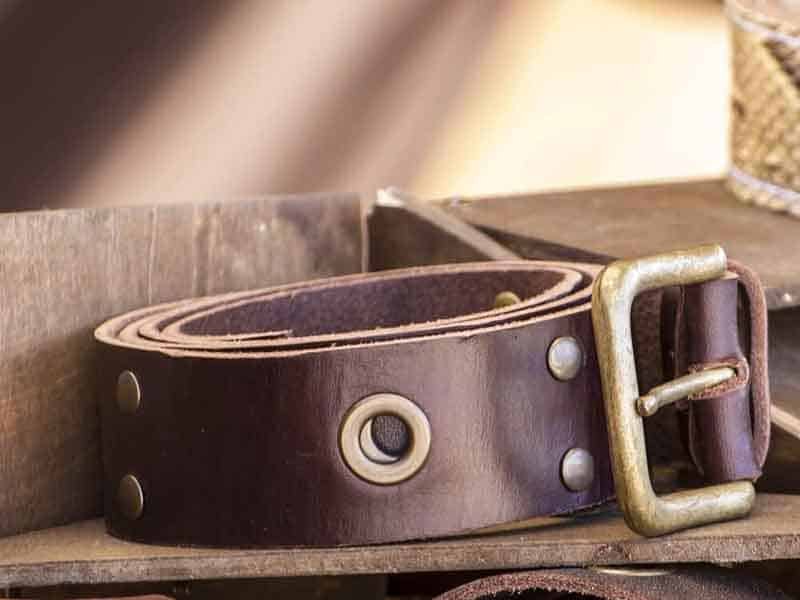
Leather hardware does more than hold pieces together—it defines a product’s style, durability, and user experience. From the gleam of a polished buckle to the subtle strength of a well-placed rivet, selecting the right components can make or break your design. Whether you’re crafting a luxury handbag or a rugged tool belt, understanding the breadth of hardware options ensures you deliver both beauty and function.
Leather hardware encompasses all the metal and plastic fittings—buckles, clasps, snaps, rivets, grommets, and buttons—that secure and decorate leather goods. Choosing the correct type and material affects strength, corrosion resistance, and aesthetic harmony. By matching hardware styles (e.g., antique brass vs. polished nickel) and installation methods to your leather’s thickness and end use, you achieve reliable performance and a cohesive design language.
Imagine showcasing a limited‐edition leather satchel at a trade show—its custom gunmetal snaps and handcrafted solid brass rivets not only catch the eye but promise years of dependable service. In this guide, we’ll dive into the metals and alloys behind your favorite fittings, unpack the vast selection of buckles and fasteners, compare decorative studs and rivets, and reveal how to select finishes that withstand wear. By the end, you’ll know exactly which hardware elevates your leather creations—and how Szoneier’s end‐to‐end capabilities can bring them to life.
What Is Leather Hardware?
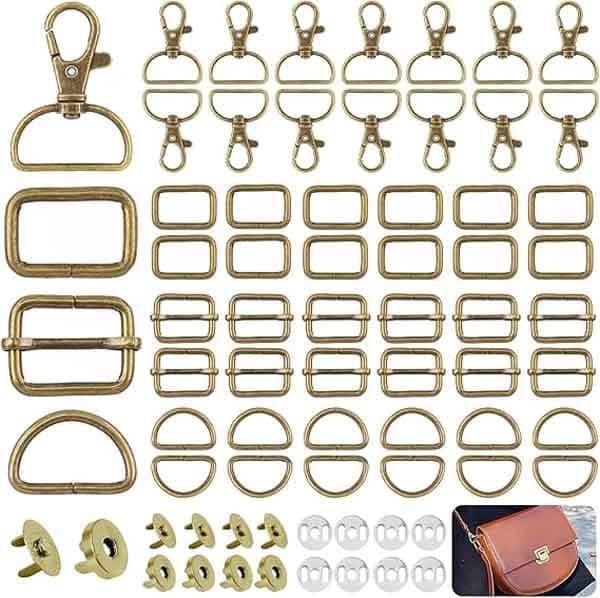
Leather hardware comprises the metal, plastic, or composite fittings—buckles, clasps, snaps, rivets, grommets, buttons, and rings—used to construct, adjust, and embellish leather goods. Quality hardware ensures structural strength at critical stress points, provides smooth, reliable functionality for closures and adjustments, and elevates a product’s visual appeal, reinforcing brand identity and justifying premium pricing.
Leather hardware forms the backbone of every well-crafted leather product, serving three pivotal functions:
Structural Integrity & Load Bearing
Leather alone cannot handle concentrated stresses over time. Hardware components distribute tension and shear loads to prevent tearing:
- Buckles & Clasps: Bear the majority of tensile forces on straps and belts. A well-sized roller buckle can handle over 1,200 N of pull force, whereas undersized or low-grade zinc buckles may deform or break under far less.
- Rivets & Snaps: Clamp multiple layers securely, reinforcing areas like strap bases or bag flaps. Solid brass rivets set properly can withstand shear loads up to 1,000 N.
- D-Rings & O-Rings: Act as anchor points for straps, handles, and lanyards. Welded stainless rings easily exceed 2,500 N in tensile tests, ensuring a reliable attachment under heavy loads.
Choosing the correct size, material, and installation method (hand-press vs. machine press) is crucial. Hardware rated below the intended load leads to early failure, warranty claims, and brand damage.
User Experience & Functional Adjustability
Well-designed hardware enhances ease of use:
- Adjustable Components: Sliders, tri-slides, and frame buckles allow precise strap length adjustment without slipping, ensuring comfort across varied body types.
- Ergonomic Design: Rounded edges on D-rings and offset prongs on frame buckles prevent leather cut-through and reduce user discomfort.
- Smooth Operation: Tight manufacturing tolerances and polished plating reduce friction. Side-release buckles snap open cleanly; swivel clasps rotate freely, preventing twisted straps.
Hardware that feels “clunky,” sticks, or jams undermines perceived quality, even if the leather itself is flawless.
Aesthetic Cohesion & Brand Language
Hardware finishes and styles convey a product’s narrative:
- Finish Selection: Polished nickel suggests modern sophistication; antique brass evokes heritage craftsmanship; black oxide reads tactical and minimalist.
- Consistent Detailing: Matching finish across buckles, rivets, zippers, and rivet caps creates a harmonious visual story. A mismatch—a bright chrome buckle with matte black studs—breaks design continuity.
- Decorative Elements: Engraved logo plates, custom-shaped conchos, and embossed snap caps can become signature motifs that customers recognize and remember.
Historical Context & Industry Evolution
Originally, leather hardware was forged iron and hand-hammered brass on saddlery and armor. Industrial die-casting introduced affordable zinc alloys, while modern CNC machining and investment casting enable precise, small-batch production in steel, brass, and specialty metals. Advanced coatings like PVD and electroless nickel plating now deliver extreme durability and environmental compliance without sacrificing aesthetic variety.
Which Metals and Alloys Are Commonly Used in Leather Hardware?
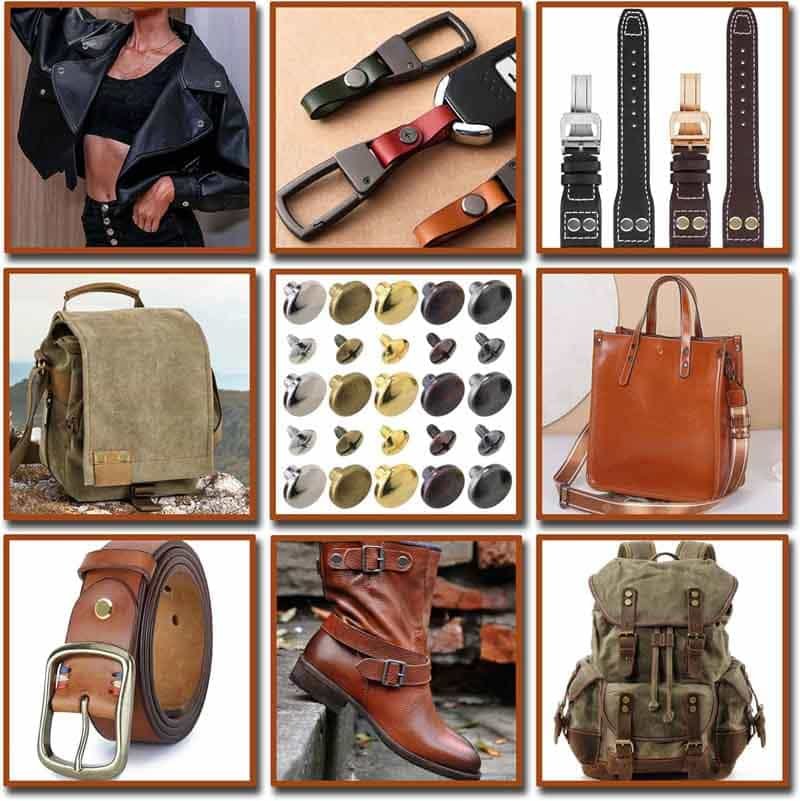
Leather hardware is typically crafted from brass (C360 free‐cutting brass for its corrosion resistance and warm tone), stainless steel (304/316 grades for rugged strength and rustproof performance), and zinc or zamak alloys (cost‐effective die‐cast options). Specialty pieces may use aluminum (lightweight), bronze (antique patina), or copper. Choosing the right metal balances budget, environmental exposure, mechanical load, and desired finish longevity.
1. Brass (C360 Free-Cutting)
Composition & Properties:
- Approximately 60% copper and 40% zinc.
- Excellent corrosion resistance in ordinary and mildly humid environments.
- Soft enough for precision machining, stamping, and hand‐setting without cracking.
- Natural golden luster that warms over time with a rich patina.
Use Cases & Considerations:
- Luxury Goods: Heritage‐style handbags, high-end belts, and decorative rivets.
- Load Capacity: Suitable for moderate loads (up to 1,200 N in properly sized buckles).
- Maintenance: Patina can be polished away or embraced as part of the design story.
- Cost: Mid-range—more expensive than zinc but below premium stainless or bronze.
2. Stainless Steel (304/316 Grades)
Composition & Properties:
- 304: 18% chromium, 8% nickel.
- 316: Adds 2–3% molybdenum for enhanced pitting resistance in marine settings.
- Exceptional tensile strength (500–700 MPa) and hardness.
- Virtually immune to corrosion, even under salt spray (ASTM B117) and acidic conditions.
Use Cases & Considerations:
- Outdoor and Marine Use: Backpacks, boat straps, and equestrian tack exposed to saltwater.
- Load-Bearing Hardware: D-rings, O-rings, and heavy‐duty snap hooks rated above 2,500 N.
- Aesthetic: Cool, silver‐gray finish—pairs well with high-tech and tactical designs.
- Cost: Higher than brass; investing in stainless ensures minimal maintenance.
3. Zinc & Zamak Alloys
Composition & Properties:
- Zinc with small percentages of aluminum, magnesium, and copper.
- Excellent die-casting fluidity—ideal for complex shapes and mass production.
- Moderately strong (tensile 200–350 MPa) but susceptible to “zinc pest” over decades if impure.
Use Cases & Considerations:
- Budget Lines: Promotional leather goods, entry-level accessories, and large-volume orders.
- Decorative Elements: Snap caps, ornamental studs, and lightweight buckles.
- Limitations: Not recommended when long-term durability or load bearing is critical.
- Cost: Lowest of the common alloys, making it attractive for cost-sensitive products.
4. Specialty Metals: Aluminum, Bronze, and Copper
| Metal | Key Traits | When to Use |
|---|---|---|
| Aluminum | Lightweight (2.7 g/cm³), corrosion-resistant with anodizing | Fashion handbags, lightweight strap adjusters |
| Bronze | Copper-tin alloy, rich brown patina, high wear resistance | Vintage styles, conchos, decorative plates |
| Copper | Antimicrobial properties, deep red hue, soft patina | High-end artisan pieces, health-oriented gear |
Use Cases & Considerations:
- Aluminum: Ideal when weight savings exceed strength demands—e.g., travel pouches or detachable straps.
- Bronze & Copper: Chosen for their warm, aged appearance; however, they require protective lacquers to prevent unwanted oxidation.
5. Surface Finishes & Platings
- Electroplating (Nickel, Chrome): Adds luster and additional corrosion barrier.
- PVD Coatings: Ultra-thin, highly durable films in black, bronze, or other tones.
- Patinas & Chemical Aging: Employed to achieve “antique” or “distressed” looks while sealing surfaces against moisture.
What Types of Buckles, Clasps, and Fasteners Are Available?
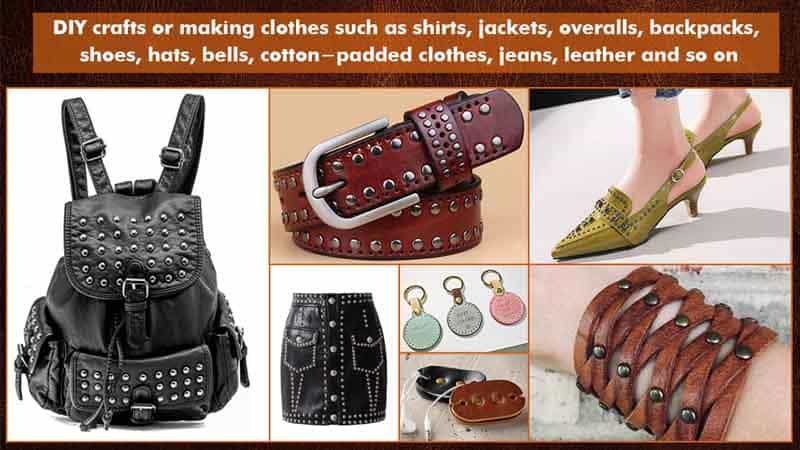
Leather goods use a variety of closures—frame and roller buckles for adjustable straps; side‐release (snap) buckles for quick one‐hand operation; D-rings and O-rings for attachment points; slide adjusters for micro‐length setting; and swivel clasps or lobster hooks for detachable straps. Each fastener type offers different load ratings, ease of use, and aesthetic styles, allowing designers to tailor functionality and look to specific applications.
1. Frame & Roller Buckles
Frame Buckles:
- Design: A metal frame with a prong that passes through punched holes in the leather strap.
- Load Capacity: Can handle up to 1,200 N when sized appropriately.
- Use Cases: Belts, watch straps, and adjustable bag closures.
- Pros & Cons: Simple and durable, but prong insertion can wear out leather over time.
Roller Buckles:
- Design: Similar to frame buckles but include a rolling bar under the prong.
- Advantages: Rollers reduce friction and stress on leather holes, extending strap life.
- Typical Applications: Heavy-duty belts, harnesses, and adjustable backpack straps.
2. Side-Release (Snap) Buckles
- Types: Plastic (acetal) and metal variants.
- Mechanism: Two-part interlocking halves that “snap” together; released by squeezing side tabs.
- Load Ratings: Plastic models typically support 500–800 N; metal versions can exceed 1,500 N.
- Use Cases: Outdoor gear, pet collars, camera straps, and quick-detach bag closures.
- Considerations: Plastic is lightweight and corrosion-proof; metal adds strength but increases weight.
3. D-Rings, O-Rings & Tri-Slides
D-Rings & O-Rings:
- Function: Anchor points for straps and clips; also used decoratively.
- Strength: Welded stainless-steel rings withstand >2,500 N; stamped brass \~800 N.
- Applications: Handbag handles, dog leads, and lashing points on travel bags.
Tri-Slides (Adjusters):
- Purpose: Allow precise strap length adjustment without prongs—ideal for shoulder straps and backpack sternums.
- Load Considerations: Nylon webbing through a 25 mm tri-slide can bear 1,000 N when weighted correctly.
4. Swivel Clasps & Lobster Hooks
Swivel Clasps:
- Design: A spring-loaded gate on a rotating base, enabling attachment without twisting straps.
- Use Cases: Detachable crossbody or camera straps; key fobs.
- Material Options: Stainless steel or brass for corrosion resistance.
Lobster Hooks:
- Mechanism: Trigger-open clasp with a spring return; more compact than standard swivel clips.
- Advantages: Sleek appearance and secure closure; common in fashion handbags.
5. Magnetic & Hook-and-Loop Fasteners
Magnetic Snaps:
- Description: Two magnetized discs inset into leather, providing effortless closure.
- Holding Force: Ranges from 5 N for light pouches to 50 N for larger bags.
- Limitations: Can weaken over time and are susceptible to debris.
Hook-and-Loop (Velcro):
- Use Cases: Utility pouches, tool bags, and child-friendly accessories.
- Durability: Tens of thousands of open/close cycles, but accumulates lint and loses grip over years.
What Are Rivets, Studs, and Decorative Hardware Options?
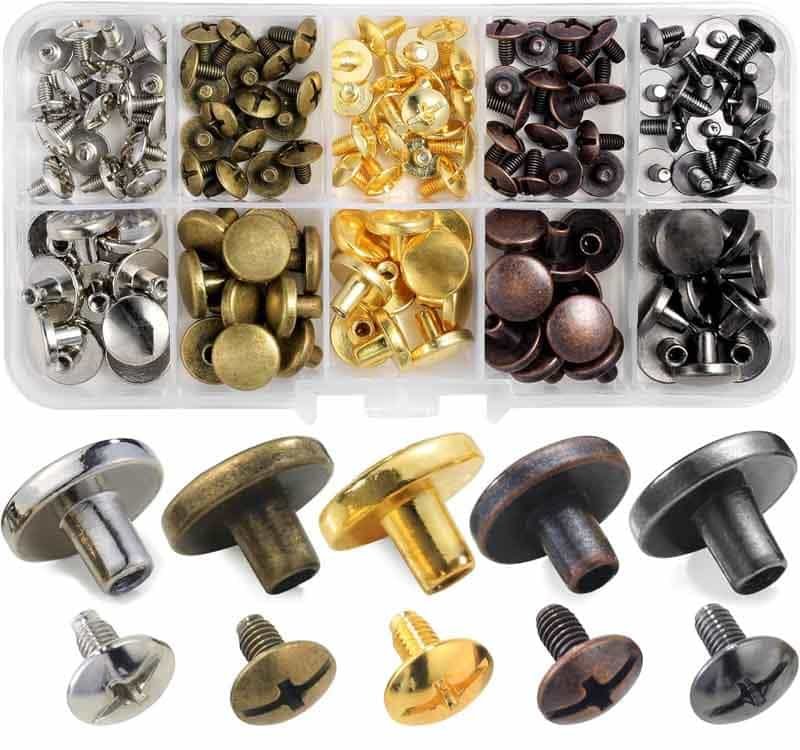
Rivets and studs are small metal fasteners that reinforce joins or add visual interest on leather goods. Rivets (solid, tubular, snap) clamp layers together under compression; studs and conchos (dome, pyramid, screw-back) attach decoratively. Other decorative options include grommets for lacing, metal corners for edge protection, and engraved plates or badges. Choosing the right style and finish lets you both strengthen stress points and elevate your design’s signature look.
Leather hardware goes beyond purely functional components; rivets, studs, and other decorative elements contribute to durability while reinforcing brand identity through thoughtful styling.
1. Types of Leather Rivets
Rivets mechanically bind multiple layers of leather without stitching, ideal for high-stress areas like strap bases or flap hinges.
| Rivet Type | Structure | Installation | Use Case |
|---|---|---|---|
| Solid (Double‐Cap) | Two matching caps sandwich the leather | Hand‐press or arbor press | Heavy belts, holsters, bag bottoms |
| Tubular (Chicago) | Sleeve and naturally flared end | Hammer or manual press | Light pouches, casual wallets |
| Snap Rivets | Integrated rivet and snap fastener | Special snap setter tool | Convertible straps, removable components |
- Solid Rivets offer the highest shear strength (up to 1,200 N) and are used where maximum holding power is needed.
- Tubular Rivets are quick to set and cost-effective, but have lower load ratings (\~300 N), making them suitable for decorative reinforcement.
- Snap Rivets combine fastening and structural support, enabling straps or panels to be interchanged without separate snap hardware.
2. Rivets vs Grommets
Though similar in appearance, rivets and grommets serve distinct purposes:
- Rivets clamp layers under compression, bearing shear and tensile loads.
- Grommets consist of a flanged eyelet that lines a hole, reinforcing leather edges against abrasion from cords or laces. A 12 mm grommet can withstand pulling forces of 500 N without tearing.
Understanding this difference prevents misuse—using grommets to bear heavy strap loads, for example, will quickly lead to tear-outs.
3. Studs, Conchos, and Decorative Fasteners
Studs and conchos provide eye-catching accents:
- Dome & Pyramid Studs: Pressed through leather and secured with pronged backs or clutches. Dome studs give a sleek, rounded look; pyramids create a bold, edgy appearance.
- Conchos: Ornate discs—often embossed or engraved—attached via screw-back posts, allowing easy removal or repositioning. Popular on Western belts and satchels.
- Engraved Plates & Name Badges: Custom metal plaques affixed by screws or rivets, ideal for branding. Laser-etching or enamel infill adds contrast and legibility.
4. Metal Corners, Eyelets & Trim
Small metal corners cap bag edges, protecting vulnerable points and lending a polished finish. Decorative eyelets (open rings set flush against the leather) can frame grommets or serve as non-wear points for lanyards.
5. Selecting Styles & Finishes
- Finish Consistency: Match the finish (polished, matte, antique) across all hardware to avoid visual discord.
- Scale & Proportion: Oversized studs on a delicate clutch overwhelm, while tiny rivets on a heavy satchel may look insubstantial.
- Material Choice: Brass rivets patina over time for a lived-in character; stainless studs retain shine in humid or coastal environments.
How Do You Choose the Right Finish and Plating for Your Hardware?
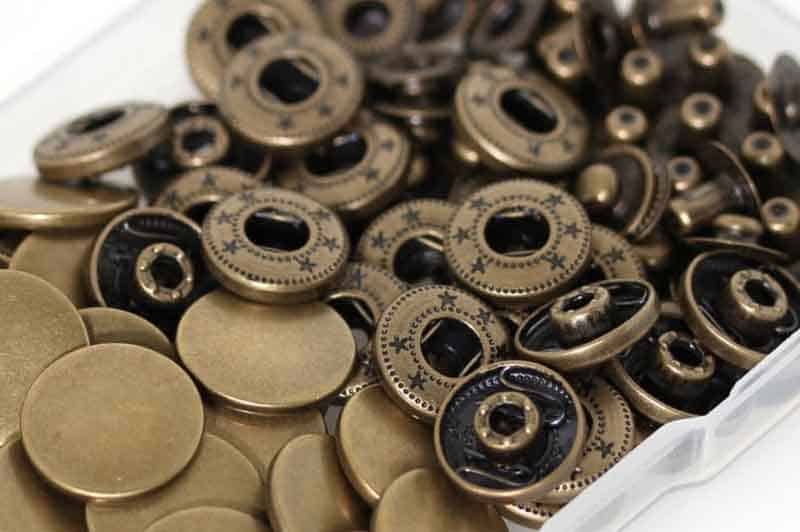
Select hardware finishes—nickel plating for bright, corrosion-resistant shine; black oxide for low-profile matte looks; antique brass or bronze for vintage warmth; and PVD coatings for extreme scratch and wear resistance. Match finish to function (e.g., marine-grade for salt exposure), style (matte vs. polished), and budget (electroplating vs. PVD). Verify ASTM B117 salt-spray and adhesion test ratings to ensure long-term performance.
Choosing the right finish and plating for leather hardware is as critical as selecting the underlying alloy. Finishes protect metal from oxidation and wear, define surface aesthetics, and affect cost and manufacturing complexity. Below are key considerations and options:
Performance Requirements
Corrosion Resistance:
- Salt Exposure: For coastal or marine gear, finishes must withstand salt spray. Stainless steel base metal paired with electroless nickel plating or PVD-coated stainless often achieves ≥ 1,000 hours in ASTM B117 salt-spray testing without red rust.
- Humidity & Perspiration: Handbags and wearable straps need finishes that resist tarnishing from skin oils. Nickel and chrome platings provide good resistance; PVD (Physical Vapor Deposition) is even more durable.
Abrasion & Scratch Resistance:
- Electroplated Finishes: Traditional nickel or chrome plating can easily scratch under heavy use, with hardness around 200–400 HV (Vickers).
- PVD Coatings: With hardness of 1,500–2,000 HV, PVD finishes such as TiN (titanium nitride) or DLC (diamond-like carbon) resist scratching and show minimal wear after 100,000 abrasion cycles in Taber testing.
Aesthetic Style
| Finish | Appearance | Common Use Cases |
|---|---|---|
| Polished Nickel | Bright, mirror-like | Contemporary handbags, dress belts |
| Chrome | High-gloss, cool tone | Modern hardware for backpacks and straps |
| Black Oxide | Matte, low reflectivity | Tactical gear, urban accessories |
| Antique Brass | Warm, aged patina | Heritage satchels, western belts |
| Bronze Patina | Brownish, vintage look | Eyewear cases, artisan boxes |
| PVD (various colors) | Custom hues: black, gold, rose | High-end commoditized hardware; fashion lines |
- Finish Cohesion: Ensure all hardware components (buckles, rivets, zippers) share the same finish to maintain visual harmony.
- Tactile Feel: Matte finishes feel more “grippy,” while polished finishes glide smoothly under touch.
Cost & Manufacturing Considerations
Electroplating (Nickel, Chrome):
- Pros: Established processes, moderate cost (\~\$0.20–\$0.50 per piece), reliable.
- Cons: Requires wet-chemical baths, wastewater treatment, thicker deposits (5–15 µm) can obscure fine details.
PVD Coating:
- Pros: Ultra-thin (1–3 µm), low environmental impact (dry process), excellent wear resistance.
- Cons: Higher capital and per-piece cost (\~\$1–\$3 per piece), batch sizes required, limited to compatible base metals (stainless steel, titanium).
Chemical Patinas & Lacquers:
- Pros: Artistic, one-off finishes achievable in small batches.
- Cons: Less durable, prone to rub-off unless sealed under clear lacquer.
Quality Assurance & Testing
Salt-Spray Testing (ASTM B117): Measures hours until first red rust appears. Choose ≥ 240 hours for coastal use, ≥ 500 hours for heavy marine exposure.
Adhesion Testing (ASTM D3359): Ensures plating adheres under tape-pull tests; classifications of 5B indicate no flaking.
Abrasion Resistance: Taber Abrasion Test can quantify finish wear cycles; luxury hardware should exceed 50,000 cycles.
Environmental and Regulatory Factors
RoHS & REACH Compliance: Avoid finishes containing hexavalent chromium or cadmium. Nickel electroplating must be trivalent to meet modern regulations.
Sustainability: PVD processes generate less hazardous waste compared to traditional electroplating baths.
How Should You Maintain and Care for Leather Hardware?
Clean leather hardware regularly with a soft cloth, mild soap, and water, then dry immediately. Apply a thin coat of microcrystalline or beeswax polish to brass and steel fittings to seal against moisture and fingerprints. Inspect fasteners quarterly for looseness or corrosion, tightening or replacing components as needed. Proper storage—away from humidity and direct sunlight—and gentle handling will keep hardware looking and functioning like new.
Maintaining leather hardware is critical to preserving both function and appearance. Follow these best practices:
1. Routine Cleaning
- Soft Dry Wipe: After each use, buff hardware with a lint-free microfiber cloth to remove surface dust and oils from handling.
- Mild Soap Solution: For fingerprints or light grime, mix a drop of neutral pH soap (e.g., castile) in water. Dampen a soft cloth, gently wipe each fitting, then immediately dry with a second cloth. Avoid soaking or abrasive cleaners, which can strip platings.
- Detail Brushes: Use a soft-bristled toothbrush to clean crevices around rivets, snap teeth, and buckle rollers.
2. Protective Coatings
- Microcrystalline Wax: Apply a thin layer of clear microcrystalline wax (e.g., Renaissance Wax) over brass or steel to create a moisture barrier. Buff lightly until the finish shines.
- Beeswax Polish: For brass hardware that develops an attractive patina, a beeswax rub slows further oxidation while retaining warm tones. Test on a hidden area first.
- Avoid Silicone Sprays: These can degrade leather adhesives and attract dust, leading to buildup.
3. Corrosion Prevention
- Humidity Control: Store leather goods in areas with 40–60% relative humidity. Excess moisture promotes rust; overly dry environments can cause metal brittleness.
- Silica Packs: Place small desiccant packs in storage boxes or dust bags to absorb ambient moisture.
- Salt and Chloride Exposure: If hardware contacts sweat or saltwater, rinse fittings with fresh water and dry promptly. Reapply protective wax after each exposure.
4. Inspection & Maintenance Schedule
Quarterly Checks: Every three months, examine all buckles, snaps, and rivets for signs of wear:
- Looseness: Gently tug straps on buckles and D-rings; retighten loose screws or crimp rivets with the proper setter tool.
- Corrosion Spots: Look for pitting or greenish verdigris on brass. Light oxidation can be polished away; deeper corrosion may require part replacement.
- Spring Tension: For snap closures and swivel clasps, test the spring action. Replace any component that feels weak or delayed in response.
5. Repair and Replacement
- Rivet Re-setting: If tubular or solid rivets loosen, use an arbor press or hand-setter with correct mandrel size to re-crimp.
- Snap and Grommet Tools: Invest in snap-setting and grommet-installation kits; these allow clean removal and reseating without damaging leather.
- Spare Hardware Kits: Keep matching spare buckles and snaps on hand—especially for limited-edition designs—to expedite repairs and maintain brand consistency.
6. Storage & Handling Best Practices
- Dust Bags: Store leather items in breathable cotton dust bags to shield hardware from dust without trapping moisture.
- Avoid Direct Sunlight: Prolonged UV exposure can fade plating and accelerate corrosion.
- Gentle Handling: Teach users to open buckles and clasps without yanking or twisting, reducing mechanical stress on pins and springs.
Conclusion
From selecting high‐grade C360 brass or 304 stainless alloys to matching buckle styles and finish choices, leather hardware plays a pivotal role in your product’s durability and brand image. At Szoneier Leather, we offer end‐to‐end expertise—from raw material research to precision metal pressing and plating—ensuring your custom hardware meets exacting standards. Contact us today to discuss bespoke hardware solutions and elevate your next leather collection.