
What Is the Best Thickness for a Leather Belt:Expert Guide
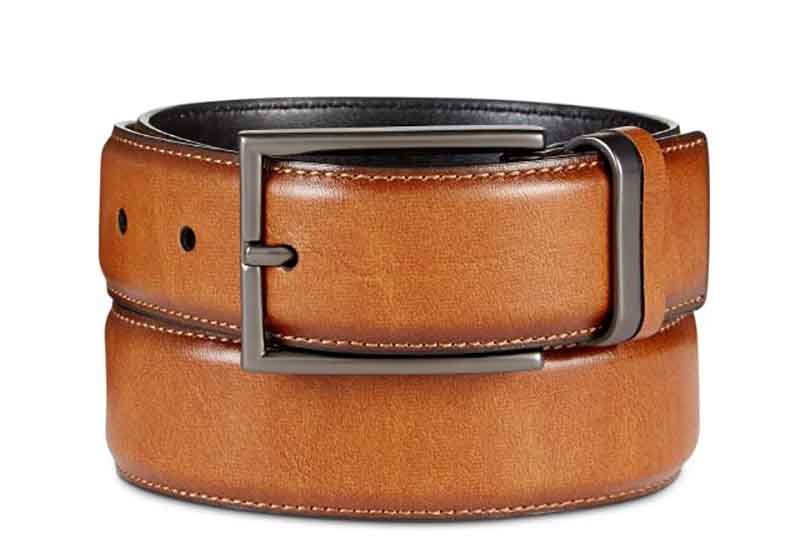
Leather belt thickness isn’t just a number—it defines a belt’s strength, flexibility, comfort, and style. Too thin, and the belt may stretch or wear through; too thick, and it won’t thread through standard loops or feel comfortable around the waist. Understanding the “sweet spot” in belt gauge guides you to a product that matches your daily needs, whether formal office wear, casual weekends, or rugged work gear.
The optimal leather belt thickness varies by use: 2.5–3.0 mm for dress belts, 3.5–4.0 mm for casual styles, and 4.5–5.0 mm for utility/work belts. Leather grade and ply construction may adjust these ranges by ±0.5 mm for best fit and durability.
What Role Does Leather Belt Thickness Play in Performance and Style?
Thickness affects a belt’s load-bearing capacity (thicker straps resist stretching under weight), flexibility (thinner straps conform to body contours), and aesthetic (slim dress belts vs. chunky utility styles). Proper gauge—balanced for intended use—ensures smooth buckle operation, comfortable wear, and longevity without compromising style.
Leather belt thickness is fundamental to three core dimensions:
Structural Integrity & Load Capacity
- Thicker Belts (4.5–5.0 mm): Provide exceptional tensile strength (≥25 MPa) and are suited for supporting heavy pant loops or tool attachments in work belts. They resist deformation and stretching under load, making them ideal for utility and outdoor belts.
- Thinner Belts (2.5–3.0 mm): Yield lower tensile strength (15–20 MPa) but remain adequate for holding trousers in place. They flex easily around hips and belt loops, preventing discomfort during long office days.
Flexibility & Comfort
- Thin Gauge: A 2.5 mm belt wraps smoothly around your waist without breaking in—perfect for dress situations where stiffness distracts from a clean silhouette.
- Thick Gauge: While offering durability, belts over 4 mm require a break-in period; they start rigid and can pinch or require firmer loops, a trade-off for rugged longevity.
Aesthetic & Proportion
- Dress Belts: 2.5–3.0 mm thickness paired with a 1–1.25″ width projects sleek minimalism. The narrow profile complements suit jackets and slim trousers.
- Casual Belts: 3.5–4.0 mm thickness with 1.25–1.5″ width balances substance and style—perfect for denim and chinos.
- Utility Belts: 4.5–5.0 mm thickness with 1.5–2.0″ width delivers a bold, purposeful look, matching workwear and outdoor gear, often featuring D-rings or multi-tool holders.
Interaction with Hardware
- Belt Loops Compatibility: Standard loops on jeans and trousers expect belts ≤4 mm thick. Exceeding this gauge may prevent proper closure or damage loops.
- Buckle Stability: Thicker belts require sturdier buckles (solid brass or stainless steel) and wider prongs to distribute stress; thinner belts pair well with narrower, decorative buckles that suit formal attire.
Leather Grade & Thickness Synergy
- Full-Grain Leather: At 3 mm, it holds shape and develops patina. At 5 mm, it becomes a statement piece—firm, structured, and heirloom-worthy.
- Top-Grain Leather: More pliable at 3.5 mm due to pigment finishes; balances easy wear with resilience.
- Split or Bonded Leather: Should never exceed 4 mm—these lower grades lose integrity if too thick and may crack under stress.
Regional and Industry Practices
- U.S. Standards: Dress belts typically 2.5 mm; casual 3.5 mm; utility 5 mm.
- European Influence: Italian artisans often craft 3 mm full-grain dress belts and 4 mm double-ply casual belts.
- Custom Tolerances: High-end makers allow ±0.2 mm gauge variance to tailor for personalized comfort.
By appreciating how thickness shapes both function and form, you can specify—or select—a belt that meets your daily demands and stylistic goals. Next, we’ll explore the precise thickness ranges suited for formal, casual, and work contexts.
Which Thickness Is Ideal for Formal, Casual, and Work Belts?
- Formal/Dress Belts: 2.5–3.0 mm thick with a narrow 1–1.25″ width for a sleek profile under suit jackets.
- Casual Belts: 3.5–4.0 mm thick and 1.25–1.5″ wide to pair with jeans or chinos, balancing substance and flexibility.
- Work/Utility Belts: 4.5–5.0 mm thick and 1.5–2.0″ wide for maximum strength and load-bearing, with hardware clearances to support tool clips or heavy buckles.
Choosing the right belt thickness isn’t just about durability—it’s also about achieving the correct visual proportion and wearing comfort for each context. Below we unpack the rationale behind each recommended range and examine real-world examples.
1. Formal & Dress Belts: 2.5–3.0 mm
Formal attire demands belts that disappear beneath jacket hems and don’t distort pant lines. A thickness of 2.5–3.0 mm strikes the sweet spot:
- Strength vs. Sleekness: At around 2.5 mm, full-grain dress belts still resist stretching (≈15 MPa tensile) yet lie flat against the waist.
- Buckle Integration: Slim buckles (35–40 mm frame width) pair cleanly, allowing the belt to slide easily under suit belt loops without puckering.
- Edge Finishing: Thin belts exhibit smooth burnished edges that reflect light subtly, enhancing formality.
- Examples:
- Hermès Constance Belt: Approx. 2.6 mm vegetable-tanned calfskin with mirror-polished buckle.
- Szoneier Slim Italian Leather Belt: 2.8 mm full-grain leather; offered in black, tan, and deep burgundy.
2. Casual Belts: 3.5–4.0 mm
For everyday denim or chinos, a 3.5–4.0 mm gauge provides substance without sacrificing flexibility:
- Material Behavior: At 3.5 mm, top-grain leather remains pliable after a short break-in—wrapping naturally around hips.
- Stitching & Detail: Casual belts often feature contrast stitching or embossed textures, which require a sturdy mid-weight substrate.
- Hardware Compatibility: Standard 40–45 mm metal buckles fit snugly, and prongs penetrate without overstressing the leather.
- Examples:
- Dooney & Bourke Signature Belt: 3.8 mm pebbled leather with brass roller buckle.
- Szoneier Custom Casual Belt: 3.6 mm Italian leather with optional double-stitch accents and D-ring tool loop.
3. Work & Utility Belts: 4.5–5.0 mm
Utility belts demand uncompromising strength. A thickness of 4.5–5.0 mm ensures:
- Load-Bearing Capacity: Tensile strengths exceed 25 MPa, preventing stretch under holsters, tool holders, or heavy hardware.
- Multi-Ply Construction: Many work belts are double-ply, bonding two 2–2.5 mm layers for redundancy.
- Hardware Clearances: Buckles and snaps must accommodate thicker straps—Szoneier recommends custom milled buckles with extended prongs.
- Examples:
- Carhartt Heritage Work Belt: 4.8 mm full-grain harness leather with steel D-rings and rivet reinforcements.
- Szoneier Tactical Belt: 5.0 mm double-ply leather, reinforced with nylon webbing core and quick-release buckle.
Considerations:
- Breaking-In Period: Expect 2–4 weeks of daily wear before the belt flexes completely.
- Loop Compatibility: Verify pant and holster loops are cut to fit thicker straps—custom shooters or trades belts often include wider belt loops.
4. Balancing Thickness with Leather Grade
Thickness recommendations assume full- or top-grain leather. If you choose corrected-grain or split leathers, reduce thickness by ~0.5 mm to avoid cracking. Conversely, exotic hides like alligator can maintain strength even at 3.5 mm, allowing a thinner profile for luxury utility belts.
How Does Leather Type and Construction Influence Optimal Thickness?
The ideal belt thickness depends on leather grade and construction: full-grain belts can be thinner (2.5–3.5 mm) and still remain strong; top-grain often uses 3.0–4.0 mm to balance durability and finish; split or corrected-grain leathers need 3.0–3.5 mm maximum to avoid cracking. Double-ply construction—bonding two 2 mm layers—adds strength with slimmer profiles. Tanning method (vegetable vs. chrome) also affects flex and thus recommended gauge by ±0.2 mm.
Leather belts are much more than strips of hide—they’re engineered systems where grade, processing, and layering dictate performance:
Full-Grain Leather
- Structure: Outermost hide featuring intact fiber matrix.
- Thickness Range: 2.5–3.5 mm is sufficient for most uses; at 4 mm it becomes ultra-sturdy.
- Flexibility: Retains natural oils; less brittle when thin.
- Patina: Thinner full-grain develops richer patina faster; thick variants take longer but patina deeply.
Top-Grain Leather
- Structure: Sanded to remove defects; pigmented finish applied.
- Thickness Range: 3.0–4.0 mm optimizes balance between smooth finish and tensile strength.
- Surface Uniformity: Pigment layer supports slightly greater thickness without hindering break-in.
Split and Corrected-Grain Leather
- Structure: Lower layers or bonded scraps with surface embossing.
- Thickness Range: Keep under 3.5 mm—exceeding this leads to stiffness and cracking as fibers lack grain support.
- Coating Dependence: Pigment and coatings mask split edges; thicker coatings compensate but add bulk.
Single-Ply vs. Double-Ply
- Single-Ply: One layer of 3 mm full-grain suffices for dress belts.
- Double-Ply: Two 2 mm layers glued and stitched yield a strong 4 mm belt that flexes easier than a monolithic 4 mm strip.
- Customization: Szoneier offers both constructions, tailoring ply counts to thickness goals and end-use.
What Is the Best Grade of Leather for a Belt?
- Best Overall: Full-grain leather—combining natural strength, moisture regulation, and patina potential. Ideal at 2.5–4.0 mm.
- Premium Formal: Italian vegetable-tanned full-grain, 2.8 mm, for smooth dress profiles.
- Durable Casual/Work: Top-grain or full-grain at 3.5–4.5 mm for everyday resilience.
- Budget Options: Corrected-grain at 3.0 mm or bonded leather under 3.5 mm—affordable but lower longevity.
What Are Industry Standards and Regional Variations in Belt Thickness?
In the U.S., standard belt gauges are 2.5 mm (dress), 3.5 mm (casual), and 5.0 mm (utility). European makers often use 3.0 mm for both dress and casual, favoring thinner elegant lines. Asian manufacturers may produce 3.0–4.0 mm belts for global markets. Custom tolerances of ±0.2 mm are typical across regions, with bespoke ateliers offering ±0.1 mm precision.
United States
- Dress Belts: 2.5–3.0 mm predominantly. Military and formal dress codes historically mandated specific gauges for uniform belts.
- Casual Belts: 3.5–4.0 mm; denim brands like Levi’s specify 3.8 mm for logo belts.
- Utility Belts: 4.5–5.5 mm, often double-ply leather, meeting OSHA and trade-union specs for tool belts.
Europe
- Italian Craftsmanship: High-fashion houses (Gucci, Prada) produce 3.0–3.2 mm full-grain belts for luxury lines, emphasizing slimness paired with sturdy hardware.
- British Leather Goods: Traditional England belts often 3.5 mm with thicker vegetable-tanned harness leather (2 layers).
Asia
- Mass-Market Producers: China and India supply 3.0–4.0 mm top-grain or corrected leather belts for global retail chains.
- Artisanal Segments: Japanese craftsmen create 2.5 mm bespoke belts with hand-rolled edges for niche luxury.
Tolerance Standards
- Industry norms allow ±0.2 mm on belt gauges; high-end artisans claim ±0.1 mm consistency via precision milling.
Custom Orders
- Brands leveraging Szoneier’s OEM/ODM services can specify non-standard gauges—e.g., 3.3 mm for unique designs—with assured precision across production batches.
How Do You Measure and Evaluate Belt Thickness Before Purchase?
Use a digital caliper to measure the belt’s gauge at multiple points—near the buckle end, the center, and the tail end—to ensure consistency. Perform a flex test by gently bending the strap around your finger: a high-quality belt will flex smoothly without cracking. Review the brand’s specification sheet or request a small leather cut sample (“cutlet”) to physically confirm the advertised thickness and leather grade before committing to a full purchase.
Selecting the right leather belt thickness starts with accurate measurement and evaluation. Here’s a comprehensive approach that both consumers and brands (like Szoneier) can apply to guarantee the belt matches its specifications and intended use:
1. Tools of the Trade
Digital Calipers (0.01 mm resolution):
- Position the caliper jaws perpendicular to the belt’s surface.
- Measure at least three points: close to the buckle, mid-strap, and near the tail.
- Record each reading; a quality belt will exhibit variance no greater than ±0.2 mm, ensuring uniform fit in standard belt loops.
Gauge Blocks or Thickness Shims:
- Stack precision shims until they match the belt’s thickness.
- Useful for quick visual confirmation without electronics, especially in wholesale showrooms.
Micrometer (Optional):
- Provides even higher accuracy (0.001 mm), valuable for manufacturers verifying bulk production tolerance.
2. Multi-Point Measurement
Leather is a natural material with slight thickness variations. To thoroughly evaluate:
- Buckle End: Leather here may be folded or doubled, so confirm single-layer thickness if possible.
- Center Strap: Typically the thickest single-layer region—your primary reference.
- Tail End: Ensures tapering is within tolerances; excessive taper (>0.5 mm) can affect buckle prong fit and wearer comfort.
3. Flexibility and Break-In Behavior
Beyond raw numbers, how the leather behaves under bending reveals its quality:
Flex Test:
- Grip the strap flat between thumb and index finger, then bend it into a U-shape around a 10–15 mm diameter circle.
- A premium full-grain belt flexes smoothly, showing slight grain stretch but no surface cracks.
- Cheaper corrected or split leathers may crease sharply or flake at the bend point.
Repeated Fold Test:
- Fold the belt at the same point 20–30 times; observe for micro-cracking. Quality hides remain intact, whereas low-grade hides develop fine cracks.
4. Specification Sheets and Cutlets
Reputable brands and factories provide detailed documentation:
Spec Sheets:
- Should list “Leather Grade,” “Thickness (mm),” “Tensile Strength (MPa),” and “Tanning Method.”
- For example, “Full-Grain Italian Cowhide, 3.0 ± 0.1 mm, 20 MPa tensile, Vegetable-Tanned.”
Leather Cutlets:
- Small rectangles of the exact hide used in production, allowing clients to physically measure and feel the material.
- Szoneier can supply free cutlets for sample approval—ensuring thickness, color, and finish match expectations.
5. Brand Claims vs Reality
Marketing can overstate gauge or hide quality:
- Verify Branding: Look for “Full-Grain” or “Top-Grain” embossing on the belt’s underside—though embossing can be misleading if not backed by spec sheets.
- Edge Examination: Burnished edges should not reveal polyester backing or foam cores, which indicate bonded or split leathers disguised as thicker straps.
6. Tolerances and Manufacturing Consistency
For private-label or OEM production, consistency across batches is critical:
Tolerance Benchmarks:
- ±0.2 mm for entry-level; ±0.1 mm for premium, bespoke lines.
Quality Audits:
- Random batch testing of 10–20% of belts for thickness, flex resistance, and edge finish.
- Szoneier’s ISO 9001 and BSCI certifications ensure such rigorous audits, maintaining <1% defect rates.
7. Integrating Measurements with Design
Finally, align thickness measurements with the belt’s intended use:
- Dress Belts (2.5–3.0 mm): Require precise, slim profiles; even small gauge deviations affect fit under suit loops.
- Casual Belts (3.5–4.0 mm): Tolerate ±0.3 mm variance without user notice, offering relaxed manufacturing tolerances.
- Work Belts (4.5–5.0 mm): Benefit from slightly tighter controls to guarantee strength and hardware compatibility.
Partner with Szoneier Leather for Your Custom Belt Needs
Whether you’re sourcing 2.8 mm dress belts, 4.0 mm casual straps, or 5.0 mm utility harnesses, Szoneier Leather provides 18+ years of R&D, vertical supply chain, and precision manufacturing. Enjoy free CAD mockups, low MOQs (200 units), rapid prototyping, and ISO/BSCI-certified quality. Contact us today to tailor belt thickness, leather grade, and hardware to your exact specifications—and deliver the perfect belt solution to your customers.
What Can I Do For You?
Here, developing your OEM/ODM private label leather goods collection is no longer a challenge,it’s an excellent opportunity to bring your creative vision to life.
Make A Sample First?
If you have your own tech packs, logo design artwork, or just an idea,please provide details about your project requirements, including preferred fabric, color, and customization options,we’re excited to assist you in bringing your leather goods designs to life through our sample production process.