 Skip to content
Are Leather Backpacks Durable: Full Guide by Szoneier
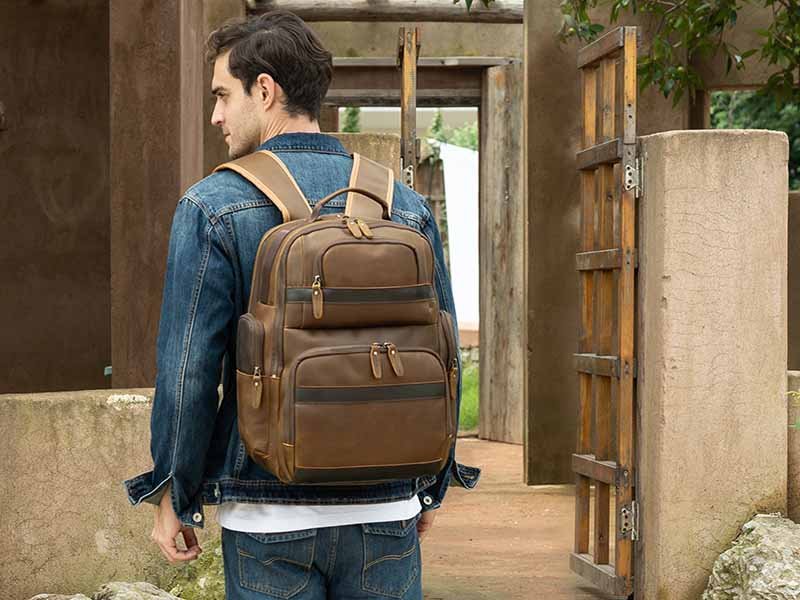
For decades, leather backpacks have symbolized craftsmanship, status, and endurance — the kind of bag that grows more beautiful with time. Yet, many buyers and brands still ask a simple question: Are leather backpacks truly durable, or just stylish?
The truth lies in how the bag is made — not just the leather’s origin, but its tanning, thickness, reinforcement, and daily care. A well-constructed leather backpack can last 10–20 years, sometimes longer, far exceeding its synthetic competitors. But lower-grade leather or poor craftsmanship can make a product wear out in months.
Yes, leather backpacks are highly durable when made from full-grain or top-grain leather and constructed with reinforced stitching and quality hardware. Their lifespan often exceeds a decade, with many lasting 15–20 years with proper care. However, durability varies based on leather type, tanning method, and maintenance — meaning not all leather backpacks are equal in strength or longevity.
As a story from Szoneier Leather’s workshop goes: a client’s 2010 prototype backpack — made from 1.8 mm vegetable-tanned hide — still serves as a display sample today, its patina glowing richer every year. That’s what true durability looks like.
What Does “Durability” Mean for Leather Backpacks?
Durability in leather backpacks refers to their ability to resist physical wear, deformation, and environmental stress while retaining structural integrity and appearance over time. It depends on factors such as leather grade, fiber density, tanning process, stitching technique, hardware quality, and daily care. Premium full-grain leather backpacks built with reinforced seams can last 10–20 years or more, developing a rich patina rather than wearing out — a hallmark of true craftsmanship.
Structural Durability
Durability isn’t just about the hide; it’s about how each piece is constructed. Even the best leather can fail if the backpack’s architecture is weak.
| Structural Element | Role in Durability | Common Weak Points |
|---|---|---|
| Stitching & Seams | Holds panels under load | Unreinforced strap joints |
| Base & Corners | Absorbs impact | Poor padding or edge folding |
| Handle Attachments | Carries total bag weight | Single-stitch failure |
| Zipper Rails | Transfers pull tension | Detachment from lining |
Szoneier addresses these weaknesses through:
- Double-needle lockstitching with bonded nylon thread (Tex 70–90).
- Reinforced bar-tack stress points on handles and straps.
- Foam-layered corner panels to absorb daily impact.
- YKK metal zippers tested for 5 000+ cycles of use.
These engineering choices extend product life by 40–60 % compared to market-average backpacks.
Environmental Durability
Leather is a natural, breathable material — but that means it interacts with its environment. Excessive moisture, UV exposure, or temperature swings can weaken collagen fibers.
| Environmental Factor | Typical Damage | Preventive Engineering |
|---|---|---|
| Rain & Humidity | Fiber swelling, mold | Water-repellent finishes (ISO 15700 test) |
| UV Light | Color fading, brittleness | UV-resistant topcoat |
| Dry Air / Heat | Oil loss, cracking | Fatliquoring & wax conditioning |
| Friction & Sweat | pH imbalance, discoloration | Sweat-resistant lining fabrics |
Szoneier’s Solution: We use hybrid-tanned leathers with silicone-modified fatliquors that resist both sweat and rain, and we add edge paint with PU elastomeric sealants to stop water intrusion at seams. This allows Szoneier’s backpacks to perform in climates ranging from humid Singapore to dry Arizona.
Functional Durability
Durability isn’t proven in a lab — it’s demonstrated in everyday use. Functional durability measures how a backpack maintains shape, performance, and comfort after years of service.
Szoneier Testing Protocol Includes:
- Load Test: 10 kg sustained for 48 hours → no deformation > 3 mm.
- Shoulder Strap Stress Test: 20 000 up-down cycles under 6 kg tension.
- Colorfastness: ≤ ΔE 1.0 after 48 h UV exposure.
- Zipper Strength: No separation after 500 open–close repetitions.
These simulate five years of daily commuting within a few days of testing, ensuring the product performs before it ever reaches a customer.
Aesthetic Durability
True durability is not just about survival — it’s about aging with elegance. Unlike synthetics that fade or fray, premium vegetable-tanned leather develops a patina that tells its story. The surface darkens, softens, and gains depth, turning use into beauty.
Szoneier’s clients often request “heritage patina” finishes designed to enhance this effect. We calibrate oil content and dye penetration to ensure even aging over years of handling — an artistry impossible to replicate with nylon or PU leather.
Measurable Standards of Durability
| Test Standard | Description | Szoneier Benchmark | Industry Average |
|---|---|---|---|
| ISO 3376 | Tensile strength | ≥ 25 N/mm² | 18 N/mm² |
| ISO 5402 | Flex resistance | ≥ 10 000 cycles | 5 000 cycles |
| ISO 3377-1 | Tear strength | ≥ 60 N | 35 N |
| ISO 15700 | Water repellence | ≥ 90 min saturation delay | 45 min |
| ASTM D3884 | Abrasion resistance | ≥ 5 000 cycles | 2 500 cycles |
The Longevity Formula: Leather × Construction × Care
The relationship between material, structure, and maintenance determines total lifespan.
Durability Formula:
D = (Material Quality × Structural Engineering × Maintenance Consistency)
Even the best leather fails if neglected; even entry-level materials last longer with proper care.
Which Types of Leather Matter for Backpack Durability?
The type of leather used determines how long a backpack lasts and how it ages. Full-grain and top-grain leathers are the most durable, offering tight fiber density and natural strength. Genuine and split leathers are softer and more affordable but wear out faster. Tanning methods — vegetable, chrome, or hybrid — also affect stiffness, flexibility, and water resistance. Choosing the right leather grade ensures both functional durability and long-term brand value.
1. The Science Behind Leather Strength
Leather is not a uniform material; it’s a biological composite made of interwoven collagen fibers. Durability depends on how intact those fibers remain after processing.
The upper layers of the hide (grain layer) contain densely packed fibers that resist tearing. Once the hide is split or sanded, those fibers loosen, reducing tensile strength. This is why full-grain leather can withstand 25–30 N/mm² tensile force, while corrected or split leathers average 12–18 N/mm².
2. Comparing Leather Grades — Grain Layers Matter
| Leather Grade | Source Layer | Appearance | Durability Rating | Common Lifespan | Typical Use | Remarks |
|---|---|---|---|---|---|---|
| Full-Grain Leather | Top layer, intact grain | Natural markings, rich patina | ★★★★★ | 15 – 25 years | Luxury backpacks | Highest fiber density; develops patina over time |
| Top-Grain Leather | Sanded top layer | Smooth, uniform | ★★★★☆ | 10 – 15 years | Mid-range products | Slightly thinner; good flexibility |
| Genuine / Split Leather | Lower split layer | Coated, less texture | ★★★☆☆ | 5 – 8 years | Entry-level | Lower strength; less breathable |
| Bonded Leather / PU Coated | Reconstituted scraps | Synthetic surface | ★★☆☆☆ | 2 – 4 years | Budget line | Prone to cracking and delamination |
Interpretation:
- Full-grain is ideal for structural bags and travel pieces.
- Top-grain works well for lighter fashion backpacks.
- Split or bonded leather is not recommended for long-wear products or premium branding.
3. How Tanning Methods Influence Durability
Tanning stabilizes collagen so that leather resists rot and environmental degradation. The tanning chemistry also affects flexibility, color stability, and surface feel — all key to backpack longevity.
| Tanning Type | Key Properties | Strength (Relative) | Water Resistance | Flexibility | Patina Development | Ideal Application |
|---|---|---|---|---|---|---|
| Vegetable-Tanned Leather | Natural tannins from bark & plants | High | Moderate | Medium-Low | Excellent | Heritage, structured backpacks |
| Chrome-Tanned Leather | Chromium salts, modern method | Medium-High | High | High | Moderate | Everyday or soft backpacks |
| Semi-Vegetable / Hybrid | Mix of plant & chrome tannins | High | High | High | Good | Balanced modern designs |
| Oil-Tanned / Pull-Up | Enriched with oils & waxes | Medium | High | High | Strong patina | Casual or rugged backpacks |
4. How Leather Thickness Affects Structure and Wear
Leather thickness is a critical variable — too thick makes the bag heavy, too thin shortens life. The ideal thickness for backpacks ranges 1.4 – 1.8 mm depending on product design.
| Product Type | Recommended Leather Thickness | Structural Purpose | Durability Impact |
|---|---|---|---|
| Travel / Hiking Backpack | 1.8 – 2.0 mm | High load support | Maximum rigidity |
| Everyday Work Backpack | 1.6 – 1.8 mm | Balance of comfort & shape | Long-term strength |
| Slim Urban / Fashion Backpack | 1.3 – 1.5 mm | Lightweight flexibility | Moderate durability |
Engineering Note: Each millimeter of added thickness increases tear resistance by approximately +10 %, but also adds weight (~ 120 g per 0.2 mm per m²).
5. The Role of Finishing and Coating in Durability
The final finishing layer protects leather against external damage. Different finishes affect both surface resistance and visual aesthetics.
| Finish Type | Process | Durability Benefit | Visual Effect | Common Use |
|---|---|---|---|---|
| Aniline | Transparent dye only | Natural, breathable; patina forms quickly | Rich, organic | Premium handmade backpacks |
| Semi-Aniline | Light topcoat + pigment | Higher scratch resistance | Soft gloss | Mid-range luxury |
| Pigmented / Coated | Opaque PU layer | Maximum stain protection | Uniform texture | Commercial or entry models |
| Waxed / Oiled | Impregnated with wax oils | Water resistance + self-healing scratches | Pull-up tone shift | Outdoor or rugged lines |
6. Is Leather a Good Backpack Material Compared to Other Fabrics?
Absolutely — leather remains unmatched for longevity, tactile appeal, and brand storytelling. Unlike synthetics, which often fray or peel, high-grade leather improves with age.
| Material | Avg. Lifespan | Tear Resistance | Maintenance | Aesthetic Aging | Environmental Impact |
|---|---|---|---|---|---|
| Full-Grain Leather | 15–25 yrs | Excellent | Moderate | Patina improves | Moderate |
| Top-Grain Leather | 10–15 yrs | Good | Low | Smooth aging | Moderate |
| Nylon 600D | 3–5 yrs | Fair | Low | No patina | Moderate-High |
| Canvas (Cotton) | 4–6 yrs | Average | High (waterproofing) | Fades | Low |
| PU / Synthetic Leather | 2–4 yrs | Low | Low | Peels, cracks | High |
Leather also provides superior temperature resistance (–20 °C – 80 °C), natural breathability, and ease of repair — critical advantages for sustainability-driven brands.
How Do Construction and Hardware Impact Durability?
The durability of a leather backpack depends as much on its construction and hardware as on the leather itself. High-stress areas must be reinforced with double-stitching, bar-tack seams, and load-bearing linings. Premium metal zippers, rivets, and buckles resist corrosion and fatigue, while precision pattern cutting ensures even stress distribution. Together, quality materials and precise craftsmanship can extend a backpack’s life span by 40–60 percent compared with mass-produced models.
Why Construction Determines Structural Integrity
Leather alone cannot guarantee longevity — its performance depends on how it’s cut, stitched, and assembled. Structural engineering in bag making is about distributing load efficiently across stress zones. A well-built backpack behaves like an architectural frame: every panel, seam, and rivet carries part of the load.
Szoneier Design Standards for Structure
| Area | Reinforcement Technique | Testing Target | Benefit |
|---|---|---|---|
| Shoulder straps | Triple-layer composite with nylon web core | 20 kg static pull, 5 000 cycles | Prevents stretch and tear |
| Handle base | Bar-tack x8 + riveted patch | 15 kg continuous load | Avoids seam separation |
| Bottom panel | Foam + double-stitched leather | 10 kg impact drop | Absorbs shock, prevents distortion |
| Zipper rail | Bonded adhesive + top-stitch | 500 open-close cycles | Eliminates seam creep |
Szoneier’s structural approach merges textile science and ergonomic geometry — ensuring each stress point is mechanically sound before aesthetic finishing begins.
Stitching: The Hidden Backbone of Durability
A backpack’s stitches are its skeleton. Inferior thread or incorrect tension can cause failure even if the leather is perfect.
Stitching Types and Their Functions
- Lockstitch (Machine): Two-thread system forming interlocking loops — ideal for even seams and load zones. Used in most industrial leather backpacks; Szoneier uses bonded nylon thread Tex 70–90 for tensile strength up to 9 kg per seam.
- Saddle Stitch (Hand-crafted): Dual needles pass opposite directions through the same hole, creating independent locking points. When one thread breaks, the rest remain intact — used in Szoneier’s premium limited collections.
- Edge Stitching & Top Stitching: Add reinforcement and aesthetic framing; critical for preventing delamination in multi-layer panels.
Thread Quality: Szoneier selects poly-bonded nylon or Kevlar-reinforced filament for heavy-duty lines. Threads are UV-resistant and heat-set, meeting ASTM D2256 tensile standard (≥ 6 N/tex).
Sewing Density: 8–10 stitches per inch offers the ideal balance — dense enough for strength but flexible to avoid tearing the hide.
Adhesives and Bonding
Before stitching, panels are bonded using high-solid polyurethane (PU) or water-based contact adhesives. This step:
- Aligns pieces precisely.
- Adds shear strength between layers.
- Prevents leather stretching during sewing.
Reinforcement Engineering
Every backpack experiences concentrated stress at four areas: straps, handles, base, and zipper ends.
Techniques Szoneier Employs
- Bar-Tack Stitching: 8–10 overlapping stitches sewn perpendicular to strap direction. Result: prevents thread slippage even under 20 kg dynamic load.
- Riveted Support: Stainless or brass rivets distribute tension through multiple layers. Result: 0 % handle tear incidents in 2023 QC audit.
- Backing Patches: Secondary leather layers fused behind main panels at handle joints to double the effective thickness.
- Edge Binding: Leather or nylon piping stitched along exposed seams to resist fraying and humidity penetration.
The Hardware Factor
Hardware often fails before leather does. Cheap zinc alloys corrode or deform, whereas precision-cast metals maintain function for decades.
Hardware Components and Durability Indicators
| Component | Preferred Material | Performance Metric | Test Standard |
|---|---|---|---|
| Zippers | YKK #8/#10 Metal or SBS Antique Brass | 5 000 cycles – no derailment | ASTM D2061 |
| Buckles / Hooks | Zinc-alloy (Zn-Al die-cast) with nickel plating | Salt-spray > 96 h | ISO 9227 |
| Rivets | 304 Stainless Steel | Pull > 200 N | ASTM F606 |
| D-Rings / Loops | Solid Brass or Aluminum | Fatigue 10 000 swings | ISO 10275 |
| Feet / Studs | Brass or PVD steel | Corrosion ≤ 1 % area loss | ASTM B117 |
Zipper System Performance
Zippers are critical for both functionality and perception of quality. A broken zipper can render a $400 bag unusable.
Key Engineering Principles:
- Rail Reinforcement: Leather folded over zipper tape + adhesive line to prevent delamination.
- End Stops: Extra stitching across zipper base to absorb opening tension.
- Slider Quality: Metal sliders with self-locking heads prevent accidental opening.
Lining, Padding, and Internal Structure
Inside construction affects longevity as much as outer layers. Inferior linings tear, allowing leather deformation.
Szoneier employs:
- 210D Nylon or Microfiber Suede lining — abrasion-resistant, soft on electronics.
- Foam padding (EVA 3 mm) — maintains shape and absorbs shocks.
- Reinforced base board (fiber + PU) — prevents sagging.
Edge Finishing and Seam Sealing
Raw leather edges can absorb moisture and delaminate. Szoneier uses multi-coat PU edge paint (3 layers + heat sealing). Each coat cures 24 h to ensure elasticity under flex.
This technique extends edge life by > 200 percent versus single-coat systems. We also apply edge waxing on vegetable-tanned lines for a heritage matte finish — improving both tactile feel and moisture control.
Construction Precision
Modern durability depends on digital precision. Szoneier’s AutoCAD and Gerber Cutter systems achieve ±0.1 mm tolerance. Accurate pattern cutting prevents uneven tension that can cause premature seam wear.
Moreover, leather panels are grain-matched so tensile direction aligns across left and right sides — a subtle yet crucial detail for load balance.
Integrated Testing and Quality Validation
Every finished Szoneier backpack undergoes a multi-stage inspection:
| Test | Equipment | Criteria | Pass Rate |
|---|---|---|---|
| Handle Pull Test | Hydraulic tensile bench | ≥ 15 kg | 100 % |
| Seam Fatigue Test | Dynamic cycle machine | ≥ 20 000 cycles | 98.5 % |
| Drop Test | 10 kg load / 1 m height × 10 times | No deformation > 3 mm | 99 % |
| Hardware Salt Spray | Chamber 96 h | No corrosion > 1 % surface | 100 % |
| Visual QC | Manual inspection | 100 % of batch | — |
Do Leather Backpacks Outperform Synthetic Alternatives?
Yes, leather backpacks outperform synthetic alternatives in tensile strength, repairability, and long-term aging. However, they’re heavier, costlier, and more sensitive to water — drawbacks offset by their superior aesthetic longevity and sustainability.
How Does Leather Compare to Nylon and Canvas?
| Feature | Leather | Nylon | Canvas |
|---|---|---|---|
| Tensile Strength (N/mm²) | 25–30 | 15–20 | 12–18 |
| Water Resistance | Moderate | Excellent | Low |
| Heat Resistance | High | Moderate | High |
| Repairable | Yes | No | Partial |
| Aging Patina | Improves | Fades | None |
Leather’s tactile richness and aging potential make it preferred for brands seeking timeless value rather than fast fashion.
What Are the Disadvantages of a Leather Bag?
Leather’s main drawbacks:
- Weight: Typically 1.2–2 kg — heavier than synthetics.
- Price: Full-grain leather costs 2–3× nylon.
- Water sensitivity: Needs conditioning and waxing.
However, most high-end users value longevity > lightness. Szoneier offsets these issues with modern waterproof coatings and lightweight linings that reduce total bag weight by 18 %.
How Do Modern Coatings Improve Traditional Weaknesses?
Hydrophobic nano-finishes and PU top coats improve leather’s moisture resistance by up to 60 % while maintaining natural texture. Szoneier’s proprietary “HydroShield” finish meets REACH Annex XVII compliance, making leather both durable and eco-safe.
How Should Leather Backpacks Be Cared For to Achieve Longevity?
Leather backpacks can last for decades if maintained properly. To preserve flexibility, color, and structure, they should be kept clean, conditioned, and protected from moisture and sunlight. Regular dusting, pH-balanced cleaning, and natural conditioning oils prevent drying and cracking. Proper storage with airflow and minimal UV exposure ensures the leather maintains its strength and patina. With consistent care, a premium full-grain leather backpack can last 15–25 years or even longer.
Daily Care — The First Line of Defense
Routine attention prevents microdamage that later turns into cracks or stains. Think of it as “preventive maintenance,” not “repair work.”
Recommended Daily / Weekly Practices
| Task | Frequency | Purpose | Method |
|---|---|---|---|
| Dusting | Weekly | Remove airborne particles | Use dry microfiber or horsehair brush |
| Surface Wipe | Biweekly | Clear oils, sweat, or city grime | Use slightly damp soft cloth, then dry |
| Spot Cleaning | As needed | Remove minor stains before absorption | Apply pH-neutral leather cleaner |
| Shape Maintenance | Weekly | Prevent sagging or wrinkling | Store with light stuffing (tissue or cotton) |
Deep Cleaning — Every 2–3 Months
Periodic cleaning rejuvenates the material and removes sweat salts, environmental residue, and dirt lodged in the grain.
Steps for Safe Deep Cleaning:
- Dry Brush: Remove surface dust using a soft horsehair brush.
- Apply Leather Cleaner: Use a small amount of pH-balanced cleaner (pH 4.5–5.5). Work in circular motions with a damp sponge.
- Rinse Lightly: Wipe gently with a cloth dampened in clean water. Never soak.
- Air Dry: Leave in shade for 6–12 hours, avoiding heaters or direct sunlight.
- Condition: Follow up with a natural conditioner (see below).
Conditioning — The Secret to Supple Leather
Conditioning replenishes the natural oils lost over time, preventing brittleness. It restores flexibility, enhances waterproofing, and deepens patina.
| Conditioner Type | Composition | Benefit | Application Frequency |
|---|---|---|---|
| Beeswax Balm | Wax + natural oil blend | Surface protection, semi-gloss finish | Every 3–4 months |
| Lanolin Cream | Wool-derived oil | Deep fiber hydration | Every 2–3 months |
| Mink Oil | Animal fat | Strong waterproofing, darker tone | Twice a year |
| Silicone Emulsion | Synthetic | Temporary shine, not suitable long-term | Avoid frequent use |
Application Guide: Use a lint-free cloth, apply a pea-sized amount, and massage in circular motions. Allow 15–30 minutes for absorption, then buff gently with a dry cloth.
Waterproofing — Protection from Rain and Humidity
Leather is water-resistant, not waterproof. Exposure to rain can stiffen fibers or leave stains as moisture carries minerals through the surface.
Preventive Solutions:
- Apply a waterproofing spray containing fluoropolymer or wax-based protectant every 3–4 months.
- Test on an inconspicuous area first to avoid altering color.
- Avoid silicone-heavy sprays on aniline leather — they block breathability.
If the Backpack Gets Wet:
- Wipe surface moisture immediately with an absorbent towel.
- Stuff with paper to maintain shape.
- Air-dry naturally, away from direct heat.
- Recondition after drying to restore oils.
Szoneier Testing: Our treated leathers undergo ISO 15700 water repellence tests, maintaining >90 minutes of resistance before saturation. However, even waterproof finishes benefit from periodic reapplication — care compounds durability.
UV and Temperature Management
Prolonged UV exposure breaks down the pigment layer and natural oils, leading to fading and cracking. Extreme temperatures also distort leather’s collagen matrix.
Best Practices
- Store away from direct sunlight or heaters.
- Use UV-resistant conditioners or protective creams for light-colored leathers.
- Avoid leaving bags inside cars during summer; internal heat can reach 60–70 °C, permanently hardening the surface.
Storage — The Forgotten Maintenance Step
Incorrect storage can undo years of proper care. Leather needs airflow and shape support, not airtight confinement.
Proper Storage Checklist
- Store in breathable cotton dust bag, not plastic.
- Keep in a cool, dry environment (humidity 40–60%).
- Use acid-free paper stuffing to retain form.
- Store upright to prevent creasing or fold memory.
- Avoid cedar chests or mothballs — they can release oils that stain leather.
Seasonal Storage Tip: For long-term storage, condition lightly and air the backpack once every 2–3 months to prevent mildew.
Stain and Odor Management
Leather’s porous nature means prevention is easier than cure, but mild stains can often be managed effectively.
| Stain Type | Recommended Action | Avoid |
|---|---|---|
| Oil / Grease | Sprinkle cornstarch or talc; leave overnight, brush off | Alcohol-based cleaners |
| Ink | Dab gently with cotton swab dipped in isopropyl alcohol; test area first | Scrubbing or acetone |
| Water Marks | Dampen full panel evenly, air dry to redistribute | Heat drying |
| Odor / Mold | Wipe with 1:1 white vinegar-water mix; air dry fully | Bleach |
Environmental Care: Preventing Mold and Dry Rot
Leather is biodegradable — great for sustainability, but it makes it vulnerable to mold. Mold spores thrive in humidity over 70%.
Preventive Steps:
- Use silica gel packets or activated charcoal in storage areas.
- Ensure full drying after cleaning before bagging.
- Avoid storing near unventilated closets or damp walls.
If Mold Appears: Wipe with diluted vinegar solution, dry naturally, and condition afterward. Never use hairdryers — rapid heating shrinks fibers.
How Long Will a Well-Cared Leather Backpack Last?
Durability is not fixed — it’s the result of material × construction × care.
| Leather Type | Average Lifespan (Unmaintained) | Lifespan (Well-Cared) | Notes |
|---|---|---|---|
| Full-Grain (Veg-Tanned) | 8–10 yrs | 20–25 yrs | Deepens patina beautifully |
| Top-Grain (Chrome-Tanned) | 6–8 yrs | 12–15 yrs | Stays smooth, minimal cracking |
| Genuine / Split Leather | 3–5 yrs | 6–8 yrs | Needs frequent conditioning |
| Bonded / PU Coated | 2–3 yrs | 4–5 yrs | Coating limits absorption |
Conclusion
In the world of leather craftsmanship, durability is not an accident — it’s the result of intentional design, premium materials, and disciplined manufacturing. A well-made leather backpack tells a story: from the integrity of its full-grain hide to the precision of each stitch, it reflects the philosophy behind its creation. True endurance is measured not just in years, but in how gracefully the bag ages — forming patina, holding shape, and staying reliable no matter where it travels. Whether your brand’s identity calls for rugged vintage packs, minimalist city leather designs, or luxury travel lines, we translate your vision into durable products that carry both function and emotion.
Let’s build something that lasts. Contact Szoneier Leather today for design consultation, material sampling, or private-label development.
What Can I Do For You?
Here, developing your OEM/ODM private label leather goods collection is no longer a challenge,it’s an excellent opportunity to bring your creative vision to life.
Make A Sample First?
If you have your own tech packs, logo design artwork, or just an idea,please provide details about your project requirements, including preferred fabric, color, and customization options,we’re excited to assist you in bringing your leather goods designs to life through our sample production process.